Plan a Private Muğla Experience
Tell us your interests and travel dates so we can suggest a practical regional route.
Request Your Private Programme





A locally recognised fig that is enjoyed fresh and dried, with the character of southwestern Türkiye’s warm-season orchards.
Fethiye Kaya İnciri is a protected local fig, not a generic name for any fig picked near a rock. Türkiye registered it as designation of origin no. 849 in August 2021. Local descriptions emphasise its distinctive fresh and dried forms; buyers should verify the registered specification rather than relying on photographs of unrelated fig varieties.
Fruit is harvested when mature and handled gently. Some figs are eaten fresh; those intended for drying are laid out and dried under suitable conditions, then sorted and stored hygienically.
The protected name identifies a particular regional fig rather than all figs from southwestern Türkiye.
Ripe fruit is delicate and easily bruised, making careful handling important.
Drying provides a longer-lasting product with a different texture and flavour.
Fresh fruit depends on the harvest; packaged dried fruit has a much longer sales window.
The essential context before tasting, buying or exploring this Muğla speciality.
Fethiye, Muğla
protected fig fruit
Fethiye Kaya figs, fresh or dried; packaged fig products may include additional ingredients.
Harvest ripe fruit gently to avoid bruising and splitting.
Fresh figs are seasonal in late summer; correctly dried figs may be sold through the rest of the year.
Ripe fruit can be sweet and aromatic with a soft, seedy interior. Drying concentrates flavour and changes chewiness and texture.
A locally recognised fig that is enjoyed fresh and dried, with the character of southwestern Türkiye’s warm-season orchards.
Fethiye Kaya İnciri is a protected local fig, not a generic name for any fig picked near a rock. Türkiye registered it as designation of origin no. 849 in August 2021. Local descriptions emphasise its distinctive fresh and dried forms; buyers should verify the registered specification rather than relying on photographs of unrelated fig varieties.
The most rewarding way to approach a regional speciality is to notice the ingredients, the people who make it and the difference between a traditional product and a loosely inspired modern version.
Fethiye Kaya İnciri is a protected local fig, not a generic name for any fig picked near a rock. Türkiye registered it as designation of origin no. 849 in August 2021. Local descriptions emphasise its distinctive fresh and dried forms; buyers should verify the registered specification rather than relying on photographs of unrelated fig varieties.
The tradition survives through farms, markets, kitchens and producers. Local versions may vary; the geographical indication, where one exists, identifies a more specific protected product.
Protected-origin status: Türkiye PDO / menşe adı, registration 849 (11 August 2021).
Fethiye Kaya figs, fresh or dried; packaged fig products may include additional ingredients.
Fruit is harvested when mature and handled gently. Some figs are eaten fresh; those intended for drying are laid out and dried under suitable conditions, then sorted and stored hygienically.
Fethiye, Muğla
Do not assume every fig sold in Fethiye is the registered Kaya İnciri variety.
Fethiye Kaya figs, fresh or dried; packaged fig products may include additional ingredients.
From coastal fishing communities to inland olive groves and mountain villages, Muğla contains several food landscapes. The exact setting of this product matters: a Bodrum mandarin orchard is not the same as a Marmaris pine forest or a Köyceğiz home kitchen.
Look at the six distinctive features below to understand the product beyond its name.
The protected name identifies a particular regional fig rather than all figs from southwestern Türkiye.
In practice, this detail connects to the preparation: harvest ripe fruit gently to avoid bruising and splitting.
Ripe fruit is delicate and easily bruised, making careful handling important.
In practice, this detail connects to the preparation: sort fresh figs and cool or sell promptly as appropriate.
Drying provides a longer-lasting product with a different texture and flavour.
In practice, this detail connects to the preparation: dry selected fruit hygienically where the producer’s method calls for it.
Fresh fruit depends on the harvest; packaged dried fruit has a much longer sales window.
In practice, this detail connects to the preparation: pack dried fruit to control moisture and protect against spoilage.
Protected-origin claims should be supported by producer and batch information.
In practice, this detail connects to the preparation: harvest ripe fruit gently to avoid bruising and splitting.
The fruit pairs naturally with regional almonds, cheese or a simple breakfast spread.
In practice, this detail connects to the preparation: sort fresh figs and cool or sell promptly as appropriate.
Fethiye Kaya İnciri is a protected local fig, not a generic name for any fig picked near a rock. Türkiye registered it as designation of origin no. 849 in August 2021. Local descriptions emphasise its distinctive fresh and dried forms; buyers should verify the registered specification rather than relying on photographs of unrelated fig varieties.
Nearby districts share some ingredients while maintaining their own names and preparations. A food trail is more interesting when it compares these differences rather than treating every dish as interchangeable.
Ripe fruit can be sweet and aromatic with a soft, seedy interior. Drying concentrates flavour and changes chewiness and texture.
Try fresh figs in season or dried figs with almonds and local cheese. Check whether a purchased dried fig has added preservatives or coatings.
Do not assume every fig sold in Fethiye is the registered Kaya İnciri variety.
These are practical clues for understanding the craft or dish, not a substitute for checking the registered specification where a protected name is used.
The protected name identifies a particular regional fig rather than all figs from southwestern Türkiye.
Ripe fruit is delicate and easily bruised, making careful handling important.
Drying provides a longer-lasting product with a different texture and flavour.
Fresh fruit depends on the harvest; packaged dried fruit has a much longer sales window.
Protected-origin claims should be supported by producer and batch information.
The fruit pairs naturally with regional almonds, cheese or a simple breakfast spread.
Try fresh figs in season or dried figs with almonds and local cheese. Check whether a purchased dried fig has added preservatives or coatings.
Look for labelled Fethiye produce at regional markets, growers’ stalls and co-operatives. Ask whether the product is fresh or dried and where it was grown.
Availability and prices change. Ask about the actual producer or cook, ingredients, portion or package size and any storage instructions before ordering or purchasing.
Fruit is harvested when mature and handled gently. Some figs are eaten fresh; those intended for drying are laid out and dried under suitable conditions, then sorted and stored hygienically.
Harvest ripe fruit gently to avoid bruising and splitting.
Sort fresh figs and cool or sell promptly as appropriate.
Dry selected fruit hygienically where the producer’s method calls for it.
Pack dried fruit to control moisture and protect against spoilage.
This is an educational overview, not a laboratory-validated manufacturing process or a complete food-safety recipe. Use a trusted recipe or qualified producer for precise quantities and controls.
Fresh figs are seasonal in late summer; correctly dried figs may be sold through the rest of the year.
Fresh harvest, dried storage and restaurant preparation are different timelines. A market may sell a preserved version even when the raw ingredient is not in season; ask about origin and production date when relevant.
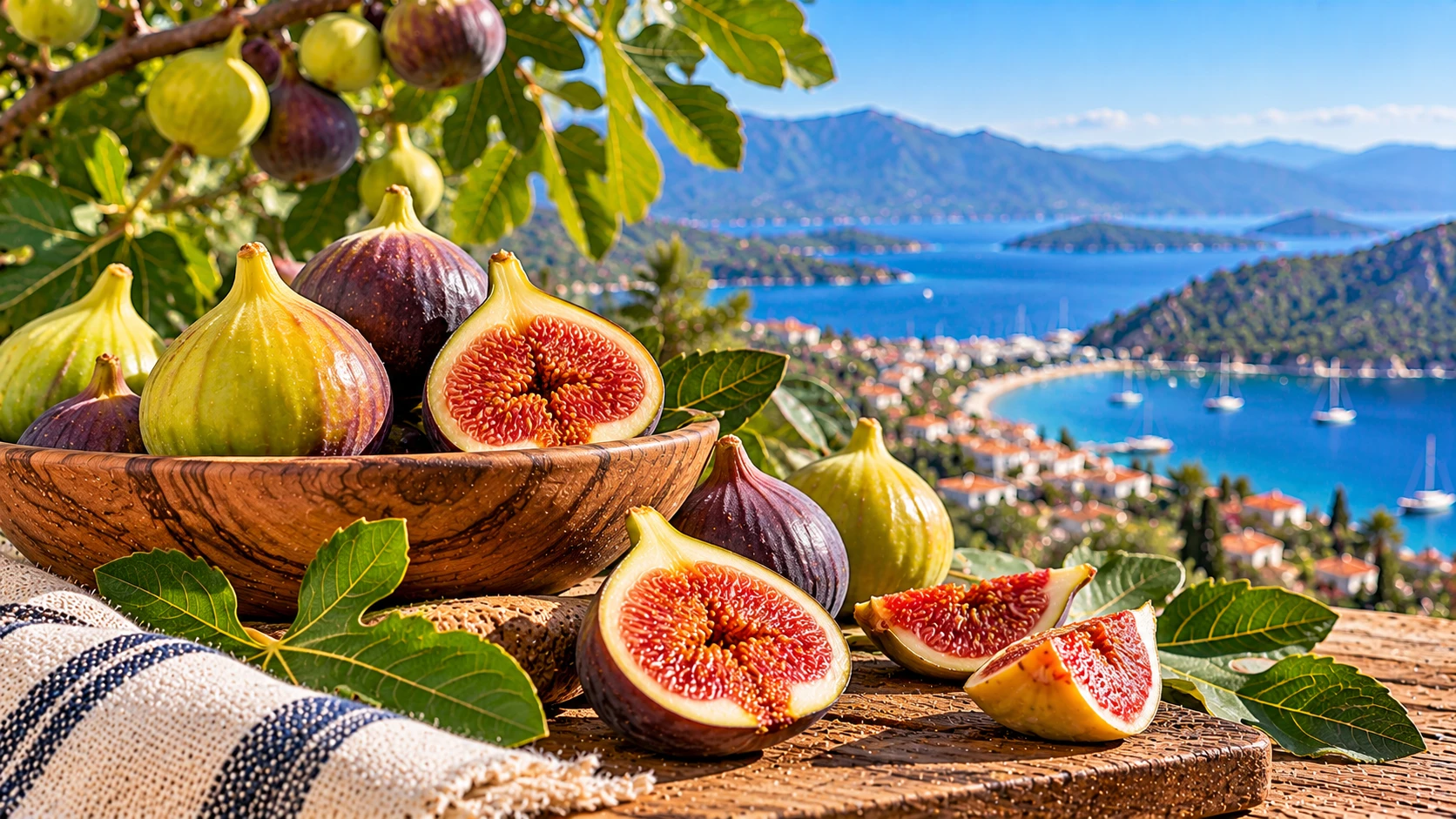
For a useful image of Fethiye Kaya İnciri, show the actual item and its characteristic texture or production setting. Details such as defined origin and fresh texture help tell the story more accurately than a generic stock image.
Use natural light, request permission before photographing producers or guests, and never imply that a placeholder image is a photograph of a specific registered product.
Fresh and dried figs are plant-based. Dried fruit is concentrated in sugars; some people are sensitive to sulphites used in other dried-fruit products.
Do not assume every fig sold in Fethiye is the registered Kaya İnciri variety.
A regional name does not guarantee suitability for a particular allergy, dietary requirement or medical condition. Check the actual label or ask the cook.
Look for labelled Fethiye produce at regional markets, growers’ stalls and co-operatives. Ask whether the product is fresh or dried and where it was grown.
Build in time for market conversations and allow for seasonal stock. If a product carries a geographical-indication claim, check the protected name, the official emblem and producer traceability.
Pair a tasting or purchase with nearby cultural visits, without expecting every venue to stock every speciality.
Follow these nearby links to compare traditions, ingredients and places within the wider Muğla guide.
Explore Fethiye for a complementary perspective on the food, landscape or heritage of southwest Türkiye.
Explore Datça Nurlu Bademi for a complementary perspective on the food, landscape or heritage of southwest Türkiye.
Explore Kayakoy Livissi for a complementary perspective on the food, landscape or heritage of southwest Türkiye.
A locally recognised fig that is enjoyed fresh and dried, with the character of southwestern Türkiye’s warm-season orchards.
Fethiye Kaya İnciri is a protected local fig, not a generic name for any fig picked near a rock. Türkiye registered it as designation of origin no. 849 in August 2021. Local descriptions emphasise its distinctive fresh and dried forms; buyers should verify the registered specification rather than relying on photographs of unrelated fig varieties.
Fethiye Kaya figs, fresh or dried; packaged fig products may include additional ingredients.
Fruit is harvested when mature and handled gently. Some figs are eaten fresh; those intended for drying are laid out and dried under suitable conditions, then sorted and stored hygienically.
Ripe fruit can be sweet and aromatic with a soft, seedy interior. Drying concentrates flavour and changes chewiness and texture.
Try fresh figs in season or dried figs with almonds and local cheese. Check whether a purchased dried fig has added preservatives or coatings.
Fresh figs are seasonal in late summer; correctly dried figs may be sold through the rest of the year.
Look for labelled Fethiye produce at regional markets, growers’ stalls and co-operatives. Ask whether the product is fresh or dried and where it was grown.
Fresh and dried figs are plant-based. Dried fruit is concentrated in sugars; some people are sensitive to sulphites used in other dried-fruit products. Do not assume every fig sold in Fethiye is the registered Kaya İnciri variety.
Choose traceable producers and established local businesses, respect private kitchens and ask permission before photographing people at work. A genuine regional speciality is tied to local knowledge, not just a name printed on a souvenir.
Do not assume every fig sold in Fethiye is the registered Kaya İnciri variety.
Support fair local trade and handle food or household products according to the maker’s instructions.
Ask Wow Cappadocia / Venere Travel about a tailor-made cultural itinerary with practical travel times and no compulsory shopping stops.
Combine local food heritage with coastal scenery, villages and historic sites at a comfortable pace.
Tell us your interests and travel dates so we can suggest a practical regional route.
Request Your Private Programme
Discover ancient cities, villages, protected nature and regional food traditions.
View the Muğla Travel Guide