Private Eşme District Programme
Tell us your group size and priorities. We will check local conditions before proposing a suitable route.
Request a Private Programme





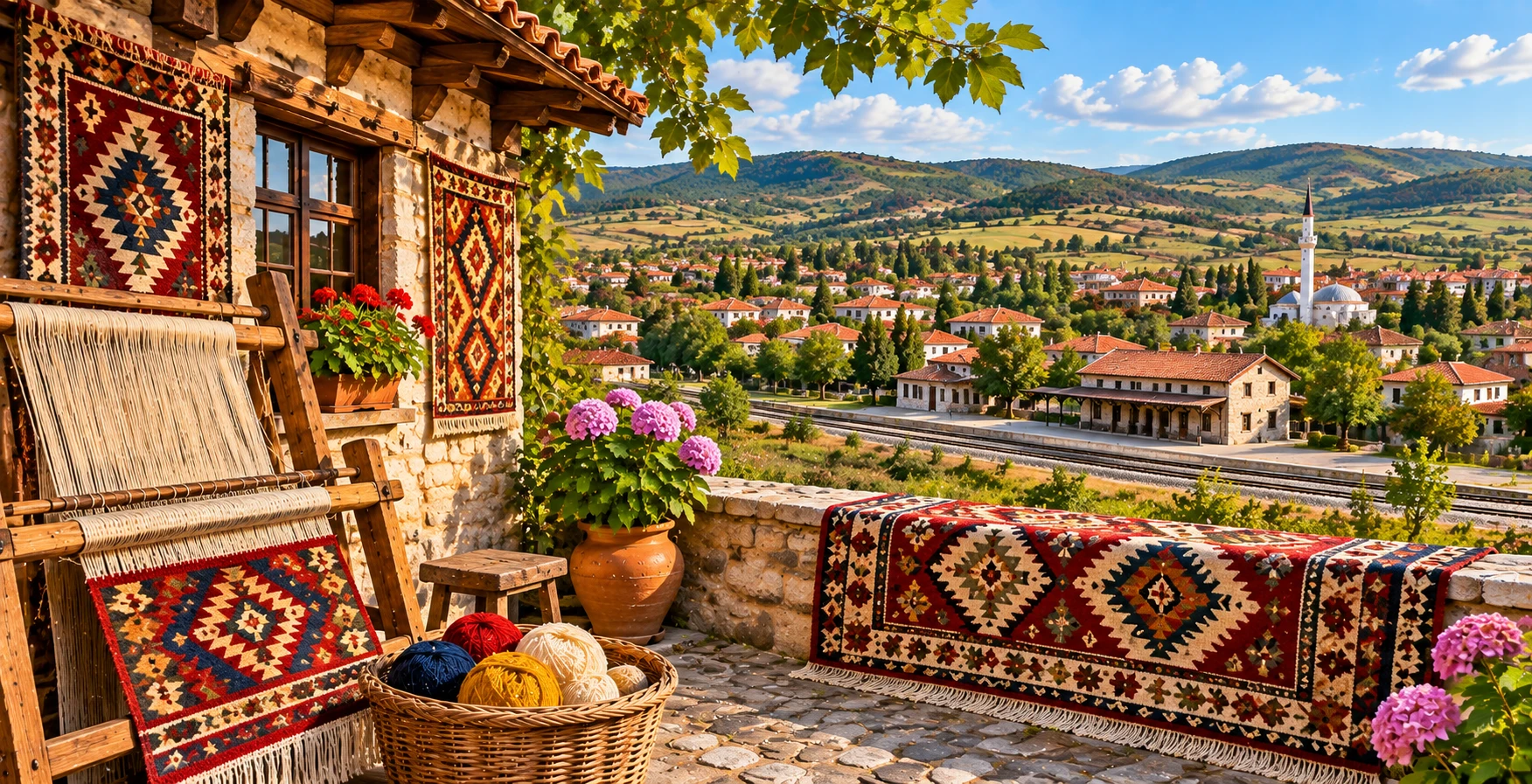
Eşme is a district to explore for its living textile culture rather than for a single blockbuster monument. It occupies the western part of Uşak Province, where villages, low hills and transport routes connect the inner Aegean with the Gediz basin. Its identity is closely associated with handwoven flatweaves, particularly Eşme kilims.
The district centre makes a useful base for visiting the Kilim House and City Archive, understanding the railway’s role in local settlement and making short excursions to Takmak Pond or Taşyaran Valley. Allow time for local conversations and ordinary town life.
Flatweaves use characteristic motifs and colour arrangements; the craft is part of local household history and women’s work.
A municipal display of historical textiles gives a starting point for reading patterns before visiting makers.
The Elvanlar rail corridor helped shape the modern administrative centre and its connections.
Takmak Pond and Taşyaran Valley reveal different sides of the district’s geography.
Useful orientation before planning a journey in Uşak.
Western Uşak Province
District Travel Guide
Eşme’s municipal history explains that the former administrative centre was Takmak.
The district includes agricultural valleys and rolling uplands on the approach to Manisa.
Plan a realistic stop and allow additional time for access and transport.
Confirm current opening, permissions, safety and road conditions.
Eşme is a district to explore for its living textile culture rather than for a single blockbuster monument. It occupies the western part of Uşak Province, where villages, low hills and transport routes connect the inner Aegean with the Gediz basin. Its identity is closely associated with handwoven flatweaves, particularly Eşme kilims.
The most rewarding way to understand this subject is to place its documented features in the wider Uşak story. The Elvanlar rail corridor helped shape the modern administrative centre and its connections.
Eşme’s municipal history explains that the former administrative centre was Takmak. The modern district centre developed around the railway at Elvanlar, and the district administration moved there in 1934. This transport-led change helps explain the relationship between the older rural settlements and the present town.
Eşme was also affected by the occupation and liberation campaigns of the Turkish War of Independence. These events should be interpreted through local archives and documented memorials rather than simplified legends. The district’s weaving traditions, meanwhile, developed across households and village workshops.
The district includes agricultural valleys and rolling uplands on the approach to Manisa. It is better understood as a network of communities and crafts than as a compact historic quarter with every attraction within walking distance.
The surrounding area matters to the visitor experience: plan around local roads, terrain, land use and the difference between an accessible public viewpoint and a privately managed area.
Flatweaves use characteristic motifs and colour arrangements; the craft is part of local household history and women’s work.
Compare this stop with the district’s other attractions before deciding how much time to allow.
A municipal display of historical textiles gives a starting point for reading patterns before visiting makers.
Compare this stop with the district’s other attractions before deciding how much time to allow.
The Elvanlar rail corridor helped shape the modern administrative centre and its connections.
Compare this stop with the district’s other attractions before deciding how much time to allow.
Takmak Pond and Taşyaran Valley reveal different sides of the district’s geography.
Compare this stop with the district’s other attractions before deciding how much time to allow.
The district combines places separated by roads and villages; use the town as an orientation point rather than expecting a single walkable attraction.
Eşme was also affected by the occupation and liberation campaigns of the Turkish War of Independence. These events should be interpreted through local archives and documented memorials rather than simplified legends. The district’s weaving traditions, meanwhile, developed across households and village workshops.
Read the district as a connected cultural landscape. Separate the chronology of its ancient sites from that of its modern town and rural industries.
Flatweaves use characteristic motifs and colour arrangements; the craft is part of local household history and women’s work.
Four distinct details give this visit a useful structure. Which can be approached on the day depends on access, current operations and local conditions.
Flatweaves use characteristic motifs and colour arrangements; the craft is part of local household history and women’s work.
A municipal display of historical textiles gives a starting point for reading patterns before visiting makers.
The Elvanlar rail corridor helped shape the modern administrative centre and its connections.
Takmak Pond and Taşyaran Valley reveal different sides of the district’s geography.
Ask permission before photographing makers or looms, and distinguish authentic handmade kilims from modern reproductions. The district is spread out, so a car is useful for villages.
Opening hours, entry charges, staff availability and permitted routes are not guaranteed by historical web descriptions. Verify these details before travelling, especially for smaller sites or rural stops.
Begin at the district centre and check whether the Kilim House is admitting visitors. Continue with the railway area and a local meal; choose one countryside excursion for the afternoon.
Choose a small number of meaningful stops and leave enough time for local travel. If the intended area is closed, respect the restriction and use an alternative public viewpoint or nearby attraction.
Spring and autumn are comfortable for combined town and countryside visits. Check the current programme before planning around the annual kilim festival.
Daylight, weather and local operating arrangements are more important than a fixed seasonal promise. Check forecasts and any current access notices.
Include both the town and its surrounding landscape to show the district’s character. Ask before photographing residents or private homes.
Drone operation may require aviation and local permissions. Never fly above sensitive heritage areas, crowds or protected environments without authorisation.
District-centre pavements and rural attractions vary greatly in accessibility. Plan individual stops according to mobility needs rather than assuming all are step-free.
For families with young children, plan regular breaks and keep everyone on permitted routes.
Eşme can be reached by road from Uşak and neighbouring Manisa districts; check current bus and railway services rather than assuming historic routes still operate for passengers.
Use a current map and confirm the final approach with the local authority or operator. A straight-line distance does not describe winding roads, track quality or private-property restrictions.
These related guides help you create a realistic route around Uşak. Select combinations by actual travel time and the interests of your group.
Explore the textile tradition from a different perspective, from historic patterns to living workshops.
Explore the textile tradition from a different perspective, from historic patterns to living workshops.
Build a realistic regional route with a complementary Uşak destination.
See a contrasting natural landscape, allowing for actual road conditions and seasonal access.
Eşme District is associated with Western Uşak Province, within Uşak Province, Türkiye.
Eşme is a district to explore for its living textile culture rather than for a single blockbuster monument. It occupies the western part of Uşak Province, where villages, low hills and transport routes connect the inner Aegean with the Gediz basin. Its identity is closely associated with handwoven flatweaves, particularly Eşme kilims.
Eşme’s municipal history explains that the former administrative centre was Takmak. The modern district centre developed around the railway at Elvanlar, and the district administration moved there in 1934. This transport-led change helps explain the relationship between the older rural settlements and the present town.
Highlights include eşme kilim tradition, kilim house and city archive, railway-centred town.
Allow at least half a day for a district introduction; a full day is better for rural sites.
Eşme can be reached by road from Uşak and neighbouring Manisa districts; check current bus and railway services rather than assuming historic routes still operate for passengers.
No. Public access, staffing, prices, permissions and local conditions may change. Confirm the current situation with the responsible authority or operator shortly before travelling.
Consider Eşme Kilim House and City Archive; Traditional Eşme Kilims; Eşme Railway Station. Check actual road conditions and travel time rather than relying on straight-line distances.
Support local communities by using established services, asking before entering private spaces and keeping travel routes realistic.
Any site-specific rules issued by the responsible public authority or operator take precedence over this general guide.
Wow Cappadocia / Venere Travel can help plan a tailored route with licensed guiding and suitable transport, subject to availability and confirmed access. No compulsory shopping stops.
Share your interests, preferred pace and travel date for a practical itinerary.
Tell us your group size and priorities. We will check local conditions before proposing a suitable route.
Request a Private Programme
Continue with a related destination or cultural theme in Uşak Province.
Read the Nearby Guide