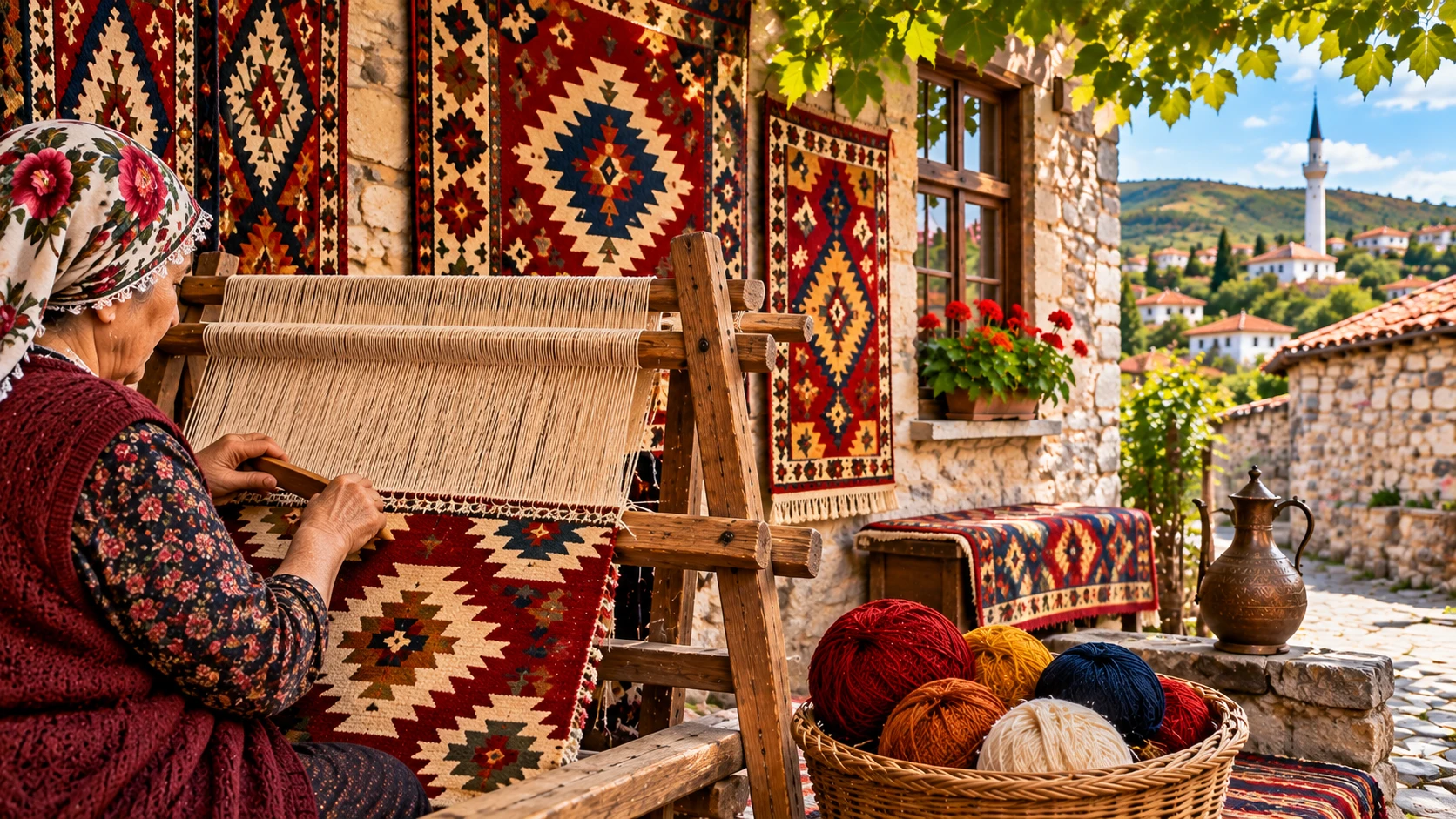
Private Traditional Eşme Kilims Programme
Tell us your group size and priorities. We will check local conditions before proposing a suitable route.
Request a Private Programme





Eşme kilims are a distinctive flatweaving tradition from western Uşak Province, closely connected with Yörük–Türkmen cultural history and the work of village weavers. Unlike pile carpets, kilims are woven with interlacing warp and weft to create a comparatively flat textile surface.
The Turkish Culture Portal describes a rich local vocabulary of motifs and weaving types, including Altınbaş, Toplu, Ablaş and prayer kilims. These names refer to particular structures or compositions and should not be flattened into a generic “tribal pattern”.
Rectangular and hooked motifs are arranged in characteristic local compositions.
Repeated medallion-like “top” forms can be counted and arranged in rows.
Historical examples used locally prepared yarns and plant dyes; modern production methods vary.
The Eşme–Yörük geographical indication helps document the tradition and its recognised features.
Useful orientation before planning a journey in Uşak.
Eşme district, Uşak Province
Traditional Textiles and Living Heritage
Traditional Eşme weaving developed in households, with yarn historically spun and dyed by weavers.
The kilim tradition is distributed across Eşme and its villages rather than confined to one museum.
Plan a realistic stop and allow additional time for access and transport.
Confirm current opening, permissions, safety and road conditions.
Eşme kilims are a distinctive flatweaving tradition from western Uşak Province, closely connected with Yörük–Türkmen cultural history and the work of village weavers. Unlike pile carpets, kilims are woven with interlacing warp and weft to create a comparatively flat textile surface.
The most rewarding way to understand this subject is to place its documented features in the wider Uşak story. Historical examples used locally prepared yarns and plant dyes; modern production methods vary.
Traditional Eşme weaving developed in households, with yarn historically spun and dyed by weavers. The Culture Portal records the use of vertical looms known locally as ıstar and a tradition of natural dyes and locally recognised motifs.
The name “Eşme–Yörük Kilimi” is registered as a Turkish geographical indication, with a registration date of 14 November 1997 according to the Turkish Patent and Trademark Office. The registration identifies a product tradition, not a UNESCO World Heritage designation.
The kilim tradition is distributed across Eşme and its villages rather than confined to one museum. The municipal Kilim House and City Archive provides a practical first stop before exploring the wider district.
The surrounding area matters to the visitor experience: plan around local roads, terrain, land use and the difference between an accessible public viewpoint and a privately managed area.
Rectangular and hooked motifs are arranged in characteristic local compositions.
Ask local makers or interpreters about the detail rather than assuming all examples are identical.
Repeated medallion-like “top” forms can be counted and arranged in rows.
Ask local makers or interpreters about the detail rather than assuming all examples are identical.
Historical examples used locally prepared yarns and plant dyes; modern production methods vary.
Ask local makers or interpreters about the detail rather than assuming all examples are identical.
The Eşme–Yörük geographical indication helps document the tradition and its recognised features.
Ask local makers or interpreters about the detail rather than assuming all examples are identical.
Textile heritage is inseparable from the people who spin, dye, design and weave; objects in collections are only one part of that story.
The name “Eşme–Yörük Kilimi” is registered as a Turkish geographical indication, with a registration date of 14 November 1997 according to the Turkish Patent and Trademark Office. The registration identifies a product tradition, not a UNESCO World Heritage designation.
Compare technique and composition before asking about age or origin. A flatweave, a knotted carpet and a modern reproduction are not interchangeable.
Rectangular and hooked motifs are arranged in characteristic local compositions.
Four distinct details give this visit a useful structure. Which can be approached on the day depends on access, current operations and local conditions.
Rectangular and hooked motifs are arranged in characteristic local compositions.
Repeated medallion-like “top” forms can be counted and arranged in rows.
Historical examples used locally prepared yarns and plant dyes; modern production methods vary.
The Eşme–Yörük geographical indication helps document the tradition and its recognised features.
Avoid treating every motif as having one fixed universal meaning; ask local makers about their own patterns. Seek permission before photographing people or private workspaces.
Opening hours, entry charges, staff availability and permitted routes are not guaranteed by historical web descriptions. Verify these details before travelling, especially for smaller sites or rural stops.
Begin at Eşme Kilim House and City Archive, then ask whether a working weaver can be visited by prior arrangement. Spend time learning how to read motifs and recognise weaving technique.
Choose a small number of meaningful stops and leave enough time for local travel. If the intended area is closed, respect the restriction and use an alternative public viewpoint or nearby attraction.
The craft can be explored year-round; check festival dates and museum hours independently.
Daylight, weather and local operating arrangements are more important than a fixed seasonal promise. Check forecasts and any current access notices.
Photograph pattern, loom and textile structure only with permission. For a fair record of craftsmanship, credit the maker whenever possible.
Drone operation may require aviation and local permissions. Never fly above sensitive heritage areas, crowds or protected environments without authorisation.
Historic houses and working studios may have steps, narrow doors or restricted work areas. Contact the venue about accessible entrances and seating.
For families with young children, plan regular breaks and keep everyone on permitted routes.
Eşme is west of Uşak city. The district centre is accessible by road, while village weaving locations require separate arrangements.
Use a current map and confirm the final approach with the local authority or operator. A straight-line distance does not describe winding roads, track quality or private-property restrictions.
These related guides help you create a realistic route around Uşak. Select combinations by actual travel time and the interests of your group.
Build a realistic regional route with a complementary Uşak destination.
Explore the textile tradition from a different perspective, from historic patterns to living workshops.
Explore the textile tradition from a different perspective, from historic patterns to living workshops.
Explore the textile tradition from a different perspective, from historic patterns to living workshops.
Traditional Eşme Kilims is associated with Eşme district, Uşak Province, within Uşak Province, Türkiye.
Its value lies in the documented Uşak weaving tradition: Rectangular and hooked motifs are arranged in characteristic local compositions.
Traditional Eşme weaving developed in households, with yarn historically spun and dyed by weavers. The Culture Portal records the use of vertical looms known locally as ıstar and a tradition of natural dyes and locally recognised motifs.
Highlights include altınbaş kilims, toplu kilims, natural-dye heritage.
This is a regional craft tradition, not a single monument. Allow time for the Kilim House and any separately arranged weaving demonstration.
Eşme is west of Uşak city. The district centre is accessible by road, while village weaving locations require separate arrangements.
No. Public access, staffing, prices, permissions and local conditions may change. Confirm the current situation with the responsible authority or operator shortly before travelling.
Consider Eşme District; Eşme Kilim House and City Archive; Traditional Uşak Carpets. Check actual road conditions and travel time rather than relying on straight-line distances.
Respect the time and intellectual contribution of craftspeople. Ask permission before recording demonstrations and avoid presenting modern examples as historic originals.
Any site-specific rules issued by the responsible public authority or operator take precedence over this general guide.
Wow Cappadocia / Venere Travel can help plan a tailored route with licensed guiding and suitable transport, subject to availability and confirmed access. No compulsory shopping stops.
Share your interests, preferred pace and travel date for a practical itinerary.
Tell us your group size and priorities. We will check local conditions before proposing a suitable route.
Request a Private Programme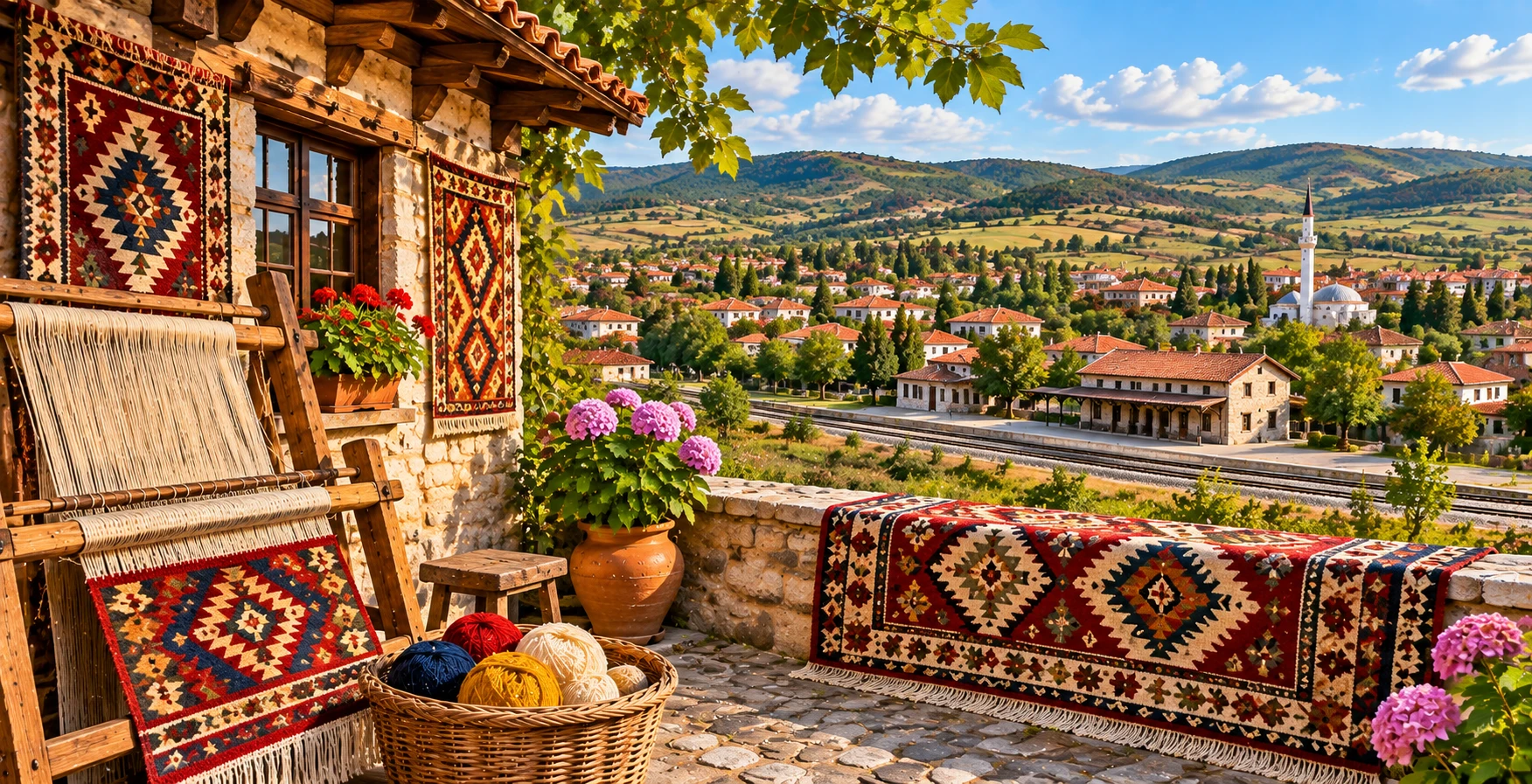
Continue with a related destination or cultural theme in Uşak Province.
Read the Nearby Guide