Private Akhisar Food Experience
Share your travel date, interests and group size. We can propose a sensible local route and check any producer access.
Request Your Private Programme





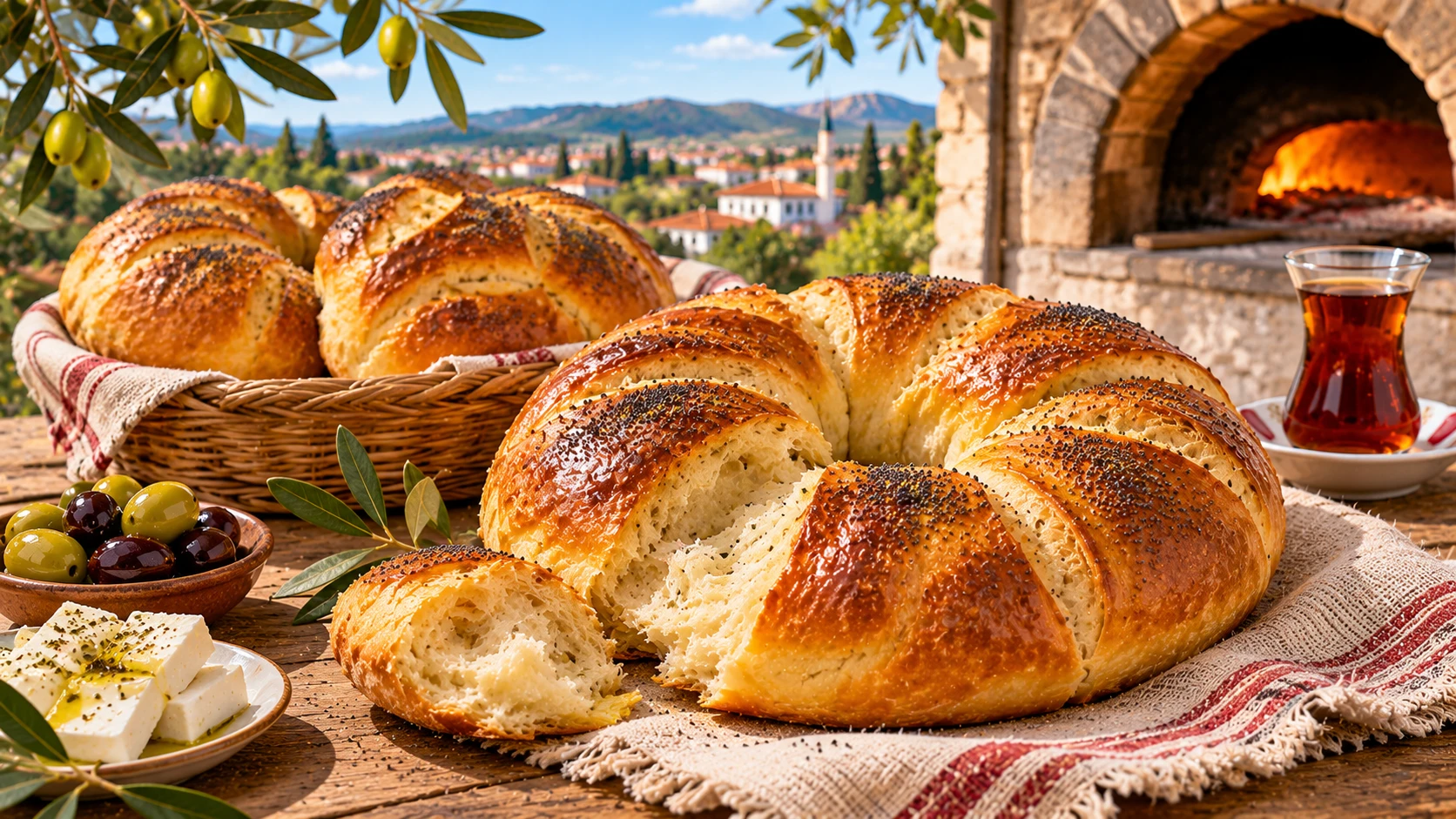
Despite the word simit in its name, Akhisar simit ekmeği is a regional bread tradition, not simply the familiar sesame-coated street ring. A chickpea-based starter is the distinguishing detail of the documented method.
The surprising element here is the starter. Chickpeas play a role in fermentation, but the finished result is a loaf for the table rather than a chickpea snack or a standard sesame street ring.
Crushed chickpeas, warm water and flour are left to ferment.
The starter is mixed into a larger wheat dough.
Egg yolk is brushed on top before baking in the documented method.
This bread is not necessarily the sesame-coated ring called simit.
Essential context for a meaningful food experience.
Akhisar, Manisa
Traditional bread
Starter
Dough
Ask locally about availability and season
No specific registration asserted
The Ministry of Culture’s regional food entry describes crushed chickpeas mixed with warm water and flour and left overnight in a warm place. The resulting fermented mixture acts as the starter for a larger dough.
This method connects Akhisar bread-making to older domestic practices in which fermentation was managed through locally available ingredients rather than a packet of commercial yeast.
This guide does not assert a specific geographical-indication registration for this item; local reputation and official registration are different things.
Expect a wheat-bread aroma with a distinctive fermentation background rather than the taste of roasted chickpeas. The egg-yolk finish gives the crust a more pronounced golden colour.
A fresh loaf can be torn into pieces for breakfast; a slice also makes a useful neutral base for tasting local olives or olive oil.
Crushed chickpeas, warm water and flour are left to ferment.
The starter is mixed into a larger wheat dough.
Egg yolk is brushed on top before baking in the documented method.
This bread is not necessarily the sesame-coated ring called simit.
Bread-making offers an accessible way to experience local food heritage without needing a special festival. In Akhisar, a bakery stop can precede an olive tasting or a museum visit.
Chickpeas are crushed finely but not ground completely to flour. They are combined with warm water and enough flour to form a soft mixture and are left covered until fermentation develops.
The starter is then worked into additional flour and water to make bread dough. After a further rise, the top is brushed with egg yolk before baking. The recipe’s final texture depends on flour, hydration, fermentation and oven heat.
Crushed chickpeas, warm water and flour are left to ferment.
The starter is mixed into a larger wheat dough.
Egg yolk is brushed on top before baking in the documented method.
This bread is not necessarily the sesame-coated ring called simit.
Ask whether a bakery actually makes the chickpea-starter version. The name may be used differently in everyday speech, and not every bread shop will follow the published heritage method.
Reference for the regional method or designation: Regional food documentation. The linked record is provided for checking the details; opening hours and producer availability must be confirmed separately.
Enjoy it with Akhisar olives, cheese, tomatoes or a small bowl of olive oil. It also works beside savoury cooked dishes where bread is used to collect sauce.
For an informative tasting, compare it with a conventional yeasted loaf and notice the crumb, aroma and crust. Differences can be subtle and will vary by baker.
Start by asking for the simplest or most characteristic preparation. Give yourself time to observe the texture, aroma and serving method, then compare it with one of the related Manisa foods linked below. A short conversation with a producer can be more revealing than collecting several rushed tastings.
Because the documented dough includes wheat and an egg-yolk glaze, visitors with relevant allergies should confirm the current recipe directly.
For a special trip, verify the producer or bakery is open and that the item is available. Seasonal harvests, working-kitchen schedules and festival dates can change; this guide deliberately avoids inventing fixed opening hours or prices.
Photograph the product in its actual context: the market stall, bakery counter, plate or orchard, with the maker’s permission. Do not enter production spaces without approval, and avoid disrupting food handling to stage a picture.
The hero path in this page is a website image reference, not a photograph included in this HTML package. Supply a properly licensed image of the specific food or product before publishing.
Food markets and historic town centres may have steps, narrow pavements or limited seating. If you need a step-free tasting location, confirm the venue’s access arrangements before travelling.
Ingredient and allergen information should come from the actual producer or kitchen. A traditional description cannot guarantee the absence of cross-contact or accommodate individual dietary needs.
The most rewarding question is often not “which loaf is famous?” but “how is this starter kept alive?” That opens a conversation about inherited skill and everyday domestic knowledge.
The local starting point is Akhisar in Manisa Province. Use an up-to-date map for the exact shop, producer or market and confirm access before making a special journey.
Continue with this related Manisa guide for a different food tradition or nearby heritage stop. Check actual travel time and opening conditions.
Continue with this related Manisa guide for a different food tradition or nearby heritage stop. Check actual travel time and opening conditions.
Continue with this related Manisa guide for a different food tradition or nearby heritage stop. Check actual travel time and opening conditions.
Its documented preparation uses an overnight chickpea-based starter.
No. The regional food record describes a fermented bread rather than the standard street simit.
Yes. Crushed chickpeas help prepare the starter used in the documented recipe.
The Ministry of Culture method brushes the loaf with egg yolk before baking.
Local olives, olive oil, cheese and breakfast vegetables are natural companions.
Ask bakeries in Akhisar specifically for the chickpea-starter traditional version.
Buy from identifiable producers and ask respectfully about their methods.
Read labels and ask about allergens, preparation and storage.
Do not enter farms, mills, kitchens or workshops without permission.
Order manageable portions and use practical packaging for purchases.
Ask Wow Cappadocia / Venere Travel to plan a private route with licensed guiding where appropriate, realistic travel times and no compulsory shopping stops. Producer visits are subject to availability and permission.
Combine food, culture and history at your own pace.
Share your travel date, interests and group size. We can propose a sensible local route and check any producer access.
Request Your Private Programme
Discover a complementary local food or cultural destination.
Read the Related Guide