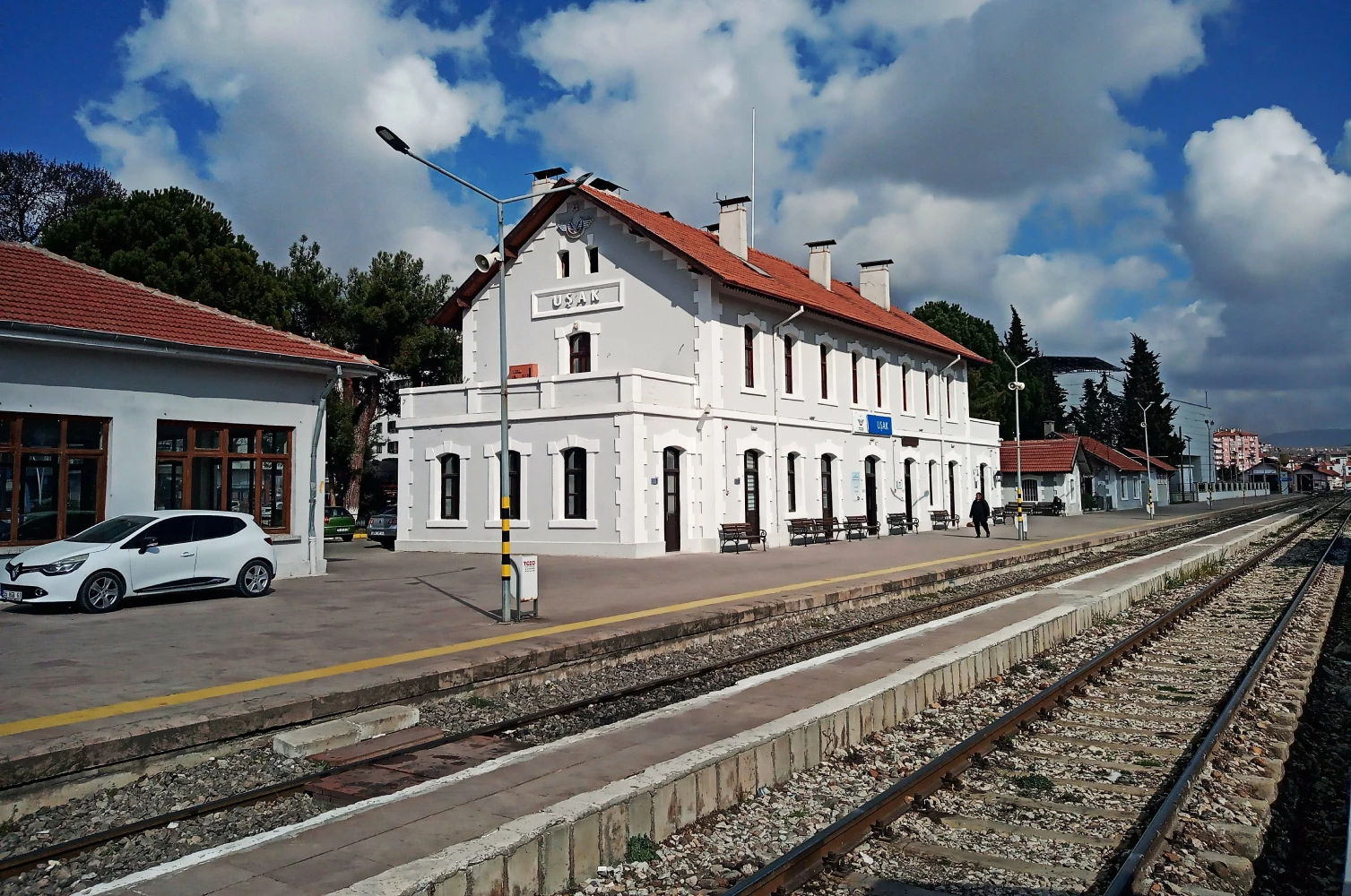
Private Historic Uşak Train Station Programme
Share your travel dates, group size and interests. We will check practical arrangements and propose a suitable route.
Request a Private Programme





Uşak Train Station connects the city’s history to the railway age. Opened in 1887, it represents a period when inland western Anatolian towns became more closely tied to wider transport and commercial networks.
The railway station is within the city and can be combined with the nearby archaeology museum and central historic streets.
The opening date places Uşak’s rail link within the nineteenth-century transformation of transport across Anatolia.
Look for the practical scale and materials of a railway building designed for travellers, operations and movement of goods.
Consider how a station connects to market streets, warehouses and the development of surrounding neighbourhoods.
The station is not simply a historic monument.
Location, historical character and sensible visitor planning at a glance.
Uşak city centre
Railway Heritage
Late Ottoman railway expansion; station opened 1887
an active railway-station environment
20–45 minutes
Check current access, operating conditions and any permissions; this guide does not guarantee prices or opening hours.
The most rewarding reason to explore Historic Uşak Train Station is the way 1887 station history relates to station architecture. Their significance becomes clearer in the context of late ottoman railway expansion; station opened 1887 and the surrounding an active railway-station environment.
Pay attention also to railway and city growth and living transport heritage. They help connect the main story to the less obvious details of the place.
The provincial culture directorate records that Uşak’s main station entered service on 20 December 1887. It belongs to the expansion of rail transport across western Anatolia during the late Ottoman period.
Railways altered the movement of passengers and goods, affecting towns that already had important agricultural, craft and market economies. Uşak’s textile and commercial history can be viewed against this background without claiming that every trade change resulted from the railway alone.
The station remains associated with Turkish State Railways. Published train services and timetables change, so the historic opening date should not be confused with a guarantee of any particular present-day departure.
The railway station is within the city and can be combined with the nearby archaeology museum and central historic streets.
In Uşak city centre, the relationship between the built or natural features and their surroundings is an important part of the experience. Consider the wider Uşak region when deciding which places to combine on the same day.
The opening date places Uşak’s rail link within the nineteenth-century transformation of transport across Anatolia.
For visitors, the key is to connect this feature with the broader railway heritage and its late ottoman railway expansion; station opened 1887 context. Observe from permitted areas, and do not assume every surviving element has the same date or function.
Look for the practical scale and materials of a railway building designed for travellers, operations and movement of goods.
For visitors, the key is to connect this feature with the broader railway heritage and its late ottoman railway expansion; station opened 1887 context. Observe from permitted areas, and do not assume every surviving element has the same date or function.
Consider how a station connects to market streets, warehouses and the development of surrounding neighbourhoods.
For visitors, the key is to connect this feature with the broader railway heritage and its late ottoman railway expansion; station opened 1887 context. Observe from permitted areas, and do not assume every surviving element has the same date or function.
The station is not simply a historic monument. Operational rules, platforms and safety barriers take priority over sightseeing.
For visitors, the key is to connect this feature with the broader railway heritage and its late ottoman railway expansion; station opened 1887 context. Observe from permitted areas, and do not assume every surviving element has the same date or function.
The railway heritage character of Historic Uşak Train Station is part of a much larger Uşak story that links town life, historic routes and the surrounding plateau. Its particular setting — an active railway-station environment — gives the visit a perspective different from the province's other destinations.
For a balanced itinerary, compare this experience with Uşak Museum of Archaeology, Uşak City History Museum. These stops reveal different chapters of Uşak’s history, geography or everyday culture; check actual routes rather than drawing straight lines between map markers.
Begin with 1887 station history and then compare it with station architecture. Ask which details are observable on site and which require an interpretation from historical research, local archives or conservation authorities.
The next useful question is how railway and city growth relates to living transport heritage. Not every feature will be accessible or fully explained by a sign, so distinguish visible evidence from interpretation.
These four highlights provide a practical structure for your visit. Access to individual features may be restricted or seasonal.
The opening date places Uşak’s rail link within the nineteenth-century transformation of transport across Anatolia.
Look for the practical scale and materials of a railway building designed for travellers, operations and movement of goods.
Consider how a station connects to market streets, warehouses and the development of surrounding neighbourhoods.
The station is not simply a historic monument.
For current passenger services, consult TCDD Taşımacılık rather than relying on old travel articles. Stay outside restricted track and operational areas.
Suggested visit length: 20–45 minutes. This is a planning estimate, not a guaranteed activity duration. Allow extra time for parking, walking, interpretation and any queues.
Start at the public station frontage, observe the building and its setting, then walk toward Uşak Museum of Archaeology. If taking a train, allow extra time for ticket and platform procedures.
Do not try to fit every nearby stop into one short visit. A practical continuation is Uşak Museum of Archaeology, provided that its current access and the travel time make sense.
Museums and indoor heritage buildings can be useful in cold or wet weather, but opening hours and closures still require checking.
For photography and walking, consider the day’s light, weather and return journey. Do not rely on an old opening-time listing or an unverified seasonal service.
Photograph from public areas only; never stand on tracks or cross railway barriers for a better composition.
Drone flights may require permission under aviation, conservation or local restrictions. Do not use a drone without confirming the applicable rules.
Check platform access, step-free routes and assistance directly with the railway operator if travelling with luggage or mobility needs.
If travelling with young children or someone who cannot manage steps or uneven ground, ask about an appropriate shorter route before departure.
Historic Uşak Train Station is associated with Uşak city centre. Check the exact destination and approach road before setting out; similarly named villages, historic stations or archaeological areas can appear on different map pins.
If using public transport, confirm that it serves the specific location rather than only the district centre. For remote heritage or nature sites, agree on a safe return plan before leaving.
Nearby options help turn a single stop into a well-paced Uşak itinerary. These are suggestions rather than a promise that every location is open on the same day.
Explore this related Uşak destination to compare different aspects of the province’s landscape and heritage. Confirm access and travel time before combining the stops.
Explore this related Uşak destination to compare different aspects of the province’s landscape and heritage. Confirm access and travel time before combining the stops.
Explore this related Uşak destination to compare different aspects of the province’s landscape and heritage. Confirm access and travel time before combining the stops.
Explore this related Uşak destination to compare different aspects of the province’s landscape and heritage. Confirm access and travel time before combining the stops.
Treat Historic Uşak Train Station as a living or protected place, not just a photo stop. The presence of residents, worshippers, workers, wildlife or archaeological material requires care appropriate to the location.
Stay on permitted routes, do not remove archaeological material or natural objects, take litter away, and ask before photographing people or entering private premises.
Historic Uşak Train Station is in Uşak city centre, within Uşak Province in western Türkiye.
Uşak Train Station connects the city’s history to the railway age. Opened in 1887, it represents a period when inland western Anatolian towns became more closely tied to wider transport and commercial networks.
Focus on 1887 station history, station architecture, and railway and city growth. These details explain its distinctive heritage or landscape.
Plan approximately 20–45 minutes. This is a suggested visit length rather than a guaranteed duration.
Start at the public station frontage, observe the building and its setting, then walk toward Uşak Museum of Archaeology. If taking a train, allow extra time for ticket and platform procedures.
No current admission price or fixed timetable is guaranteed in this guide. Check the relevant local authority or site operator shortly before travelling; access, conservation works and seasonal arrangements may change.
Check platform access, step-free routes and assistance directly with the railway operator if travelling with luggage or mobility needs.
Consider Uşak Museum of Archaeology, Uşak City History Museum. Check actual road distances, public access and available time before combining stops.
Wow Cappadocia / Venere Travel can help arrange tailor-made sightseeing with a licensed guide and suitable transport, subject to availability and confirmed access. No compulsory shopping stops.
Combine local heritage and natural landscapes at a comfortable pace.
Share your travel dates, group size and interests. We will check practical arrangements and propose a suitable route.
Request a Private Programme
Continue your Uşak itinerary with a related destination.
Read the Nearby Guide