Request a Private Uşak Programme
We can discuss regional heritage and food experiences; individual access and tastings must be confirmed in advance.
Contact Wow Cappadocia





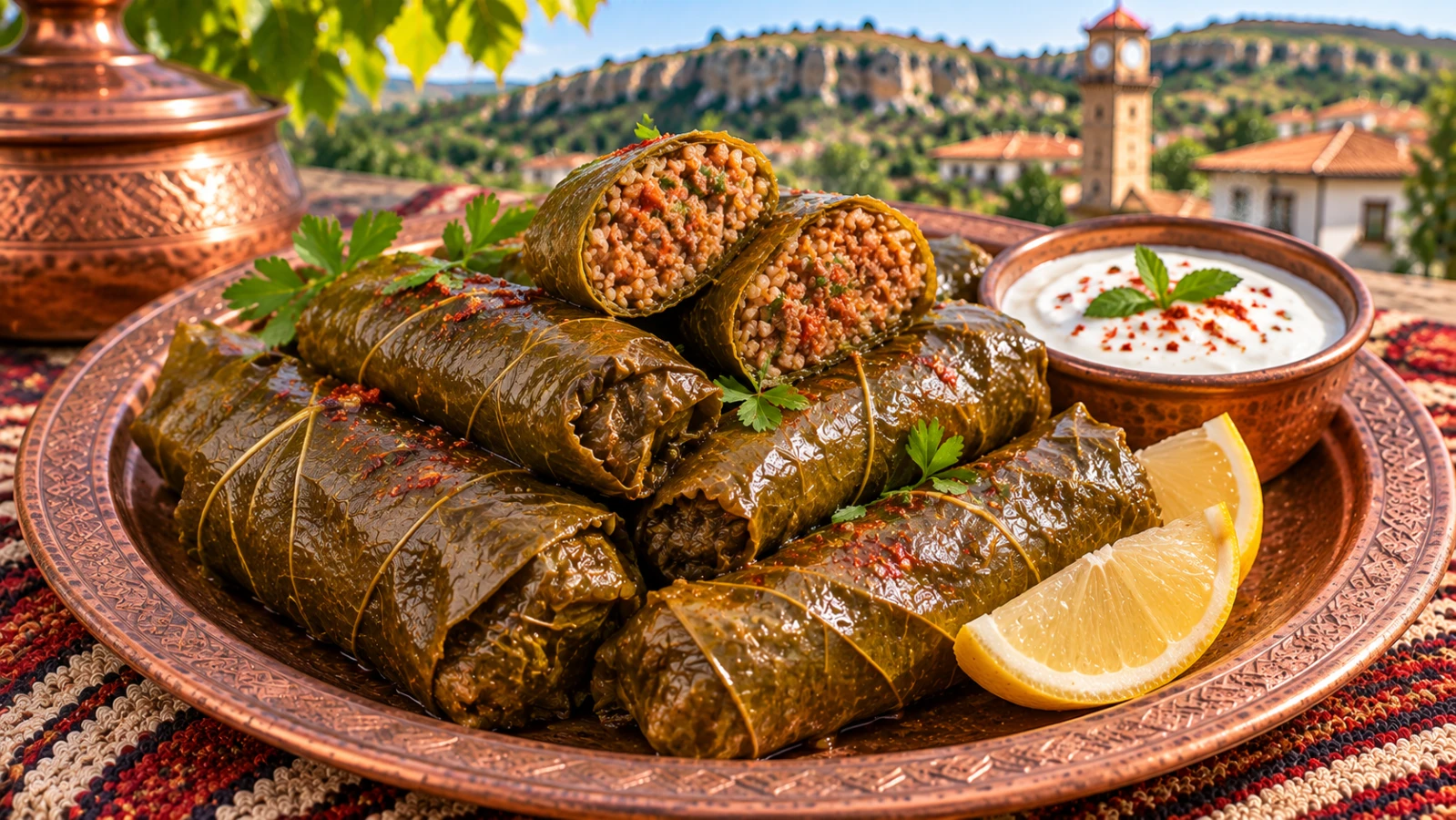
İlabada sarması uses the broad leaves of a plant locally called ilabada, a name associated with patience dock or labada. The wrapper is the distinguishing feature: this is not grape-leaf sarma under another name.
The Uşak culture directorate identifies ilabada as the local name for labada and describes the rolls as a well-known local dish. Because wild leafy plants can be misidentified, the safest explanation emphasises edible, properly identified leaves supplied by a knowledgeable grower or cook.
The characteristic wrapper.
Ilabada is a regional name for labada.
Small parcels hold the filling.
A connection to household plant knowledge.
Essential context for curious visitors and local food enthusiasts.
Uşak Province
Stuffed patience-dock leaves
Ilabada leaves
Ilabada is a regional name for labada.
Ask a local cook about the exact recipe.
Confirm local arrangements and individual variations.
İlabada sarması uses the broad leaves of a plant locally called ilabada, a name associated with patience dock or labada. The wrapper is the distinguishing feature: this is not grape-leaf sarma under another name.
Leaf-wrapped foods show the link between seasonal greens and Anatolian household kitchens. The same technique appears across regions, but the name ilabada is part of Uşak’s local vocabulary.
Dock leaves can give a different, slightly tart herbal character from vine leaves. The filling may be mild or more aromatic depending on the cook.
The Uşak culture directorate identifies ilabada as the local name for labada and describes the rolls as a well-known local dish. Because wild leafy plants can be misidentified, the safest explanation emphasises edible, properly identified leaves supplied by a knowledgeable grower or cook.
Leaf-wrapped foods show the link between seasonal greens and Anatolian household kitchens. The same technique appears across regions, but the name ilabada is part of Uşak’s local vocabulary.
Dock leaves can give a different, slightly tart herbal character from vine leaves. The filling may be mild or more aromatic depending on the cook.
Compare the distinctive elements below with other Uşak traditions. Similar names elsewhere do not always indicate identical ingredients, techniques or historical origins.
The characteristic wrapper.
In İlabada Sarması, ilabada leaves is worth examining in relation to the whole preparation. A careful tasting can distinguish texture, aroma and the role of each ingredient without assuming that every family follows a single standard.
Ilabada is a regional name for labada.
In İlabada Sarması, local vocabulary is worth examining in relation to the whole preparation. A careful tasting can distinguish texture, aroma and the role of each ingredient without assuming that every family follows a single standard.
Small parcels hold the filling.
In İlabada Sarması, careful rolling is worth examining in relation to the whole preparation. A careful tasting can distinguish texture, aroma and the role of each ingredient without assuming that every family follows a single standard.
A connection to household plant knowledge.
In İlabada Sarması, seasonal greens is worth examining in relation to the whole preparation. A careful tasting can distinguish texture, aroma and the role of each ingredient without assuming that every family follows a single standard.
The following is a practical cultural outline, not a claim that every household or site follows an identical procedure.
Select edible, correctly identified leaves and wash them thoroughly; do not forage by resemblance alone.
Soften the leaves briefly if necessary to make them pliable without tearing.
Prepare a rice- or bulgur-based filling according to a local household recipe; meat and seasoning vary.
Wrap small portions tightly, arrange in a pot and cook gently with enough liquid until the filling is tender.
Leaf-wrapped foods show the link between seasonal greens and Anatolian household kitchens. The same technique appears across regions, but the name ilabada is part of Uşak’s local vocabulary.
Local terms, production methods and the stories told by residents can be as valuable as the finished food. Ask before recording a demonstration or entering privately managed spaces.
Dock leaves can give a different, slightly tart herbal character from vine leaves. The filling may be mild or more aromatic depending on the cook.
Notice the relationship between the principal elements rather than judging the subject only by appearance. Differences between families, seasons and preservation conditions deserve attention.
If you have plant allergies, ask for ingredient details. Never harvest unidentified wild leaves, and check whether the filling contains meat, wheat or other allergens.
Do not forage or eat unidentified wild leaves.
For local foods, availability depends on preparation schedules, seasonality and individual kitchens. Special-occasion foods may need advance notice; never assume every restaurant stocks the dish.
For a more rewarding experience, combine this topic with related Uşak heritage or cuisine rather than rushing through many unrelated stops.
In Uşak, ask a local producer, market vendor or family-run kitchen whether they make the named version; check ingredients and availability before visiting. The page is a cultural guide, not a guarantee that a particular venue serves it.
If arranging a private itinerary, tell your guide your interests and accessibility needs in advance. No shopping stops are required.
Explore this related Uşak topic to understand the region in a broader context. Check availability, travel conditions and local access before making a combined itinerary.
Explore this related Uşak topic to understand the region in a broader context. Check availability, travel conditions and local access before making a combined itinerary.
Explore this related Uşak topic to understand the region in a broader context. Check availability, travel conditions and local access before making a combined itinerary.
Support local craftspeople, farmers and small food producers without treating private homes or working spaces as public attractions. Ask permission before photographing people and leave public spaces clean.
Do not make claims about protected status, historical dates or ingredients without reliable evidence. Check the relevant official register or provincial cultural authority for updated information.
İlabada sarması uses the broad leaves of a plant locally called ilabada, a name associated with patience dock or labada. The wrapper is the distinguishing feature: this is not grape-leaf sarma under another name.
İlabada Sarması is associated with Uşak Province, in the wider Uşak region of western Türkiye.
The characteristic wrapper. Ilabada is a regional name for labada.
Select edible, correctly identified leaves and wash them thoroughly; do not forage by resemblance alone. Soften the leaves briefly if necessary to make them pliable without tearing.
If you have plant allergies, ask for ingredient details. Never harvest unidentified wild leaves, and check whether the filling contains meat, wheat or other allergens.
Related Uşak topics include Alacatene, Uşak Döndürmesi. Check travel and opening conditions before combining places.
Wow Cappadocia / Venere Travel can help design a private itinerary focused on local culture, subject to access and availability. No compulsory shopping stops.
Share your dates, group size and interests for a thoughtful regional route.
We can discuss regional heritage and food experiences; individual access and tastings must be confirmed in advance.
Contact Wow Cappadocia