Kalbur marks
The outside carries a clear woven or ridged pattern from a traditional sieve.






Sivas hurma, also called sini hurması, is a traditional oven-baked pastry shaped against a sieve or ridged mould and soaked in sugar syrup. The name does not mean that dates are a required ingredient.
The outside carries a clear woven or ridged pattern from a traditional sieve
Finger impressions help the pastry bake and absorb syrup
The original Sivas preparation uses a generous quantity of butter
Syrup is added in portions rather than all at once
Its place in Sivas cuisine and the defining preparation details.
Sivas province, Türkiye
Regional food
Melt butter and remove the foam and sediment where following the traditional preparation.
No confirmed registration claimed for this specific dish
The provincial dessert inventory describes hurma as one of the most widely prepared local sweets after baklava. Its popularity rests on familiar pantry ingredients—fat, flour, egg, yoghurt and syrup—combined with a distinctive hand-shaping technique.
Traditionally the dough was pressed against a kalbur, or sieve, creating a textured surface. A separate indentation is made by the fingers to help the pastry cook through and absorb syrup. Purpose-made hurma moulds are also now used.
The pastry is baked until coloured, then syrup is introduced in stages rather than simply drowning the pan at once. A local description notes that salted butter is especially characteristic of the old preparation, though versions with unsalted butter also exist.
The outside carries a clear woven or ridged pattern from a traditional sieve.
Finger impressions help the pastry bake and absorb syrup.
The original Sivas preparation uses a generous quantity of butter.
Syrup is added in portions rather than all at once.
Hurma is the local name, but the standard recipe does not call for date fruit.
These are ingredients documented in the local culinary sources or used in the explained traditional method. Amounts are included only where the available source specifies them; household quantities vary.
Melted clarified or filtered butter
Flour, enough for a medium-soft dough
Yoghurt
1 egg
A little water
A pinch of salt
Sugar and water for syrup
A small amount of citric acid or lemon to help the syrup remain smooth
The sieve’s mesh leaves a repeated texture on one face of the dough. A broad impression on the opposite side makes it easier for heat and syrup to pass through the oval pastry. The ridges are therefore both decorative and functional.
The provincial account describes separating foam and sediment from melted butter. The dough is then mixed gently with egg and yoghurt; vigorous kneading can make it less delicate. A modern mould may speed shaping but does not replace correct dough texture.
The traditional account mentions walnuts mixed into the dough or placed inside a small hollow.
A modern patterned tool can replace the older kalbur.
Provincial versions vary slightly in the resting temperature; avoid adding all syrup abruptly.
Serve once the syrup is absorbed and the pastry has cooled enough to hold its shape. The contrast is between a gently browned outer shell and a tender syrup-soaked interior, often enjoyed with tea.
After baking, the first portion of syrup begins to soften the pastry; the second finishes the absorption once the first has settled. Hurma should remain a shaped sweet that can be lifted from the tray, rather than dissolving into a wet flour mixture.
“Hurma” is a dessert name in this context, not evidence of date fruit in the ingredients.
Too much kneading can make the finished pastry tough; the local directions favour gentle handling.
Ask local restaurants, bakers or specialist food shops for Sivas Hurma Dessert. Availability depends on the dish and preparation schedule; slow-cooked, preserved and festival foods are not necessarily offered every day. For historical context and other Sivas places, browse our Sivas food and craft guide.
No. Dates are not part of the standard provincial recipe.
To give the surface its traditional ridged pattern.
The Sivas version described by the provincial source is oven-baked.
In two stages so the pastry absorbs it gradually.
The Sivas Provincial Directorate of Culture and Tourism publishes a documented introduction to Sivas Hurma Dessert or the relevant Sivas culinary tradition, linked in the sources below.
This guide draws on the provincial Culture and Tourism Directorate’s culinary documentation and, where the product is registered, TÜRKPATENT’s official geographical-indication register. Historical traditions are identified as local culinary accounts, not dated archaeological proofs.
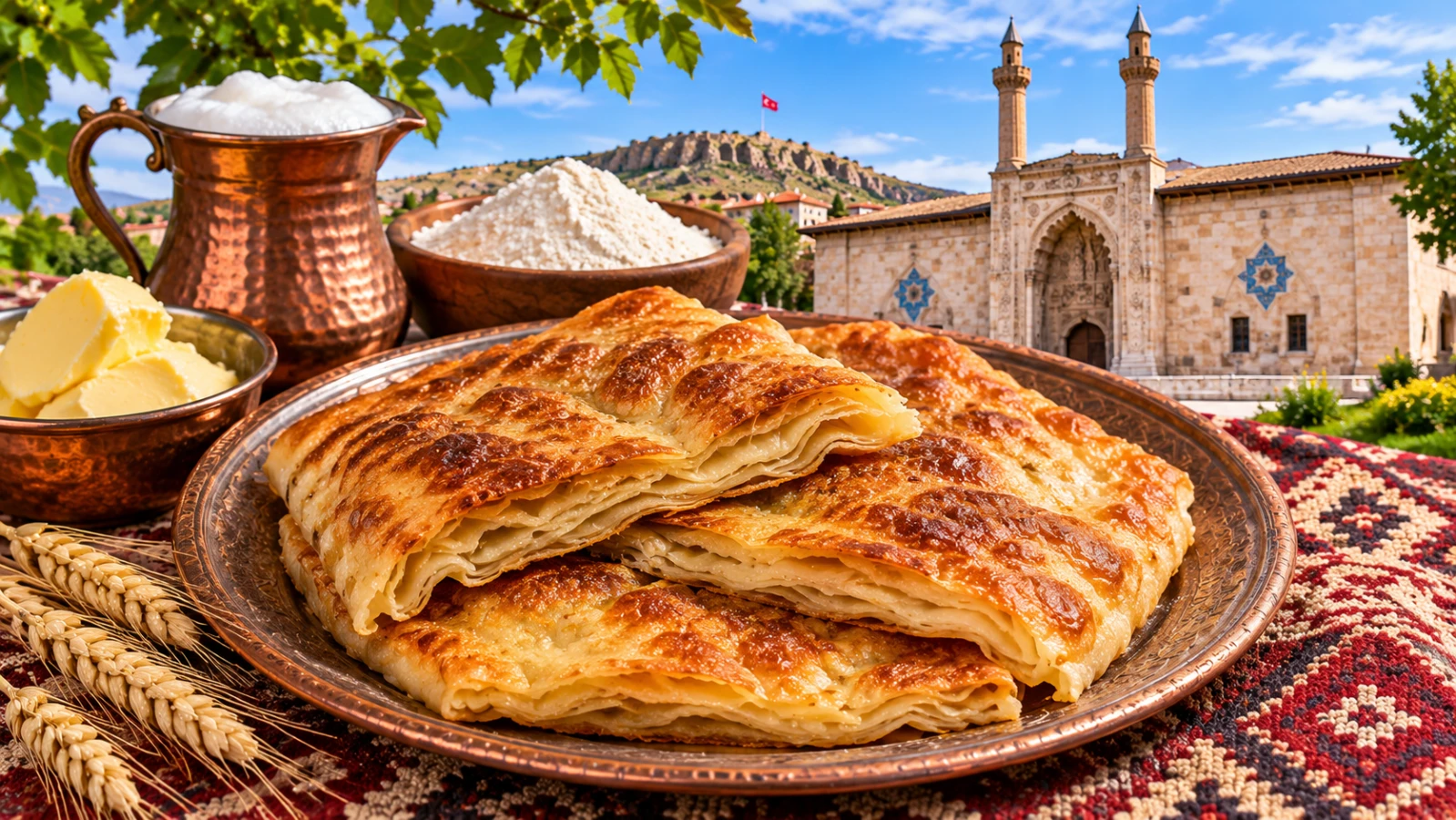
Sivas Katmeri is a savoury, butter-layered pastry associated with local ovens and breakfast tables. Its crisp surface and separated inner layers are created by repeated oiling, folding and shaping of dough.
Read Food Guide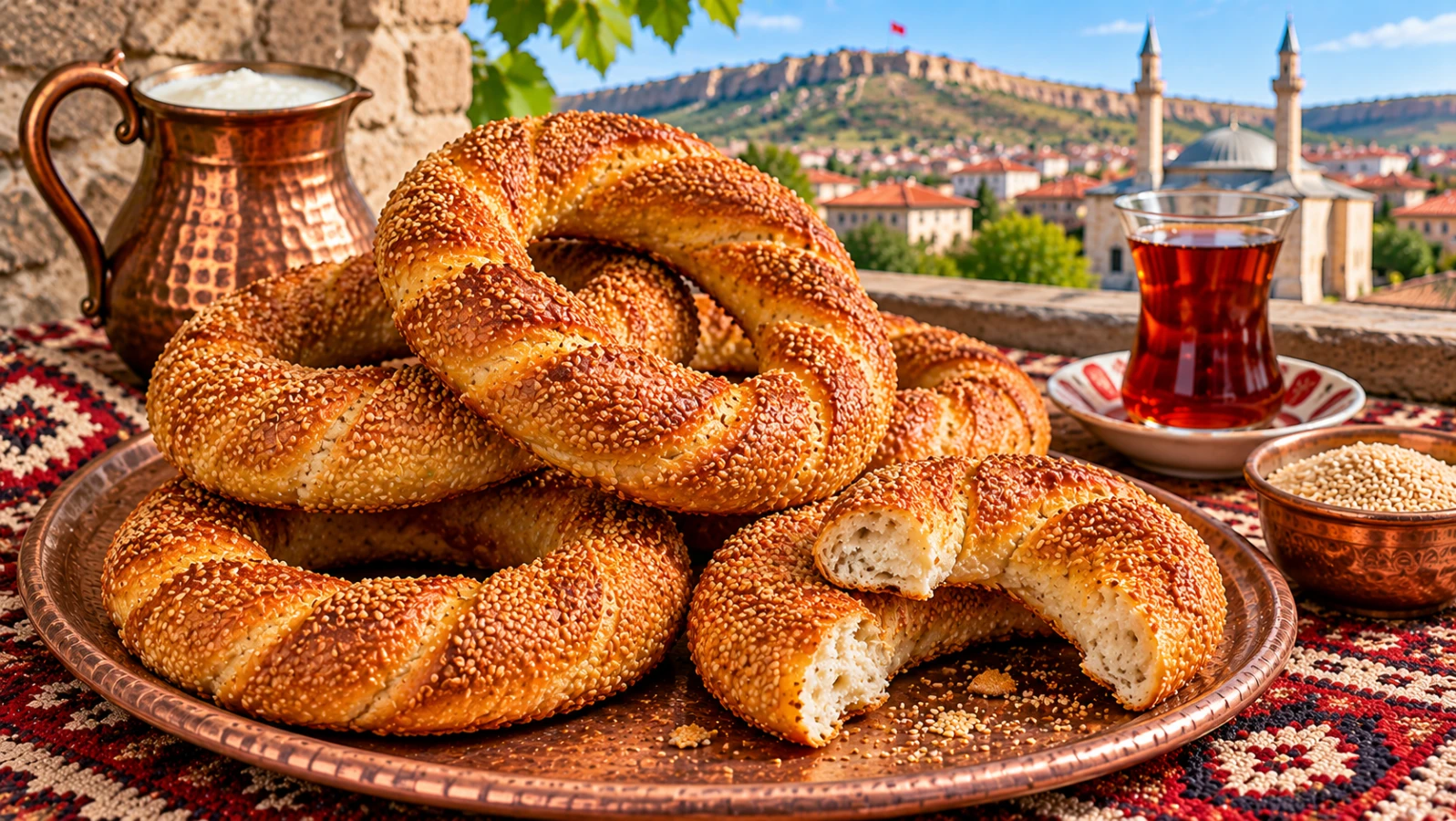
Kazan Simidi is a classic Sivas bakery ring: the shaped yeast dough is plunged into simmering mulberry-molasses water before being coated in sesame and baked in a stone oven.
Read Food Guide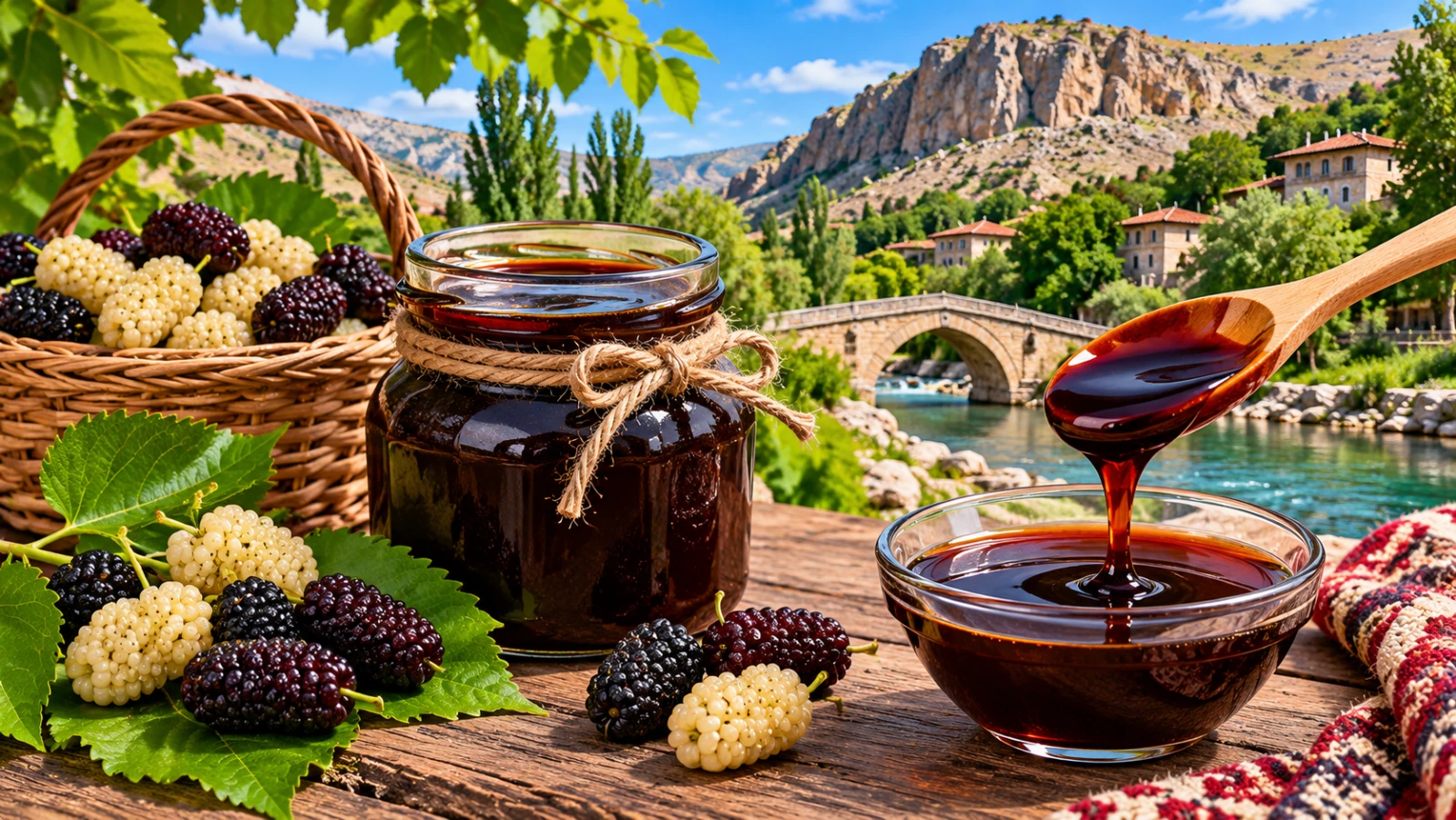
Gürün Dut Pekmezi is a concentrated mulberry preparation produced in the highland district of Gürün. Its flavour comes from ripe mulberries reduced into a dark, sweet syrup rather than from a flavoured sugar mixture.
Read Food Guide