
Private Sebaste Ancient City Programme
Tell us your group size and priorities. We will check local conditions before proposing a suitable route.
Request a Private Programme





Sebaste offers an unusually focused glimpse into the transition from Roman urban life to Byzantine Christianity in inland western Anatolia. The remains lie near Selçikler, a short distance from Sivaslı, and are associated with an ancient settlement established under Augustus.
The provincial tourism authority identifies the remains of two churches, conventionally described as the large and small churches, as the principal features. Sebaste is not a reconstructed classical city with a grand colonnaded avenue; careful interpretation of what survives is essential.
Examine the plan and surviving masonry from an approved viewpoint to understand the scale of the Byzantine community.
The second church allows comparison of ecclesiastical spaces within the same settlement.
Sebaste’s Roman origin gives the churches a much longer urban history than their visible remains alone suggest.
The relationship between the ancient site and today’s settlement is part of the story, not an inconvenience to ignore.
Useful orientation before planning a journey in Uşak.
Selçikler, Sivaslı district
History and Cultural Heritage
Official provincial information dates the foundation under the name Sebaste to around 20 BCE, during the reign of Augustus.
The archaeological area is integrated with the modern Selçikler landscape rather than separated into a large enclosed visitor park.
Plan a realistic stop and allow additional time for access and transport.
Confirm current opening, permissions, safety and road conditions.
Sebaste offers an unusually focused glimpse into the transition from Roman urban life to Byzantine Christianity in inland western Anatolia. The remains lie near Selçikler, a short distance from Sivaslı, and are associated with an ancient settlement established under Augustus.
The most rewarding way to understand this subject is to place its documented features in the wider Uşak story. Sebaste’s Roman origin gives the churches a much longer urban history than their visible remains alone suggest.
Official provincial information dates the foundation under the name Sebaste to around 20 BCE, during the reign of Augustus. The name itself reflects the imperial age; the town belonged to the network of settlements across Roman Asia Minor.
The settlement became an ecclesiastical centre in the Byzantine period, with the provincial account identifying a ninth-century episcopal role. The two church sites speak to that later phase more directly than the sparse remains of the earlier Roman town. Claims about precise phases should be checked against archaeological publications.
The archaeological area is integrated with the modern Selçikler landscape rather than separated into a large enclosed visitor park. Rural roads, present-day settlement and scattered ruins make it important to identify the legal visitor approach.
The surrounding area matters to the visitor experience: plan around local roads, terrain, land use and the difference between an accessible public viewpoint and a privately managed area.
Examine the plan and surviving masonry from an approved viewpoint to understand the scale of the Byzantine community.
This is best appreciated without touching protected material or entering restricted ground.
The second church allows comparison of ecclesiastical spaces within the same settlement.
This is best appreciated without touching protected material or entering restricted ground.
Sebaste’s Roman origin gives the churches a much longer urban history than their visible remains alone suggest.
This is best appreciated without touching protected material or entering restricted ground.
The relationship between the ancient site and today’s settlement is part of the story, not an inconvenience to ignore.
This is best appreciated without touching protected material or entering restricted ground.
For archaeological sites, the interpretation is strongest when visible masonry, documented history and modern land use are kept distinct.
The settlement became an ecclesiastical centre in the Byzantine period, with the provincial account identifying a ninth-century episcopal role. The two church sites speak to that later phase more directly than the sparse remains of the earlier Roman town. Claims about precise phases should be checked against archaeological publications.
Look for the relationship between documented phases and the surviving material. Not every visible fragment can be dated or assigned a function from appearance alone.
Examine the plan and surviving masonry from an approved viewpoint to understand the scale of the Byzantine community.
Four distinct details give this visit a useful structure. Which can be approached on the day depends on access, current operations and local conditions.
Examine the plan and surviving masonry from an approved viewpoint to understand the scale of the Byzantine community.
The second church allows comparison of ecclesiastical spaces within the same settlement.
Sebaste’s Roman origin gives the churches a much longer urban history than their visible remains alone suggest.
The relationship between the ancient site and today’s settlement is part of the story, not an inconvenience to ignore.
Do not enter active excavation or privately occupied parcels, move stones or climb walls. Confirm access arrangements and any museum supervision before departure.
Opening hours, entry charges, staff availability and permitted routes are not guaranteed by historical web descriptions. Verify these details before travelling, especially for smaller sites or rural stops.
Plan 45–90 minutes for a modest archaeological visit if access is permitted. Start by locating the church remains, then compare their orientation and building materials with the surrounding landscape.
Choose a small number of meaningful stops and leave enough time for local travel. If the intended area is closed, respect the restriction and use an alternative public viewpoint or nearby attraction.
Spring and autumn usually offer comfortable conditions for exposed ruins; in summer carry water and avoid midday heat.
Daylight, weather and local operating arrangements are more important than a fixed seasonal promise. Check forecasts and any current access notices.
Use wide views to establish the archaeological setting, then photograph architectural details only from permitted positions. Do not climb remains for a dramatic angle.
Drone operation may require aviation and local permissions. Never fly above sensitive heritage areas, crowds or protected environments without authorisation.
Uneven surfaces, rubble, slopes and the absence of formal paths can make archaeological visits difficult for visitors with reduced mobility. Confirm step-free alternatives before setting out.
For families with young children, plan regular breaks and keep everyone on permitted routes.
The site is described by the provincial authority as about 2 km southwest of Sivaslı near Selçikler. Confirm the final approach locally rather than following a map pin across private fields.
Use a current map and confirm the final approach with the local authority or operator. A straight-line distance does not describe winding roads, track quality or private-property restrictions.
These related guides help you create a realistic route around Uşak. Select combinations by actual travel time and the interests of your group.
Build a realistic regional route with a complementary Uşak destination.
Add historical context through a related museum, monument or archaeological landscape.
See a contrasting natural landscape, allowing for actual road conditions and seasonal access.
Add historical context through a related museum, monument or archaeological landscape.
Sebaste Ancient City is associated with Selçikler, Sivaslı district, within Uşak Province, Türkiye.
Examine the plan and surviving masonry from an approved viewpoint to understand the scale of the Byzantine community. The second church allows comparison of ecclesiastical spaces within the same settlement.
Official provincial information dates the foundation under the name Sebaste to around 20 BCE, during the reign of Augustus. The name itself reflects the imperial age; the town belonged to the network of settlements across Roman Asia Minor.
Highlights include large church remains, small church remains, augustan foundation.
Allow roughly 30–90 minutes for a permitted visit, depending on access, walking conditions and your interests.
The site is described by the provincial authority as about 2 km southwest of Sivaslı near Selçikler. Confirm the final approach locally rather than following a map pin across private fields.
No. Public access, staffing, prices, permissions and local conditions may change. Confirm the current situation with the responsible authority or operator shortly before travelling.
Consider Sivaslı District; Hacım Sultan Tomb; Evrenli Natural Park. Check actual road conditions and travel time rather than relying on straight-line distances.
Treat historic buildings, graves and archaeological remains as irreplaceable evidence. Do not remove fragments, cross fences, enter unstable spaces or disturb local residents.
Any site-specific rules issued by the responsible public authority or operator take precedence over this general guide.
Wow Cappadocia / Venere Travel can help plan a tailored route with licensed guiding and suitable transport, subject to availability and confirmed access. No compulsory shopping stops.
Share your interests, preferred pace and travel date for a practical itinerary.
Tell us your group size and priorities. We will check local conditions before proposing a suitable route.
Request a Private Programme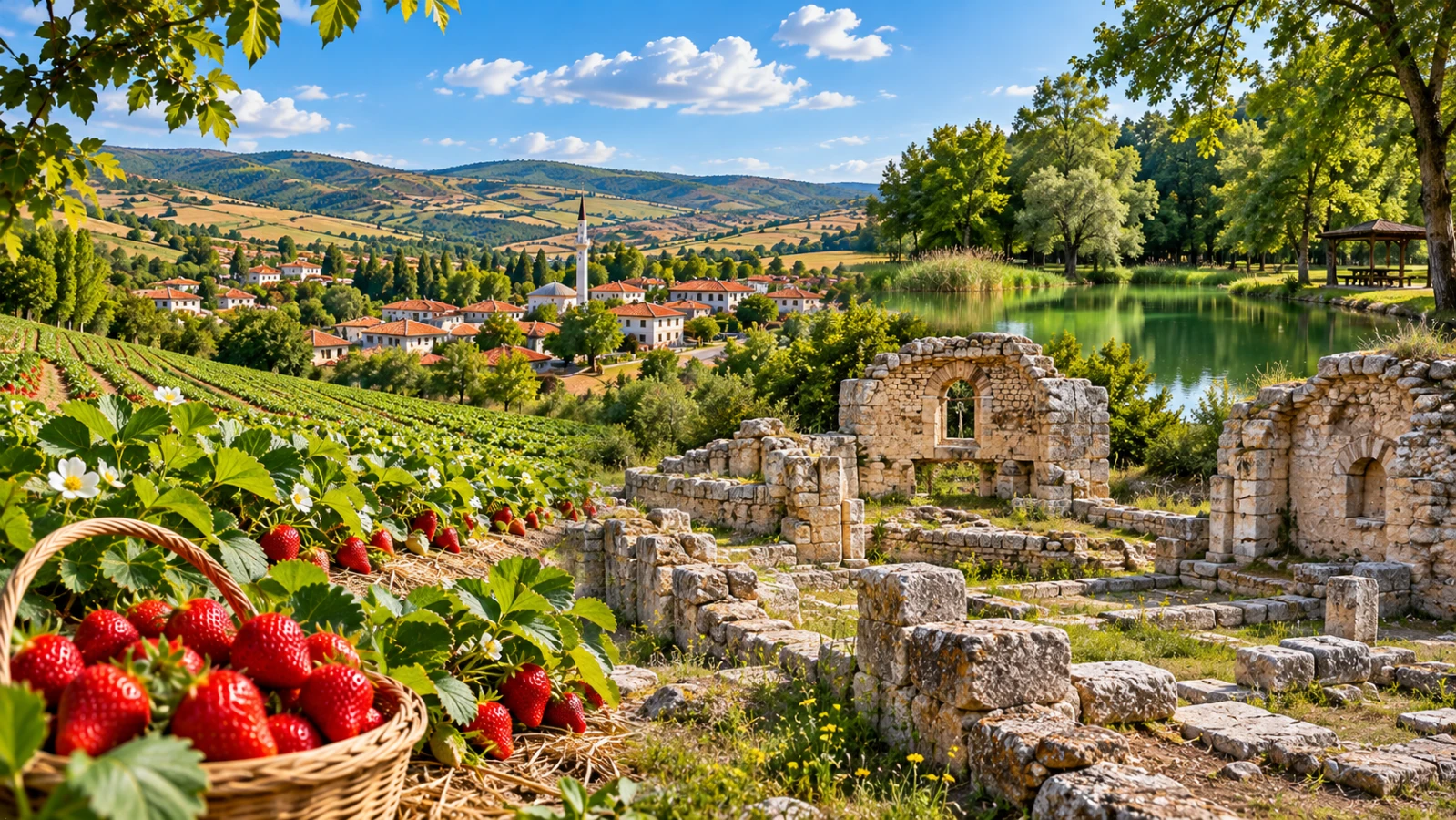
Continue with a related destination or cultural theme in Uşak Province.
Read the Nearby Guide