Private Christian Heritage İzmir Tour
Explore Saint Vukolos, Saint Polycarp and the wider Christian history of ancient and historic Smyrna with a route shaped around your interests.
Request a Private İzmir Tour





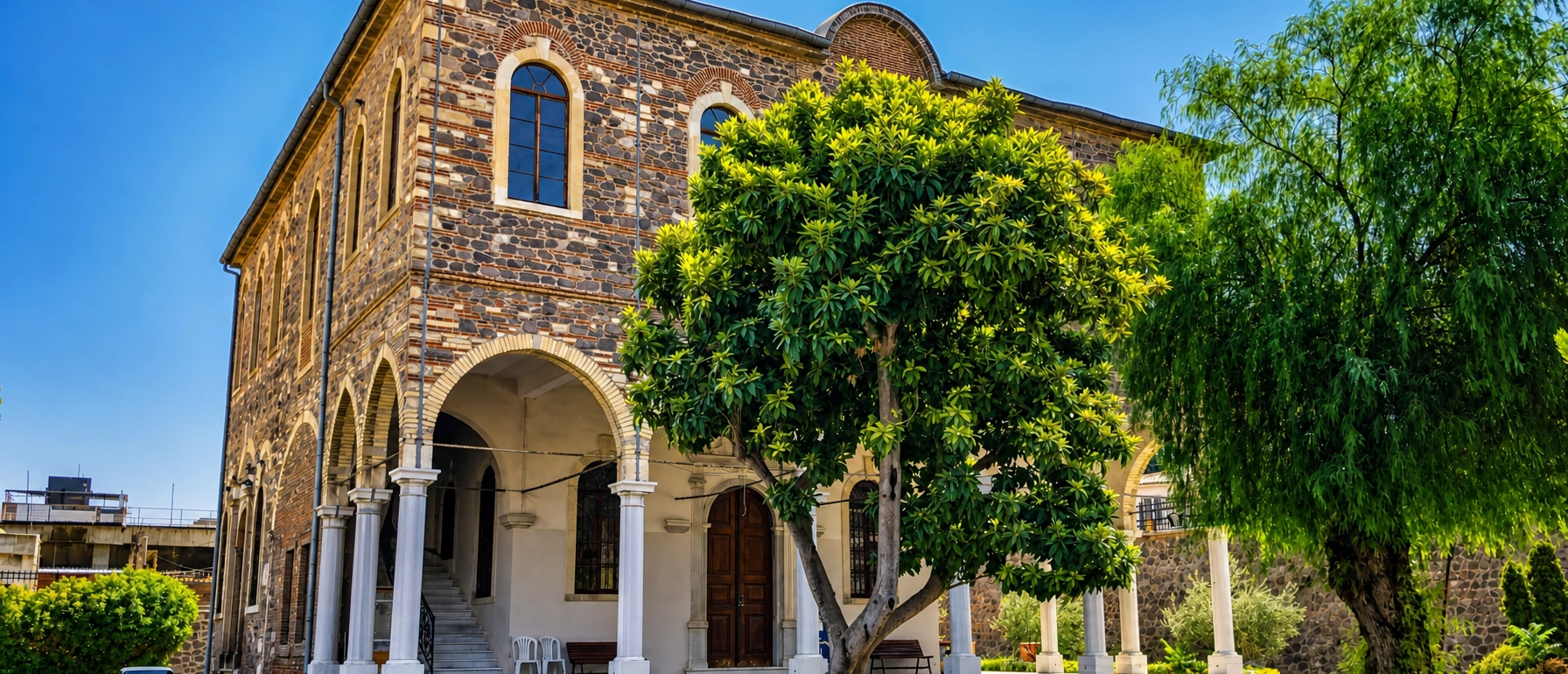
Hidden among the historic streets of Basmane stands one of the most fascinating surviving monuments of İzmir's multicultural past: Saint Vukolos Church, commonly known in Turkish as Ayavukla Church or Aya Vukla Kilisesi.
Built by İzmir's Greek Orthodox community in the late 19th century, the church was dedicated to Saint Vukolos — Saint Bucolus or Boukolos, traditionally remembered as the first bishop of ancient Smyrna and the predecessor of Saint Polycarp.
Its story, however, extends far beyond its original religious function. Saint Vukolos survived the devastating Great Fire of İzmir in 1922, later became the home of İzmir's first archaeological museum, passed through periods of storage and cultural use, suffered deterioration and fire damage, and was eventually restored by İzmir Metropolitan Municipality.
Today the restored building functions primarily as the Saint Vukolos Church Cultural Center, hosting concerts, exhibitions, performances and other cultural events. Its surviving architecture, recovered wall paintings and extraordinary sequence of uses make it one of the most layered historic buildings in central İzmir.
Discover one of the finest surviving Greek Orthodox religious buildings from late Ottoman İzmir.
Learn about Saint Vukolos, traditionally regarded as the first bishop of ancient Smyrna and predecessor of Saint Polycarp.
The church escaped the destruction that consumed many other Greek Orthodox buildings during the Great Fire of İzmir.
The building became the home of İzmir's first archaeological museum during the early years of the Turkish Republic.
Essential information about Ayavukla Church, its history, architecture and present-day cultural role in İzmir.
Saint Vukolos Church, also written Saint Voukolos, Saint Bucolus, Aya Vukla or Ayavukla Church.
Etiler neighbourhood in the historic Basmane area of Konak, central İzmir.
The İzmir Provincial Directorate of Culture and Tourism dates the church to 1886.
Originally a Greek Orthodox church serving the Christian community of late Ottoman Smyrna.
Traditionally remembered as the first bishop of Smyrna and predecessor of Saint Polycarp.
The church survived the Great Fire of İzmir that destroyed much of the surrounding historic city.
It became the home of İzmir's early archaeological museum, opened to visitors in 1927.
Restoration revealed images including Christ, Saint John Chrysostom and the Archangels Michael and Gabriel.
A masonry church with a single nave, apse, transept, narthex, gallery, vaulting and central dome.
Primarily used as a municipal cultural centre for concerts, exhibitions, performances and special events.
Allow around 30–60 minutes when the interior is accessible, longer when attending an exhibition or event.
Public access can depend on exhibitions and events, so confirm current arrangements before making a special journey.
Saint Vukolos Church is valuable not simply because it is an attractive historic church, but because several completely different chapters of İzmir's history survive within one building.
The first reason to visit is its connection with Greek Orthodox Smyrna. Before the profound demographic changes of the early 20th century, İzmir was a major Mediterranean port inhabited by Muslim, Greek Orthodox, Jewish, Armenian, Catholic, Levantine and other communities. Saint Vukolos is one of the surviving architectural witnesses to that multicultural city.
The second is its dedication. Saint Vukolos belongs to the earliest Christian tradition of Smyrna and is remembered as the bishop who preceded Saint Polycarp. This gives the site a symbolic connection with a Christian history extending far deeper than the 19th-century building itself.
The third is survival. Much of historic Smyrna disappeared through fire, redevelopment and social transformation. Saint Vukolos survived the 1922 fire, preserving an unusually important architectural link with the vanished neighbourhoods of pre-fire İzmir.
Finally, the building played an important role in the development of archaeology and museum culture in modern İzmir. Ancient sculptures, inscriptions, reliefs and architectural pieces were once displayed inside the former church and across its grounds.
Visitors researching the building may encounter several spellings. They generally refer to the same saint and the same historic church.
The most common English-language rendering used by many Turkish tourism and municipal sources.
A transliteration closer to the Greek form of the saint's name and widely encountered in international sources.
The traditional Latinised form often used in English-language Christian historical sources.
Another transliteration of the Greek name Βουκόλος.
A long-established Turkish form of the name used in official documents and local historical literature.
A combined spelling commonly used today when referring to the historic church and cultural centre.
The modern Turkish rendering, literally meaning Saint Vukolos.
An older local nickname encountered particularly in sources concerning the period when the building served as İzmir's archaeological museum.
The church was named for a figure associated with the earliest Christian traditions of ancient Smyrna.
In Orthodox Christian tradition, Saint Vukolos — Bucolus or Boukolos — is remembered as a disciple of Saint John the Apostle and Evangelist and as the first bishop of Smyrna.
Traditional accounts describe Vukolos as guiding the city's early Christian community during the late 1st and beginning of the 2nd century. Before his death, he is said to have entrusted the church of Smyrna to Saint Polycarp, who became one of the most celebrated bishops and martyrs of early Christianity.
Orthodox calendars commemorate Saint Vukolos on 6 February. Traditional accounts place his death around the beginning of the 2nd century.
The names Vukolos and Polycarp form an important pair in Christian traditions concerning ancient Smyrna.
Vukolos is remembered as the city's earlier bishop, while Polycarp became his successor and one of the best-known Christian figures associated with Roman-period Smyrna.
Polycarp's importance extends far beyond İzmir. He was remembered by later Christians as an Apostolic Father, and accounts of his martyrdom at Smyrna became among the most important early Christian martyr narratives.
For visitors interested in Christian heritage, Saint Vukolos Church can therefore be combined naturally with Saint Polycarp Church. The two buildings belong to much later historical periods, but their dedications connect modern İzmir with the memory of the city's earliest bishops.
Saint Vukolos Church was constructed by the Greek Orthodox community of İzmir during the second half of the 19th century in the historic Kapılar district, today within the Etiler neighbourhood near Basmane.
The İzmir Provincial Directorate of Culture and Tourism dates the church to 1886. Some other heritage publications give slightly earlier dates, illustrating that the published chronology of the building is not completely uniform.
The church continued to function as a Greek Orthodox place of worship until the dramatic events surrounding 1922. Remarkably, it survived the Great Fire of İzmir, even though many other churches and historic buildings within the city were destroyed.
After the departure of most of İzmir's Greek Orthodox population and the subsequent population exchange between Greece and Türkiye, the building no longer possessed the congregation for which it had been built.
Rather than disappearing, however, Saint Vukolos entered an entirely new phase. During the first years of the Republic it became associated with the collection and preservation of archaeological material from İzmir and western Anatolia.
The institution that developed there became İzmir's first archaeological museum. After the museum left the building, Saint Vukolos served various other functions before eventually falling into poor condition.
Major restoration work in the early 21st century saved the building and transformed it into the cultural venue visitors see today.
Most official heritage descriptions used for this guide identify 1886 as the principal construction date for Saint Vukolos Church.
Visitors researching the church may nevertheless encounter 1887 as the year the building was completed or opened, while one Visit İzmir historical route describes construction in 1866–1867.
Because the published heritage record is not completely consistent, it is safest to describe Saint Vukolos as a late-19th-century Greek Orthodox church while using 1886 as the principal date given by the İzmir Provincial Directorate of Culture and Tourism.
The location of Saint Vukolos is essential to understanding the building. It stands not in today's waterfront tourist centre but within Basmane, one of the most historically layered districts of central İzmir.
Basmane developed as a dense mixture of residential streets, religious buildings, workshops, commercial activity and transportation routes. Communities of different languages and religions lived within a relatively small urban area.
The opening of Basmane Railway Station in the 19th century strengthened the district's importance by connecting İzmir's port economy with the agricultural and commercial hinterland of western Anatolia.
Saint Vukolos belonged to this wider urban world. It was not an isolated monument but a neighbourhood church surrounded by the streets, houses and institutions of the community that worshipped there.
Walking through Basmane before or after visiting the church helps reveal a different side of İzmir from the open waterfront character of Kordon or Alsancak.
One of the defining events in the church's history occurred in September 1922, when a catastrophic fire swept through extensive sections of İzmir.
The disaster destroyed large areas of the historic city and many buildings connected with its Greek Orthodox, Armenian and Levantine communities.
Saint Vukolos Church survived.
Its survival is one reason the building is so historically valuable today. It preserves a physical connection with neighbourhoods and institutions that were profoundly altered or completely erased during the turbulent early 20th century.
The church therefore deserves to be understood not only as a religious monument but also as a rare architectural survivor from the urban landscape of late Ottoman Smyrna.
The next chapter in the building's life is one of its most surprising.
During the early years of the Turkish Republic, ancient objects recovered from İzmir and archaeological sites throughout the surrounding region required a safe place for collection, study and public display.
The abandoned Saint Vukolos Church became the centre of this effort. Archaeological material began to be assembled here during the early 1920s, and the institution was established in 1924.
After several years of collecting, organising and preparing the displays, the museum opened to visitors at Aya Vukla in 1927.
The church's nave, narthex and garden were adapted for museum functions. Sculptures, inscriptions, architectural fragments, reliefs and other archaeological material transformed the former religious complex into one of the foundations of modern museum culture in İzmir.
As archaeological collections expanded, the space became insufficient. In 1951, the main museum collection moved to facilities in Kültürpark. İzmir's present purpose-built Archaeology Museum at Bahribaba Park later opened in 1984.
Saint Vukolos combines a relatively restrained exterior with an interior plan designed around the spatial requirements of Orthodox Christian worship.
The principal worship space forms one broad nave rather than a multi-aisled basilica.
A transverse architectural element intersects the main interior axis and contributes to the church's cross-like spatial organisation.
The sanctuary end of the building terminates in an apse, one of the characteristic elements of historic Christian church architecture.
A dome rises above the central crossing and creates the principal vertical emphasis inside the church.
The entrance zone forms a transitional space before visitors enter the main nave.
An upper gallery historically associated with the women's section overlooks the main interior.
The masonry structure combines rubble stone and brick, with brick detailing used to articulate parts of the exterior.
Different forms of vaulting and the half-dome above the apse create a varied ceiling profile throughout the church.
Look beyond individual decorative details and notice how the architecture creates a progression from the entrance through the narthex and nave toward the sanctuary.
Stand near the entrance and look along the full interior axis to understand the proportions of the church.
Look upward at the central crossing where the dome gives the interior its strongest sense of height.
The curved sanctuary termination provides one of the clearest reminders of the building's original religious function.
The elevated gallery illustrates the organisation of worship within the historic Orthodox congregation.
Different roof forms create a changing rhythm as the eye moves through the interior.
Recovered painted figures reveal decorative layers that remained hidden beneath later coats of paint.
Examine the restored stone and brick construction rather than looking only at the decorative surfaces.
The historic interior now makes a particularly atmospheric setting for concerts and musical performances.
One of the most important discoveries made during restoration involved decorative paintings that had become concealed beneath later layers of paint.
Conservation work revealed religious imagery identified by official heritage sources as including a figure of Jesus Christ, Saint John Chrysostom and representations associated with the Archangels Michael and Gabriel.
Their rediscovery is particularly significant because the building passed through several non-religious functions after 1922. Every change of use created the possibility that original decorative material could be damaged, covered or permanently lost.
The surviving paintings therefore provide a rare visual link with the original Orthodox interior.
By the end of the 20th century, Saint Vukolos had suffered from decades of changing use, neglect and physical deterioration.
The building was officially registered as a protected cultural asset in 1975 and was allocated to İzmir Metropolitan Municipality in 2003.
Architectural documentation and restoration projects were developed between 2004 and 2007 with the involvement of the Architectural Restoration Department of İzmir Institute of Technology.
Physical restoration work began after the site was handed over in December 2008. The project addressed structural problems, damaged architectural elements and surviving interior decoration.
Rather than attempting to return the building to an exclusive historical function, the project gave Saint Vukolos a sustainable new role as a cultural and artistic venue.
This adaptive reuse is one of the reasons visitors can experience the church today as part of living İzmir rather than as a closed ruin.
Today the historic church is generally presented by İzmir Metropolitan Municipality and Visit İzmir as the Saint Vukolos Church Cultural Center.
The restored nave provides an atmospheric setting for concerts, exhibitions, performances, talks and cultural gatherings.
Its continuing event programme demonstrates that Saint Vukolos is not simply a monument preserved behind barriers. The building has once again become part of daily city life, although its function today is primarily cultural rather than that of a regular parish church.
Visitors should therefore check the current programme when planning a visit. An evening concert can offer a completely different experience from seeing the building during a daytime heritage visit.
The acoustics and architectural atmosphere make Saint Vukolos especially suitable for intimate musical performances.
The historic setting is periodically used for visual arts and cultural presentations.
The venue also hosts theatrical and multidisciplinary cultural events.
Municipal cultural programming can change seasonally, so checking the current calendar is worthwhile.
The restoration project also brought new life to the church's surrounding buildings.
An outbuilding within the complex was adapted as the İzmir Journalists Association Press Museum, which opened in 2012.
The museum presents aspects of İzmir's long newspaper and printing tradition, together with equipment and objects connected with Turkish journalism.
Its location beside Saint Vukolos creates an unusual heritage combination: the same complex tells stories of Orthodox Smyrna, early Republican archaeology, architectural conservation and modern Turkish press history.
If the Press Museum is part of your plans, verify its current opening arrangements separately rather than assuming that access follows exactly the same schedule as the church cultural centre.
Architecturally and historically, Saint Vukolos remains unmistakably a Greek Orthodox church building.
Its principal everyday public role, however, is now as a municipal cultural centre rather than a regular parish church with daily worship.
Religious ceremonies have occasionally returned to the historic building in the decades following restoration, reinforcing its continuing symbolic importance to people connected with İzmir's Greek Orthodox heritage.
Visitors should therefore avoid treating the building simply as an event hall. Its present cultural function exists alongside the memory and sacred character of its original purpose.
Yes, but visitors should understand that Saint Vukolos operates as a cultural and event venue rather than as a conventional archaeological site with one permanent sightseeing schedule.
Access can depend on exhibitions, municipal programming, concerts, rehearsals, private functions and conservation requirements.
If seeing the architecture and wall paintings is particularly important to you, check the current cultural programme or contact the venue shortly before your visit.
Enough for a brief architectural visit when the church interior is accessible.
Better for studying the architecture, paintings, museum history and church grounds without rushing.
Allow longer when combining the church with the Press Museum or an exhibition.
Combine Saint Vukolos with Basmane streets, Basmane Station and nearby historic buildings.
Continue through the Agora of Smyrna and Kemeraltı for a deeper exploration of historic İzmir.
A concert or cultural event provides one of the most atmospheric ways to experience the restored interior.
Saint Vukolos Church is located in the Etiler neighbourhood near Basmane, within walking distance of several important parts of central İzmir.
Basmane Metro Station is the most useful rapid-transit access point for most visitors.
Historic Basmane Railway Station lies nearby and makes the church easy to combine with exploration of the surrounding district.
Municipal bus services using the wider Gaziler Caddesi and Basmane area provide additional connections.
Ask for Aziz Vukolos Kilisesi, Ayavukla Kilisesi or the Etiler/Basmane location.
The church can be reached on foot from the historic market district, especially when combined with Smyrna Agora.
Walking is the best way to understand the relationship between Saint Vukolos and the wider Basmane historic quarter.
The official venue address is Etiler Mahallesi, 1281. Sokak 11 A, 35240 Konak / İzmir.
A good choice when combining the church with a walking exploration of Basmane and Smyrna Agora.
Works well as part of a route continuing toward Kemeraltı and central Konak.
Concerts can reveal the atmosphere and acoustics of the restored church in an entirely different way.
One of the most comfortable seasons for walking through Basmane and the historic centre.
Another excellent period for longer heritage routes through central İzmir.
Visit earlier in the day if you are planning extensive walking through Basmane, Agora and Kemeraltı.
Check whether an event, rehearsal or private programme affects ordinary access.
Municipal cultural programming can provide opportunities to experience the church while attending a live performance.
Step back far enough to capture the complete composition rather than concentrating only on the entrance.
Architectural details in the masonry provide strong close-up photographs.
A central viewpoint can emphasise the symmetry and length of the interior.
Look upward from the crossing to capture one of the most dramatic architectural elements.
The relationship between the upper gallery and the main nave helps explain the original spatial organisation.
When photography is permitted, the restored religious images are among the most historically significant interior details.
Use the surrounding complex to show the church in its wider architectural setting.
Photography rules may be different during concerts, exhibitions, ceremonies or private functions.
Always follow instructions given by venue staff, particularly during performances or religious ceremonies.
This route brings together Christian heritage, archaeology, Ottoman urban history and modern İzmir without requiring long-distance transportation between sites.
One of İzmir's major historic transport landmarks and an essential part of understanding the development of the district.
Explore old streets, houses, religious buildings and the dense urban fabric surrounding Saint Vukolos.
The Roman civic centre of ancient Smyrna lies nearby and creates one of the strongest historical combinations with the church.
Continue through İzmir's extraordinary historic commercial district of markets, mosques, hans and hidden heritage sites.
Connect Saint Vukolos with another church whose dedication preserves the memory of an early bishop of Smyrna.
Climb above the old city to understand the geography of ancient and historic Smyrna.
Continue toward İzmir Clock Tower and the waterfront civic centre.
Finish the day beside İzmir Bay and contrast Basmane's dense historical fabric with the city's open waterfront.
Follow the memory of two of the earliest bishops traditionally associated with ancient Smyrna.
Move between late Ottoman Christian heritage and the Roman city of Smyrna within the same central district.
The best combination for understanding the church as part of a real historic neighbourhood rather than an isolated monument.
Combine religious history with İzmir's historic Ottoman commercial landscape.
Connect Saint Vukolos and Saint Polycarp with other surviving churches and sites associated with Christian Smyrna.
Combine churches, synagogues, mosques and Ottoman hans for a broader interpretation of the city's diverse past.
Explore Saint Vukolos' museum history before visiting Smyrna Agora and İzmir Archaeology Museum.
Walk from the dense historic inner city toward the modern waterfront to experience contrasting faces of İzmir.
Because the church operates as a cultural venue, ordinary sightseeing access may vary with the event programme.
A concert or exhibition can be one of the most memorable ways to experience the historic interior.
Saint Vukolos is best combined with a walking route through Basmane, Smyrna Agora and Kemeraltı.
The dome, vaulting, gallery and upper architectural elements are essential parts of the interior.
The surviving wall paintings are among the most important results of the restoration project.
Imagine the nave and garden filled with archaeological sculptures and ancient architectural fragments during the museum period.
Do not arrive by taxi, photograph the church and immediately leave. The surrounding district adds essential historical context.
Although now primarily a cultural venue, Saint Vukolos remains a historic sacred building with religious meaning for many visitors.
Saint Vukolos Church is a historic Greek Orthodox church in the Basmane area of İzmir that today functions primarily as a municipal cultural centre.
Yes. Saint Vukolos, Aya Vukla and Ayavukla are different forms commonly used for the same historic church.
It is in Etiler neighbourhood near Basmane in the Konak district of central İzmir.
The commonly listed venue address is Etiler Mahallesi, 1281. Sokak 11 A, 35240 Konak, İzmir.
The İzmir Provincial Directorate of Culture and Tourism dates the church to 1886, although alternative dates appear in some published sources.
It was built for İzmir's Greek Orthodox community during the late Ottoman period.
In Orthodox tradition, Saint Vukolos or Bucolus was a disciple of Saint John and the first bishop of ancient Smyrna.
Yes. Christian tradition remembers Saint Polycarp as Vukolos' successor as bishop of Smyrna.
His feast day is traditionally observed on February 6 in the Orthodox calendar.
Yes. The church survived the Great Fire of İzmir despite the destruction of many buildings in the historic city.
It makes Saint Vukolos one of the important surviving architectural witnesses to the Greek Orthodox and multicultural landscape of pre-1922 Smyrna.
Yes. The former church became the home of İzmir's early archaeological museum during the first years of the Turkish Republic.
The museum institution was established in 1924 and the museum at Aya Vukla opened to visitors in 1927.
Archaeological sculptures, inscriptions, reliefs, architectural pieces and other ancient objects from İzmir and surrounding sites were displayed in the building and garden.
The expanding archaeological collection moved to museum facilities in Kültürpark in 1951.
It passed through several functions including storage and use connected with İzmir State Opera and Ballet before later restoration.
The building was officially registered as a protected cultural asset in 1975.
Major restoration planning developed during the 2000s and physical restoration work began in 2008.
The restoration was carried out under İzmir Metropolitan Municipality, with architectural restoration work and documentation involving İzmir Institute of Technology.
Official heritage sources identify restored imagery including Christ, Saint John Chrysostom and the Archangels Michael and Gabriel.
It has a single nave, apse and transept, together with a narthex, gallery, dome and different forms of vaulting.
The historic masonry combines stone and brick construction.
Its principal public function today is as a municipal cultural centre rather than a regular parish church.
Religious ceremonies have occasionally taken place in the restored historic church, but visitors should not assume that regular services are held.
The cultural centre hosts concerts, exhibitions, performances, meetings and other cultural programmes.
Access is possible at various times, but because the building functions as an event venue it is wise to confirm current arrangements before visiting specifically for the interior.
Admission conditions depend on the event or programme, so there is not one universal visitor ticket applicable to every occasion.
Allow approximately 30–60 minutes for the church itself when accessible, or longer when attending an exhibition, concert or visiting related facilities.
It is a museum devoted to İzmir's journalism and printing history, established in an outbuilding of the Saint Vukolos complex.
Yes. The church lies within the wider Basmane district and can easily be combined with the historic railway station.
Yes. The Agora is close enough to make the two sites a very practical historic walking combination.
Yes. Basmane, Saint Vukolos, Smyrna Agora and Kemeraltı make an excellent central İzmir heritage route.
Yes, particularly if you are interested in early Christian Smyrna. The dedications of the two churches preserve the memory of two important bishops associated with the ancient city.
Basmane Metro Station provides one of the easiest public-transport approaches, after which the historic district is best explored on foot.
Photography conditions can depend on exhibitions, concerts, religious ceremonies and other events. Follow instructions given by venue staff.
Few buildings in İzmir combine late Ottoman Greek Orthodox heritage, survival of the 1922 fire, early Republican museum history, architectural conservation and contemporary cultural life so clearly in one place.
Saint Vukolos Church can form part of a deeper private exploration of historic İzmir, connecting Basmane, ancient Smyrna, Saint Polycarp, Kemeraltı and the multicultural heritage of the city.
Tell us whether your priority is early Christianity, Greek Orthodox heritage, ancient Smyrna, architecture, archaeology, Ottoman history, photography or İzmir's multicultural past, and we can shape a private route around your interests.
Explore Saint Vukolos, Saint Polycarp and the wider Christian history of ancient and historic Smyrna with a route shaped around your interests.
Request a Private İzmir Tour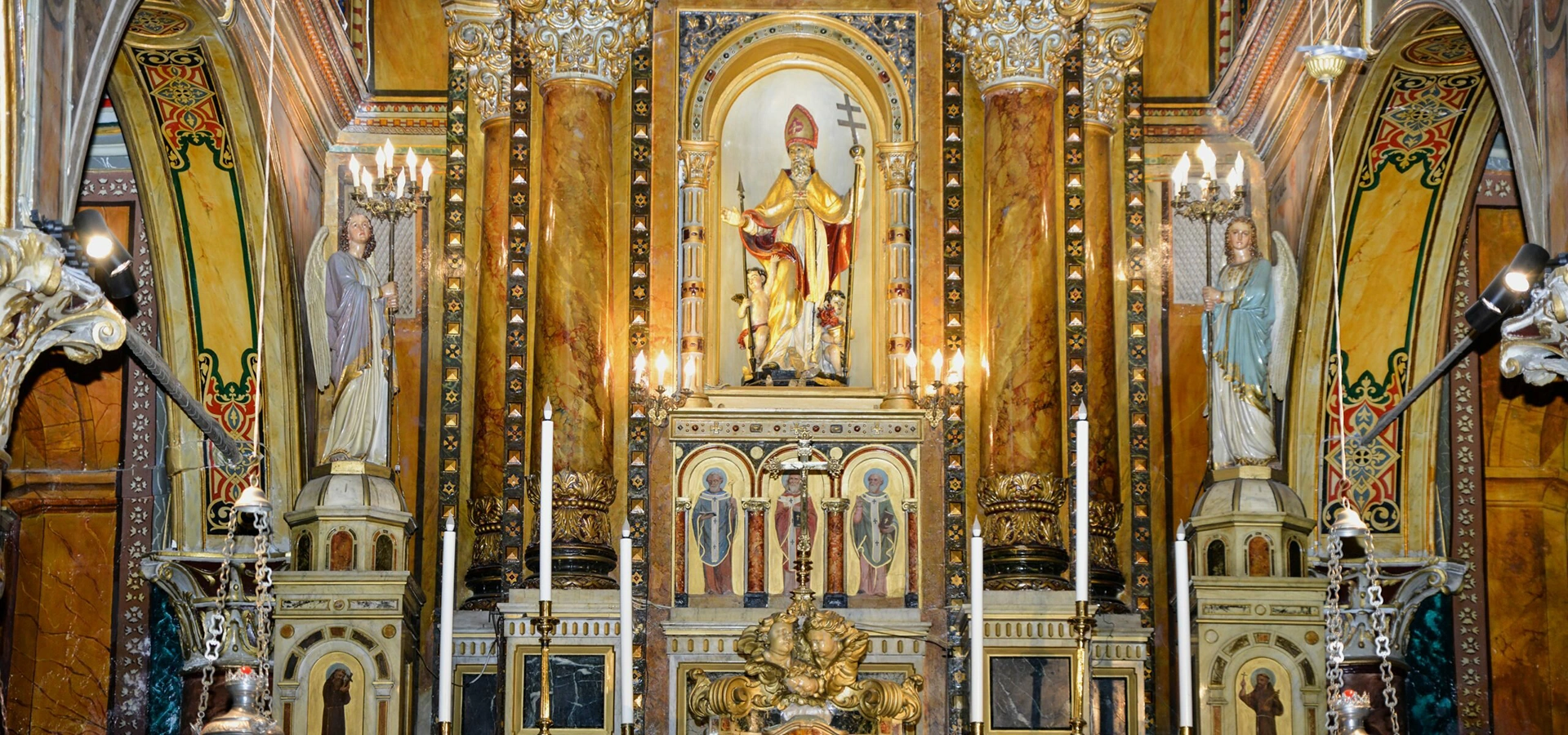
Continue the story of early Christian Smyrna through the church dedicated to Saint Polycarp, traditionally remembered as the successor of Saint Vukolos.
Explore Saint Polycarp Church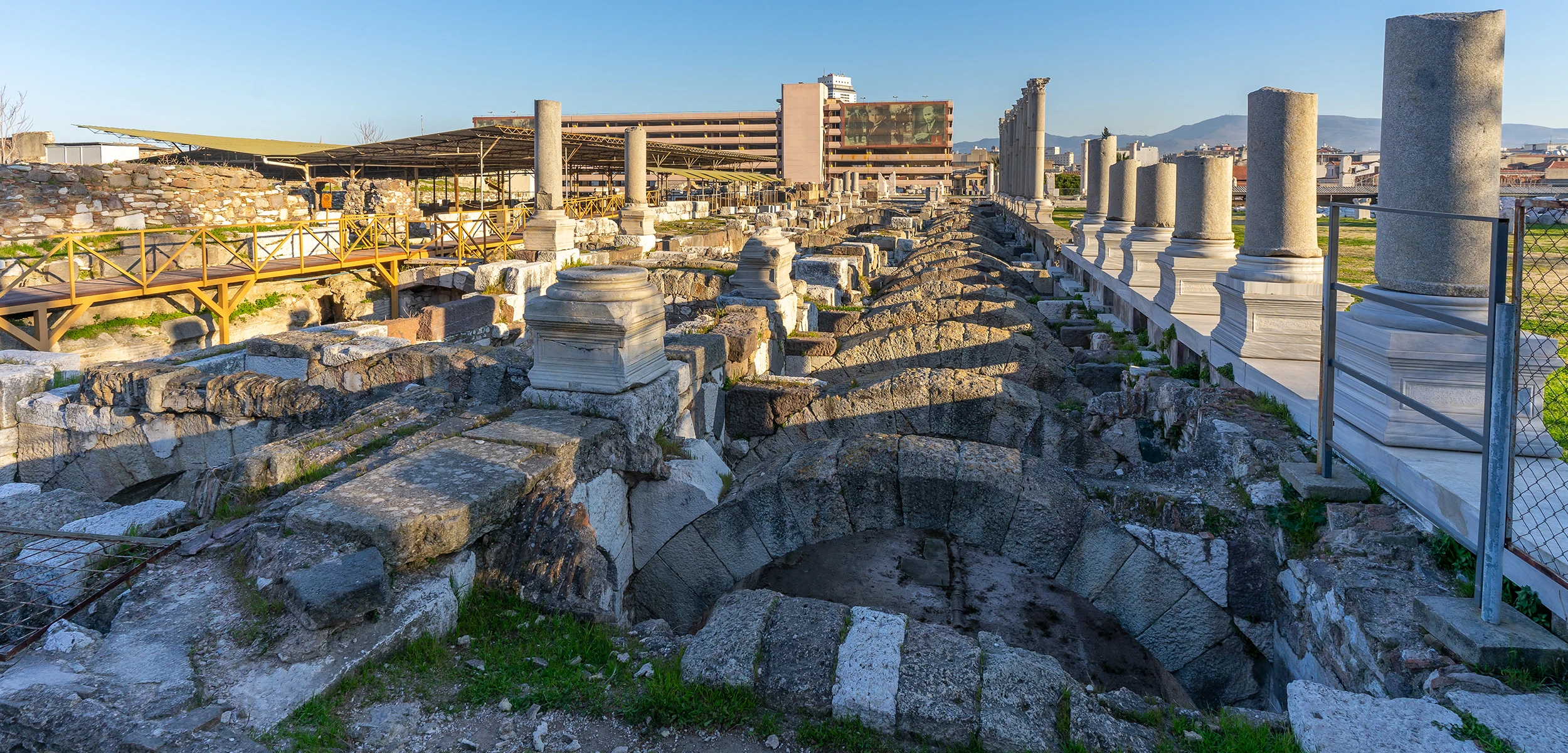
Combine the church with the Agora of Smyrna to connect early Christian memory and late Ottoman heritage with the surviving archaeology of the Roman city.
Explore Ancient Smyrna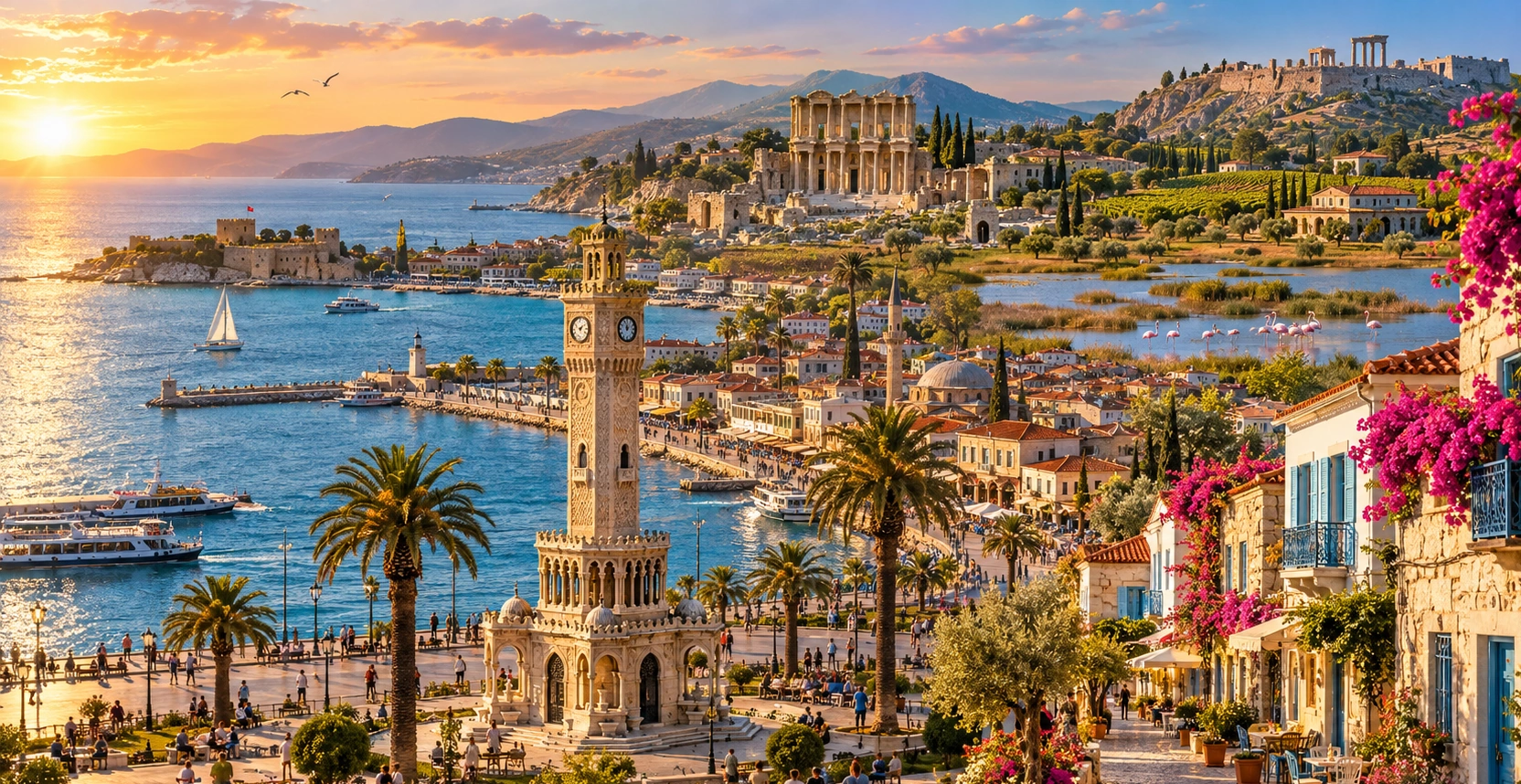
Continue with our complete İzmir guide for ancient sites, churches, Ottoman heritage, historic neighbourhoods, museums, local cuisine and day trips.
View İzmir Guide