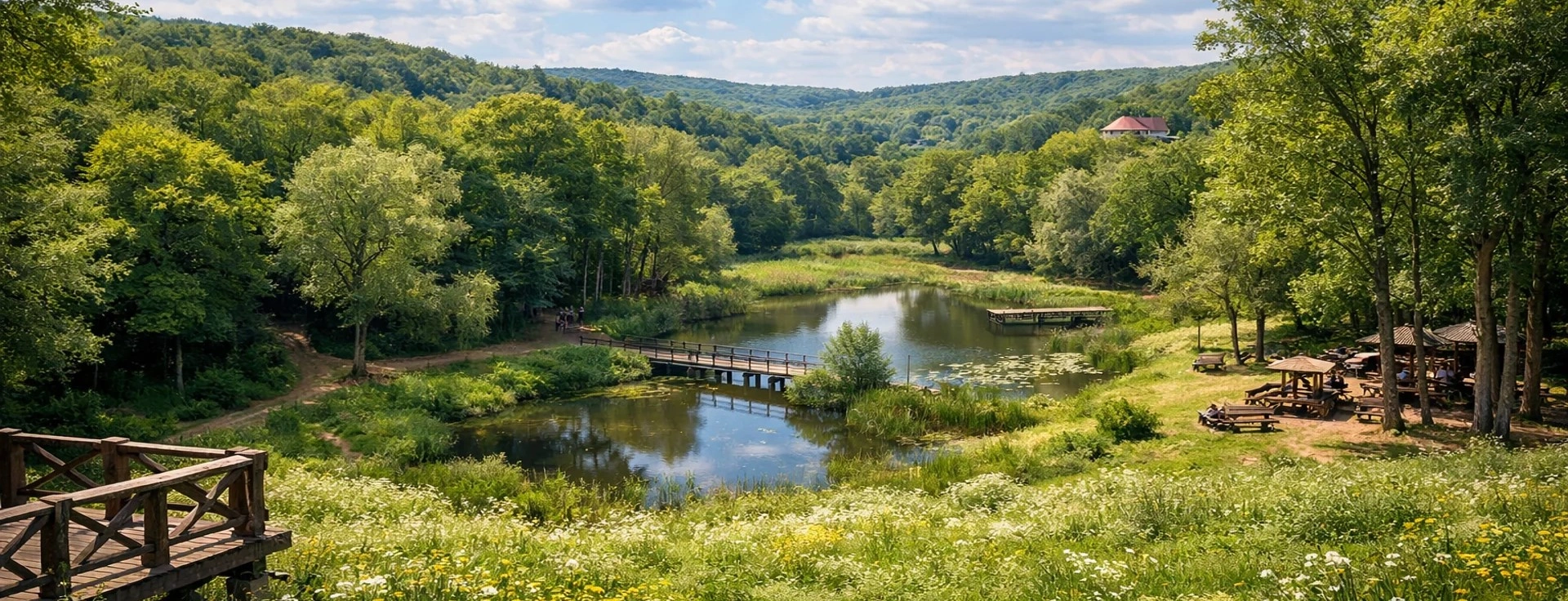
Private Polonezköy Heritage & Nature Tour
Explore the extraordinary history of Istanbul's Polish village together with its church, traditional heritage, countryside atmosphere and Polonezköy Nature Park.
Request a Custom Polonezköy Tour





Drive away from the Bosphorus, climb through the green countryside of Beykoz, and Istanbul begins to change.
Apartment blocks disappear.
Traffic becomes quieter.
Dense woodland surrounds the road.
Then, almost unexpectedly, you arrive in a village with a story unlike anywhere else in Turkey.
This is Polonezköy.
Its history began in 1842, when a settlement known as Adampol was established under the initiative of Polish statesman and exile leader Prince Adam Jerzy Czartoryski.
Poland had disappeared from the political map of Europe following the partitions of the late 18th century, and waves of Polish political refugees were scattered across the continent after unsuccessful uprisings against foreign rule.
The Ottoman Empire became one of the places where some of these refugees found protection.
Out of that extraordinary historical relationship emerged a small Polish community in the countryside outside Constantinople.
More than 180 years later, the village still survives.
Its Polish heritage remains visible through family histories, names, traditions, the Częstochowa Virgin Mary Church, old houses and the remarkable Zofia Ryży Memorial House.
Yet Polonezköy is equally famous for something completely different.
Nature.
The village lies within one of the greenest parts of Istanbul and is surrounded by the enormous Polonezköy Nature Park, a protected landscape of forests, walking routes, wildlife habitat and countryside recreation.
For Istanbul residents, the village has consequently become synonymous with weekend breakfasts, forest walks, cycling, gardens, countryside restaurants, family outings and peaceful escapes from the city.
For international visitors, however, Polonezköy offers something even more unusual:
a chance to encounter a living piece of Polish history in the forests of Asian Istanbul.
Discover the extraordinary story of Adampol, founded in 1842 as a settlement connected with Polish political exiles and the independence movement.
Walk through one of Istanbul's largest protected natural landscapes, filled with woodland, wildlife habitat and peaceful countryside trails.
Visit the church, traditional houses and memorial sites that preserve the cultural identity of generations of Polish residents.
Combine history with a long breakfast, forest walk, photography and a relaxed day far from central Istanbul's crowds.
Essential information about Polonezköy's history, Polish heritage, nature park, location, walking opportunities, cultural landmarks and recommended visit length.
In the forested countryside of Beykoz on Istanbul's Asian side.
Established in 1842 under the initiative of Polish statesman Prince Adam Jerzy Czartoryski.
The settlement was historically known as Adampol, meaning approximately “Adam's Village.”
The official name Polonezköy — literally “Polish Village” — was adopted in the Republican period.
Polonezköy Nature Park was declared in 1994 and covers roughly 2,931 hectares.
Forest walking, countryside relaxation, nature photography and exploring the historic village.
Częstochowa Virgin Mary Church remains one of the strongest symbols of the village's Polish Catholic heritage.
Zofia Ryży Memorial House preserves photographs, household objects and memories associated with old Polonezköy.
The village is historically associated with the Polonezköy Cherry Festival celebrating Turkish–Polish friendship.
Allow half a day for village highlights or a full day when combining history, breakfast and forest walking.
A private car or transfer offers the greatest flexibility for reaching the village and exploring surrounding Beykoz.
History, nature, Polish heritage, walking, couples, families, photography and relaxed Istanbul day trips.
Polonezköy is special because its identity cannot be explained through nature or history alone.
It is both.
From a historical perspective, the village represents an extraordinary chapter in the relationship between the Ottoman Empire and the Polish independence movement.
Poland had been divided between neighboring powers and removed from the political map of Europe.
Polish political leaders and soldiers consequently formed exile communities across Europe and the Ottoman world.
Polonezköy emerged from that wider story.
The settlement offered Polish émigrés a place where they could create homes, cultivate land and preserve elements of their language, religion and cultural identity.
Generations passed.
Empires disappeared.
Modern Turkey and an independent Poland emerged.
Yet the village remained.
That continuity is what makes Polonezköy far more significant than an ordinary countryside settlement.
It became a living symbol of Turkish–Polish friendship.
At the same time, the surrounding forest landscape became increasingly important to Istanbul residents seeking fresh air and nature.
Today visitors can walk through protected woodland in the morning and then stand beside a Polish Catholic church whose history reaches back to the earliest decades of the community.
Few destinations within Istanbul offer such an unusual combination.
To understand Polonezköy, it is necessary to begin far beyond Istanbul.
During the late 18th century, the Polish–Lithuanian Commonwealth was divided between neighboring powers in a series of partitions.
By 1795, an independent Polish state had disappeared from the map of Europe.
Polish resistance continued through uprisings, political organizations, military movements and communities in exile.
One of the most important moments came with the November Uprising of 1830–1831 against Russian rule.
Following its defeat, thousands of Polish political activists, intellectuals and soldiers left their homeland in what became known as the Great Emigration.
Among the most influential leaders of the Polish émigré movement was Prince Adam Jerzy Czartoryski.
His political network worked internationally to preserve the idea of Polish independence.
The Ottoman Empire occupied an important place within these plans because Ottoman authorities had their own complicated political relationship with Russia and had long interacted with Polish diplomatic and military networks.
In this environment, a Polish settlement was established near Constantinople in 1842.
It became known as Adampol in honor of Prince Adam Czartoryski.
Over time, Polish settlers built houses, cultivated fields, established religious institutions and developed a distinctive village community within Ottoman territory.
For generations, the settlement was widely known by its Polish name: Adampol.
The name honored Adam Jerzy Czartoryski and reflected the village's close connection with the Polish exile movement.
Life here was very different from political meetings in European capitals.
Adampol was fundamentally a rural settlement.
Families worked the land.
Gardens and orchards surrounded houses.
Livestock, agriculture and woodland resources formed part of everyday life.
Religion remained central to the community.
Polish customs were preserved inside families.
The village's isolation within the forests of Beykoz also helped maintain a distinctive identity.
Visitors arriving today should therefore imagine something very different from modern Istanbul.
For most of the 19th century, the journey between Constantinople and Adampol passed through largely rural countryside.
What today feels like an unusual green suburb was once genuinely remote.
The settlement eventually became officially known as Polonezköy.
The Turkish name can be understood simply as “Polish Village.”
Official nature-park sources record that the name was changed to Polonezköy in 1938.
The new name nevertheless preserved the most important feature of the settlement's identity.
Its Polish origin remained visible.
Even today, both names appear in discussions of local history.
Adampol evokes the original 19th-century settlement and Polish historical memory.
Polonezköy describes the modern Istanbul village that grew from it.
Polonezköy has acquired an importance extending far beyond its population or geographic size.
The village is regularly presented as one of the strongest cultural symbols of the long relationship between Turkey and Poland.
Its story connects political exile, hospitality, religion, migration and community survival.
Polish diplomats, cultural organizations, academics and visitors continue to participate in activities connected with the village.
Turkish institutions have likewise supported events and projects designed to preserve its heritage.
This shared identity is especially visible during cultural celebrations, exhibitions, commemorations and the traditional Cherry Festival.
For Polish visitors to Istanbul, Polonezköy can therefore have a significance quite different from an ordinary nature excursion.
It is a place where national history survives unexpectedly on the Asian side of Istanbul.
One of the most important historical landmarks in Polonezköy is the village's Catholic church dedicated to Our Lady of Częstochowa.
The church represents the religious continuity of the Polish community that developed here during the 19th century.
For the original settlers, faith was closely connected with cultural identity.
A church was therefore not simply a place of worship.
It was a center of community life.
Beykoz historical records trace the village church tradition back to the earliest years of the settlement.
The church and its garden continue to provide one of the clearest reminders that Polonezköy developed as a genuine Polish Catholic community inside the Ottoman Empire.
The church preserves the Catholic tradition brought to the village by Polish settlers.
The dedication connects the village with one of the most powerful Marian traditions in Polish religious culture.
The church historically served as an important focus for religious and social gatherings.
Its grounds have also hosted ceremonies and cultural activities associated with Turkish–Polish friendship.
Monumental architecture tells only part of Polonezköy's history.
To understand how families actually lived, one of the most valuable places in the village is the Zofia Ryży Memorial House, commonly associated locally with the memory of “Zosia Teyze.”
The traditional house preserves a much more intimate side of the village story.
Family photographs, documents, furnishings and personal objects help visitors imagine generations of everyday life inside the Polish community.
This is particularly important because Polonezköy's history did not unfold in palaces or monumental government buildings.
It survived through households.
Families preserved stories.
Recipes continued from one generation to another.
Languages were spoken around tables.
Religious traditions were maintained inside homes as well as churches.
The memorial house consequently transforms the history of Adampol from an abstract political story into something personal.
Polonezköy should be explored slowly.
Some of its most interesting details are not monumental attractions at all.
They are houses, gardens, gates, trees and quiet village streets.
Traditional buildings reflect the rural character that once defined Adampol.
Wooden architectural details, pitched roofs, garden plots and low-rise village forms create a landscape fundamentally different from urban Istanbul.
Many buildings have naturally been rebuilt, renovated or adapted over time.
Polonezköy is a living settlement rather than an open-air museum.
Nevertheless, the scale and greenery of the village still provide valuable clues to its older appearance.
The forest surrounding the village became officially protected as Polonezköy Nature Park in 1994.
Covering approximately 2,931 hectares, it is among the most extensive protected nature-park landscapes in Istanbul.
The designation helped establish Polonezköy's modern identity as one of the city's great countryside escapes.
Here the experience is completely different from Sultanahmet, Beyoğlu or the Bosphorus waterfront.
Visitors come for trees rather than monuments.
Birdsong replaces traffic noise.
Paths disappear beneath forest canopies.
Seasonal changes become part of the attraction.
Follow established routes through dense woodland and enjoy one of Istanbul's easiest escapes into nature.
Designated recreation areas make Polonezköy particularly popular with families and weekend visitors.
The wider protected landscape supports mammals, woodland birds and other wildlife rarely associated with metropolitan Istanbul.
Forest and rural roads make the area attractive to cyclists, subject to local route and access conditions.
Forest light, morning mist, autumn color and rural scenery create excellent photographic opportunities.
The character of the park changes dramatically between spring greenery, summer shade, autumn color and quiet winter woodland.
Walking is one of the best ways to experience Polonezköy.
The village sits within a landscape of mature woodland where established recreational routes allow visitors to leave roads and restaurants behind.
Depending on the route, the scenery can include dense tree cover, small bridges, forest clearings and gently changing terrain.
The experience is generally much more relaxed than serious mountain trekking.
Nevertheless, natural surfaces can become muddy, slippery or uneven after rainfall.
Arrive early for quieter trails, cooler temperatures and better chances of enjoying the forest before weekend crowds increase.
Expect mud and slippery leaves, particularly on shaded sections of woodland path.
Dense tree cover provides welcome shade, although humidity can remain high.
One of the finest periods for walking as woodland colors change dramatically.
Choose shorter established routes when walking with younger children.
Comfortable closed walking shoes are much better than sandals, especially outside dry summer weather.
One of Polonezköy's great surprises is the diversity of wildlife recorded in the surrounding forest landscape.
Official tourism sources list species including red deer, roe deer, wild boar, jackals, squirrels, martens and weasels within the wider natural environment.
Birdlife is equally important.
Woodland and open habitats support many species ranging from common songbirds to birds of prey.
A bird observation facility within the broader protected area also reflects the ecological importance of the region.
Most casual visitors should not expect guaranteed wildlife encounters.
Wild animals naturally avoid heavily visited sections of the park.
The pleasure comes from knowing that one of Europe's largest urban regions still contains functioning forest habitats capable of supporting this biodiversity.
Move calmly and reduce noise if you hope to observe birds or other wildlife.
Wildlife activity is generally more noticeable when trails are quieter.
Feeding wild animals changes natural behavior and can create dangerous interactions.
Never approach deer, wild boar or other mammals for photographs.
Polonezköy center is compact enough to explore comfortably on foot.
The appeal lies less in a single monumental attraction than in the complete environment.
Gardens surround houses.
Trees rise behind village streets.
Small restaurants and cafés appear between residential buildings.
The church recalls the Polish foundations of the settlement.
Historic houses preserve fragments of family memory.
Walk slowly and the village begins to feel less like an Istanbul attraction and more like a rural community that has gradually been absorbed into the modern boundaries of a giant metropolis.
For many Istanbul residents, the words “Polonezköy” and “breakfast” are almost inseparable.
Countryside restaurants surrounded by gardens and trees have made the village one of the city's classic destinations for a long weekend breakfast.
Rather than eating quickly before sightseeing, visitors often make breakfast part of the day itself.
Tea continues to arrive.
Bread, cheeses, olives, eggs, pastries, jams, honey and seasonal products fill the table.
Children play outside.
The forest remains only minutes away.
Popular establishments can become extremely busy during sunny weekends.
Outdoor tables are one of the great pleasures of Polonezköy during comfortable weather.
A countryside breakfast is intended to be leisurely rather than rushed.
Seasonal preserves, honey, fruit products and homemade specialties may vary from one establishment to another.
The modern food scene in Polonezköy combines Turkish countryside dining with traces of the village's Polish heritage.
Many restaurants primarily serve the type of generous breakfasts, grilled dishes and regional meals popular across rural areas surrounding Istanbul.
Individual establishments may also preserve family recipes, pastries, cakes, preserves or dishes connected with Polish traditions.
Seasonal fruit has historically played an important role in village life.
Cherries in particular became closely associated with Polonezköy's cultural identity through the traditional Cherry Festival.
The classic choice for visitors arriving in the morning.
Country restaurants often specialize in grilled meats and substantial weekend meals.
Look for preserves, fruit products, honey and other locally produced items when available.
Some establishments maintain family recipes or Polish-inspired dishes, but menus vary considerably.
A coffee or tea stop can be a pleasant way to explore the village's café culture after walking.
Booking ahead can be worthwhile for popular restaurants during Sunday mornings and public holidays.
Among the village's best-known cultural traditions is the Polonezköy Cherry Festival — Kiraz Festivali.
The festival has historically brought together Turkish and Polish cultural elements through music, dance, exhibitions, community activities and celebrations connected with the village's cherry-growing tradition.
Polish folk groups have participated in previous editions, helping transform the festival into something more than a local agricultural celebration.
It also functions as a public expression of the friendship between Turkey and Poland.
The event has been organized in different forms and locations over the years.
Recent editions have continued the tradition with cultural performances, talks, exhibitions, children's activities and cherry distribution.
Polonezköy offers a completely different photographic experience from central Istanbul.
Instead of minarets, domes and ferries, the visual language is built around forests, gardens, rural architecture and cultural detail.
Low light filtering through trees can create beautiful depth and atmosphere on woodland paths.
Changing foliage makes this one of the most photogenic periods of the year.
Use the church and surrounding greenery to tell the story of the village's Polish heritage.
Gardens, gates and traditional architectural details create intimate rural compositions.
Fresh green vegetation and flowers bring the countryside back to life after winter.
Small cultural details can communicate Polonezköy's identity more effectively than wide landscape photographs alone.
Fresh leaves, flowers, mild temperatures and renewed forest activity make spring one of the best seasons for walking.
Long daylight and dense greenery provide excellent conditions for combining the village with an extended forest walk.
Forest shade offers relief from city heat, but weekend restaurants and recreation areas can be extremely busy.
A pleasant transition period with warm days and gradually quieter weekend conditions.
Perhaps the most photogenic season as deciduous woodland changes through yellow, orange and brown.
A much quieter experience with bare woodland, mist, cold countryside air and fewer visitors outside popular dining periods.
Polonezköy is an excellent choice for couples looking for a quiet escape without leaving Istanbul Province.
The experience is particularly suited to travelers who prefer nature, food and slow exploration rather than intensive sightseeing.
Begin with a relaxed walk before restaurants and village roads become busier.
Take time over breakfast rather than trying to follow a strict sightseeing schedule.
Explore the church, traditional houses and Polish heritage together on foot.
A countryside hotel or pension can turn a simple day trip into a peaceful short break.
Polonezköy is particularly popular with families because much of the experience takes place outdoors.
Children can walk in the forest, experience rural landscapes and spend time away from heavy urban traffic.
Large gardens and countryside restaurants also make family visits easier than sightseeing through densely crowded historic districts.
Adapt the forest route to the age and energy level of younger children.
Forest surfaces can become slippery after rain.
Teach children to observe animals quietly rather than approaching or feeding them.
Arrive earlier than midday if you prefer quieter roads and recreation areas.
Accessibility varies considerably between the village center and natural areas.
Some restaurants, roads and modern facilities may provide relatively straightforward access.
Forest trails are naturally more challenging.
Uneven ground, mud, roots, gradients and seasonal conditions can make parts of the nature park unsuitable for wheelchairs or visitors with significant mobility limitations.
Historic buildings can also include steps, narrow entrances or older interior layouts.
The best overall choice for peaceful village streets, lighter road traffic and quieter walking routes.
Excellent for forest walking, photography and breakfast before larger groups arrive.
Fresh vegetation and mild temperatures create excellent nature-walking conditions.
Beautiful green countryside with long daylight and outdoor dining weather.
Popular for shaded countryside escapes but often busy during weekends.
Comfortable for walking, eating outdoors and visiting before autumn weather becomes cooler.
The strongest period for autumn photography and colorful woodland.
Best for visitors seeking quiet countryside atmosphere rather than outdoor events or long picnics.
Enough for a quick walk through the village center and exterior views of the principal historic landmarks.
Combine breakfast or lunch with the church, heritage atmosphere and a short forest walk.
The best choice for first-time visitors wanting both the cultural story and Polonezköy Nature Park.
Useful for couples or families wanting a quieter countryside break without returning directly to central Istanbul.
A private vehicle allows Polonezköy to be combined with another Beykoz viewpoint, Bosphorus stop or Black Sea destination.
Allow extra time if visiting specifically for Polish heritage and small cultural attractions.
Polonezköy lies within Beykoz district on Istanbul's Asian side.
Although administratively part of Istanbul, its forest location makes the journey feel much more rural than traveling between central neighborhoods.
A private vehicle remains the easiest option.
From the main Bosphorus bridge and Kavacık area, roads continue through the greener interior of Beykoz toward the village.
Public transportation also reaches the wider Polonezköy area through selected IETT services and route variations.
However, these should not be treated like a frequent central Istanbul bus connection.
Routes and individual departures may vary.
Travelers relying on public transport should therefore check the latest official IETT journey information immediately before departure.
The easiest choice for reaching Polonezköy and adding surrounding Beykoz attractions.
Kavacık provides one of the principal gateways from the Bosphorus area into northern Beykoz countryside.
Selected IETT route variations serve stops around Polonezköy, but frequency and routing should always be confirmed.
Allow additional time for crossing to the Asian side before continuing into Beykoz.
A taxi is possible, although arranging a return journey in advance may be sensible if traveling during quiet periods.
Sunny Sundays and public holidays can produce congestion on narrow approach roads and around popular restaurants.
The village becomes substantially busier during weekend breakfast hours.
If possible, visit Monday–Friday for a completely different and much quieter atmosphere.
Even an easy forest walk can involve mud, roots and uneven ground.
Rain changes forest trail conditions quickly and can make outdoor dining less enjoyable.
Bring drinking water for longer forest walks even when starting near restaurants or cafés.
Reservations can be useful at popular restaurants during sunny Saturdays and Sundays.
Do not come only for food. The Polish heritage is what makes Polonezköy truly unique.
Historic-looking gardens and houses may still be private residences.
Never feed wild animals or leave food waste in woodland.
Fire, picnic and recreation regulations can change according to season and forest conditions.
Observe all restrictions during dry summer periods and never create unauthorized fires.
Carry all litter out of the forest and protect the village's exceptionally green environment.
A first visit should balance the village's cultural heritage with its forest landscape.
This route is particularly meaningful for Polish travelers, historians and visitors interested in migration, political exile and Ottoman-European relations.
Private transportation makes it possible to combine Polonezköy's forest landscape with spectacular Bosphorus scenery elsewhere in Beykoz.
Enjoy one of Istanbul's greatest panoramic views across the Bosphorus, Fatih Sultan Mehmet Bridge and Rumeli Hisarı.
Continue from the forests toward the Bosphorus for traditional neighborhoods, waterfront restaurants and ferry scenery.
Explore a historic fishing settlement near the northern Bosphorus surrounded by steep green hills.
Discover the strategic fortress overlooking the narrow northern entrance to the Bosphorus.
Continue north toward Black Sea beaches, river scenery and rural landscapes within Beykoz district.
Combine countryside nature with magnificent views across the Bosphorus toward the European side.
Continue with Istanbul's palaces, mosques, museums, parks, forests, Bosphorus districts and historic neighborhoods.
Create a customized route connecting Polonezköy with Beykoz, the Asian Bosphorus, Black Sea or central Istanbul.
Polonezköy is located in Beykoz district on Istanbul's Asian side, surrounded by extensive forest countryside.
Yes. Despite its rural atmosphere, Polonezköy is officially part of Istanbul Province and Beykoz district.
The name means approximately “Polish Village” in Turkish.
The historic settlement was known as Adampol, named in honor of Polish statesman Prince Adam Jerzy Czartoryski.
Polonezköy was founded in 1842.
The settlement was established under the initiative of Prince Adam Jerzy Czartoryski and the Polish exile movement associated with him.
The village developed within the wider history of Polish political exile following the partitions of Poland and failed independence uprisings during the 19th century.
It became a lasting Polish settlement in Ottoman territory and today serves as an important symbol of Turkish–Polish friendship.
Families connected with the original Polish community remain part of the village's cultural identity, although modern Polonezköy has naturally changed considerably since the 19th century.
Yes. The church, family histories, memorial house, traditional names, cultural events and village identity continue to reflect Polish origins.
The principal historic Catholic landmark is the Częstochowa Virgin Mary Church.
It is a traditional heritage house preserving photographs, objects and memories connected with generations of life in Polonezköy.
It is the extensive protected forest landscape surrounding the village, officially declared a nature park in 1994.
Official sources give an area of approximately 2,931 hectares.
Yes. Forest walking is one of the main reasons to visit, with established recreational routes through the protected landscape.
Yes. The forests and rural roads are popular with cyclists, although route conditions and access should be checked locally.
The wider forest environment supports species including deer, roe deer, wild boar, squirrels, jackals and numerous woodland birds.
No. These are wild animals living across a large forest landscape, so sightings should never be expected or guaranteed.
It is famous for Polish heritage, forests, village breakfasts, nature walks, garden restaurants and countryside weekend escapes.
It is a traditional cultural celebration combining the village's cherry heritage with Turkish and Polish music, dance and friendship activities.
The dates can vary by year. Check current announcements from Beykoz Municipality and Istanbul cultural authorities before planning your visit.
Yes, especially for travelers interested in nature, Polish history, cultural heritage, rural landscapes and a quieter side of Istanbul.
Yes. It is one of the best countryside day trips from Istanbul, particularly when traveling by private vehicle.
Half a day is enough for the main village experience. A full day is recommended when adding a substantial forest walk and leisurely meal.
Spring and autumn are especially beautiful. Weekdays provide the quietest overall experience.
Yes. Sunny weekends can become very busy, particularly around breakfast restaurants, picnic areas and approach roads.
Yes. Autumn is one of the finest periods for forest walking and photography because of the changing woodland colors.
Yes. The combination of outdoor space, nature walks and countryside restaurants makes it particularly popular with families.
Yes. Quiet woodland, garden dining and countryside accommodation make it an excellent short escape for couples.
Yes. The wider village area includes countryside hotels, pensions and accommodation suitable for short nature breaks.
Yes, selected IETT services and route variations reach the Polonezköy area, but schedules are limited compared with central Istanbul and should be checked before departure.
No, but a car or private transfer makes the visit significantly easier and allows you to combine Polonezköy with other Beykoz destinations.
No for a simple nature visit. A knowledgeable guide adds considerable value if you want to understand the Polish exile story and wider Turkish–Polish historical context.
Stay on established routes and avoid damaging vegetation or woodland habitats.
Follow all seasonal restrictions and never light unauthorized fires in or near woodland.
Carry all waste out of walking areas and use designated bins wherever available.
Wild animals should remain wild and should never become dependent on human food.
Observe animals calmly and never approach deer, wild boar or other mammals.
Remember that Polonezköy is a living community rather than an outdoor museum.
Do not enter gardens, fields or residential compounds without permission.
Quiet behavior improves both the village atmosphere and opportunities for wildlife observation.
Do not touch fragile objects or architectural details unnecessarily.
Keep conversations quiet around the church and avoid disturbing religious services.
Small restaurants, cafés and local producers help preserve the village economy.
Leave forests, picnic areas and historic village streets exactly as you found them.
Discover one of Istanbul's most unusual historical communities and greenest landscapes with a private route connecting Polish heritage, forest scenery, village life and the wider Beykoz countryside — without compulsory shopping stops.
Create a private Polonezköy experience combining the story of Adampol, village landmarks, traditional streets, local food and a peaceful walk through the surrounding forest.
Explore the extraordinary history of Istanbul's Polish village together with its church, traditional heritage, countryside atmosphere and Polonezköy Nature Park.
Request a Custom Polonezköy Tour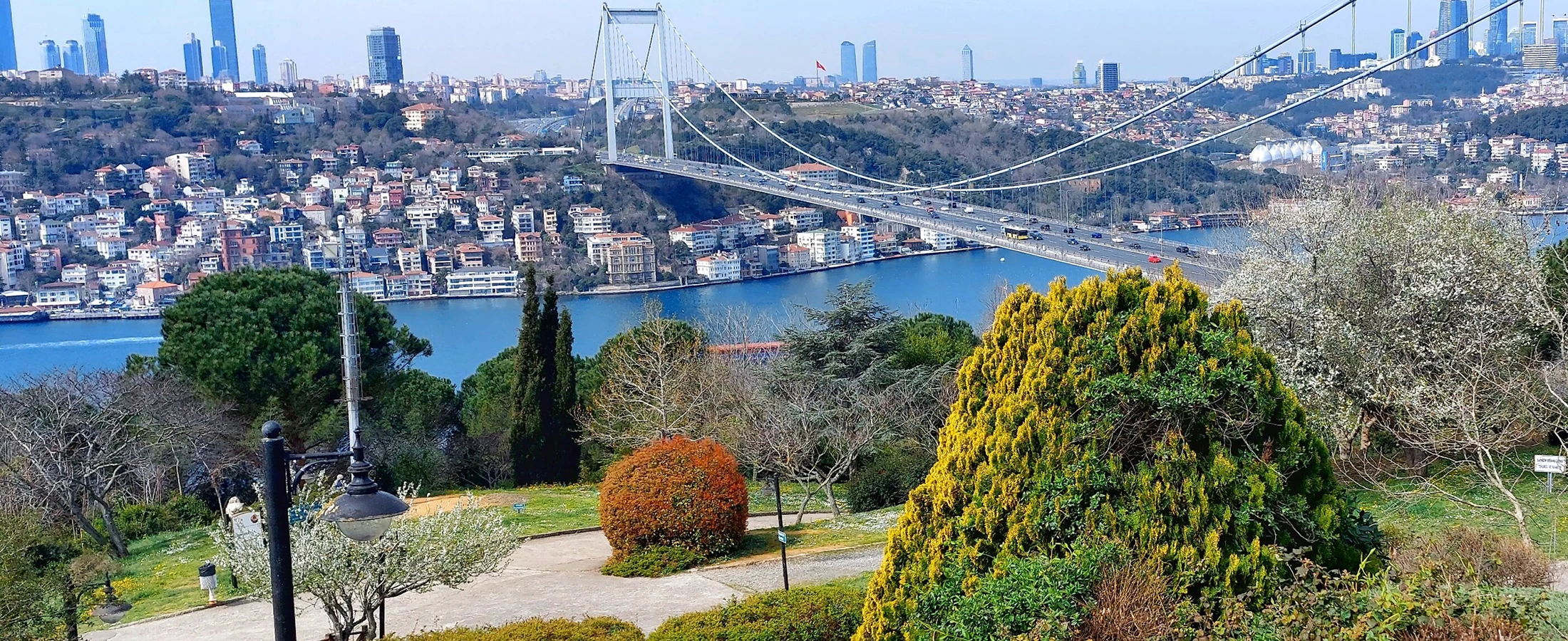
Combine Polonezköy's Polish heritage and forests with Otağtepe, Bosphorus viewpoints and selected hidden landscapes of Istanbul's Asian side.
Request a Polonezköy & Beykoz TourCombine Polonezköy with Beykoz, the Bosphorus, Black Sea countryside, Asian-side neighborhoods or other lesser-known Istanbul destinations according to your interests.
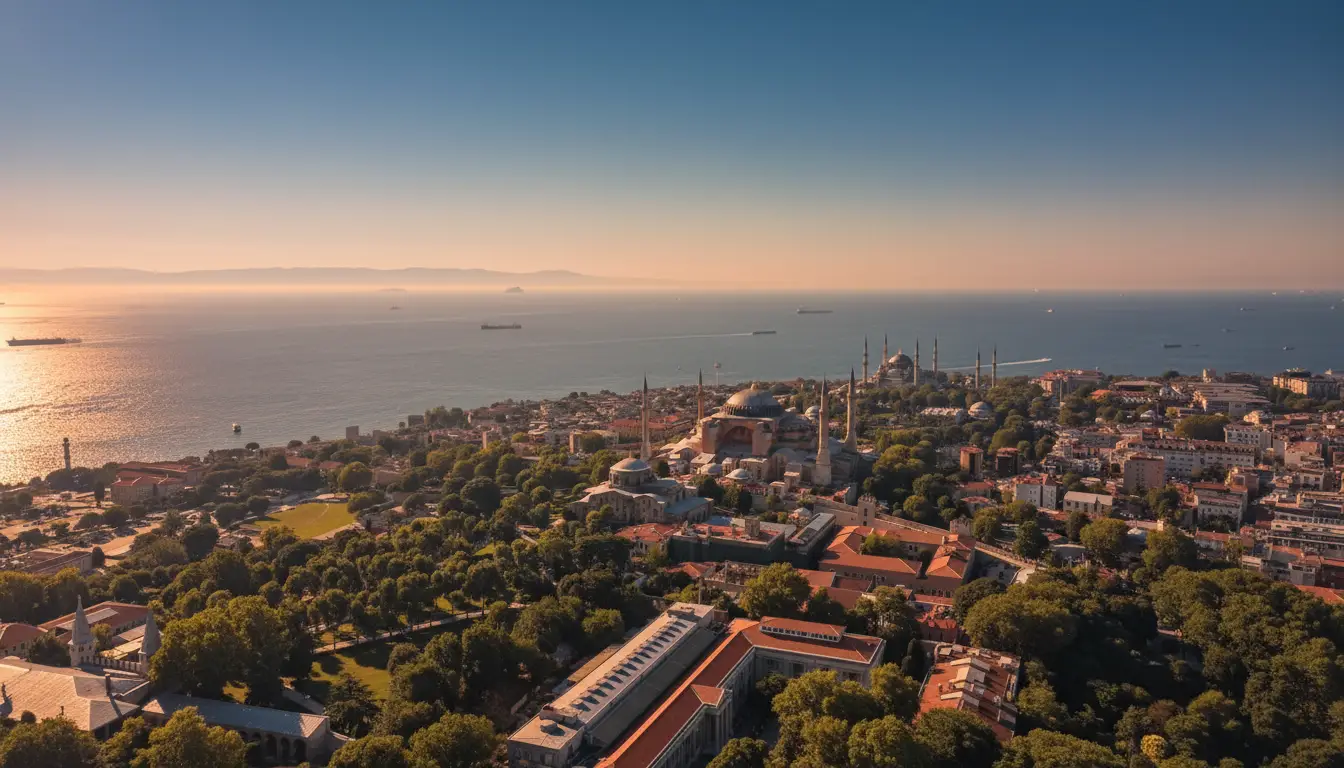
Create a private Istanbul itinerary around Byzantine and Ottoman history, neighborhoods, museums, food, forests, the Bosphorus and unusual cultural landscapes.
View Private Istanbul Tours
Continue planning with Istanbul's mosques, churches, palaces, museums, bazaars, forests, parks, Bosphorus districts, villages and hidden landscapes.
Explore Istanbul