Private Pierre Loti Hill & Eyüp Route
Ask us about a tailor-made route combining Pierre Loti Hill, the TF2 cable car, Eyüp Sultan, the historic cemetery and the Golden Horn.
Request a Custom Tour





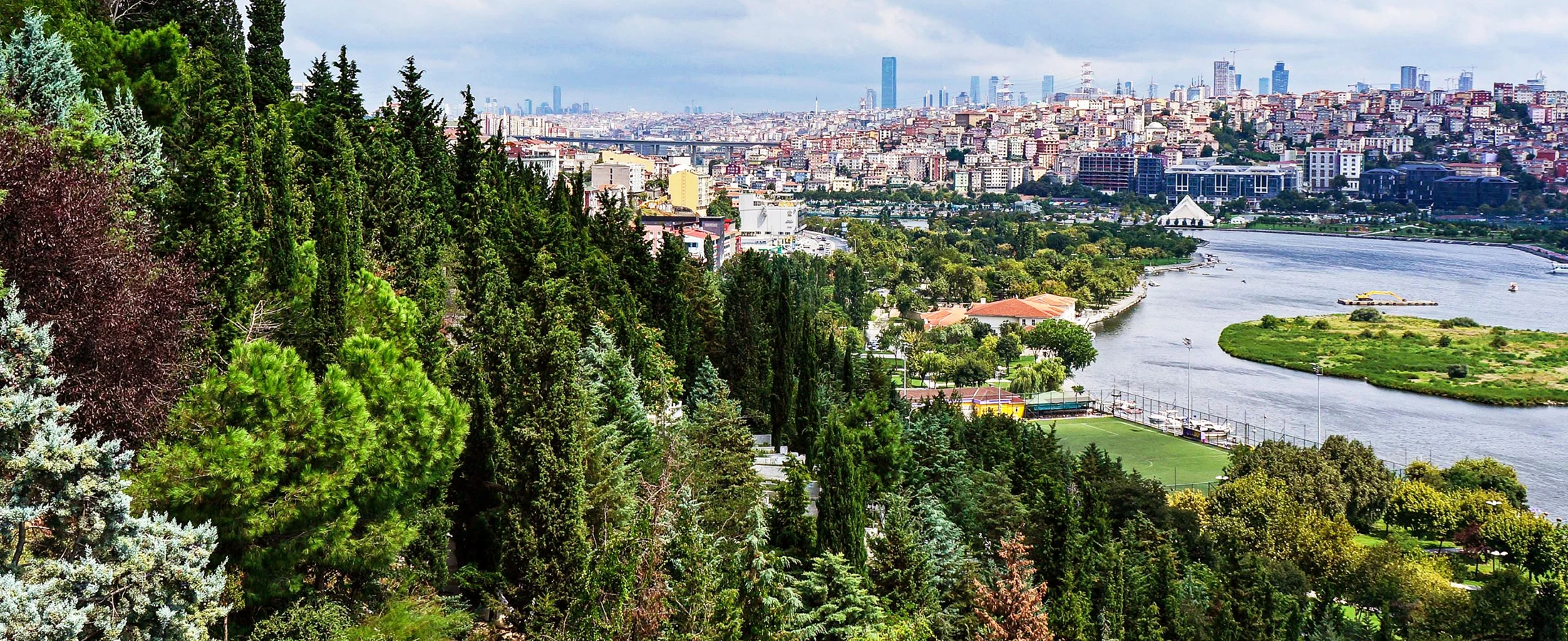
High above the historic district of Eyüp, a wooded hillside looks across the long curve of the Golden Horn, one of the waterways that shaped the history of Constantinople and Istanbul.
This is Pierre Loti Hill — Piyer Loti Tepesi, one of the city's best-known scenic viewpoints and a classic stop for visitors exploring Eyüpsultan.
The hill is named after Pierre Loti, the pen name of French naval officer and novelist Julien Viaud, who became closely associated with Istanbul and is traditionally remembered for spending time in the hilltop café while overlooking the city.
Today visitors can reach the summit by the short TF2 Eyüp–Piyer Loti cable car or walk uphill through the extraordinary historic cemetery that climbs the slope behind Eyüp Sultan.
At the top, tea gardens and terraces face one of Istanbul's most recognizable inland panoramas: the Golden Horn stretching toward the old city, bridges crossing the water, historic neighborhoods lining the shores and modern Istanbul rising behind them.
Pierre Loti Hill is not a monumental attraction in the conventional sense. Its appeal comes from the combination of view, atmosphere, memory, landscape and neighborhood history.
See one of Istanbul's most famous elevated views across the Golden Horn and the historic neighborhoods lining its shores.
Sit with Turkish tea or coffee in the hilltop café area traditionally associated with the French writer Pierre Loti.
Ride the TF2 cable car between Eyüp and Piyer Loti for a short journey directly above the historic hillside cemetery.
Combine the hill with Eyüp Sultan Mosque, the tomb complex, Ottoman cemeteries and the waterfront of one of Istanbul's most historic districts.
Essential information about Pierre Loti Hill's location, history, Golden Horn views, cable car, walking route, café atmosphere, photography and the best way to combine it with Eyüp.
Eyüpsultan, on the western side of the Golden Horn, above Eyüp Sultan Mosque and the historic cemetery.
A panoramic hilltop view across the Golden Horn, especially atmospheric in the early morning and toward sunset.
The TF2 Eyüp–Piyer Loti cable car links the Golden Horn side of Eyüp directly with the summit.
The hill is named after Pierre Loti, the literary pseudonym of French naval officer and writer Julien Viaud.
Drink Turkish tea or coffee at the hilltop café while looking over the Golden Horn.
Visit together with Eyüp Sultan Mosque, the tomb complex, Eyüp Cemetery and the Golden Horn waterfront.
Morning for clearer atmosphere and fewer crowds; late afternoon for warmer light and illuminated city views.
Allow around one to two hours on the hill, or half a day when combining it with historic Eyüp.
Pierre Loti Hill is important because it preserves one of Istanbul's most powerful combinations of historic landscape and panoramic city view.
Unlike a tower or palace terrace, the viewpoint is part of a real neighborhood landscape that has developed over centuries.
Below the summit stand the sacred monuments of Eyüp, while the slopes are covered by one of Istanbul's most historically important Muslim cemeteries.
Beyond them stretches the Golden Horn, the sheltered inlet around which Byzantine, Genoese, Ottoman and modern Istanbul developed.
The hill is also connected with the literary memory of Pierre Loti, whose fascination with Istanbul became part of the site's modern identity.
For many visitors, however, the attraction is simpler: a glass of tea, a hillside breeze and a broad view across a city that reveals itself in layers.
Pierre Loti was the pen name of Louis-Marie-Julien Viaud, a French naval officer and novelist born in 1850.
His naval career took him across the Mediterranean, Asia, the Pacific and the Middle East, and his literary work was strongly shaped by travel, memory and encounters with cultures far from France.
Istanbul became one of the places most closely associated with his public image.
He visited the Ottoman capital repeatedly and wrote about the city with intense nostalgia and fascination.
His novel Aziyadé, first published in 1879, helped establish his literary reputation and drew heavily on an imagined and autobiographical vision of Ottoman Istanbul.
Loti's writings are valuable as part of the history of European literary engagement with the late Ottoman world, although modern readers also approach them critically because they reflect the romanticized and Orientalist perspectives common in European writing of his era.
The Eyüp hilltop became associated with him because of the tradition that he spent time here enjoying the view and writing.
The hill is known in Turkish as Piyer Loti Tepesi.
Its modern name honors the French writer Pierre Loti, who developed a deep attachment to Istanbul and became especially associated with Eyüp and the hilltop café.
Over time, the literary connection became inseparable from the identity of the viewpoint.
For Istanbul residents and visitors, the name now refers not only to the writer but to the entire hilltop experience: the tea garden, terraces, cable car station, historic houses and Golden Horn panorama.
This is a good example of how Istanbul's urban memory is often created through layers of architecture, personal stories, literature and local tradition rather than through a single monument.
The panorama is the main reason most visitors come to Pierre Loti Hill.
From the terraces, the Golden Horn stretches south and east through a long urban corridor framed by hills on both sides.
The view is different from Istanbul's famous Bosphorus panoramas.
The Bosphorus feels open, maritime and international, while the Golden Horn feels more enclosed and deeply connected with the internal history of the old city.
From Pierre Loti, the eye moves across historic Eyüp, the opposite shore, bridges, waterfront parks, former industrial areas and neighborhoods that have been transformed repeatedly over centuries.
Atmospheric haze is common, particularly during warm weather, so the view can change dramatically from one visit to another.
For generations, one of the classic experiences on Pierre Loti Hill has been simply to sit down and look at the city.
The hilltop café and tea-garden tradition is closely connected with the site's identity and with the story of Pierre Loti himself.
Tables are arranged to take advantage of the slope and the Golden Horn panorama, creating the feeling of sitting almost above the waterway.
Turkish tea is the most traditional choice, although coffee, soft drinks and food may also be available depending on the venue and current service arrangements.
The location can become very busy at weekends, during holidays and around sunset.
If the view matters more than the café itself, explore the terraces and public viewing areas before choosing where to sit.
Understanding the Golden Horn makes the view from Pierre Loti Hill much more meaningful.
Known in Turkish as the Haliç, the Golden Horn is a natural inlet that enters the European side of Istanbul from the Bosphorus.
Its sheltered waters made it an exceptional natural harbor and helped support Constantinople's survival as a major imperial capital.
During the Ottoman period, the shores contained shipyards, religious complexes, neighborhoods, gardens, markets and industrial activity.
Eyüp developed at the inner end of this historic urban corridor around the tomb and mosque of Abu Ayyub al-Ansari, known in Turkish as Eyüp Sultan.
Pierre Loti Hill therefore gives more than a scenic view. It provides a natural vantage point for understanding how the Golden Horn connects sacred Eyüp with the wider city.
One of the most memorable ways to reach Pierre Loti Hill is to walk uphill through Eyüp Cemetery.
The cemetery spreads across the slopes above Eyüp Sultan and contains graves dating back through centuries of Ottoman history.
Tall cypress trees, carved marble tombstones, turban-shaped headstones, inscriptions and family plots create an extraordinary historical landscape.
The route is not simply a shortcut to the summit.
It is one of the best places in Istanbul to understand the visual culture of Ottoman burial grounds and the long-standing desire to be buried near the sacred Eyüp Sultan complex.
Visitors should remember that this remains an active cemetery and a place of memory for local families.
The easiest and most popular way to reach the summit is the TF2 Eyüp–Piyer Loti Cable Car.
The line opened in 2005 and connects the lower Eyüp station near the Golden Horn with the Piyer Loti station beside the hilltop viewpoint.
The route is short — approximately 0.42 kilometers — and the one-way journey takes a little over three minutes.
The cabins pass above the historic cemetery, making the ride scenic despite its short duration.
The lower station integrates conveniently with the T5 Eminönü–Alibeyköy Tram Line at Eyüpsultan Teleferik, making the hill straightforward to reach from the Historic Peninsula.
TF2 Eyüp–Piyer Loti.
Approximately 0.42 km.
Eyüp and Piyer Loti.
Approximately 3.25 minutes one way.
Transfer from the T5 tram at Eyüpsultan Teleferik.
Ride up and walk down through the cemetery, or reverse the route if you prefer the climb.
Visitors who are comfortable with hills should consider walking at least one direction.
The route climbs from the Eyüp Sultan area through the historic cemetery toward the summit.
The ascent is steeper and more tiring than the short distance on a map suggests, especially during hot or humid weather.
Its advantage is atmosphere.
Walking gives you time to see the cemetery's inscriptions, carved stones, cypress trees and changing views between the graves.
The descent is physically easier for most visitors and works particularly well after riding the cable car to the top.
The best overall period for quieter terraces, softer light, clearer views and a peaceful atmosphere.
Good for combining the hill with Eyüp Sultan before lunch, although tour traffic begins to increase.
Excellent for warm light across the Golden Horn and a more dramatic skyline.
Beautiful but often busy. Arrive early enough to find a good viewing position before the light changes.
The illuminated Golden Horn creates a different cityscape, with bridges and neighborhoods reflected across the water.
Comfortable temperatures and fresh vegetation make walking through the cemetery especially pleasant.
Choose morning or evening. Midday heat can make the cemetery climb tiring.
Often more atmospheric and less crowded, with lower sunlight and stronger contrasts across the Golden Horn.
Enough for the cable car, a quick panorama and a few photographs if you are on a tight schedule.
A comfortable minimum for the viewpoint, tea or coffee and a short walk around the summit.
Ideal if you want to sit at the café, explore viewpoints and walk one direction through the cemetery.
Combine Pierre Loti Hill with Eyüp Sultan Mosque, the tomb complex, cemetery and Golden Horn waterfront.
Add Fener, Balat, Miniatürk or the Rahmi M. Koç Museum depending on your interests.
Allow extra time because the light, haze, boats and reflections change constantly.
Pierre Loti Hill is one of Istanbul's classic cityscape locations.
The strongest photographs usually use the Golden Horn as a leading line rather than trying to include every part of the skyline.
Use the long curve of the Golden Horn to lead the eye toward the central city.
Early light often produces cleaner atmosphere and fewer people around the viewpoint.
Arrive before sunset so you can photograph both golden light and the transition into evening illumination.
Look for compositions where the cabins cross above the cemetery with the Golden Horn behind them.
The cemetery offers carved Ottoman tombstones, cypress trees, inscriptions and layered hillside perspectives.
A standard or short telephoto lens helps isolate bridges, domes, waterfront districts and details across the water.
Sunset is the most popular time to experience Pierre Loti Hill.
As the light softens, the water becomes warmer in tone and the urban slopes around the Golden Horn begin to separate into layers.
After sunset, streetlights, bridges and buildings gradually transform the view into an illuminated cityscape.
The atmosphere can be wonderful, but popularity brings crowds.
If sunset photography is your priority, arrive well before the actual sunset time and choose your position in advance.
During summer, evening can also be much more comfortable than climbing the hill during midday heat.
Pierre Loti Hill can be an easy family stop because the cable car turns the ascent into part of the experience.
Children often enjoy the short ride and the view from above the cemetery.
At the summit, the main activity is sightseeing rather than a large collection of attractions, so the hill works best as part of a broader Eyüp visit.
Families with younger children may prefer to ride both directions rather than use the steep cemetery route.
If walking downhill, hold younger children closely on steps and sloping paths, particularly when surfaces are wet.
The steep natural terrain is the main accessibility challenge around Pierre Loti Hill.
The cemetery walking route contains slopes and steps and is not the best choice for visitors with limited mobility.
The TF2 cable car is generally the more practical option.
Metro Istanbul states that the cable-car cabins can accommodate wheelchairs by folding the cabin seats.
However, the overall visitor experience also depends on access between transport stops, the hilltop station, café terraces and individual viewing areas.
Visitors with significant mobility requirements should check current station conditions before travel and keep the route focused on the most accessible viewpoint areas.
Pierre Loti Hill is in Eyüpsultan on the western side of the Golden Horn.
For most visitors, the easiest public-transport route is to reach the T5 Eminönü–Alibeyköy Tram Line, get off at Eyüpsultan Teleferik and transfer to the TF2 cable car.
The T5 line is especially useful because it begins at Eminönü and also serves Fener, Balat, Ayvansaray and Feshane along the Golden Horn.
Take the T1 tram toward Eminönü, then transfer to the T5 tram and continue to Eyüpsultan Teleferik.
Use the T5 tram directly to Eyüpsultan Teleferik, then transfer to the TF2 cable car.
Travel toward the Golden Horn by metro, bus or taxi; public-transport routes often connect most conveniently through Eminönü or another T5 interchange.
The T5 tram provides an easy direct connection along the Golden Horn to Eyüpsultan Teleferik.
Depending on current City Lines services, Golden Horn ferries can be an atmospheric way to reach the Eyüp area before continuing uphill.
A useful option if travelling with children, limited mobility or a tight schedule, although traffic varies significantly by time of day.
Morning provides quieter viewpoints, easier café seating and often better visibility across the Golden Horn.
The cable car can become busy at weekends, holidays and around sunset.
Even if you ride up, you may still encounter steep paths, steps and uneven surfaces around the cemetery and historic district.
Haze, rain and strong wind can change visibility and may affect cable-car operations.
The exposed hilltop can feel cooler and breezier than the streets below, especially after sunset.
Remember that the historic cemetery is an active burial place, not simply a scenic walking trail.
The hill makes much more sense when combined with Eyüp Sultan Mosque, the tomb and the historic streets below.
Public-transport prices change periodically, so check current Istanbulkart and transit tariffs when planning your trip.
A simple loop lets you experience the sacred, historical and scenic sides of Eyüp without repeating the same route.
Two hours is enough for a relaxed first visit if your main priorities are the viewpoint, cable car and historic atmosphere.
A half day is ideal because it places Pierre Loti Hill within the religious and historical landscape that gives the viewpoint its deeper meaning.
Pierre Loti Hill works especially well as the northern highlight of a full day following the historic neighborhoods of the Golden Horn.
Explore one of Istanbul's most historic districts, centered on Eyüp Sultan Mosque, sacred tombs, Ottoman cemeteries and the Golden Horn.
Visit one of the most important religious complexes in Istanbul and the spiritual heart of the Eyüp district.
Walk through a remarkable landscape of Ottoman tombstones and cypress trees extending across the hillside below Pierre Loti.
Continue along the Golden Horn to explore historic houses, churches, synagogues, steep streets and colorful neighborhood architecture.
See miniature models of major architectural landmarks from across Türkiye in a family-friendly open-air setting beside the Golden Horn.
Explore transport, engineering, industry and technology in one of Istanbul's most engaging museum complexes.
Combine Eyüp with one of Istanbul's great Byzantine monuments, famous for its extraordinary mosaics and frescoes.
Continue planning with Istanbul's palaces, mosques, churches, museums, bazaars, parks and historic neighborhoods.
Pierre Loti Hill is in Eyüpsultan on the European side of Istanbul, above Eyüp Sultan and the Golden Horn.
Yes. It offers one of Istanbul's classic Golden Horn views and combines naturally with Eyüp Sultan, the historic cemetery and a scenic cable-car ride.
It is famous for its panoramic Golden Horn view, hilltop tea garden, association with French writer Pierre Loti and the TF2 cable car.
Pierre Loti was the pen name of French naval officer and novelist Julien Viaud, whose writings and travels became closely associated with Istanbul.
He visited Istanbul repeatedly and became strongly associated with the city through his life and writing. Local tradition particularly connects him with the hilltop café in Eyüp.
The easiest public-transport route is usually the T5 tram to Eyüpsultan Teleferik, followed by the TF2 cable car to Piyer Loti.
The TF2 journey takes approximately 3.25 minutes one way.
The TF2 route is approximately 0.42 kilometers long.
Yes. A historic walking route climbs through Eyüp Cemetery, although the ascent can be tiring because of the steep terrain.
For most visitors, taking the cable car up and walking down through the cemetery is the easier and more enjoyable combination.
The public viewpoint area can be enjoyed without a conventional attraction ticket, but transport, food, drinks and individual services are charged separately.
Early morning is best for quiet conditions and visibility, while late afternoon and sunset are best for warm light and atmosphere.
Yes. Sunset is one of the most popular times to visit, but it can also be the busiest.
Allow around one to two hours for the hill itself and half a day if combining it with Eyüp Sultan and the surrounding historic district.
Yes. They form one of the most natural combinations in Istanbul because the hill rises directly above the historic Eyüp Sultan district.
Yes. The Golden Horn panorama, cable-car cabins, cemetery, cypress trees and changing light provide excellent cityscape and historical photography.
Yes. The cable car is usually enjoyable for children, although steep cemetery paths require care with younger visitors.
The cable car can accommodate wheelchair users, but the steep historic terrain means that not every path, terrace or cemetery route is equally accessible.
Yes. Drinking Turkish tea or coffee while overlooking the Golden Horn is one of the classic Pierre Loti experiences.
Yes. The T5 tram makes it easy to link Fener, Balat and Eyüpsultan along the Golden Horn in the same day.
No. The viewpoint is easy to visit independently, but a knowledgeable guide can add valuable context about Eyüp Sultan, Ottoman cemeteries, the Golden Horn and Pierre Loti's place in Istanbul's cultural memory.
Remember that Eyüp Cemetery is an active burial ground with deep cultural and religious significance.
Avoid loud behavior when walking among graves or near religious areas.
Do not photograph mourners or private religious moments without permission.
Use established routes and avoid stepping over graves or damaging historic stones.
Do not sit on, lean equipment against or touch fragile carved tombstones unnecessarily.
Use bins and avoid leaving cups, food packaging or other waste around viewpoints and paths.
If visiting Eyüp Sultan Mosque, dress and behave appropriately for an active religious site.
The T5 tram and TF2 cable car provide an efficient way to visit without adding unnecessary road traffic to the historic district.
Discover Pierre Loti Hill as part of a private Istanbul route connecting panoramic viewpoints, Ottoman history, sacred Eyüp, Golden Horn neighborhoods and local city life — without compulsory shopping stops.
Create a private route focusing on Istanbul history, religion, literature, photography and Golden Horn neighborhoods according to your interests and available time.
Ask us about a tailor-made route combining Pierre Loti Hill, the TF2 cable car, Eyüp Sultan, the historic cemetery and the Golden Horn.
Request a Custom Tour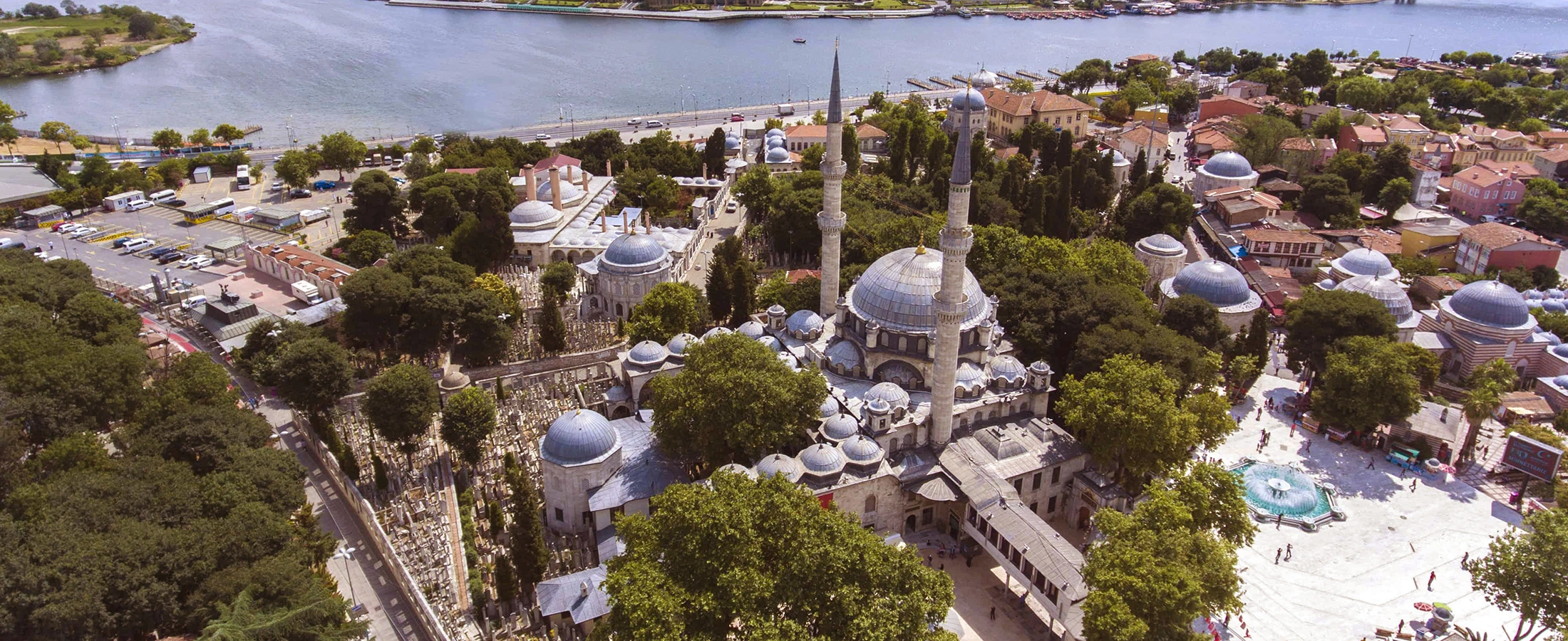
Explore the sacred and historic district below the hill, centered on Eyüp Sultan Mosque, the tomb complex and centuries-old Ottoman cemeteries.
Explore EyüpCombine Pierre Loti Hill with Fener, Balat, Chora, Miniatürk, Rahmi M. Koç Museum, Eminönü or other Golden Horn neighborhoods according to your interests.
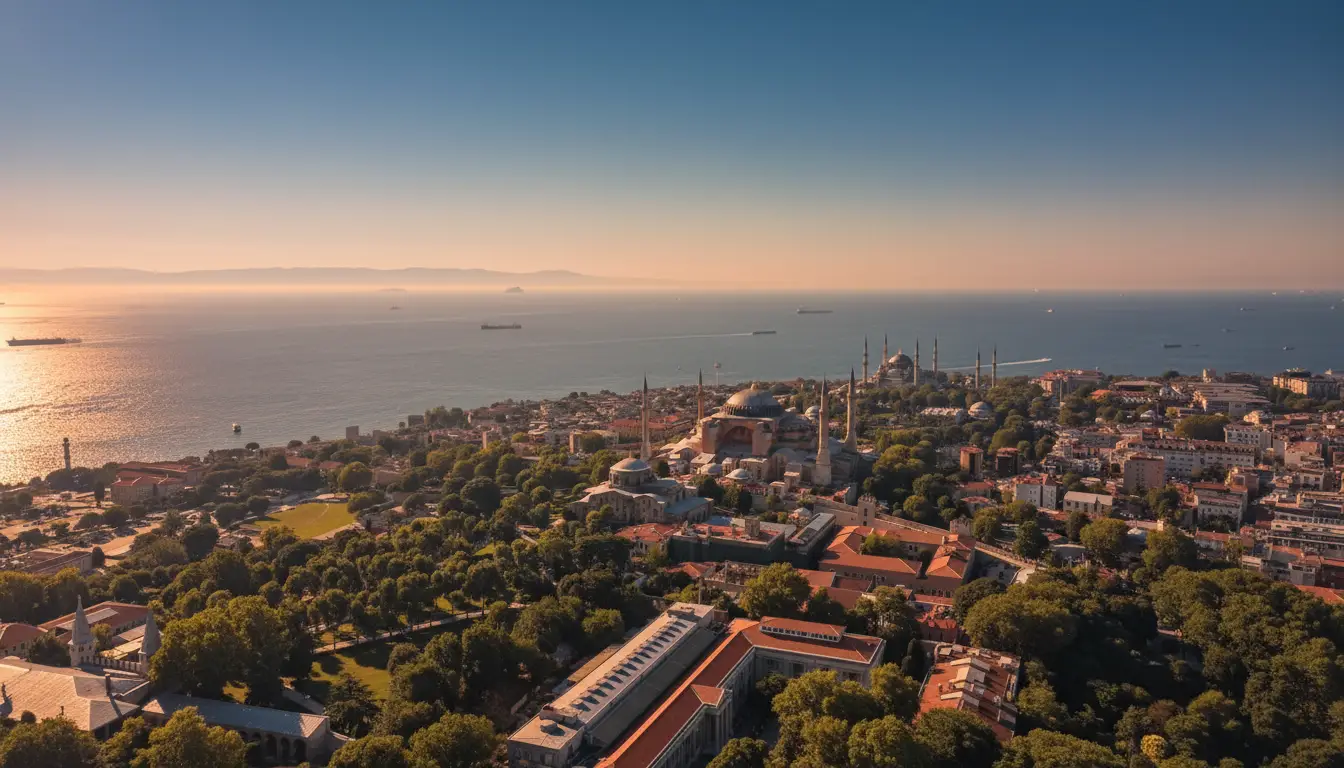
Create a private Istanbul itinerary around Byzantine and Ottoman history, architecture, museums, sacred sites, neighborhoods, food and panoramic viewpoints.
View Private Istanbul Tours
Continue planning with Istanbul's mosques, churches, palaces, museums, bazaars, viewpoints, parks, Bosphorus districts and historic neighborhoods.
Explore Istanbul