Custom Aydın Gastronomy Experience
Explore the traditional flavors of Bozdoğan and Aydın, combining regional food heritage with countryside scenery and cultural discoveries.
Request a Custom Experience





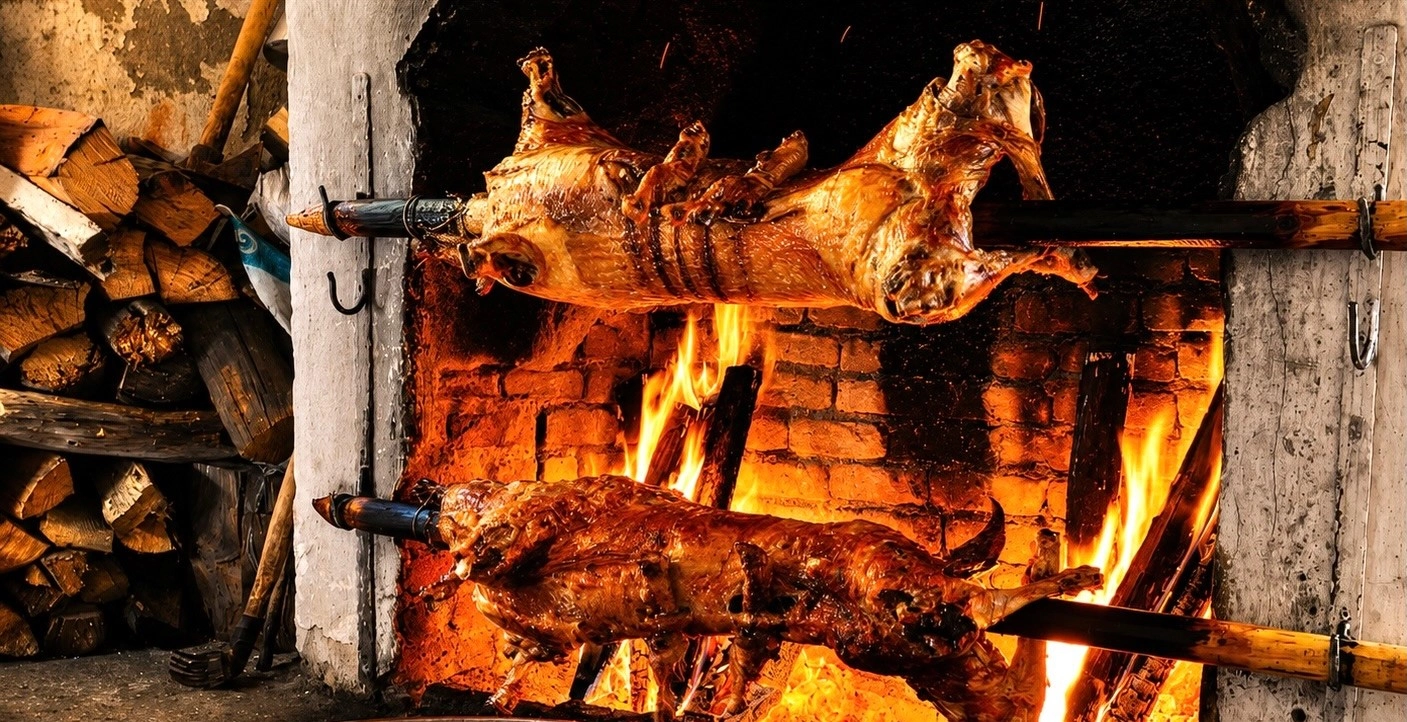
Olukbaşı Oğlak Çevirme Kebabı is a distinctive traditional Turkish kebab originating from Olukbaşı village in the Bozdoğan district of Aydın Province, western Türkiye.
Unlike familiar kebabs prepared from individual pieces of meat, this regional specialty involves roasting a young goat on a horizontal spit beside a carefully maintained wood fire.
The preparation is remarkably simple in its ingredients yet demanding in its technique. According to the registered specification, the meat is seasoned only with rock salt before being slowly rotated beside burning wood.
Experienced cooks must carefully control the distance between the fire and the goat, maintain consistent heat and turn the spit to achieve even roasting.
The result is a traditional roasted meat dish celebrated for its natural flavor, golden exterior and connection to the rural culinary customs of the Aegean Region.
The kebab is particularly significant because its history is associated with the Türkmen Yörük communities who settled in Olukbaşı during the Ottoman period.
For generations, preparing goat kebab has formed part of the village's social and culinary life, traditionally taking place on Wednesdays when the local market is held.
Its preparation also reflects an established division of tasks within the historical village tradition, with women responsible for roasting while men traditionally undertook slaughtering, preparation, carving and serving.
The kebab's regional identity received official recognition on August 8, 2023, when the Turkish Patent and Trademark Office registered Olukbaşı Oğlak Çevirme Kebabı as a geographical indication under registration number 1445.
Today, it represents an important example of how traditional food, local knowledge and village customs contribute to Türkiye's extraordinarily diverse gastronomic heritage.
Prepared using carefully selected young female goats according to the registered regional method.
A whole prepared goat is rotated horizontally beside an oak or pine wood fire.
The tradition is associated with Türkmen Yörük communities who settled in Olukbaşı during the Ottoman period.
Officially registered as a Turkish geographical indication on August 8, 2023.
Essential information about the ingredients, preparation and cultural identity of this traditional Bozdoğan kebab.
Olukbaşı village, Bozdoğan district, Aydın Province, Türkiye.
Explore Olukbaşı on Google MapsYoung female goat, traditionally between 6 and 12 months old.
Horizontal spit roasting beside an oak or pine wood fire.
Approximately two hours, depending on the preparation and fire conditions.
Rock salt, without additional spices or marinades.
Wednesday, corresponding with the local village market.
Registration No. 1445, dated August 8, 2023.
Traditional Türkmen Yörük culinary practices of rural Bozdoğan.
A traditional whole-goat roasting method deeply associated with the village customs and food culture of Bozdoğan.
Olukbaşı Oğlak Çevirme Kebabı is a traditional Turkish meat dish prepared by mounting a young goat on a long horizontal spit and roasting it beside an open wood fire.
The dish belongs to the wider Anatolian tradition of çevirme, in which meat is slowly rotated near a heat source to cook evenly.
Its preparation differs from kebabs made with minced meat, small skewers or individual grilled portions.
Instead, the whole prepared goat is roasted as a single piece, allowing the cook to manage the exterior browning and internal cooking through careful spit rotation.
The registered Olukbaşı method uses young female goats weighing approximately 13–14 kilograms before preparation, together with rock salt and a traditional wood-fired roasting arrangement.
One of its defining characteristics is that the goat is positioned beside the flames rather than directly above a conventional barbecue grill.
The cooking process is as much a demonstration of inherited practical knowledge as it is a method of food preparation.
The finished goat is traditionally brought to the serving area on its spit, carved on a substantial food-safe wooden surface and sold by weight.
These distinctive practices help explain why the kebab occupies a special place in the cultural identity of Olukbaşı.
The traditional name combines the dish's geographical origin with a description of the meat and cooking technique.
The name of the village in Bozdoğan district where this registered culinary specialty originates.
The Turkish word for a young goat, particularly important in describing the type of meat used for the dish.
Literally refers to turning or rotating, describing the traditional roasting process on a spit.
The Turkish form of kebab, a broad culinary category encompassing many varieties of roasted and grilled meat.
For English-speaking visitors, a natural descriptive translation is Olukbaşı Spit-Roasted Kid Goat Kebab or Olukbaşı Traditional Goat Rotisserie Kebab.
However, the traditional Turkish name should be retained in headings and culinary references because it preserves the dish's official geographical identity.
The kebab originates from Olukbaşı village in the Bozdoğan district of Aydın Province, in western Türkiye's Aegean Region.
Bozdoğan is an inland district where village life, agricultural production and traditional food customs form an important part of local cultural identity.
Olukbaşı is particularly associated with the preparation of spit-roasted young goat, a practice that has become one of the community's most recognizable culinary traditions.
The official geographical indication defines the production area specifically as Olukbaşı village rather than the whole of Aydın Province or Bozdoğan district.
The recognized geographical origin and traditional production area of the protected kebab.
An inland district of Aydın characterized by rural settlements, agricultural landscapes and distinctive local traditions.
A culturally rich province of western Türkiye known for archaeological heritage, agriculture and regional gastronomy.
A region where Mediterranean ingredients, Anatolian cooking techniques and local village customs meet.
The kebab is traditionally associated with goats raised within the local area, reflecting the relationship between rural animal husbandry and food production.
For visitors interested in discovering regional Turkish cuisine beyond the best-known tourist destinations, Olukbaşı offers an example of a highly localized culinary tradition.
The history of Olukbaşı Oğlak Çevirme Kebabı is closely associated with the Türkmen Yörük communities who settled in Olukbaşı during the Ottoman period.
The Yörüks are traditionally associated with pastoral ways of life, seasonal movement, animal husbandry and distinctive food traditions developed across Anatolia.
Goat husbandry formed part of the wider rural economy of many Yörük communities, making goat meat an important ingredient in regional culinary practices.
In Olukbaşı, roasting young goat over wood fire developed into an established local tradition.
Rather than being associated with a single restaurant or modern culinary invention, the dish belongs to the collective food heritage of the village.
Its continued preparation reflects the transmission of knowledge between generations, particularly the skills required to prepare, secure, turn and roast a whole goat.
The traditional association with Wednesday market gatherings further connects the kebab to the village's social life.
During the twenty-first century, increased interest in regional gastronomy and geographical indications created new opportunities to document and recognize the tradition.
Nazilli Chamber of Commerce submitted the geographical indication application on April 30, 2021.
Following the registration process, the dish received official recognition on August 8, 2023.
The traditional kebab is associated with communities who settled in Olukbaşı during the Ottoman era.
Goat husbandry and livestock-based food practices helped shape the wider regional culinary culture.
Wednesday gatherings became closely associated with the preparation and sharing of the kebab.
Traditional roasting skills have been passed between members of the local community.
Nazilli Chamber of Commerce applied for registration on April 30, 2021.
The kebab was registered as a protected regional specialty on August 8, 2023.
One of the most distinctive cultural characteristics of Olukbaşı Oğlak Çevirme Kebabı is its connection with Wednesday.
According to the geographical indication record, Wednesday is the traditional day on which the kebab is prepared because it coincides with the local market.
Village markets have historically served as important places for buying and selling produce, meeting neighbors and maintaining community relationships.
Preparing a substantial traditional meal on market day naturally connects food production with social gathering.
Olukbaşı's kebab tradition therefore reflects more than a cooking schedule. It represents a relationship between local commerce, communal life and shared culinary identity.
The local market day is traditionally associated with preparation of the village's famous goat kebab.
The market creates opportunities for residents and visitors to meet and enjoy regional food.
The registered tradition also allows preparation on other days when required for weddings or collective meals.
The recurring market-day tradition helps maintain awareness of the village's distinctive gastronomic heritage.
The preparation of Olukbaşı Oğlak Çevirme Kebabı is also distinctive for the traditional distribution of tasks within the village community.
The official geographical indication describes a historical arrangement in which men and women perform different stages of production.
According to this tradition, men undertake the slaughtering and skinning of the goat, as well as the carving and presentation of the cooked kebab.
Women traditionally carry out the roasting process, which requires continuous attention, practical experience and careful control of the fire.
This organization reflects locally documented culinary customs rather than a universal rule for contemporary Turkish cooking.
Slaughtering and initial preparation are traditionally described as men's responsibilities.
Women are traditionally associated with turning and roasting the goat beside the fire.
Men traditionally undertake the portioning and serving of the finished kebab.
The complete preparation depends on several specialized skills passed through the local community.
These practices form part of the documented intangible cultural context of the dish and provide an additional reason for preserving its original methods.
Several characteristics distinguish Olukbaşı Oğlak Çevirme Kebabı from many other Turkish meat dishes.
The most important elements are the selection of young female goats, the traditional horizontal roasting arrangement, the use of wood fire and the intentionally simple seasoning.
The registered preparation specifies female goats aged 6–12 months and weighing approximately 13–14 kilograms.
The prepared goat is roasted as one piece instead of being cut into small kebab portions before cooking.
The goat is secured to a long spit and rotated beside the fire to distribute heat.
Traditional ground-level fireplaces are fueled with wood from oak or pine trees.
The official preparation relies on rock salt without additional herbs, spice mixtures or marinades.
The goat is brought to the serving area on its spit and carved on a thick wooden surface.
The preparation is traditionally connected with the village's weekly market.
The dish preserves an important relationship with the traditional food customs of the local community.
One of the most striking characteristics of Olukbaşı Oğlak Çevirme Kebabı is the simplicity of its recipe.
Unlike many modern roasted meat dishes that depend on elaborate marinades, the traditional preparation emphasizes the natural flavor of the goat.
The essential ingredient is a female goat aged approximately 6–12 months and weighing around 13–14 kilograms.
Rock salt is applied by hand to the inside of the prepared goat before roasting.
Wood is used as the traditional fuel for the ground-level roasting fire.
A food-safe wooden or stainless-steel spit supports the goat throughout cooking.
The official geographical indication specifies that no other seasoning ingredients are added during preparation.
This absence of elaborate seasoning helps distinguish Olukbaşı Oğlak Çevirme Kebabı from many other regional roasting methods.
The traditional method is particularly dependent on the quality of the meat and the experience of the person controlling the roasting process.
The type of animal used is an essential element of the registered preparation.
The official specification identifies young female goats between 6 and 12 months of age, weighing approximately 13–14 kilograms.
Locally raised goats are traditionally preferred, maintaining a close relationship between the village's livestock practices and its food culture.
Young goat is particularly associated with this style of traditional roasting because its meat provides the characteristic flavor and texture expected from the dish.
Between approximately six and twelve months according to the registered specification.
Approximately 13–14 kilograms when selected for the traditional preparation.
The registered recipe specifies female young goats.
Traditional production is associated with goats raised in the geographical area of Olukbaşı.
These particular selection requirements contribute to the identity of Olukbaşı Oğlak Çevirme Kebabı as a registered regional specialty.
Preparing Olukbaşı Oğlak Çevirme Kebabı involves several carefully coordinated stages requiring experience in meat preparation and traditional spit roasting.
The following overview summarizes the essential methods described in the geographical indication registration.
A suitable young female goat meeting the traditional age and weight requirements is selected.
The goat is slaughtered and dressed under appropriate food-hygiene conditions, with the specified internal organs and fat retained.
The official method describes a resting period of approximately one hour to allow remaining blood to drain.
The goat is mounted on a food-safe spit, traditionally wooden, with stainless steel also permitted.
The legs, neck and back are fastened using traditional positioning techniques so the goat remains stable during rotation.
Rock salt is rubbed by hand onto the interior of the goat without additional seasoning ingredients.
A ground-level fireplace is fueled with oak or pine wood to generate roasting heat.
The mounted goat is positioned approximately 40–50 centimeters from the wood fire.
The spit is turned during approximately two hours of roasting to achieve even cooking.
The cooked goat is brought to the serving location on its roasting spit.
The goat is cut into portions on a thick food-safe wooden surface.
The meat is traditionally weighed and offered to customers in individual portions.
Wood-fired roasting is central to the traditional preparation of Olukbaşı Oğlak Çevirme Kebabı.
The goat is secured horizontally and positioned beside a ground-level fireplace.
According to the geographical indication, the fire is fueled using oak or pine wood, and the goat is positioned approximately 40–50 centimeters from the heat source.
The meat is roasted for approximately two hours while the spit is turned to distribute heat across the surface.
Controlling the distance from the fire is particularly important because the goat must cook thoroughly without the exterior burning excessively.
Experienced cooks rely on knowledge of the wood fire, the size of the goat and the roasting process to judge its progress.
The traditional cooking arrangement uses a fireplace positioned at ground level.
The registered method specifies wood from oak or pine trees as the traditional fuel.
The goat is positioned approximately 40–50 centimeters from the fire during roasting.
The horizontal spit is rotated to expose different surfaces of the meat to heat.
The official preparation describes a roasting period of around two hours.
Traditional cooks manage the roasting process through practical knowledge and careful observation.
This traditional fire-management expertise is one of the important cultural elements preserved through the continued preparation of the kebab.
The roasting spit is an essential piece of equipment used to support the goat and allow continuous turning throughout the cooking process.
The registered preparation traditionally uses a food-safe wooden spit, commonly made from pine.
Stainless-steel roasting equipment is also permitted under the official specification, including suitable tubes approximately 10 centimeters in diameter.
The goat is carefully secured to the spit using traditional positioning and fastening techniques.
A food-safe wooden pole, typically associated with pine wood, is used for roasting.
Appropriate stainless-steel equipment may replace the traditional wooden spit.
The spit holds the prepared goat horizontally beside the fireplace.
The goat must remain properly attached to the spit throughout turning and roasting.
The distinctive horizontal roasting arrangement is part of what separates Olukbaşı Oğlak Çevirme Kebabı from other methods of preparing goat meat.
Olukbaşı Oğlak Çevirme Kebabı is appreciated for the natural savory character of roasted young goat, enriched by the wood-fire cooking process.
Because the traditional seasoning consists only of rock salt, the flavor depends primarily on the quality of the meat and the roasting technique.
As the goat turns beside the fire, its exterior gradually develops an appealing roasted character.
Proper preparation also aims to preserve the tenderness and moisture of the meat.
The simple seasoning emphasizes the flavor of the meat itself.
Traditional roasting beside burning wood contributes a characteristic roasted aroma.
Gradual exposure to the heat creates an appetizing browned surface.
Careful preparation and roasting can produce tender portions of young goat.
The whole-goat roasting method helps preserve the distinctive character of the different cuts.
The absence of elaborate marinades allows the fundamental roasted-meat flavor to remain prominent.
The precise flavor and texture vary according to the goat, roasting conditions and the experience of the cook.
The presentation of Olukbaşı Oğlak Çevirme Kebabı is one of the most recognizable elements of its registered tradition.
After roasting, the whole goat is transported to the serving area together with the spit on which it was cooked.
The goat is then carved on a thick wooden surface suitable for food preparation.
The portions are weighed and offered to customers, reflecting the traditional commercial practices associated with the dish.
The roasted goat is brought to the serving area on its roasting spit.
The meat is portioned on a thick, food-safe wooden cutting surface.
The registered serving tradition includes weighing the carved meat before sale.
The finished kebab is intended to be enjoyed after the traditional roasting and carving process.
Individual establishments or local events may offer bread, salads, beverages or other accompaniments, although these are not defining ingredients of the protected kebab itself.
Visitors should check the available serving arrangements with the local producer.
Türkiye's kebab traditions vary considerably between regions, with differences in meat selection, seasoning, equipment and cooking techniques.
Olukbaşı Oğlak Çevirme stands apart because of its whole-goat preparation, traditional wood-fire roasting and strictly defined geographical identity.
Young female goat seasoned with rock salt and roasted whole on a horizontal spit beside an oak or pine fire.
Spit-roasted lamb, using a different type of meat and regional methods that may vary between communities.
Meat traditionally cooked through an enclosed or pit-style roasting method rather than the Olukbaşı horizontal-spit arrangement.
Small pieces of beef threaded onto miniature reed skewers and rapidly grilled over charcoal in Germencik district.
A seasoned minced-meat kebab shaped onto broad skewers and grilled over charcoal.
Individual pieces of meat threaded onto skewers and grilled, with considerable regional variations.
Each preparation reflects different ingredients, cooking environments and local food traditions.
The identity of Olukbaşı Oğlak Çevirme Kebabı is especially closely tied to the village where it developed.
Olukbaşı Oğlak Çevirme Kebabı represents more than a traditional roasted meat dish.
It reflects the relationship between village life, animal husbandry, local food production and inherited practical knowledge.
Its connection with the Türkmen Yörük communities of Olukbaşı gives the kebab particular cultural significance.
The preparation also preserves specialized methods of managing a wood fire, positioning a whole goat on a roasting spit and carving the finished meat.
The Wednesday market association further demonstrates the close relationship between cuisine and community gatherings.
The kebab preserves a connection to traditional Türkmen Yörük food culture.
The dish highlights the importance of livestock-based food traditions in rural communities.
Roasting and serving techniques represent practical skills transmitted within the village.
Traditional Wednesday preparation connects the kebab with community and commercial life.
The protected specialty contributes to Olukbaşı's recognition as a destination of culinary interest.
The dish provides an opportunity to introduce travelers to less familiar elements of Aydın's food heritage.
Protecting and documenting these traditions can help preserve the cultural identity of rural communities while supporting responsible regional gastronomy tourism.
Olukbaşı Oğlak Çevirme Kebabı is officially recognized as a geographically indicated food product in Türkiye.
The registration identifies the traditional ingredients, preparation methods, geographical origin and cultural relationship that distinguish this product from similar dishes.
The geographical indication was registered by the Turkish Patent and Trademark Office on August 8, 2023, under registration number 1445.
The registering organization is Nazilli Chamber of Commerce (Nazilli Ticaret Odası).
Olukbaşı Oğlak Çevirme Kebabı.
1445.
C2021/000209.
April 30, 2021.
August 8, 2023.
Mahreç İşareti, a Turkish geographical indication category.
Nazilli Chamber of Commerce (Nazilli Ticaret Odası).
Olukbaşı village, Bozdoğan district, Aydın Province.
Kebab, within the prepared dishes and soups category.
Traditional young-goat preparation and horizontal wood-fire spit roasting.
The geographical indication specification requires all production stages of the registered kebab to take place within Olukbaşı village.
Although its designation is a mahreç işareti, the registered production rules specifically establish this local production requirement.
Use of the registered name and the appropriate geographical indication emblem must follow the official marking requirements.
Several characteristics help distinguish the registered Olukbaşı method from more general varieties of roasted goat.
The specification identifies young female goats meeting particular age and weight requirements.
The goat is seasoned with rock salt without additional spices or marinades.
The whole prepared goat rotates beside a ground-level oak or pine wood fire.
The finished goat is brought on its spit to the serving area and carved on a wooden surface.
The registered production takes place within the geographical boundary of Olukbaşı village.
Compliance with the official registration and marking requirements identifies the protected product.
Although these characteristics provide useful guidance, appearance alone does not prove formal geographical indication compliance.
Visitors interested in an officially registered product should ask the producer about its preparation and geographical indication status.
The most appropriate destination for experiencing this regional specialty is Olukbaşı village in Bozdoğan district, Aydın Province.
Because the registered preparation is tied to a specific village tradition, visiting the place of origin offers an opportunity to appreciate its wider cultural context.
The kebab is traditionally prepared on Wednesdays, corresponding with the village market.
Special production may also take place for weddings or other collective meals, depending on local arrangements.
The geographical origin and traditional production area of the protected kebab.
The weekly market day is traditionally associated with preparation and sale of the dish.
The kebab may be prepared for weddings and larger gatherings by advance arrangement.
A visit may be considered within a customized journey exploring Bozdoğan and Aydın's culinary heritage.
Preparation dates, serving locations, availability and prices should be confirmed with local producers before visiting.
A culinary visit to Olukbaşı can become part of a wider exploration of inland Aydın, where traditional villages, historical landmarks and regional food specialties reveal a different side of the Turkish Aegean.
The following destinations and culinary experiences can be considered when planning a customized journey through Bozdoğan and neighboring districts.
Explore the district's rural heritage, landscapes and traditional Anatolian village culture.
Discover an impressive reservoir landscape surrounded by the mountainous countryside of Bozdoğan.
Explore another distinctive regional food tradition associated with Bozdoğan and its agricultural heritage.
Discover a remarkable historical landmark in the Nazilli area, reflecting the region's architectural past.
Learn about one of Aydın's most famous agricultural products and its importance to the region.
Discover the olive-growing traditions that contribute to the wider gastronomic identity of the Aegean Region.
These experiences can be combined according to available travel time, road conditions and the operating schedules of individual locations.
If you are planning to discover this traditional kebab during a journey through Aydın, a few practical considerations will help you arrange a more enjoyable experience.
The traditional preparation day is Wednesday, when the village market is held.
Check whether the kebab will actually be prepared on your intended visiting date.
Traditional whole-goat roasting requires considerable preparation and cooking time.
The registered serving tradition includes carving and weighing the meat.
Be considerate when visiting village markets, observing preparation or photographing local residents.
The dish contains goat meat and rock salt. Ask the producer about any dietary concerns.
Consider private transportation when exploring smaller rural settlements away from major tourism centers.
Combine your culinary experience with nearby historical sites, countryside scenery or local food traditions.
Helpful answers about the ingredients, cooking method, history and cultural importance of this traditional Aydın kebab.
Olukbaşı Oğlak Çevirme Kebabı is a traditional Turkish kebab made by roasting a young goat on a horizontal spit beside a wood fire. It originates from Olukbaşı village in Bozdoğan district, Aydın.
The dish originates from Olukbaşı village in the Bozdoğan district of Aydın Province, western Türkiye.
Oğlak means young goat, while çevirme refers to turning or rotating during cooking. A suitable English translation is spit-roasted kid goat.
It is made from young goat, not lamb. The registered method specifically identifies female goats aged between 6 and 12 months.
The official specification identifies young female goats weighing approximately 13–14 kilograms when selected for preparation.
The prepared goat is secured to a horizontal spit and roasted beside a ground-level oak or pine wood fire while being turned.
The official production method describes a roasting time of approximately two hours. Actual cooking conditions and food-safety requirements must always be considered.
The registered preparation uses rock salt applied to the inside of the goat. No additional spices or marinades are included.
The traditional roasting fire is fueled with wood from oak or pine trees.
The horizontal spit allows the prepared goat to be rotated beside the fire, distributing heat during the roasting process.
The registered production method places the goat approximately 40–50 centimeters from the wood fire.
Wednesday is the traditional market day in Olukbaşı and is associated with preparation of the kebab.
Yes. The geographical indication describes exceptions for weddings and other collective meal arrangements.
The dish's history is associated with Türkmen Yörük communities who settled in Olukbaşı during the Ottoman period.
The registered village tradition associates roasting with women, while men traditionally undertake slaughtering, initial preparation, carving and serving.
The roasted goat is brought to the serving area on its spit, carved on a thick wooden surface and traditionally sold by weight.
Yes. It received Turkish geographical indication registration number 1445 on August 8, 2023.
Nazilli Chamber of Commerce applied for and obtained its geographical indication registration through the Turkish Patent and Trademark Office.
The registered geographical boundary is Olukbaşı village in Bozdoğan district. The official specification requires all production stages to take place within that area.
Not exactly. The registered Olukbaşı method specifies particular goat characteristics, seasoning, cooking equipment, production location and serving practices.
The traditional place to experience the dish is Olukbaşı village. Visitors should confirm preparation schedules and serving arrangements before traveling.
Yes. Olukbaşı can be considered as a culinary destination within a customized visit to Bozdoğan and surrounding areas, subject to local availability and route arrangements.
This guide draws primarily on the official Turkish geographical indication registration, information published by Nazilli Chamber of Commerce and research concerning Aydın's traditional gastronomy.
Official geographical indication database entry for Olukbaşı Oğlak Çevirme Kebabı, registration No. 1445.
Registration document detailing the traditional ingredients, roasting method, geographical boundary and production requirements.
Information from the registering organization describing the kebab's traditional production method and cultural significance.
Research on Olukbaşı Oğlak Çevirme Kebabı within the context of geographical indications and sustainable gastronomy tourism.
Official cultural information about the wider tradition of goat spit roasting in Aydın Province.
Discover traditional Aegean cuisine, fascinating historical destinations and authentic regional experiences through a personalized private journey.
Our team can help design a personalized itinerary combining historical sightseeing, countryside exploration and opportunities to discover Aydın's traditional food culture. Specific tastings and local food experiences are subject to availability and advance confirmation.
Explore the traditional flavors of Bozdoğan and Aydın, combining regional food heritage with countryside scenery and cultural discoveries.
Request a Custom Experience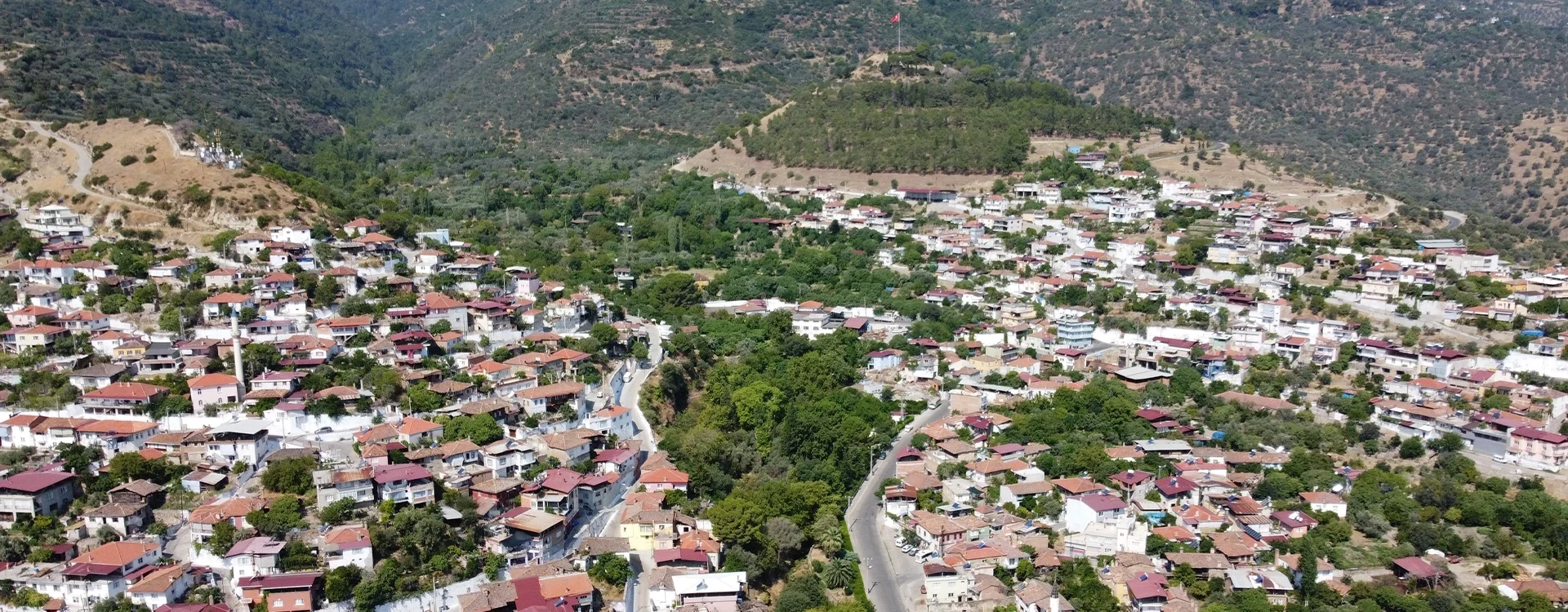
Explore the rural landscapes, traditional villages and regional cultural heritage of one of Aydın's distinctive inland districts.
Explore BozdoğanFrom traditional kebabs and village specialties to celebrated agricultural products, explore the remarkable gastronomic diversity of the Turkish Aegean.
Discover the famous miniature beef skewers of Ortaklar, traditionally grilled over charcoal.
Explore Ortaklar Çöp ŞişExplore a distinctive walnut-based sweet specialty associated with the food traditions of Bozdoğan.
Discover Bozdoğan Cevizli SucuğuLearn about another traditional regional specialty associated with Germencik's culinary heritage.
Explore Germencik Sour ChickenDiscover a traditional Aydın dish reflecting the region's distinctive home-cooking traditions.
Discover Aydın YuvarlamasıExplore a traditional ceremonial dish associated with the village and celebration culture of Karacasu.
Explore Dedebağ KeşkeğiDiscover the traditional pumpkin dessert of Aydın, reflecting the sweet flavors of the region.
Explore Aydın Pumpkin Dessert