Plan a Private Muğla Experience
Tell us your interests and travel dates so we can suggest a practical regional route.
Request Your Private Programme





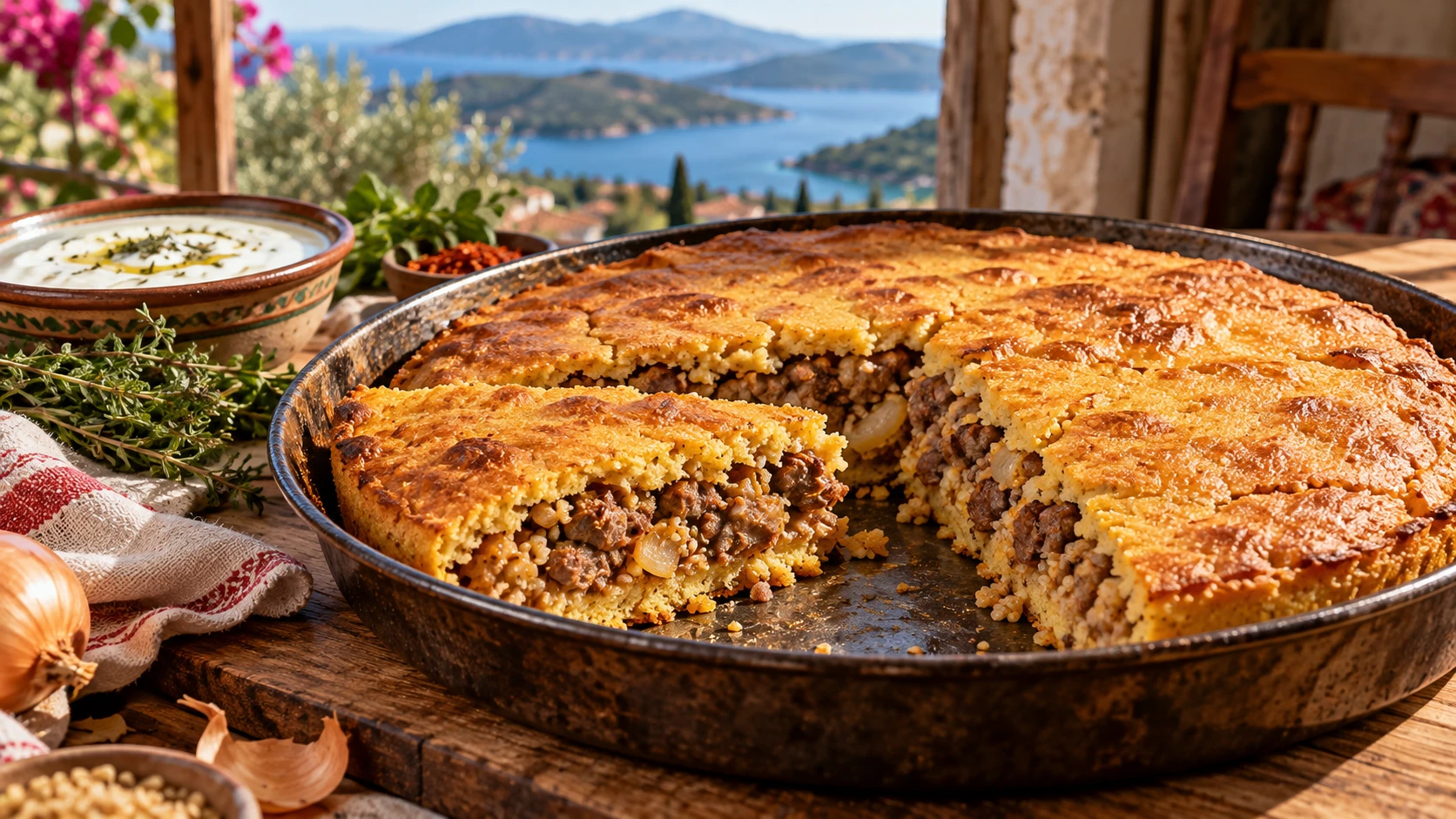
A rustic layered pastry with a corn-flour-based crust and a savoury filling of meat, bulgur and onions.
The word leğen refers to the basin traditionally used in preparing or cooking this substantial pastry. The Muğla Culture Portal describes a version cooked beneath a tray among embers and ash, later adapted to household ovens. It was also associated with using cooked meat at special family occasions, including religious feasts.
Meat and onions are cooked with bulgur and seasonings. A soft corn-flour dough is divided between a lower and upper layer around the filling. Traditionally the pastry was baked in a deep basin under embers; an oven is a practical modern alternative.
The dough is more rustic than a standard paper-thin yufka pastry.
Goat, lamb or beef may be used with fat, onions and seasonings.
The wheat grain helps absorb juices and gives the filling a hearty texture.
The traditional leğen and ember method explains the name and original baking character.
The essential context before tasting, buying or exploring this Muğla speciality.
Muğla, Türkiye
substantial meat pastry
Corn flour, milk and salt for the dough; goat, lamb or beef, bulgur, onion, fat and herbs or spices for the filling.
Cook chopped meat and onions, then stir in moistened bulgur and herbs.
Usually prepared for gatherings or by cooks familiar with the recipe; do not assume it is available daily in every restaurant.
Crumbly golden corn crust around a richly seasoned, moist meat-and-bulgur centre.
A rustic layered pastry with a corn-flour-based crust and a savoury filling of meat, bulgur and onions.
The word leğen refers to the basin traditionally used in preparing or cooking this substantial pastry. The Muğla Culture Portal describes a version cooked beneath a tray among embers and ash, later adapted to household ovens. It was also associated with using cooked meat at special family occasions, including religious feasts.
The most rewarding way to approach a regional speciality is to notice the ingredients, the people who make it and the difference between a traditional product and a loosely inspired modern version.
The word leğen refers to the basin traditionally used in preparing or cooking this substantial pastry. The Muğla Culture Portal describes a version cooked beneath a tray among embers and ash, later adapted to household ovens. It was also associated with using cooked meat at special family occasions, including religious feasts.
The tradition survives through farms, markets, kitchens and producers. Local versions may vary; the geographical indication, where one exists, identifies a more specific protected product.
Corn flour, milk and salt for the dough; goat, lamb or beef, bulgur, onion, fat and herbs or spices for the filling.
Meat and onions are cooked with bulgur and seasonings. A soft corn-flour dough is divided between a lower and upper layer around the filling. Traditionally the pastry was baked in a deep basin under embers; an oven is a practical modern alternative.
Muğla, Türkiye
Although corn flour is used for the crust, bulgur means the traditional filling is not gluten-free.
Corn flour, milk and salt for the dough; goat, lamb or beef, bulgur, onion, fat and herbs or spices for the filling.
From coastal fishing communities to inland olive groves and mountain villages, Muğla contains several food landscapes. The exact setting of this product matters: a Bodrum mandarin orchard is not the same as a Marmaris pine forest or a Köyceğiz home kitchen.
Look at the six distinctive features below to understand the product beyond its name.
The dough is more rustic than a standard paper-thin yufka pastry.
In practice, this detail connects to the preparation: cook chopped meat and onions, then stir in moistened bulgur and herbs.
Goat, lamb or beef may be used with fat, onions and seasonings.
In practice, this detail connects to the preparation: make a soft dough with corn flour, milk and salt; divide into two layers.
The wheat grain helps absorb juices and gives the filling a hearty texture.
In practice, this detail connects to the preparation: place the filling between the layers and seal the edges in a greased vessel.
The traditional leğen and ember method explains the name and original baking character.
In practice, this detail connects to the preparation: bake until cooked through and browned; rest briefly before cutting.
A bottom and top dough layer enclose the filling before cooking.
In practice, this detail connects to the preparation: cook chopped meat and onions, then stir in moistened bulgur and herbs.
The size and labour involved make it well suited to sharing at gatherings.
In practice, this detail connects to the preparation: make a soft dough with corn flour, milk and salt; divide into two layers.
The word leğen refers to the basin traditionally used in preparing or cooking this substantial pastry. The Muğla Culture Portal describes a version cooked beneath a tray among embers and ash, later adapted to household ovens. It was also associated with using cooked meat at special family occasions, including religious feasts.
Nearby districts share some ingredients while maintaining their own names and preparations. A food trail is more interesting when it compares these differences rather than treating every dish as interchangeable.
Crumbly golden corn crust around a richly seasoned, moist meat-and-bulgur centre.
Serve warm in wedges. It is filling enough to be a main dish and pairs with a simple salad or yoghurt.
Although corn flour is used for the crust, bulgur means the traditional filling is not gluten-free.
These are practical clues for understanding the craft or dish, not a substitute for checking the registered specification where a protected name is used.
The dough is more rustic than a standard paper-thin yufka pastry.
Goat, lamb or beef may be used with fat, onions and seasonings.
The wheat grain helps absorb juices and gives the filling a hearty texture.
The traditional leğen and ember method explains the name and original baking character.
A bottom and top dough layer enclose the filling before cooking.
The size and labour involved make it well suited to sharing at gatherings.
Serve warm in wedges. It is filling enough to be a main dish and pairs with a simple salad or yoghurt.
Ask traditional kitchens or local food events about leğen böreği and order ahead if possible.
Availability and prices change. Ask about the actual producer or cook, ingredients, portion or package size and any storage instructions before ordering or purchasing.
Meat and onions are cooked with bulgur and seasonings. A soft corn-flour dough is divided between a lower and upper layer around the filling. Traditionally the pastry was baked in a deep basin under embers; an oven is a practical modern alternative.
Cook chopped meat and onions, then stir in moistened bulgur and herbs.
Make a soft dough with corn flour, milk and salt; divide into two layers.
Place the filling between the layers and seal the edges in a greased vessel.
Bake until cooked through and browned; rest briefly before cutting.
This is an educational overview, not a laboratory-validated manufacturing process or a complete food-safety recipe. Use a trusted recipe or qualified producer for precise quantities and controls.
Usually prepared for gatherings or by cooks familiar with the recipe; do not assume it is available daily in every restaurant.
Fresh harvest, dried storage and restaurant preparation are different timelines. A market may sell a preserved version even when the raw ingredient is not in season; ask about origin and production date when relevant.
For a useful image of Leğen Böreği, show the actual item and its characteristic texture or production setting. Details such as corn-flour crust and meat filling help tell the story more accurately than a generic stock image.
Use natural light, request permission before photographing producers or guests, and never imply that a placeholder image is a photograph of a specific registered product.
Contains meat and milk; bulgur contains gluten, and some recipes add wheat flour. Ask about ingredients if allergic.
Although corn flour is used for the crust, bulgur means the traditional filling is not gluten-free.
A regional name does not guarantee suitability for a particular allergy, dietary requirement or medical condition. Check the actual label or ask the cook.
Ask traditional kitchens or local food events about leğen böreği and order ahead if possible.
Build in time for market conversations and allow for seasonal stock. If a product carries a geographical-indication claim, check the protected name, the official emblem and producer traceability.
Pair a tasting or purchase with nearby cultural visits, without expecting every venue to stock every speciality.
Follow these nearby links to compare traditions, ingredients and places within the wider Muğla guide.
Explore Otlu Tepsi Böreği for a complementary perspective on the food, landscape or heritage of southwest Türkiye.
Explore Oğlak Yahni for a complementary perspective on the food, landscape or heritage of southwest Türkiye.
Explore Mugla for a complementary perspective on the food, landscape or heritage of southwest Türkiye.
A rustic layered pastry with a corn-flour-based crust and a savoury filling of meat, bulgur and onions.
The word leğen refers to the basin traditionally used in preparing or cooking this substantial pastry. The Muğla Culture Portal describes a version cooked beneath a tray among embers and ash, later adapted to household ovens. It was also associated with using cooked meat at special family occasions, including religious feasts.
Corn flour, milk and salt for the dough; goat, lamb or beef, bulgur, onion, fat and herbs or spices for the filling.
Meat and onions are cooked with bulgur and seasonings. A soft corn-flour dough is divided between a lower and upper layer around the filling. Traditionally the pastry was baked in a deep basin under embers; an oven is a practical modern alternative.
Crumbly golden corn crust around a richly seasoned, moist meat-and-bulgur centre.
Serve warm in wedges. It is filling enough to be a main dish and pairs with a simple salad or yoghurt.
Usually prepared for gatherings or by cooks familiar with the recipe; do not assume it is available daily in every restaurant.
Ask traditional kitchens or local food events about leğen böreği and order ahead if possible.
Contains meat and milk; bulgur contains gluten, and some recipes add wheat flour. Ask about ingredients if allergic. Although corn flour is used for the crust, bulgur means the traditional filling is not gluten-free.
Choose traceable producers and established local businesses, respect private kitchens and ask permission before photographing people at work. A genuine regional speciality is tied to local knowledge, not just a name printed on a souvenir.
Although corn flour is used for the crust, bulgur means the traditional filling is not gluten-free.
Support fair local trade and handle food or household products according to the maker’s instructions.
Ask Wow Cappadocia / Venere Travel about a tailor-made cultural itinerary with practical travel times and no compulsory shopping stops.
Combine local food heritage with coastal scenery, villages and historic sites at a comfortable pace.
Tell us your interests and travel dates so we can suggest a practical regional route.
Request Your Private Programme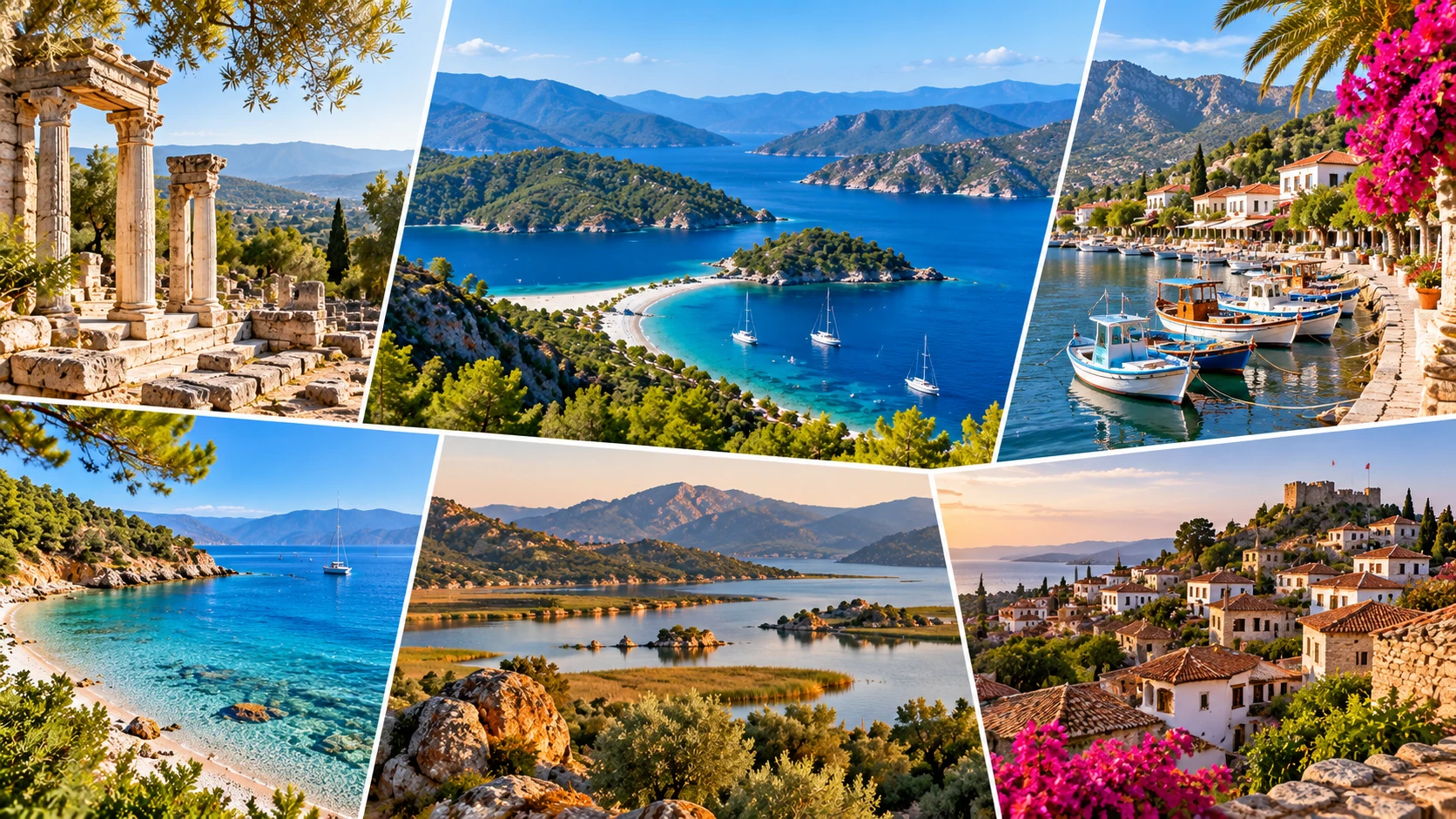
Discover ancient cities, villages, protected nature and regional food traditions.
View the Muğla Travel Guide