


Yozgat & Central Anatolia

Kerkenes Ancient City – Travel Guide

Şahmuratlı, Sorgun, Yozgat, Türkiye · Archaeology & ancient history

Discover the Story

Discover Kerkenes Ancient City

A vast fortified Iron Age city with a planned street network and the monumental Cappadocia Gate; its identification as Pteria remains a hypothesis.

History & background

Seven gates and a planned Iron Age city

Key details

The seven gates and urban survey · Foundation dates and the Pteria hypothesis

Explore Yozgat

Related Places & Traditions

Plan Your Visit

Kerkenes Ancient City – Quick Facts

📍

Location

Şahmuratlı, Sorgun, Yozgat, Türkiye

🏛️

Category

Archaeology & ancient history

⭐

Main focus

Seven gates and a planned Iron Age city

🧭

Related guide

Uşaklı Höyük


Archaeology & ancient history

Seven gates and a planned Iron Age city

Palaeo-Phrygian inscriptions and graffiti, together with evidence of a destructive fire, inform the debate over the city’s inhabitants and its end in the sixth century BC. The short period of urban occupation and limited subsequent building make the ridge unusually valuable for studying Iron Age planning.

Key details and historical context

The seven gates and urban survey

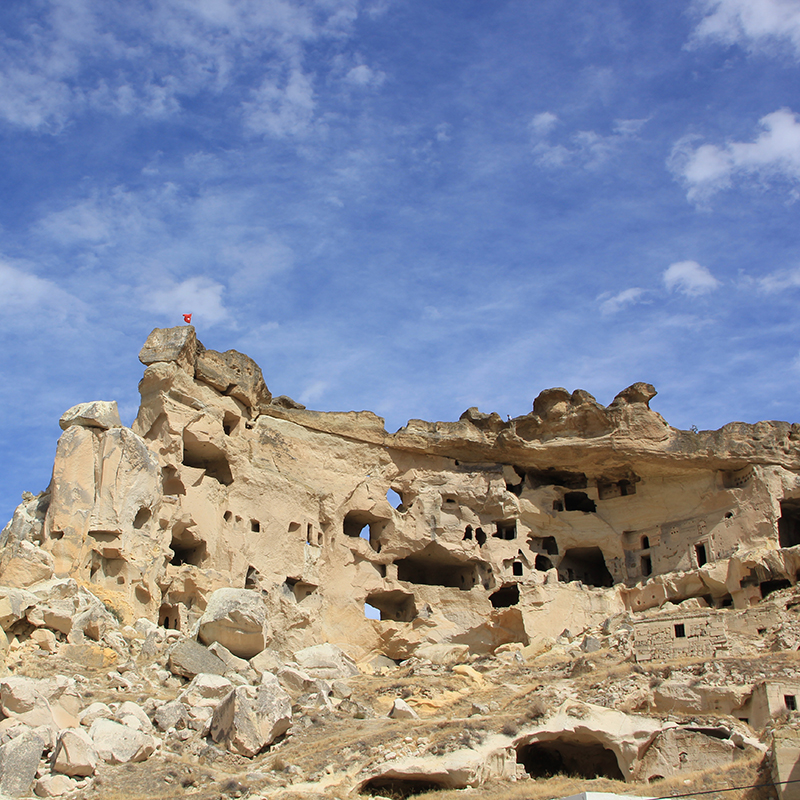
The city enclosed approximately 2.5 square kilometres within a defensive circuit about seven kilometres long, interrupted by seven gates. Excavation of the Cappadocia Gate between 1999 and 2011 produced a detailed record of a monumental entrance.
Foundation dates and the Pteria hypothesis

Geophysical survey mapped residential compounds and public structures beneath the surface. The published gate report places the foundation in the later seventh century BC, while the project’s more recent historical synthesis favours the transition into the sixth century BC. Herodotus' Pteria remains a proposed identification, not a proven ancient name.

A city gate with a sanctuary and monumental sculpture

Excavation of the Cappadocia Gate revealed that an entrance through the defences could also serve a ceremonial purpose. A stepped stone installation supported an idol, and an unfigured upright stone formed another element of the cultic arrangement. Excavators recovered fragments of a human-scale statue from the back of the gate, together with its pedestal, decorated with two sphinxes facing away from one another. Iron fittings from the doors and an ornament fashioned from gold and electrum offer a different record of the city’s metalworking and wealth. The gate’s design and religious furnishings are interpreted by the excavators as Phrygian; they are more specific evidence of cultural affiliation than the modern site name.

Visiting Kerkenes Ancient City

Planning your visit

The landscape is exposed and the archaeological remains are fragile.

On-site considerations

Consult the project and local authorities about access; do not walk on wall foundations.

Regional itinerary

Compare the planned Iron Age city with the nearby Hittite landscape at Uşaklı.

Continue Exploring Yozgat

Yozgat & Central Anatolia