Private Crimean Church & Galata Heritage Tour
Ask us about a tailor-made route combining Christ Church, Galata Tower, Serdar-ı Ekrem, Şişhane, İstiklal Avenue and the international heritage of Beyoğlu.
Request a Custom Tour





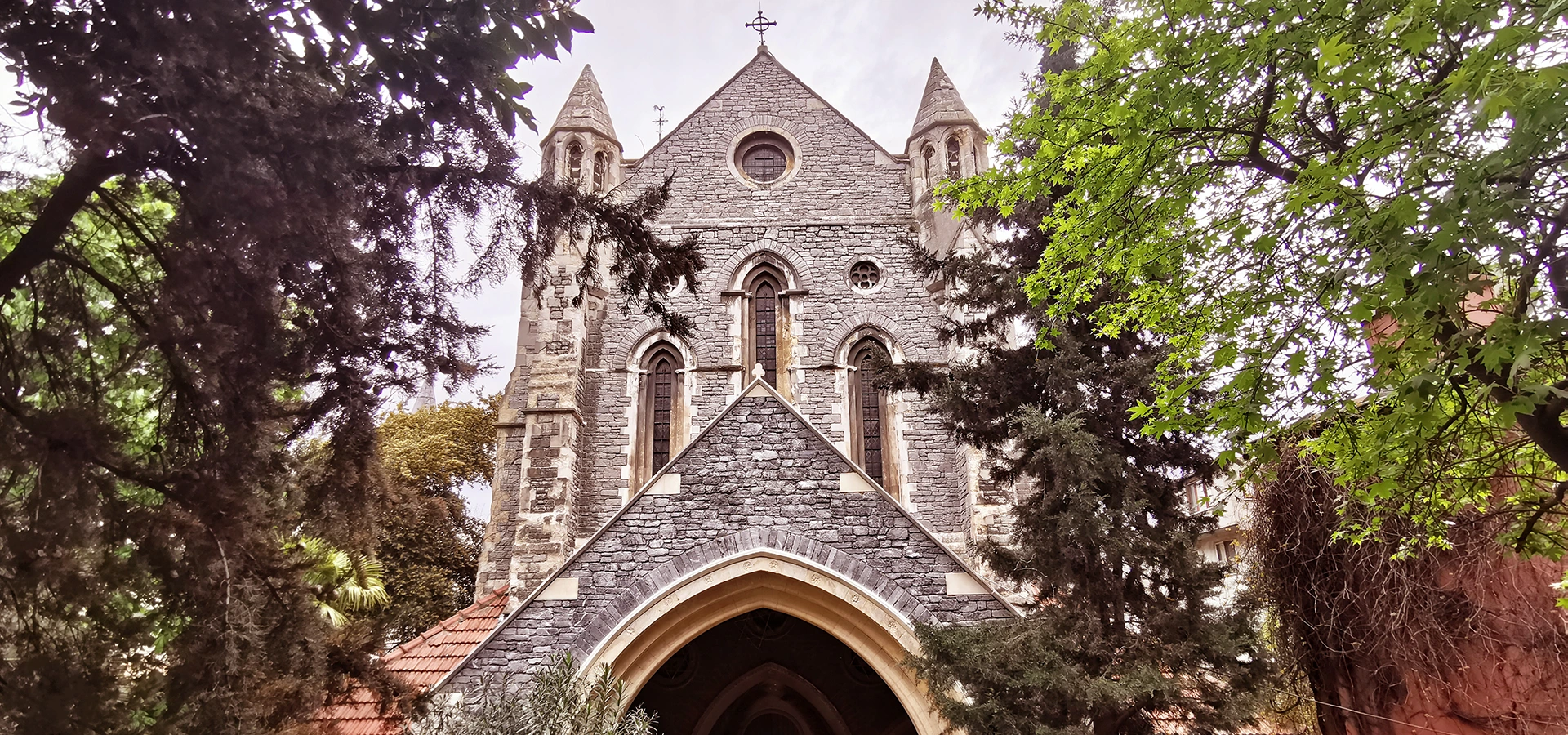
The Crimean Memorial Church, officially known as Christ Church, Galata and often called Kırım Kilisesi in Turkish, is one of Istanbul's most atmospheric and unexpected Christian monuments. Hidden among the steep streets of Galata and Beyoğlu, the grey-stone Anglican church feels strikingly different from the Byzantine churches, Ottoman mosques and Levantine apartment buildings that surround it.
The church was created as a memorial to British servicemen who died during the Crimean War of 1853–1856. Its story began soon after the conflict, when a memorial church was proposed in Constantinople. The site was provided by Sultan Abdülmecid I, and construction extended from 1858 to 1868.
The design history is almost as fascinating as the building itself. The young architect William Burges won the original architectural competition in 1856, but after years of revisions he was replaced. The church ultimately took shape under the celebrated Victorian Gothic architect George Edmund Street, who gave the building the powerful Gothic Revival character seen today.
Christ Church is not simply a war memorial or architectural curiosity. It remains an active Church of England congregation within the Diocese in Europe. Its modern story includes closure in 1978, restoration and reopening in 1991, refugee ministry, music, memorial art and weekly Anglican worship.
The present church was constructed in Galata as a memorial to British servicemen who died in the Crimean War.
George Edmund Street completed the Victorian Gothic design after William Burges won the original competition.
After more than a decade of closure, the church reopened and returned to active Anglican life.
Christ Church remains an active Anglican congregation with a regular Sunday service in the heart of Istanbul.
Essential information for visiting Christ Church Galata and understanding its place in the Crimean War, British-Ottoman relations, Anglican life and Victorian Gothic architecture.
Serdar-ı Ekrem Street in Galata, Beyoğlu, within walking distance of Galata Tower and Şişhane.
Open on Google MapsAn active Anglican / Church of England church officially dedicated as Christ Church, Galata.
Built in memory of British servicemen who died during the Crimean War of 1853–1856.
The foundation stone was laid in 1858, and the church opened for worship in 1868.
A major example of Victorian Gothic Revival architecture associated with George Edmund Street.
A living Anglican church with regular worship; Sunday service is currently listed at 11:00.
Christ Church is one of the most revealing monuments in Istanbul for understanding the city's 19th-century international communities and the political world of the Crimean War.
The church is important first as a memorial to the Crimean War, a conflict that brought the Ottoman Empire, Britain, France and Sardinia into alliance against Russia. Constantinople became a major logistical, diplomatic and medical center during the war, and thousands of British servicemen passed through the Ottoman capital and the Bosphorus region.
Its foundation therefore reflects an unusual moment of British-Ottoman cooperation. The land on which the church stands was provided by Sultan Abdülmecid I, while funds were raised in Britain for a permanent memorial church in Constantinople. The result was not a military monument in the conventional sense, but a functioning place of Anglican worship dedicated to the memory of the dead.
Architecturally, the building is one of Istanbul's clearest examples of High Victorian Gothic Revival. Its pointed arches, heavy stonework, steep rooflines, turret-like forms and secluded garden setting make it feel almost transplanted from Victorian Britain, yet its location above the Bosphorus gives it an unmistakably Istanbul context.
For travelers following our guide to places to visit in Istanbul, the Crimean Memorial Church adds another layer to the history of Galata and Pera. It reveals the presence of Anglican worship, British diplomacy, European expatriate communities and international conflict within the late Ottoman capital.
The origins of the church lie directly in the aftermath of the Crimean War, fought between 1853 and 1856. Britain and France entered the war as allies of the Ottoman Empire, and Constantinople became a vital base for troops, shipping, hospitals and diplomacy connected with the conflict.
In 1856, shortly after the war ended, an initiative was launched in Britain to create a permanent memorial to those who had died. Rather than erecting only a statue or column, supporters proposed a church in Constantinople where worship could continue from generation to generation according to the rites of the Church of England.
A site in Galata was made available through the support of Sultan Abdülmecid I. The foundation stone was laid in 1858. The project then experienced years of design changes, financial pressure and architectural controversy before the building was finally completed.
The church opened for worship in 1868. Its dedication as Christ Church remained the formal ecclesiastical name, while the commemorative purpose became so closely associated with the building that it came to be widely known as the Crimea Memorial Church or Crimean Memorial Church.
Through the late Ottoman period, the First World War, the Allied occupation of Istanbul, the foundation of the Turkish Republic and the enormous demographic changes of the 20th century, the church remained an unusual British Anglican landmark in Galata. Its later closure and revival added another remarkable chapter to that history.
The Crimean War linked Britain, France and the Ottoman Empire in an alliance against Russia.
A memorial church in Constantinople was proposed and an architectural competition was organized.
The foundation stone of the church was laid on land provided during the reign of Sultan Abdülmecid I.
George Edmund Street replaced William Burges as architect after years of revisions and disagreement.
The completed church opened for Anglican worship.
Christ Church reopened after a period of closure and returned to active congregational life.
To understand the church, it is essential to understand why a British military memorial appeared in Istanbul at all. During the Crimean War, the Ottoman Empire fought Russia with the military support of Britain and France. Constantinople became one of the great rear bases of the Allied war effort.
British ships, soldiers, medical personnel and officials moved through the Bosphorus and the Ottoman capital on their way toward the Black Sea and Crimea. The wider Istanbul region also became closely associated with wartime hospitals, including the famous British military hospital at Scutari — today's Üsküdar — where Florence Nightingale worked during the conflict.
The memorial church was therefore designed to combine remembrance and living worship. The dead would be commemorated not only through inscriptions, but through an Anglican congregation continuing to pray and worship in the city that had served as a critical wartime center.
This makes Christ Church especially unusual among Istanbul monuments. It is simultaneously a religious building, a war memorial, a product of Victorian Britain and a physical reminder of a period when Ottoman and British strategic interests were closely aligned.
Britain and France entered the war in support of the Ottoman Empire against Russia.
The Ottoman capital became an essential diplomatic, naval, logistical and medical center during the war.
The church was conceived as a permanent memorial to servicemen who did not return from the conflict.
Its founders chose a functioning church so remembrance would continue through worship rather than through a static monument alone.
Across the Bosphorus, Üsküdar became famous for the wartime hospitals associated with Florence Nightingale.
The building preserves a rare architectural memory of British-Ottoman cooperation in the 19th century.
The answer is more complicated than a single architect's name. In 1856, a competition was organized for the new memorial church, and the winning design was submitted by the young British architect William Burges. Burges would later become one of the most imaginative figures of Victorian Gothic architecture.
The project did not proceed smoothly. Burges produced repeated revisions while the committee debated cost, style and the practical requirements of the church. His designs gradually changed, but disagreements continued and his scheme was ultimately abandoned.
In 1863, Burges was replaced by George Edmund Street, another major figure of the Gothic Revival. Street is best known internationally for the Royal Courts of Justice in London, but Christ Church in Istanbul forms an important earlier chapter in his career.
The standing church is therefore credited to Street, but the abandoned Burges project remains an important part of its architectural history. The story offers a rare opportunity to connect Istanbul directly with the debates, competitions and stylistic rivalries of High Victorian architecture in Britain.
The Crimean Memorial Church is one of Istanbul's most distinctive examples of Victorian Gothic Revival architecture. Its appearance is deliberately unlike the domed Byzantine and Ottoman religious buildings that dominate the city's historic skyline. Instead, it uses the vertical language of medieval Western European church architecture.
The exterior is characterized by grey stone masonry, pointed-arch openings, circular windows, steep gables, slender turret-like elements and a strong sense of upward movement. The rough stone surface gives the building a severe, almost fortress-like character, while the garden softens the composition.
The church is especially memorable because it is partly concealed by the surrounding Galata streets and vegetation. Visitors approach through a dense urban neighborhood and suddenly encounter a building that resembles a Victorian English church set within a secluded garden. That contrast is one of the strongest parts of the experience.
Inside, the Gothic language continues through pointed arches, wooden furnishings, the chancel, memorial details and the visual focus toward the altar. Later additions have layered the interior with 20th- and 21st-century art without erasing the original Victorian structure.
The building belongs to the 19th-century revival of medieval Gothic architecture in Britain.
Heavy stone masonry gives the exterior a strong and immediately recognizable character.
Windows, portals and interior openings use the pointed forms associated with Gothic architecture.
Gables and turret-like elements pull the eye upward and give the church a distinctly northern European silhouette.
The church stands within greenery that creates an unexpected sense of seclusion in central Galata.
Its Victorian character creates one of the most dramatic architectural contrasts in Beyoğlu.
The interior of Christ Church feels intimate compared with Istanbul's monumental imperial churches and mosques. Its atmosphere comes from the combination of Victorian Gothic architecture, wooden liturgical furnishings, memorial objects, painted devotional art and the continuing signs of an active congregation.
The nave leads toward the chancel and altar, with the Gothic structure providing a calm frame for later additions. One of the most distinctive features is the rood screen, which became both a memorial object and a canvas for modern sacred painting.
The church also preserves a historic pipe organ made in England in 1911 by W. Hill & Son. Its presence reflects the musical traditions of Anglican worship and adds another direct link between the Galata church and British ecclesiastical culture.
Visitors should remember that many of the church's most interesting objects are not museum displays. They remain part of a living sacred environment, and the quietness of the interior is central to the experience.
The main interior space preserves the church's strong Victorian Gothic perspective toward the chancel.
A major memorial and artistic focus separates the nave visually from the sanctuary area.
The 1911 W. Hill & Son instrument is one of the church's most important historic furnishings.
The interior contains layers of remembrance extending far beyond the original Crimean War dedication.
Later painted works connect biblical imagery with the landscape and people of Istanbul.
The church remains a devotional space where services and prayer take priority over sightseeing.
One of the most remarkable features of the church is its wooden rood screen. The screen was erected in 1923 as a memorial connected with those who died at Gallipoli, adding another major chapter of British and Ottoman-era wartime memory to a church originally dedicated to the Crimean War dead.
Decades later, the screen gained an entirely new artistic character. Between approximately 1995 and 2005, Scottish artist Mungo McCosh created painted panels showing saints and sacred figures within an unmistakably Istanbul setting.
The paintings are especially memorable because they do not treat the church as an isolated British enclave. The city itself becomes part of the sacred imagery, and figures associated with the congregation inspired some of the faces. One famous local detail even shows the Christ Child holding a simit, Istanbul's familiar ring-shaped bread.
The result is a highly unusual meeting of Anglican tradition and local identity. The screen transforms the church from a purely Victorian monument into a building that also speaks visually about its long life in Istanbul.
The rood screen was erected as a memorial associated with the dead of Gallipoli.
The Scottish artist later covered the screen with a distinctive modern cycle of sacred paintings.
Local urban scenery enters the religious imagery and anchors the church firmly in its city.
People connected with the church provided inspiration for some of the painted saints and figures.
A playful Istanbul touch shows the Christ Child holding one of the city's most familiar foods.
The screen connects Gallipoli remembrance, modern art and present-day Anglican identity.
Music has long formed an important part of Anglican worship, and Christ Church preserves a significant instrument built in England in 1911 by W. Hill & Son. The firm was one of Britain's major organ builders and produced instruments for important churches and cathedrals.
The organ gives the church a strong musical identity and has also helped make the building a memorable setting for concerts and special events. Visitors should not assume that a concert or organ performance takes place every day, however; programs change and should be checked separately before planning a visit around music.
The organ-loft area has also been associated with historic military flags and objects linked with British forces, the Crimean War and later periods of Istanbul's history. These details reinforce the church's unusual combination of religious life and military remembrance.
By the second half of the 20th century, Istanbul's English-speaking and expatriate communities had changed dramatically. With the congregation greatly reduced, Christ Church eventually closed in 1978.
The closure could easily have marked the end of the building's religious life. Instead, the church underwent an extraordinary revival around the beginning of the 1990s. Restoration work was undertaken, and accounts of the reopening emphasize the help given by refugees and migrants who had arrived in Istanbul during a period of regional upheaval.
The church reopened in September 1991. From that point, Christ Church once again developed as an active congregation, a center of hospitality and a place where Istanbul's international Christian communities could gather.
This modern history is essential to understanding the church today. The building is not preserved only because of its Victorian architecture. Its survival is also the result of people who returned it to worship, repaired it and gave it a new social purpose in the city.
A dwindling congregation led to the closure of the church.
Work in the following years rescued a building that had fallen into serious decline.
Refugees and migrants became closely connected with the restoration and renewed life of the church.
Christ Church reopened for worship.
The church again became a spiritual home for an international Anglican community.
Its modern revival is now part of the historical significance of the monument itself.
The Crimean Memorial Church remains part of the Church of England's Diocese in Europe. It is therefore not a former church converted into a museum, but a functioning Christian community with regular worship.
The current official church listing includes a Sunday service at 11:00. Visitors are welcome to attend respectfully, but anyone coming specifically for worship should check the latest schedule before traveling because special services, major feasts and local circumstances can alter normal arrangements.
The congregation is international, reflecting the long history of English-speaking Christians, expatriates, travelers, refugees and migrants in Istanbul. In this sense, the church continues the multicultural religious character that has defined Galata and Pera for centuries.
Its Anglican identity also makes the church an important counterpart to the Catholic, Greek Orthodox, Armenian, Bulgarian Orthodox, Syriac and Protestant communities found elsewhere in Istanbul. Together, these traditions reveal a much more diverse Christian history than the city's most famous monuments alone might suggest.
Christ Church belongs to the Anglican tradition and the Church of England's Diocese in Europe.
The current official listing gives a regular Sunday service at 11:00.
The congregation reflects Istanbul's continuing role as a meeting place between countries and cultures.
Guests may attend worship respectfully and should follow the guidance of clergy and church members.
Religious services, pastoral work and private prayer always take priority over sightseeing.
The church carries a 19th-century Anglican presence into modern Istanbul.
One of the most meaningful aspects of the church's modern history is its connection with refugees and displaced people. The revival of the church around 1991 was closely linked with people who had themselves arrived in Istanbul through regional crises and migration.
The crypt and wider church community later became associated with practical support and hospitality for people in difficult circumstances. This charitable role transformed Christ Church from a historical memorial into a place where the idea of refuge became part of everyday ministry.
That history creates a powerful contrast with the church's original purpose. A monument built to remember the dead of a 19th-century war eventually became a place supporting people displaced by the conflicts and instability of later generations.
The church's layers of remembrance extend into the 21st century. Within the chancel is a memorial to Roger Short, the British Consul-General in Istanbul who was killed in the terrorist bombing of the British Consulate on 20 November 2003.
Short had a long connection with Turkey and was widely known for his interest in the country's history and culture. His memorial at Christ Church links the congregation with another traumatic moment in the history of modern Istanbul.
This addition is important because it shows how Christ Church has continued to function as a place of communal memory. The Crimean War remains the founding story, but later generations have added their own experiences of war, loss, diplomacy and reconciliation to the building.
A visit is most rewarding when you look beyond the façade and consider how architecture, war memory, modern art and living worship overlap in the same small complex. The building rewards slow observation rather than a rushed photo stop.
Notice the surprising transition from the dense streets of Galata into a quiet, green church precinct.
Study the pointed arches, circular windows, gable and vertical Gothic composition.
The interior preserves the atmosphere of a 19th-century Anglican Gothic church.
Look for the extraordinary modern paintings that merge saints, congregation members and Istanbul imagery.
The historic W. Hill & Son organ is one of the church's most significant surviving furnishings.
Explore the layers of remembrance connected with the Crimean War, Gallipoli and later British history.
Look carefully at the modern sacred paintings for a distinctly Istanbul interpretation of Christian imagery.
The chancel memorial connects the church with the 2003 British Consulate bombing.
Observe how historic architecture continues to serve present-day Anglican worship and community life.
No fixed daily visitor opening hours are currently published by the official Anglican listing, so confirm before making a dedicated trip.
The current official schedule lists worship every Sunday at 11:00, normally lasting about one hour.
The church is small and sound carries easily; lower your voice as soon as you enter the grounds.
Choose clothing suitable for an active Christian church.
This is usually enough for architecture, memorials, art and the garden when the church is open for visitors.
Concerts and cultural programs may take place, but they are not part of a fixed daily schedule.
Galata's streets are steep and often paved with uneven historic surfaces.
Normal church visits are not organized like a state museum; special concerts or events may have separate ticketing.
Begin around Şişhane and descend into the historic streets of Galata. This district once formed the center of the Genoese colony of Constantinople and later became one of the city's most international neighborhoods.
Continue toward Serdar-ı Ekrem Street and visit the Crimean Memorial Church when access is available. Allow around 30–45 minutes to appreciate the garden, Gothic façade, interior, rood screen, organ and memorials.
From the church, walk toward Galata Tower and the surrounding medieval street network. Then continue uphill toward İstiklal Avenue, where the Catholic churches and late Ottoman buildings of Pera reveal another side of Istanbul's European and Levantine history.
If you want to continue the Christian heritage theme, visit St. Anthony of Padua Church on İstiklal Avenue. Use our complete Istanbul visitor guide to extend the route toward Fener, Balat or the historic peninsula.
Christ Church is located on Serdar-ı Ekrem Street in Galata, Beyoğlu. The current Diocese in Europe listing gives the church address as Serdar Ekrem Sokak 82, Karaköy, 34425 Istanbul. Because local street-numbering references can vary across map services, searching directly for “Crimea Memorial Church” or “Kırım Kilisesi” is usually the simplest way to navigate.
The church remains an active Anglican congregation. The current official schedule lists a Sunday service at 11:00. This is the most reliable regularly published time for finding the church active, but attending worship should be approached as participation in a religious service rather than as sightseeing.
The official Church of England listing does not currently publish fixed general opening hours for casual visitors and recommends contacting the church for more information. For that reason, travelers making a special journey for the interior should verify access in advance.
There is no standard state-museum admission ticket for ordinary church access. However, concerts, recitals or other special cultural events may operate with their own tickets and schedules.
The current Church of England listing shows a Sunday service every week at 11:00, usually lasting around one hour. The service is part of the normal worship life of the congregation and is open to visitors who attend respectfully.
Anyone coming for the architecture alone should avoid moving around the nave, using flash or treating the liturgy as a tourist performance. If you wish only to see the building, a separate visit outside the main service is preferable when access can be arranged.
The current regular service is listed at 11:00.
The official event listing gives approximately one hour for the regular Sunday service.
Guests may attend respectfully and follow the congregation's guidance.
Holy Week, Christmas, special events and pastoral circumstances can affect the normal schedule.
The best sightseeing time is whenever you have confirmed that the church is open outside a service or private event.
Best for experiencing the living Anglican congregation rather than for unrestricted sightseeing.
If visitor access is confirmed, daylight helps reveal the stone façade, garden and interior details.
Greenery around the church can make the secluded garden setting especially atmospheric.
Special music events can be memorable, but check the organizer because they may require a separate ticket.
Visit before the surrounding streets become busiest, especially on weekends.
Enough for the exterior, garden and a brief interior look if access is available.
Ideal for the architecture, rood screen, organ, memorials and quiet observation.
Appropriate if attending the regular Sunday service or a musical program.
Combine Christ Church with Galata Tower, Şişhane, İstiklal Avenue and St. Anthony of Padua.
The church is especially photogenic because of the contrast between its Victorian Gothic stonework and the dense vegetation around the building. The strongest exterior views often use the garden, steps or surrounding Galata streets to frame the façade.
Inside, the nave, rood screen, organ and memorial details offer atmospheric compositions when photography is permitted. However, this is a small active church, so even quiet camera activity can become intrusive very quickly.
Never photograph people at prayer, refugee or community activities, pastoral conversations or a service without clear permission. Avoid flash and respect any temporary restriction communicated by the church.
Use the surrounding greenery to emphasize how secluded the church feels within Galata.
Side light can reveal the texture of the grey masonry and Gothic details.
Look for repeating Gothic forms around windows, doors and interior openings.
The painted panels are among the most unusual visual details in the church.
The historic organ adds a strong vertical focal point to interior photography when permitted.
Worshippers and community members should never become uninvited subjects of tourist photography.
The main challenge for visitors with mobility limitations is not only the church building itself but also Galata's steep historic street network. Approaches from Şişhane, Karaköy and Galata Tower can involve slopes, steps and uneven paving.
Galata contains significant gradients that may be difficult for visitors with limited mobility.
Cobbled and uneven surfaces are common in the surrounding neighborhood.
The historic garden and entrance sequence can include changes of level and steps.
The M2 metro can reduce the amount of uphill walking compared with some approaches from the waterfront.
A taxi may shorten the approach, although narrow streets and traffic restrictions can affect the final drop-off point.
Contact the church in advance if step-free access or other accessibility arrangements are essential.
The church stands on Serdar-ı Ekrem Street in Galata, within the Beyoğlu district. It is hidden in a neighborhood of narrow streets rather than located on a major boulevard, so navigation by map is useful even when you are already close.
Take the M2 metro to Şişhane and walk downhill through Galata toward Serdar-ı Ekrem Street.
The church is only a short walk through the surrounding historic streets, but expect slopes and uneven paving.
Walk uphill toward Galata; the route is scenic but steep. The historic Tünel funicular can reduce some of the climb.
Walk toward the Tünel / Şişhane end of the avenue and descend into the Galata neighborhood.
Take the T1 tram to Karaköy, then continue uphill toward Galata or connect with the historic Tünel funicular.
Ask for “Kırım Kilisesi, Serdar-ı Ekrem, Galata.” Narrow streets may mean the final approach is on foot.
Christ Church lies in one of Istanbul's richest walking districts. Within a short distance you can connect medieval Genoese history, late Ottoman architecture, Anglican and Catholic heritage, art institutions, historic passages and the waterfront culture of Karaköy. Use our complete Istanbul visitor guide to continue planning.
Visit the most famous surviving landmark of the former Genoese district and enjoy wide views over Istanbul.
Explore one of Galata's atmospheric streets, known for historic buildings, design shops and steep urban views.
Continue uphill toward late Ottoman Pera and one of the most convenient metro connections in the district.
Walk through the former Grande Rue de Péra, lined with churches, passages, consulates and historic architecture.
Discover Istanbul's great Neo-Gothic Catholic basilica and the Franciscan heritage of İstiklal Avenue.
Descend toward the waterfront for historic banks, contemporary culture, cafés and access to the Golden Horn.
Explore a major cultural institution housed in the former Ottoman Bank building near the lower Galata district.
Discover more churches, mosques, palaces, museums, neighborhoods and hidden historic sites across the city.
It is a 19th-century Anglican church in Galata built as a memorial to British servicemen who died during the Crimean War.
Its official ecclesiastical name is Christ Church, Galata. It is widely known as the Crimea Memorial Church or Crimean Memorial Church.
It is commonly called Kırım Kilisesi or Kırım Anıt Kilisesi.
It is on Serdar-ı Ekrem Street in Galata, within Istanbul's Beyoğlu district and a short walk from Galata Tower and Şişhane.
It was created as a lasting memorial to British servicemen who died during the Crimean War of 1853–1856.
The site was provided during the reign of Ottoman Sultan Abdülmecid I, reflecting the alliance between the Ottoman Empire and Britain during the Crimean War.
The foundation stone was laid in 1858, and the completed church opened for worship in 1868.
William Burges won the original 1856 design competition, but he was later replaced. The standing church is associated with architect George Edmund Street.
It is a major example of Victorian Gothic Revival architecture, with pointed arches, grey stone, steep gables and strong vertical forms.
Yes. Christ Church is an active Church of England congregation within the Diocese in Europe.
Yes. It remains a functioning Anglican church rather than a former church or museum.
The current official Church of England listing gives a regular Sunday service at 11:00, normally lasting around one hour.
Visitors may attend respectfully. During worship, avoid sightseeing, photography and unnecessary movement through the church.
The official church listing does not currently publish fixed daily visitor opening hours and recommends contacting the church for more information.
There is no standard state-museum ticket for normal church access. Special concerts or events may have their own ticketing arrangements.
A declining congregation led to closure in 1978. The church was later restored and reopened in September 1991.
The screen was erected in 1923 as a Gallipoli memorial and later painted by Scottish artist Mungo McCosh with saints and Istanbul imagery.
One of the modern painted details gives the Christ Child a simit, creating a playful and memorable connection between Christian imagery and Istanbul life.
The historic pipe organ was built in England in 1911 by W. Hill & Son.
It commemorates the British Consul-General Roger Short, who was killed in the 20 November 2003 bombing of the British Consulate in Istanbul.
Allow around 30–45 minutes for a normal visit when access is available, or longer if attending worship or a concert.
Photography may be possible when the church is open outside worship, but visitors should avoid flash and respect any restrictions, private prayer or community activity.
The easiest public-transport approach is usually the M2 metro to Şişhane, followed by a downhill walk into Galata. Karaköy and the historic Tünel funicular are also useful.
Yes. The two sites are close enough to combine easily in the same walking route.
Yes, especially for travelers interested in the Crimean War, British-Ottoman relations, Anglican heritage, Victorian Gothic architecture and the hidden history of Galata.
Remain quiet and avoid sightseeing movement while services or private prayer are taking place.
Pastoral, refugee and charitable activities are private ministry rather than tourist experiences.
Remember that Christ Church is a functioning place of worship.
Keep steps, doors, aisles and access routes clear for congregation members and church staff.
Avoid flash, intrusive equipment and photographs of people without permission.
If donations are invited, contributions help sustain a living church and its community work.
Connect Christ Church with Galata Tower, Serdar-ı Ekrem, Şişhane, İstiklal Avenue, Catholic and Orthodox heritage and the wider story of 19th-century international Istanbul through a private route shaped around your interests and without compulsory shopping stops.
Choose a focused half-day exploration of Christ Church, Galata and historic Pera, or build a deeper private itinerary around Crimean War history, British-Ottoman relations, Anglican heritage, Levantine architecture and Istanbul's diverse Christian communities.
Ask us about a tailor-made route combining Christ Church, Galata Tower, Serdar-ı Ekrem, Şişhane, İstiklal Avenue and the international heritage of Beyoğlu.
Request a Custom Tour
Create a private Istanbul itinerary around Christian heritage, Byzantine monuments, Ottoman history, Galata, Beyoğlu, church architecture and the city's lesser-visited cultural treasures.
View Private Istanbul ToursUse Christ Church as a Galata starting point for a wider journey through Anglican, Catholic, Orthodox and Byzantine heritage across Istanbul, from Pera and the Golden Horn to Fener, Balat and the historic peninsula.
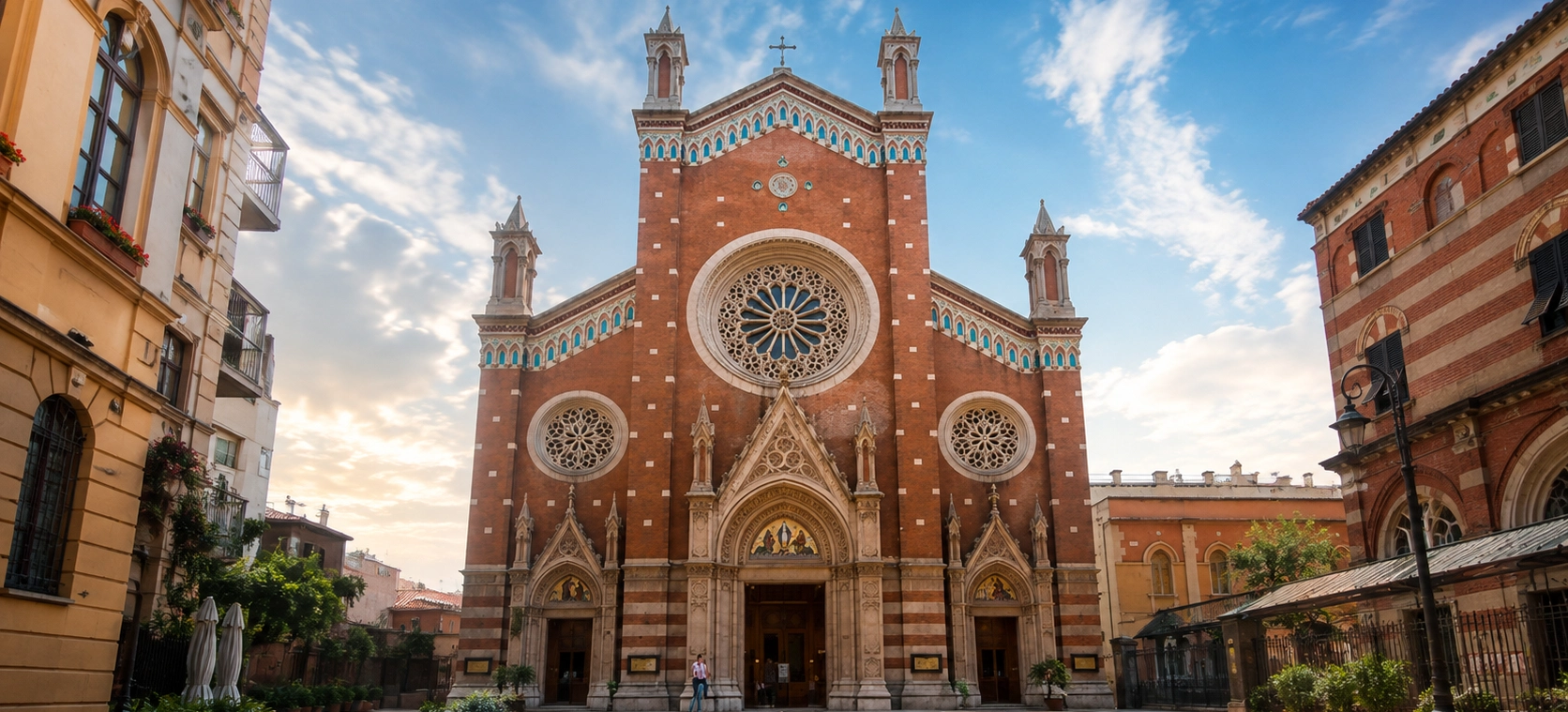
Continue into Pera for Istanbul's great Neo-Gothic Catholic basilica and the Franciscan heritage of İstiklal Avenue.
Explore St. Anthony Church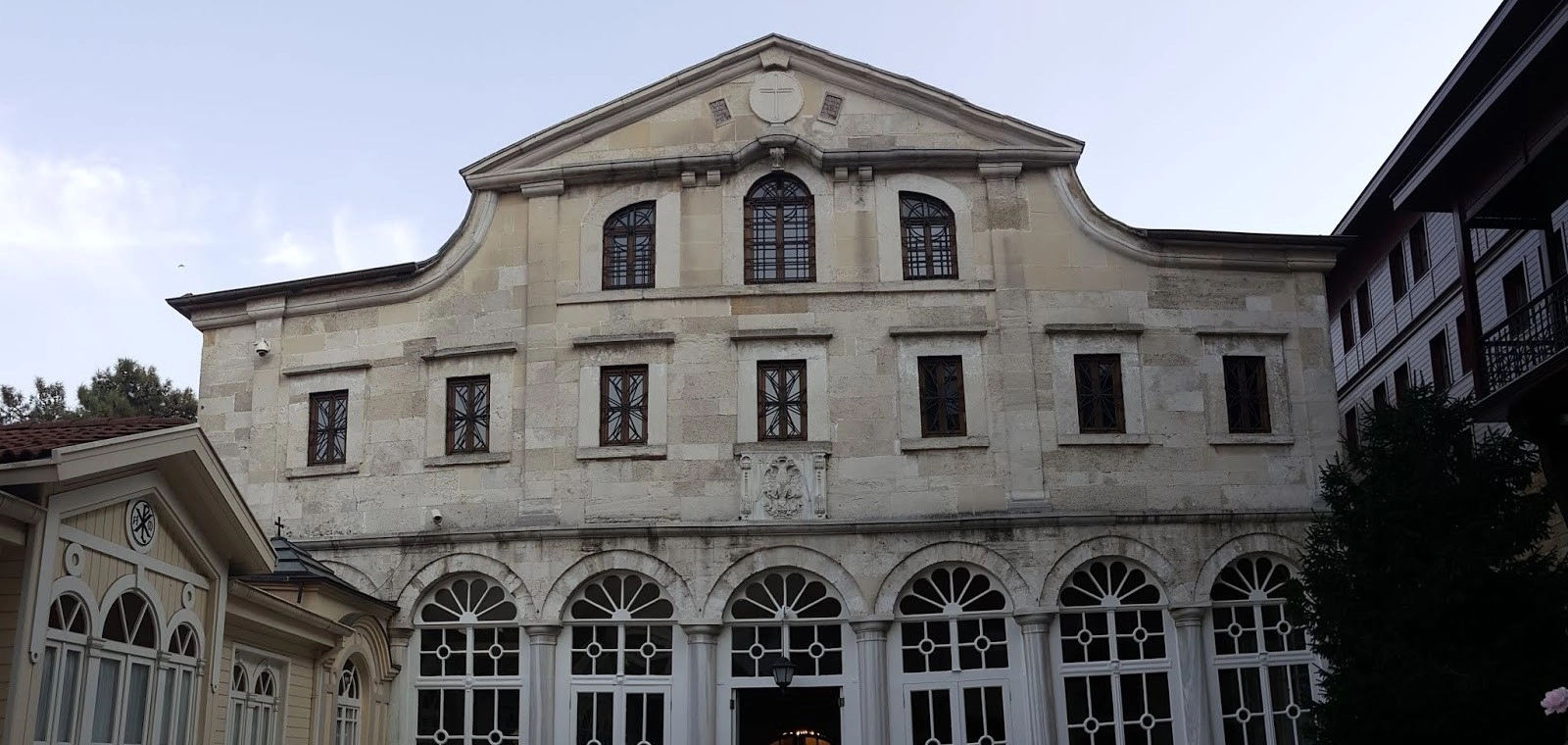
Continue to Fener for the principal church of the Ecumenical Patriarchate and one of Istanbul's most important living Orthodox sites.
Explore St. George Church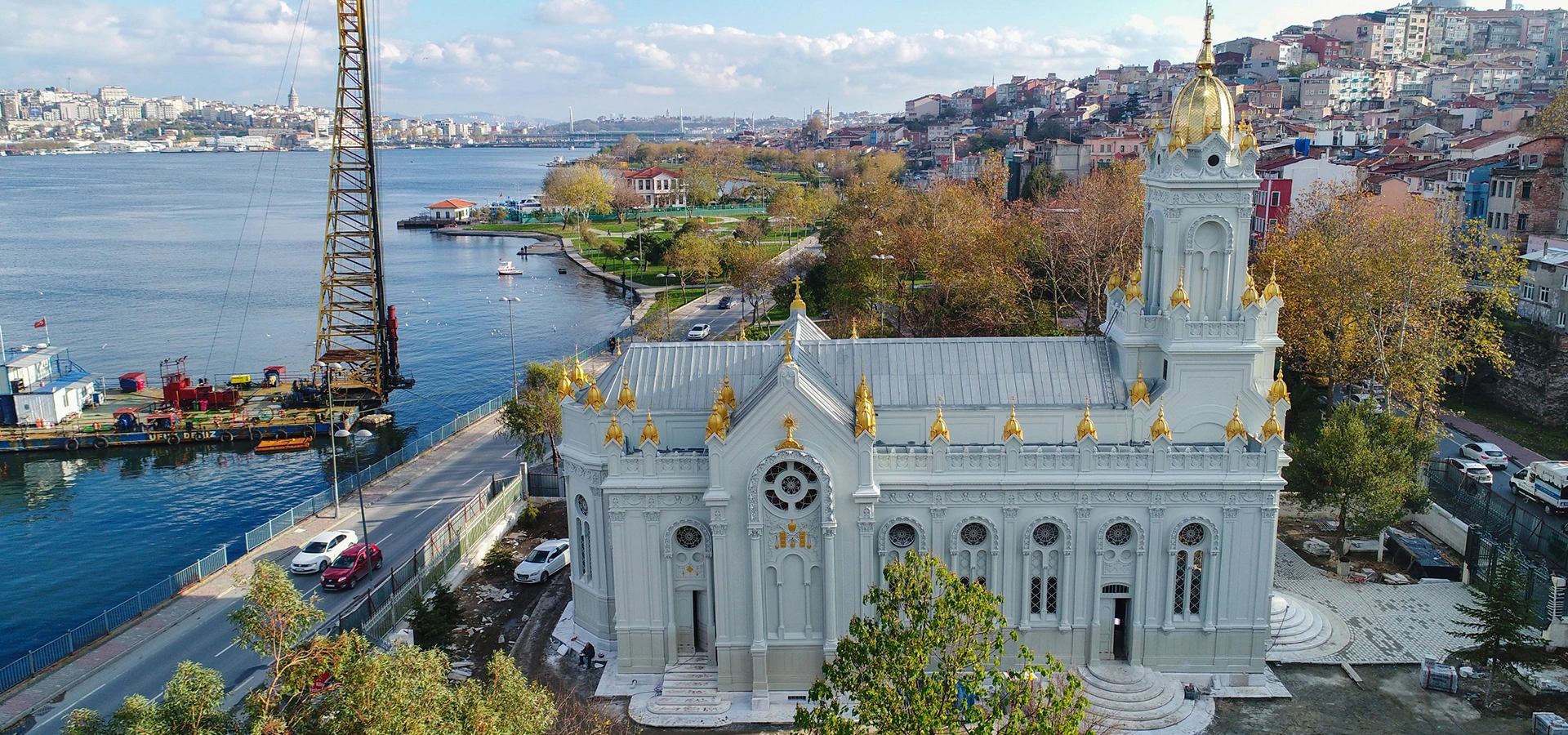
Discover the famous Iron Church on the Golden Horn and another remarkable expression of Istanbul's diverse Christian communities.
Explore St. Stephen Church