Request a Private Uşak Programme
We can discuss regional heritage and food experiences; individual access and tastings must be confirmed in advance.
Contact Wow Cappadocia





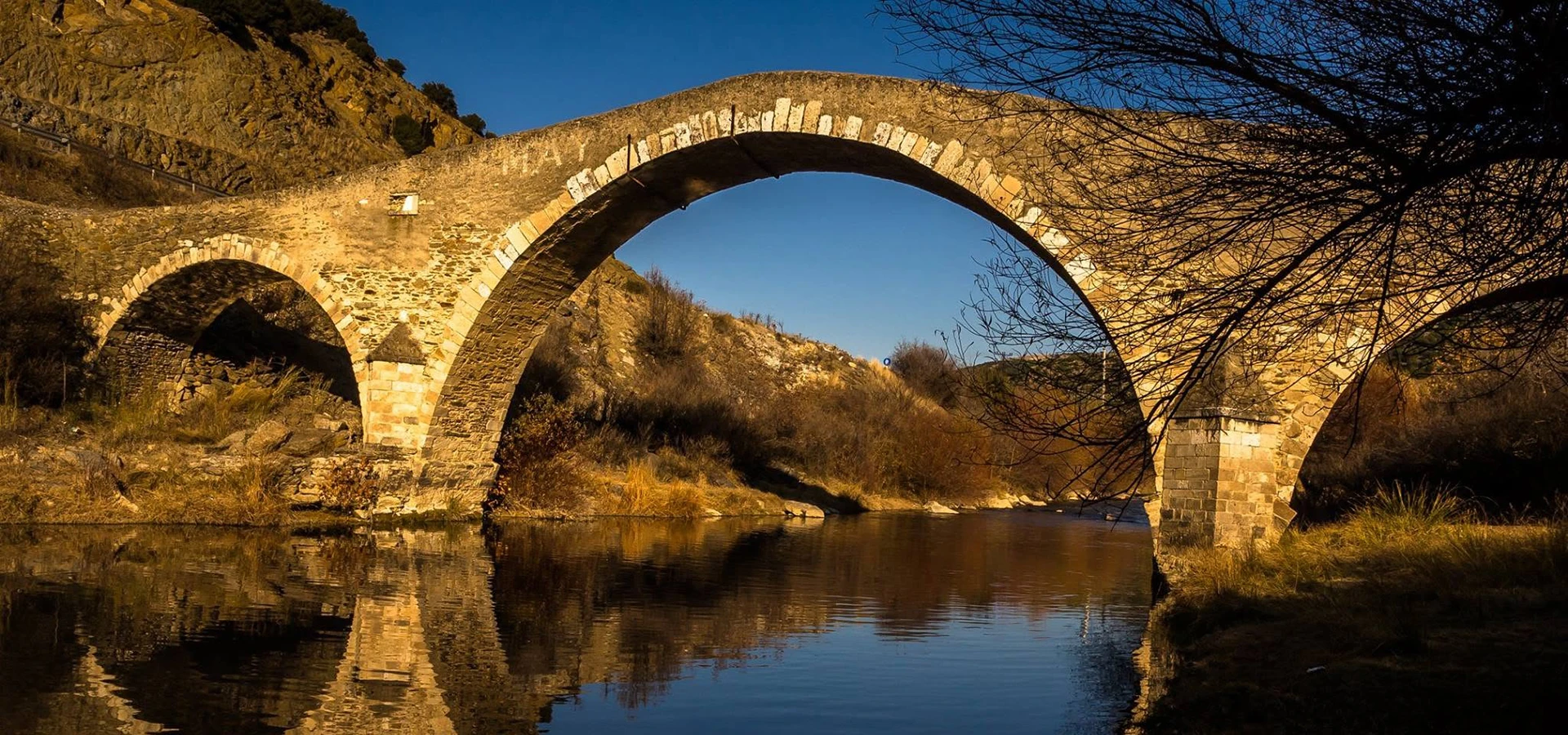
Çataltepe Bridge is a modest but informative crossing of the Gediz River, west of Uşak. Rather than a monumental city gate, its importance lies in the engineering of a route that connected settlements, fields and markets across a working river landscape.
The Uşak Provincial Directorate of Culture and Tourism describes a three-arched bridge of dressed stone, approximately 45 metres long and 3.5 metres wide, roughly 48 kilometres from the city centre. Its construction inscription has not survived. A Seljuk-period date is suggested by the authority, but it should be described as an attribution rather than a securely documented year.
A triple opening channels the Gediz beneath a narrow stone roadway.
The masonry shows how a durable crossing was assembled.
The Gediz gives the bridge its practical purpose.
A proposed Seljuk attribution is not a dated inscription.
Essential context for curious visitors and local food enthusiasts.
Gediz River, Uşak–İzmir road
Historic stone bridge
Three arches
The masonry shows how a durable crossing was assembled.
Plan around public access and road conditions.
Confirm local arrangements and individual variations.
Çataltepe Bridge is a modest but informative crossing of the Gediz River, west of Uşak. Rather than a monumental city gate, its importance lies in the engineering of a route that connected settlements, fields and markets across a working river landscape.
Its uncertain date is part of the historical story. Inscriptions, archival records and repairs are all needed to distinguish an original bridge from later interventions; the absence of an inscription is not proof of a particular dynasty.
The restrained masonry and repeating arches give Çataltepe a quieter appeal than an ornate urban monument. Changes in water level and seasonal vegetation can make the same crossing look very different.
The Uşak Provincial Directorate of Culture and Tourism describes a three-arched bridge of dressed stone, approximately 45 metres long and 3.5 metres wide, roughly 48 kilometres from the city centre. Its construction inscription has not survived. A Seljuk-period date is suggested by the authority, but it should be described as an attribution rather than a securely documented year.
Its uncertain date is part of the historical story. Inscriptions, archival records and repairs are all needed to distinguish an original bridge from later interventions; the absence of an inscription is not proof of a particular dynasty.
The restrained masonry and repeating arches give Çataltepe a quieter appeal than an ornate urban monument. Changes in water level and seasonal vegetation can make the same crossing look very different.
Compare the distinctive elements below with other Uşak traditions. Similar names elsewhere do not always indicate identical ingredients, techniques or historical origins.
A triple opening channels the Gediz beneath a narrow stone roadway.
In Çataltepe Bridge, three arches is worth examining in relation to the whole setting. Observe from permitted ground and distinguish visible fabric from later repair or interpretation.
The masonry shows how a durable crossing was assembled.
In Çataltepe Bridge, dressed stone is worth examining in relation to the whole setting. Observe from permitted ground and distinguish visible fabric from later repair or interpretation.
The Gediz gives the bridge its practical purpose.
In Çataltepe Bridge, river setting is worth examining in relation to the whole setting. Observe from permitted ground and distinguish visible fabric from later repair or interpretation.
A proposed Seljuk attribution is not a dated inscription.
In Çataltepe Bridge, uncertain chronology is worth examining in relation to the whole setting. Observe from permitted ground and distinguish visible fabric from later repair or interpretation.
The following is a practical cultural outline, not a claim that every household or site follows an identical procedure.
Begin with the river and the approach road: a bridge makes most sense when its banks and traffic routes are considered together.
From a safe public vantage point, look for the three arches, the profile of the cut-stone masonry and the way the piers meet the current.
Compare the bridge with other historic crossings in western Anatolia without assuming that similar arches prove identical dates.
Keep away from unstable parapets and fast water; do not treat the structure as a guaranteed pedestrian route.
Its uncertain date is part of the historical story. Inscriptions, archival records and repairs are all needed to distinguish an original bridge from later interventions; the absence of an inscription is not proof of a particular dynasty.
Local terms, production methods and the stories told by residents can be as valuable as the finished photograph. Ask before recording a demonstration or entering privately managed spaces.
The restrained masonry and repeating arches give Çataltepe a quieter appeal than an ornate urban monument. Changes in water level and seasonal vegetation can make the same crossing look very different.
Notice the relationship between the principal elements rather than judging the subject only by appearance. Differences between families, seasons and preservation conditions deserve attention.
Check the exact roadside approach before leaving Uşak. The bridge is not a staffed museum; do not assume parking, safety barriers or formal visitor facilities. Photograph from publicly accessible ground and allow extra time for rural roads.
Do not climb parapets or enter the river to photograph the arches.
Choose daylight and suitable weather, allowing enough time for a careful visit. Check whether roads, museum access or public pathways are open before departure.
For a more rewarding experience, combine this topic with related Uşak heritage or cuisine rather than rushing through many unrelated stops.
Locate the relevant area on a current map, then check the final approach with municipal or provincial information. Rural roads and site access can differ from the shortest route shown on a map.
If arranging a private itinerary, tell your guide your interests and accessibility needs in advance. No shopping stops are required.
Explore this related Uşak topic to understand the region in a broader context. Check availability, travel conditions and local access before making a combined itinerary.
Explore this related Uşak topic to understand the region in a broader context. Check availability, travel conditions and local access before making a combined itinerary.
Explore this related Uşak topic to understand the region in a broader context. Check availability, travel conditions and local access before making a combined itinerary.
Support local craftspeople, farmers and small food producers without treating private homes or working spaces as public attractions. Ask permission before photographing people and leave public spaces clean.
Do not make claims about protected status, historical dates or ingredients without reliable evidence. Check the relevant official register or provincial cultural authority for updated information.
Çataltepe Bridge is a modest but informative crossing of the Gediz River, west of Uşak. Rather than a monumental city gate, its importance lies in the engineering of a route that connected settlements, fields and markets across a working river landscape.
Çataltepe Bridge is associated with Gediz River, Uşak–İzmir road, in the wider Uşak region of western Türkiye.
A triple opening channels the Gediz beneath a narrow stone roadway. The masonry shows how a durable crossing was assembled.
Begin with the river and the approach road: a bridge makes most sense when its banks and traffic routes are considered together. From a safe public vantage point, look for the three arches, the profile of the cut-stone masonry and the way the piers meet the current.
Check the exact roadside approach before leaving Uşak. The bridge is not a staffed museum; do not assume parking, safety barriers or formal visitor facilities. Photograph from publicly accessible ground and allow extra time for rural roads.
Related Uşak topics include Tasyaran Valley, Inay Caravanserai. Check travel and opening conditions before combining places.
Wow Cappadocia / Venere Travel can help design a private itinerary focused on local culture, subject to access and availability. No compulsory shopping stops.
Share your dates, group size and interests for a thoughtful regional route.
We can discuss regional heritage and food experiences; individual access and tastings must be confirmed in advance.
Contact Wow Cappadocia