Sultan Bayezid II, Early Ottoman Imperial Architecture & Historic Beyazıt Square

Beyazıt Mosque Istanbul – Complete Visitor Guide

Discover one of the oldest surviving Ottoman imperial mosques in Istanbul,
built for Sultan Bayezid II beside the Grand Bazaar between 1501 and 1505.

Explore Beyazıt Mosque

Beyazıt Mosque – The Early Imperial Masterpiece beside the Grand Bazaar

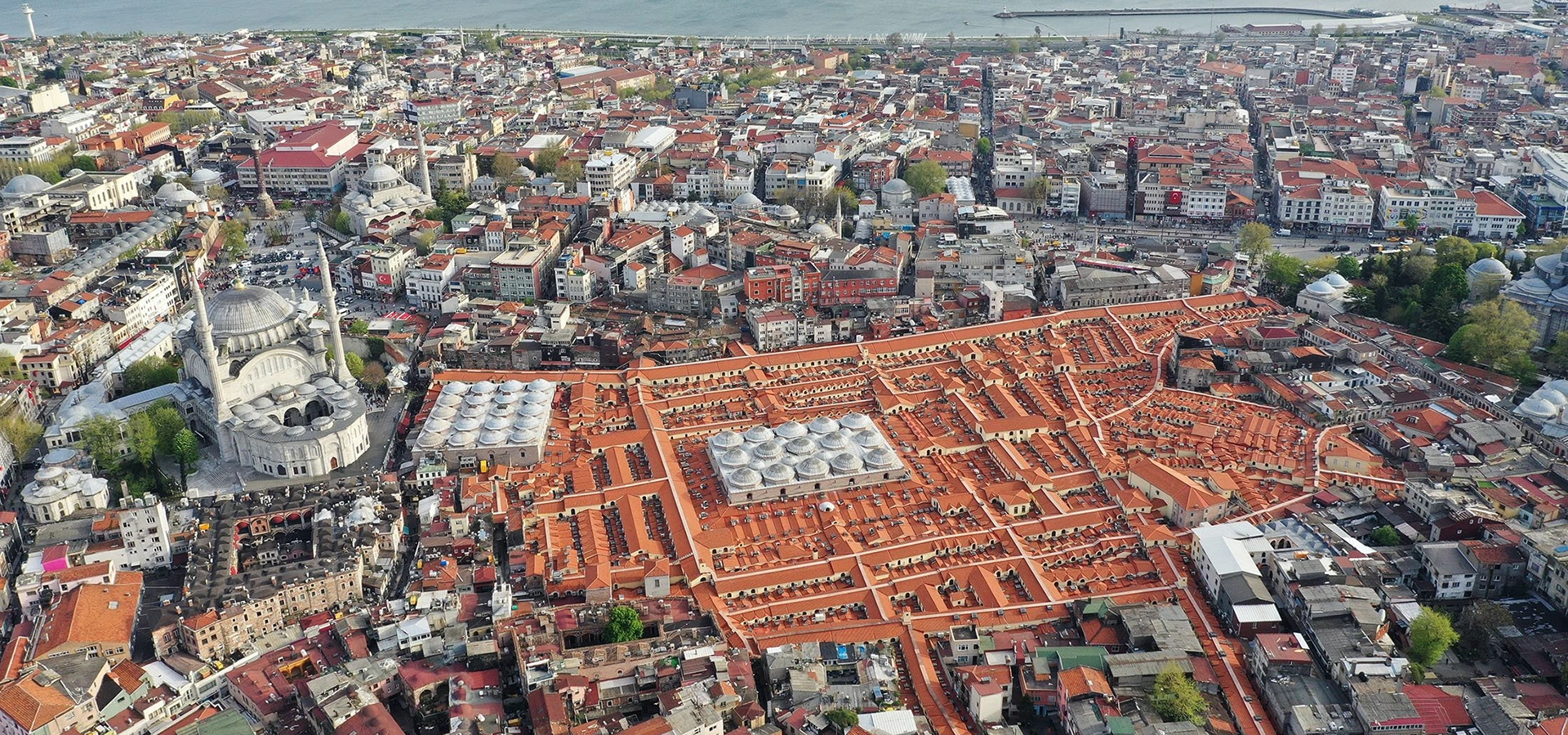
The Beyazıt Mosque, also known as Bayezid II Mosque or Beyazıt Camii, stands at the eastern side of Beyazıt Square in the heart of Istanbul's Historic Peninsula. Only a few minutes from the Grand Bazaar, it is one of the most important surviving monuments from the generation immediately after the Ottoman conquest of Constantinople.

Commissioned by Sultan Bayezid II, son and successor of Mehmed the Conqueror, the mosque was constructed between 1501 and 1505 according to the monumental inscription above its main entrance. It formed the religious center of a major külliye that included a medrese, imaret, caravanserai, primary school, tabhane guest rooms, bath and the sultan's mausoleum.

Architecturally, Beyazıt Mosque is especially significant because it stands between the experimental monumental mosques of the 15th century and the mature classical tradition that would later reach its height under Mimar Sinan. A great central dome approximately 16.78 meters in diameter is supported by two half-domes on the main axis, while smaller domed spaces extend along the sides.

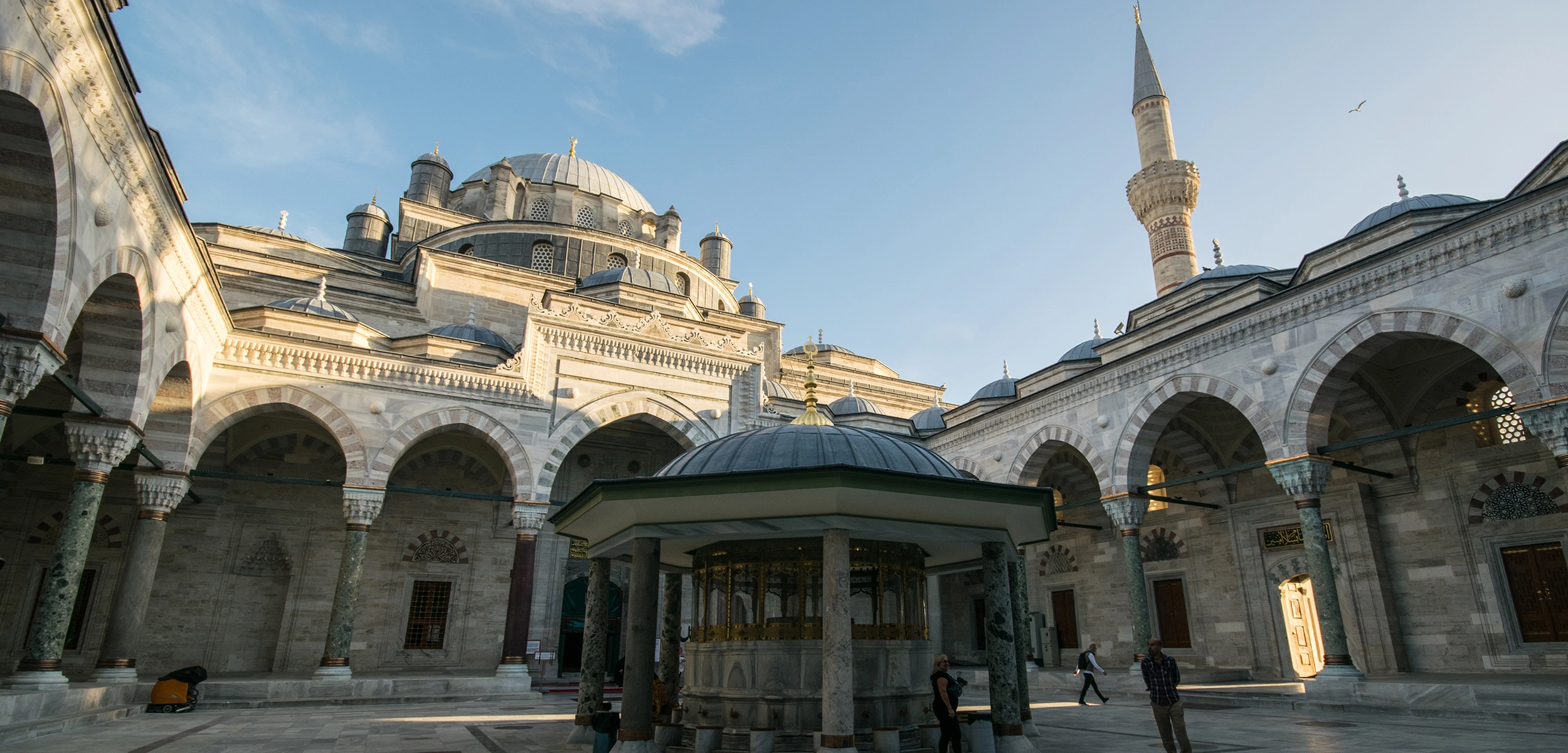
The mosque also preserves one of Istanbul's most beautiful imperial courtyards. Twenty-four small domes cover the surrounding arcades, colored marble and reused ancient stone elements appear throughout the enclosure, and the central şadırvan creates a calm architectural focus only steps from one of the busiest pedestrian areas in the city.

1501–1505

The mosque was built for Sultan Bayezid II in the first decades of Ottoman Istanbul.

16.78 m Dome

A monumental central dome dominates the historic prayer hall.

24 Courtyard Domes

Explore one of the finest arcaded imperial courtyards in the Historic Peninsula.

Grand Bazaar

Combine the mosque with one of the world's most famous historic covered markets.

Know Before You Go

Beyazıt Mosque – Quick Facts

Essential information for visiting Sultan Bayezid II's monumental early 16th-century mosque beside Beyazıt Square and the Grand Bazaar.

📍

Location

Beyazıt Square, Fatih, on the Historic Peninsula beside Istanbul University and the Grand Bazaar.

Open on Google Maps
👑

Patron

Sultan Bayezid II, son of Mehmed the Conqueror and father of Sultan Selim I.

🏛️

Architect

Not securely identified; historical scholarship has proposed Yakub Şah, Mimar Hayreddin and Mimar Kemaleddin.

📅

Construction

Begun in 1501 and completed in 1505 according to the entrance inscription.

🎟️

Entrance

Normally free; Beyazıt Mosque remains an active place of worship.

⏱️

Suggested Visit

Allow around 30–45 minutes, or 2–4 hours with Beyazıt Square and the Grand Bazaar.


From Mehmed the Conqueror's City to the Classical Ottoman Age

Why Is Beyazıt Mosque Important?

Beyazıt Mosque is one of the essential monuments for understanding how Ottoman imperial architecture developed in Istanbul between the conquest of 1453 and the great works of the 16th century.

The mosque was commissioned by Sultan Bayezid II on an exceptionally important urban site. Beyazıt Square occupies part of the area once associated with the Byzantine Forum of Theodosius, one of the principal monumental spaces of Constantinople. By building here, the Ottoman dynasty established a new imperial religious center directly within the inherited urban core of the city.

The complex was the second major sultanic foundation created in Ottoman Constantinople after the great Fatih complex of Mehmed the Conqueror. Unlike the highly ordered arrangement of Fatih, the buildings of the Beyazıt külliye were distributed more freely across the surrounding urban fabric, responding to existing streets and topography.

The mosque is also architecturally transitional. Its great central dome and axial half-domes recall the spatial ambition of Hagia Sophia, yet the building belongs fully to the developing language of Ottoman mosque architecture. Its courtyard, tabhane wings, monumental portals, stonework and domed prayer spaces point toward the architectural solutions later refined by the great imperial architects of the classical period.

For travelers following our guide to places to visit in Istanbul, Beyazıt Mosque is especially easy to combine with the Grand Bazaar, Column of Constantine, Süleymaniye Mosque and the historic university quarter.

History of Beyazıt Mosque

The construction of Beyazıt Mosque began during the reign of Sultan Bayezid II, who ruled the Ottoman Empire from 1481 to 1512. The inscription above the main entrance records that construction began in 1501 and was completed in 1505. The wider complex continued to develop immediately afterward.

The choice of location was highly symbolic. The mosque rose beside the former Byzantine Forum of Theodosius and close to the commercial streets that would become the heart of Ottoman Istanbul. The surrounding külliye provided religious education, food distribution, accommodation, schooling and other services that helped reshape the urban life of the district.

Only a few years after completion, the devastating 1509 Istanbul earthquake, remembered in Ottoman sources as the “Little Apocalypse,” damaged the building. Historical accounts indicate that the main dome suffered serious destruction. The mosque was repaired, and later interventions continued as earthquakes, fires and changing architectural needs affected the monument.

During the 16th century, Mimar Sinan was involved in strengthening the structure. A historical source records that the mosque was reinforced with a new arch in 1573–1574. This intervention is an important reminder that the building already had a long structural history before Sinan's own great imperial mosques transformed the Istanbul skyline.

1501

Construction began during the reign of Sultan Bayezid II.

1505

The mosque was completed according to its monumental entrance inscription.

1509

The great Istanbul earthquake damaged the newly built mosque and its dome.

1573–1574

Mimar Sinan is recorded as strengthening the mosque with a new structural arch.

1836

A major repair campaign was carried out during the reign of Sultan Mahmud II.

2020

The mosque reopened after an extensive modern restoration campaign.

Sultan Bayezid II and His Mosque

Sultan Bayezid II was the son of Mehmed II, the conqueror of Constantinople, and became sultan in 1481. His reign belonged to a crucial generation in which the Ottoman capital was being transformed from conquered Byzantine Constantinople into a mature imperial Ottoman city.

Bayezid was an active patron of religious, educational and charitable architecture across the empire. His Istanbul foundation was designed not simply as a monumental mosque but as a network of institutions serving worshippers, scholars, travelers, students, the poor and the wider urban population.

The mosque therefore reflects both dynastic authority and the Ottoman concept of charitable endowment. Its presence beside a major public square, commercial district and routes leading across the Historic Peninsula gave the complex enormous social as well as ceremonial importance.

After Bayezid II died in 1512, his son Sultan Selim I had a mausoleum constructed for him on the qibla side of the mosque. The sultan's tomb remains one of the most important elements of the complex and gives the site a direct connection with the Ottoman dynasty.

Son of Mehmed II

Bayezid II inherited an empire and capital dramatically reshaped after the conquest of Constantinople.

Reigned 1481–1512

His reign connected the age of Mehmed the Conqueror with the expansion of Selim I and Süleyman the Magnificent.

Imperial Patron

He commissioned important religious and charitable foundations in several Ottoman cities.

Buried Here

Bayezid II's octagonal mausoleum stands immediately behind the mosque.

Who Designed Beyazıt Mosque?

The architect of Beyazıt Mosque is one of the most frequently debated questions surrounding the monument. Older publications often attributed the mosque to Mimar Hayreddin or Mimar Kemaleddin, both important architectural figures associated with the reign of Bayezid II.

Later archival research introduced another name: Yakub Şah bin Sultan Şah. Some scholars consider him the strongest candidate for the principal architect, while official historical summaries continue to note that the question cannot be settled with complete certainty.

For that reason, it is better to describe the architect as uncertain rather than assigning the building definitively to a single master. What is clear is that Beyazıt Mosque emerged from a highly active imperial architectural organization at a moment when Ottoman builders were experimenting with large centralized domed spaces in the capital.

Traditional AttributionMimar Hayreddin
Another Historic AttributionMimar Kemaleddin
Later Scholarly CandidateYakub Şah bin Sultan Şah
Best DescriptionThe exact chief architect remains uncertain

Architecture of Beyazıt Mosque

Beyazıt Mosque is organized around a monumental square prayer hall covered by a large central dome. Four massive piers and great arches carry the dome, while two half-domes extend the main space along the qibla axis. Smaller domed bays flank the central volume on both sides.

The composition is often discussed in relation to Hagia Sophia because both structures use a great central dome expanded by major half-domes on an axial line. Beyazıt Mosque, however, adapts this spatial idea into a specifically Ottoman religious building with a monumental courtyard, minarets, tabhane wings and a carefully articulated prayer hall.

The mosque also preserves features connected with the earlier tabhaneli or guest-house mosque tradition. Independent accommodation spaces once stood at the sides of the prayer hall for travelers and guests. As these functions changed, parts of the side structures were incorporated into the mosque's worship space.

From Beyazıt Square the building appears broad and horizontal compared with some later classical mosques. Its two widely separated minarets emphasize the width of the complex, while the sequence of domes rises more gradually toward the central cupola.

Central Dome

The main dome measures approximately 16.78 meters in diameter.

Two Half-Domes

Large half-domes extend the central volume along the main prayer axis.

Four Main Piers

Massive structural supports carry the great arches beneath the central dome.

Side Domes

Four smaller domed bays on each side broaden the prayer hall.

Two Minarets

The widely spaced minarets rise from the outer edges of the complex.

Tabhane Tradition

Historic guest-house spaces preserve a link with earlier Ottoman mosque planning.

The Dome and Half-Domes of Beyazıt Mosque

The principal dome is the visual center of the mosque. With a diameter of approximately 16.78 meters, it rises above four great arches supported by monumental piers. Its scale gives the interior a strong sense of unity without overwhelming the lower architectural details.

Two major half-domes extend the central space along the north-south axis, while smaller domed units form the lateral zones. This combination creates an elongated centralized composition rather than the four-half-dome arrangement seen in some later imperial mosques.

The structural history of the dome is especially interesting because the building suffered damage in the 1509 earthquake and underwent repeated repairs. Later reinforcement, including work connected with Mimar Sinan, became part of the mosque's long architectural life.

Main DomeApproximately 16.78 meters in diameter
Main SupportsFour monumental piers and great arches
Axial ExpansionTwo large half-domes
Side SpacesFour smaller domed bays on each side
Historic ChallengeEarthquake damage required repeated structural repair and reinforcement

Inside Beyazıt Mosque

The interior of Beyazıt Mosque is more restrained than the richly tiled interiors of some later Ottoman mosques. Its beauty comes from architectural proportion, finely carved stone, marble furnishings, woodwork, calligraphy and the repeated geometry of arches, windows and domes.

The mihrab is treated with elaborate carved decoration and muqarnas, while the marble minbar is one of the finest examples of stone craftsmanship in the mosque. Its delicately pierced and carved surfaces reward close viewing from the visitor area.

The müezzin mahfili rests on slender marble supports, and the historic hünkâr mahfili occupies part of the prayer hall as a reminder of the mosque's imperial status. Original and restored wooden doors and window shutters preserve important examples of early 16th-century decorative craft.

Calligraphy is also central to the monument's identity. The inscription over the main entrance was written in monumental celî sülüs by the celebrated Ottoman calligrapher Şeyh Hamdullah, one of the most influential masters in the history of Islamic calligraphy.

Marble Mihrab

Rich carving and muqarnas emphasize the direction of prayer.

Stone Minbar

Intricate carved surfaces make the pulpit one of the interior's finest details.

Müezzin Mahfili

A finely proportioned raised platform supported by marble elements.

Hünkâr Mahfili

The imperial prayer area reflects the mosque's role as a selatin foundation.

Historic Woodwork

Doors and window shutters preserve refined early Ottoman craftsmanship.

Şeyh Hamdullah

The great calligrapher is associated with the monumental foundation inscription.

The Courtyard, Porticoes and Şadırvan

The courtyard of Beyazıt Mosque is one of the great architectural spaces of early Ottoman Istanbul. A nearly square marble-paved enclosure is surrounded by arcaded porticoes covered with twenty-four small domes.

The arcades use columns and stone elements of different colors and materials. Some were reused from earlier Byzantine monuments, demonstrating the practical and symbolic reuse of ancient materials during the rebuilding of Ottoman Istanbul. White and red stone in the arches creates a strong visual rhythm around the courtyard.

At the center stands the şadırvan. Historical sources indicate that its basin was originally open to the sky and that Sultan Murad IV later had a domed canopy placed above it on reused columns. The fountain remains one of the most photogenic features of the complex.

The monumental entrance portal on the prayer-hall side is especially important. Its carved stone niche, muqarnas decoration, inscription panel and historic door treatment show the increasing sophistication of Ottoman imperial architecture at the beginning of the 16th century.

24 Domes

Small domes cover the arcaded porticoes around the courtyard.

Marble Paving

The courtyard floor includes striking historic stone and porphyry elements.

Reused Columns

Ancient and Byzantine stone elements were incorporated into the Ottoman design.

Central Şadırvan

The ablution fountain forms the visual heart of the courtyard.

Murad IV Canopy

The domed covering over the fountain is traditionally associated with Sultan Murad IV.

Main Portal

Carved stone, muqarnas and calligraphy create a monumental entrance to the prayer hall.

Visitor tip: Walk around the full courtyard before entering the mosque. The changing views between the arcades, şadırvan, minarets and central dome are among the highlights of the visit.

The Beyazıt II Külliye

Beyazıt Mosque was the central building of a much larger külliye, an Ottoman religious and charitable foundation combining worship, education, accommodation, food distribution and public services.

The original complex included the mosque, medrese, imaret, tabhane guest spaces, sıbyan mektebi, caravanserai, hamam and dynastic mausoleums. Unlike the highly symmetrical Fatih complex, the Beyazıt buildings were distributed irregularly around the surrounding urban area.

Several of these structures survive with later adaptations. The former imaret became closely associated with the Beyazıt State Library, while the historic hamam has been restored by Istanbul University and interpreted as part of the city's bath and cultural heritage. The medrese and other buildings have also continued to serve educational or cultural functions at different times.

Exploring the surviving buildings makes it easier to understand the mosque as a complete social institution rather than simply an isolated place of prayer. The foundation helped shape the identity of Beyazıt as one of the intellectual, commercial and civic centers of Ottoman Istanbul.

Mosque

The monumental religious and ceremonial center of Sultan Bayezid II's foundation.

Medrese

A major institution of higher religious learning associated with prominent Ottoman scholars.

Imaret

The charitable kitchen and service buildings helped feed people supported by the foundation.

Tabhane

Guest rooms accommodated travelers and visitors in the earlier phase of the complex.

Caravanserai

Accommodation and service space supported movement through the imperial capital.

Hamam

The monumental Beyazıt Bath formed part of the wider charitable and urban system.

Beyazıt Mosque and Historic Beyazıt Square

The setting of Beyazıt Mosque is as historically important as the building itself. The modern square occupies part of the zone of the ancient Forum of Theodosius, also known as the Forum Tauri, one of the great public spaces of Byzantine Constantinople.

After the Ottoman conquest, this central district was gradually transformed through imperial foundations, markets, educational institutions and administrative buildings. Beyazıt Mosque became the dominant religious monument of the square and helped establish a new Ottoman identity for the area.

Today the mosque faces an urban landscape shaped by many centuries. The monumental gate of Istanbul University, the book market of Sahaflar Çarşısı, the Grand Bazaar, Ottoman libraries and busy transport routes all surround the mosque.

This layering makes Beyazıt one of the best places in Istanbul to experience the continuity of the city rather than a single historical period. Roman and Byzantine urban memory, Ottoman imperial architecture, modern educational institutions and living commercial culture all meet within a remarkably compact area.

Forum of Theodosius

The square occupies part of one of Byzantine Constantinople's great monumental forums.

Istanbul University

The monumental university gate creates one of the most recognizable views across Beyazıt Square.

Sahaflar

The historic booksellers' market preserves the district's long association with scholarship and books.

Grand Bazaar

One of the world's great historic covered markets begins only a short walk from the mosque.

The Tomb of Sultan Bayezid II

Behind the mosque on the qibla side stands the türbe of Sultan Bayezid II. It was constructed after the sultan's death in 1512 by order of his son and successor, Sultan Selim I.

The mausoleum has an octagonal plan and is built of carefully worked stone beneath a domed roof. Its restrained exterior reflects the architectural character of the early 16th century and creates a dignified contrast with the larger mass of the mosque.

Nearby is the mausoleum of Bayezid II's daughter Selçuk Hatun, while the surrounding burial area contains additional Ottoman graves. Together these tombs strengthen the dynastic character of the complex.

Visitors interested in Ottoman history should not leave immediately after seeing the prayer hall. Walking around the qibla side to view the türbes helps connect the architecture of the mosque with the life and succession of the dynasty that commissioned it.

Bayezid II

The patron of the mosque was buried beside his imperial foundation after his death in 1512.

Built by Selim I

The mausoleum was commissioned by the sultan's son and successor.

Octagonal Plan

The türbe follows a classic polygonal Ottoman mausoleum form.

Selçuk Hatun

A separate nearby mausoleum belongs to Bayezid II's daughter.

Restoration of Beyazıt Mosque

Beyazıt Mosque has survived more than five centuries in one of the world's most earthquake-prone and intensely used historic cities. Its present appearance is therefore the result of the original early 16th-century design together with many periods of repair, reinforcement and restoration.

The first major disaster came almost immediately after construction when the 1509 earthquake severely damaged the building. Later earthquakes, fires, lightning strikes and ordinary deterioration required further work across the dome, minarets, roofs, decorative surfaces and surrounding structures.

In the 16th century Mimar Sinan reinforced the mosque with a new structural arch. A major repair was carried out under Sultan Mahmud II in 1836, while 20th-century interventions included significant work on the dome and the reconstruction or repair of parts of the portico.

The most extensive recent restoration was carried out by the General Directorate of Foundations over a period of approximately eight years. After this campaign, Beyazıt Mosque reopened to its congregation on 29 May 2020.

1509 Earthquake

One of Istanbul's greatest historical earthquakes damaged the newly completed mosque.

Sinan Reinforcement

Mimar Sinan strengthened the building with a new arch in the later 16th century.

1836 Repair

Sultan Mahmud II sponsored an important restoration campaign.

Modern Conservation

Structural, architectural and decorative elements were addressed in an extensive restoration.

29 May 2020

The restored mosque reopened after approximately eight years of conservation work.

Living Monument

Routine maintenance remains essential because the building continues to function as a mosque.

What to See at Beyazıt Mosque

Beyazıt Mosque deserves more than a quick stop on the way to the Grand Bazaar. Walk through the courtyard slowly, study the monumental portal, enter the prayer hall beneath the central dome, and then circle behind the building to see the imperial tombs and surviving parts of the wider külliye.

Main Dome

Stand beneath the approximately 16.78-meter-wide central dome and follow the great supporting arches.

Two Half-Domes

Notice how the prayer hall expands along the central axis rather than equally in four directions.

Monumental Portal

Study the carved stone entrance, muqarnas and foundation inscription by Şeyh Hamdullah.

Courtyard

Walk beneath the twenty-four domed arcades and compare the colored stone columns and arches.

Şadırvan

Use the historic fountain as a central point for appreciating the courtyard's symmetry.

Mihrab & Minbar

Look closely at the carved stone and marble craftsmanship in the prayer hall.

Hünkâr Mahfili

Notice the elevated imperial prayer area and its refined marble supports.

Bayezid II Türbe

Walk behind the mosque to see the mausoleum of the sultan who commissioned the complex.

Grand Bazaar

Continue directly into the historic market district after your mosque visit.

Do not miss: Stand near the center of the courtyard and turn slowly through 360 degrees. The mosque, university gate, square and surrounding historic buildings reveal how Beyazıt functions as an urban ensemble rather than a single monument.

Practical Tips for Visiting Beyazıt Mosque

Dress Modestly

Shoulders and knees should be covered. Women should cover their hair inside the prayer hall.

Remove Shoes

Shoes must be removed before stepping onto the carpeted worship area.

Visit Between Prayers

Architectural sightseeing is easiest outside congregational prayer periods.

Avoid Friday Midday

The mosque is especially busy around the principal Friday prayer.

Come in the Morning

Earlier hours are usually calmer around the courtyard, square and Grand Bazaar entrances.

Explore the Exterior

Allow extra time for the tombs, square and surviving külliye buildings.

Combine with the Bazaar

The Grand Bazaar is only a few minutes away and makes a natural continuation.

Use the T1 Tram

Beyazıt–Kapalıçarşı station is the easiest public-transport stop for most visitors.

Suggested Beyazıt Mosque, Grand Bazaar and Çemberlitaş Route

Begin at Beyazıt Mosque in the morning. Spend around 30–45 minutes exploring the arcaded courtyard, central dome, mihrab, minbar, imperial mahfil and the tomb of Sultan Bayezid II.

Next, cross or circle Beyazıt Square to appreciate the monumental Istanbul University gate and the historic urban setting created over the former Byzantine forum. Continue through Sahaflar Çarşısı, the traditional booksellers' quarter.

From here, enter the Grand Bazaar and walk through its historic covered streets, hans and market passages. Allow at least an hour if you want to explore beyond the principal tourist route.

Exit toward Çemberlitaş and continue to the Column of Constantine, a surviving Roman monument that provides a dramatic contrast with the Ottoman architecture of Beyazıt.

If you still have time and energy, extend the route uphill to Süleymaniye Mosque or toward Şehzade Mosque to compare Beyazıt with the mature 16th-century architecture of Mimar Sinan.

StartBeyazıt Mosque
Historic SquareBeyazıt Square & Istanbul University Gate
Book QuarterSahaflar Çarşısı
Main MarketGrand Bazaar
Roman MonumentColumn of Constantine / Çemberlitaş
Optional ExtensionSüleymaniye Mosque or Şehzade Mosque
Total TimeApproximately 2–4 hours depending on stops
Shorter option: Allow around 60–90 minutes for Beyazıt Mosque, the square and Sahaflar before entering the Grand Bazaar.

Beyazıt Mosque Visitor Information

Beyazıt Mosque remains an active place of worship rather than a ticketed museum. It is used for the five daily prayers, Friday prayer, religious gatherings and major Islamic holy days.

There is normally no general entrance fee. Visitors of all backgrounds can generally enter respectfully outside congregational prayer periods, subject to instructions from mosque staff and any temporary access arrangements.

Because the mosque follows a religious schedule rather than fixed museum hours, sightseeing is best planned around prayer times. These change throughout the year, and Friday midday is normally the busiest period of the week.

The mosque stands in Beyazıt Square in Fatih, immediately beside the historic university quarter and a few minutes' walk from the Grand Bazaar. The T1 tram stop Beyazıt–Kapalıçarşı makes the site extremely easy to reach from Sultanahmet, Eminönü and the western Historic Peninsula.

SiteBeyazıt Mosque / Bayezid II Mosque / Beyazıt Camii
DistrictBeyazıt, Fatih, Istanbul
EntranceNormally free; active place of worship
Visitor AccessBest between prayers; temporary restrictions may occur
Suggested Time30–45 minutes for the mosque
Best ForOttoman architecture, imperial history, courtyards, calligraphy and Grand Bazaar routes
Prayer-time reminder: If sightseeing is your main purpose, avoid arriving immediately before congregational prayer and especially around Friday midday. Always follow instructions from mosque staff.

Best Time to Visit Beyazıt Mosque

Weekday Morning

Usually the best time for a calmer courtyard and easier photography before the surrounding commercial streets become crowded.

Mid-Afternoon

A useful period for combining the mosque with the Grand Bazaar between prayer times.

Friday

Avoid the main congregational prayer period if your purpose is architectural sightseeing.

Spring

Mild weather is excellent for continuing on foot through the Historic Peninsula.

Autumn

Comfortable temperatures make long walks around Beyazıt, Süleymaniye and Çemberlitaş especially pleasant.

Late Afternoon

Lower light can emphasize the stone façades, courtyard arcades and university gate.

How Much Time Do You Need at Beyazıt Mosque?

15–20 Minutes

Enough for a quick look at the courtyard and prayer hall while passing through Beyazıt.

30–45 Minutes

The ideal range for the dome, courtyard, portal, mihrab, minbar and imperial tomb.

60–90 Minutes

Add Beyazıt Square, Sahaflar and surviving elements of the külliye.

Half Day

Continue through the Grand Bazaar, Çemberlitaş, Süleymaniye or Şehzade.

Photography at Beyazıt Mosque

Beyazıt Mosque offers excellent architectural photography both inside and outside. The courtyard is particularly rewarding because its repeating arches, twenty-four domes, central fountain and varied stone columns create strong symmetrical compositions.

Inside, wide-angle views can capture the relationship between the main dome, half-domes and lateral spaces. The portal, mihrab, minbar, carved stone, historic doors and calligraphic details are better suited to careful close photography.

For wider exterior views, move into Beyazıt Square and include the mosque with the monumental gate of Istanbul University. The surrounding pedestrian space gives more distance than many mosque sites in the Historic Peninsula, making it easier to understand the full scale of the building.

Remember that Beyazıt Mosque is a living religious space. Avoid photographing worshippers intrusively, never block prayer rows or entrances, and keep equipment and movement discreet.

Courtyard Symmetry

Use the şadırvan and repeating arcades for balanced compositions.

Main Dome

Photograph upward from the central prayer area to emphasize the structural arches.

Main Portal

Close views reveal carved stone, muqarnas and calligraphic detail.

University Gate

Step into the square for one of the classic urban views of Beyazıt.

Minarets

The widely separated minarets work especially well in wider square compositions.

Late Light

Afternoon light can add depth to the pale stone façades and arcades.

Photography etiquette: Avoid flash, intrusive portraits of worshippers, loud equipment and tripods that interfere with circulation. Religious activity always takes priority.

Accessibility at Beyazıt Mosque

Beyazıt Mosque is easy to reach by public transport, but it remains a 500-year-old religious monument with historic paving, thresholds, shoe-removal requirements and occasional changes in level.

T1 Tram

Beyazıt–Kapalıçarşı station is only a short walk from the mosque.

Pedestrian Square

Much of the surrounding public space is open and relatively easy to navigate.

Historic Surfaces

Marble and stone paving may be uneven or slippery in wet weather.

Prayer Hall

Shoes must be removed before entering the carpeted worship area.

Crowds

Beyazıt can become extremely busy because of the university, tram line and Grand Bazaar.

Ask on Arrival

If step-free access is essential, ask mosque staff for the most suitable currently available entrance.

How to Get to Beyazıt Mosque

Beyazıt Mosque stands in central Fatih on the Historic Peninsula, directly beside Beyazıt Square and close to the Grand Bazaar. Its location on the T1 tram corridor makes it one of the easiest major historic mosques to reach without a private vehicle.

By T1 Tram

Use the Kabataş–Bağcılar T1 line and get off at Beyazıt–Kapalıçarşı.

From Sultanahmet

Take the T1 tram west for a few stops or walk through Çemberlitaş and the historic commercial streets.

From Eminönü

Take the T1 tram toward Bağcılar and leave at Beyazıt–Kapalıçarşı.

From the Grand Bazaar

Exit toward Beyazıt; the mosque and square are only a short walk from the market gates.

From Süleymaniye

Walk downhill and south through the university and historic commercial quarter.

By Car

Traffic and parking are difficult in the Historic Peninsula, so public transport is generally preferable.

Transport tip: The T1 tram is usually the simplest choice. Use Beyazıt–Kapalıçarşı station and combine the mosque with the Grand Bazaar in the same visit.

Places to Visit Near Beyazıt Mosque

Beyazıt Mosque stands in one of the richest walking zones in Istanbul. Within a relatively compact area you can connect Ottoman mosques, Roman monuments, historic markets, libraries, university buildings and some of the city's most atmospheric commercial streets. Use our complete Istanbul visitor guide to build a wider route.

Grand Bazaar

Enter one of the world's largest and most famous historic covered market complexes.

Sahaflar Çarşısı

Browse the traditional booksellers' quarter between Beyazıt Square and the Grand Bazaar.

Column of Constantine

Walk east to one of the most important surviving monuments of Roman Constantinople.

Süleymaniye Mosque

Continue to Mimar Sinan's 16th-century masterpiece overlooking the Golden Horn.

Şehzade Mosque

Compare Beyazıt with one of Mimar Sinan's earliest major imperial mosque complexes.

Istanbul University Gate

See the monumental 19th-century entrance dominating the western side of Beyazıt Square.

Beyazıt State Library

Discover the historic library institution associated with surviving parts of the old imperial complex.

Explore More of Istanbul

Continue through palaces, churches, cisterns, mosques, markets and archaeological monuments.

Frequently Asked Questions About Beyazıt Mosque

Where is Beyazıt Mosque in Istanbul?

The mosque is in Beyazıt Square in the Fatih district, beside Istanbul University and only a short walk from the Grand Bazaar.

What is the Turkish name of Beyazıt Mosque?

It is commonly called Beyazıt Camii or II. Bayezid Camii in Turkish.

Who built Beyazıt Mosque?

The mosque was commissioned by Sultan Bayezid II, son of Mehmed the Conqueror.

When was Beyazıt Mosque built?

The entrance inscription records construction between 1501 and 1505.

Who was the architect of Beyazıt Mosque?

The exact chief architect is not securely known. Historical and modern scholarship has proposed Mimar Hayreddin, Mimar Kemaleddin and Yakub Şah bin Sultan Şah.

Why is Beyazıt Mosque important?

It is one of the oldest surviving great imperial mosques of Ottoman Istanbul and an important bridge between early Ottoman architecture and the later classical tradition.

How large is the main dome?

The central dome measures approximately 16.78 meters in diameter.

How many minarets does Beyazıt Mosque have?

The mosque has two minarets placed at the outer sides of the complex.

Was Beyazıt Mosque damaged by earthquakes?

Yes. The great earthquake of 1509 damaged the recently completed mosque, and the building underwent repeated repairs and reinforcement afterward.

Did Mimar Sinan work on Beyazıt Mosque?

Yes. Historical records indicate that Mimar Sinan reinforced the mosque with a new structural arch in 1573–1574.

Who is buried at Beyazıt Mosque?

Sultan Bayezid II is buried in an octagonal mausoleum behind the mosque. A nearby türbe belongs to his daughter Selçuk Hatun.

Is Beyazıt Mosque part of a külliye?

Yes. The original foundation included a medrese, imaret, tabhane, primary school, caravanserai, hamam and mausoleums in addition to the mosque.

Is Beyazıt Mosque free to enter?

There is normally no general admission fee because it remains an active mosque.

Can non-Muslims visit Beyazıt Mosque?

Visitors of all backgrounds can normally enter respectfully outside congregational prayer periods, subject to current mosque arrangements.

Do women need to cover their hair?

Women should cover their hair inside the prayer hall, while all visitors should dress modestly and cover shoulders and knees.

Do visitors need to remove their shoes?

Yes. Shoes must be removed before entering the carpeted prayer area.

Can I visit during prayer time?

Sightseeing may be restricted during congregational prayer, so visiting between prayer periods is more convenient and respectful.

What are Beyazıt Mosque opening hours?

Because it is an active mosque, visitor access follows the religious schedule rather than a rigid museum timetable. Plan your sightseeing between prayers.

What is the best time to visit Beyazıt Mosque?

A weekday morning is usually an excellent choice before Beyazıt Square and the Grand Bazaar reach their busiest daytime period.

How long should I spend at Beyazıt Mosque?

Allow around 30–45 minutes for the mosque itself and two to four hours if you combine it with Beyazıt Square and the Grand Bazaar.

Is photography allowed?

Discreet architectural photography is generally possible, but visitors should avoid flash, noise and intrusive photographs of people praying.

When was Beyazıt Mosque last restored?

An extensive modern restoration lasting approximately eight years was completed before the mosque reopened on 29 May 2020.

How do I get to Beyazıt Mosque?

The easiest option for many visitors is the T1 tram to Beyazıt–Kapalıçarşı station.

Is Beyazıt Mosque near the Grand Bazaar?

Yes. The mosque is only a few minutes' walk from the Grand Bazaar and is one of the easiest historic sites to combine with it.

Is Beyazıt Mosque worth visiting?

Absolutely. It combines early Ottoman imperial architecture, a magnificent courtyard, dynastic history and one of the most historically layered locations in Istanbul.

Responsible Visiting at Beyazıt Mosque

Give Worshippers Priority

Never stand directly in front of people praying or block prayer rows, doors and circulation routes.

Dress Appropriately

Modest clothing respects the religious function of the mosque and its congregation.

Keep Noise Low

Avoid loud conversation, speakerphone use and disruptive behavior inside the prayer hall.

Photograph Carefully

Architecture can be photographed discreetly, but private prayer should never become an intrusive photo opportunity.

Protect Historic Surfaces

Do not unnecessarily touch carved stone, historic woodwork, columns or decorative surfaces.

Follow Local Guidance

Prayer services, funerals, religious events, restoration or maintenance may temporarily change visitor access.

Private Beyazıt Mosque & Historic Istanbul Experiences

Connect Beyazıt Mosque with the Grand Bazaar, Çemberlitaş, Süleymaniye, Şehzade Mosque and the wider Historic Peninsula through a private route designed around your interests and without compulsory shopping stops.

Custom Ottoman Architecture & Historic Bazaar Experience

Choose a focused half-day walk around Beyazıt and the Grand Bazaar, or create a deeper private journey connecting early Ottoman architecture, classical imperial mosques, Byzantine and Roman monuments and the commercial history of Istanbul.

Continue Exploring Historic Istanbul

Connect Beyazıt with the Grand Bazaar, Roman Constantinople, Mimar Sinan's imperial mosques and the wider historic districts of the peninsula.