Private Aynalıkavak Pavilion & Golden Horn Tour
Ask us about a tailor-made route focused on Sultan Selim III, Tersane Palace, Ottoman classical music, Hasköy and the historical landscapes of the Golden Horn.
Request a Custom Tour





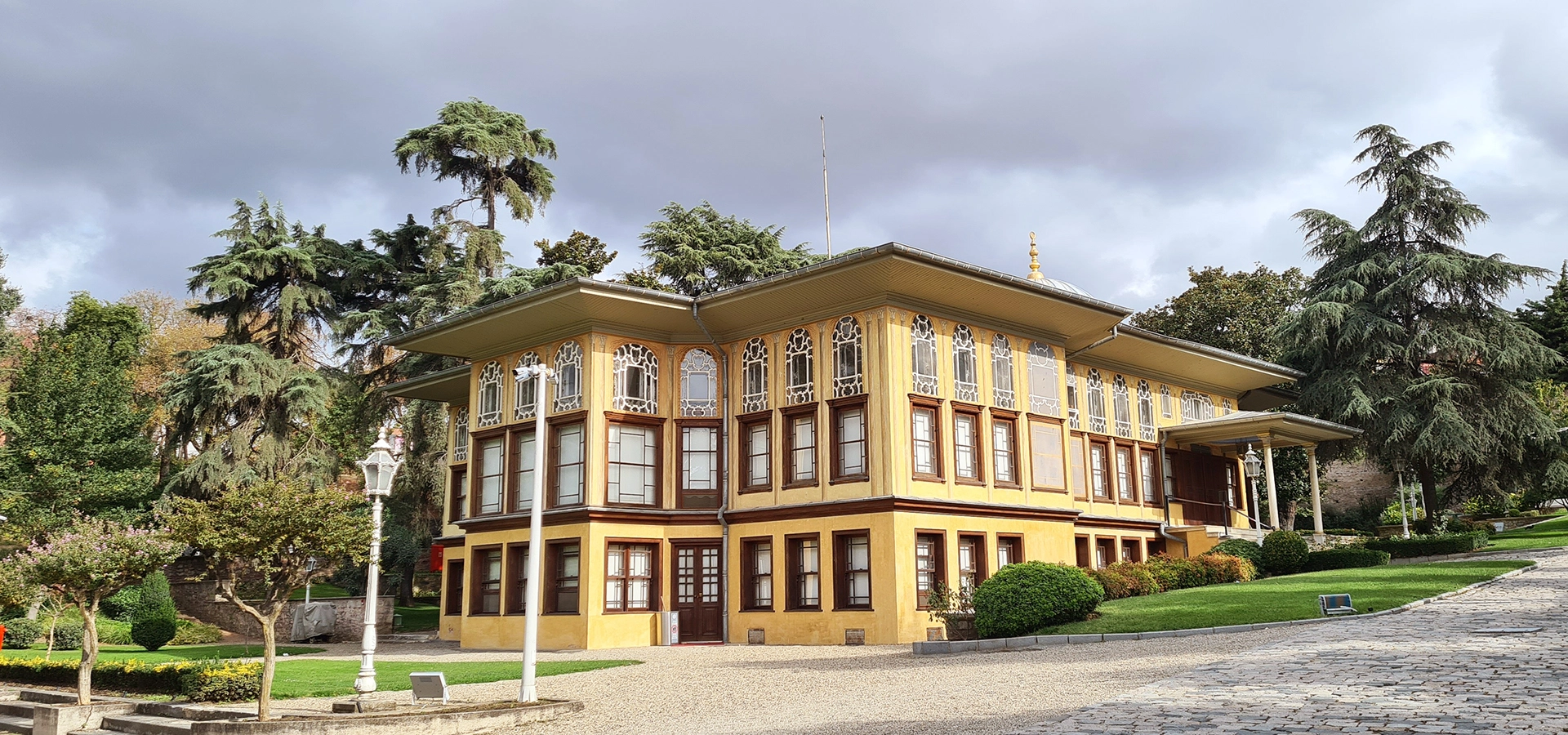
The Aynalıkavak Pavilion, known in Turkish as Aynalıkavak Kasrı, stands in Hasköy on the northern side of Istanbul's Golden Horn. It is the only major building to survive from the once-extensive Tersane Sarayı, or Shipyard Palace, an imperial complex that developed beside the Ottoman naval arsenal over several centuries.
The wider site had long been valued as a royal excursion landscape. Historical sources associate the area with Byzantine imperial recreation, while after the Ottoman conquest it became part of the Tersane Hasbahçesi, the Imperial Shipyard Garden. The first securely documented pavilion there was built for Sultan Ahmed I in 1613, and later sultans expanded the estate with new halls, gardens and waterfront structures.
The surviving pavilion is generally associated with the reign of Sultan Ahmed III and was substantially reshaped under Sultan Selim III, the reforming ruler who was also an accomplished composer and musician. Its Divanhâne, Privy Chamber, gilded imperial monogram, painted decoration and long calligraphic poems preserve a remarkably intimate picture of late-18th-century Ottoman court culture.
Today, Aynalıkavak combines a historic palace interior with the Aynalıkavak Mûsikî Museum, where traditional Turkish musical instruments reinforce the pavilion's close connection with Selim III. For visitors exploring the Golden Horn, it is one of Istanbul's most distinctive small imperial monuments and one of the best places to see an earlier Ottoman architectural world that predates Dolmabahçe and the grand 19th-century Bosphorus palaces.
The first securely documented imperial pavilion in the Tersane Garden was built for Sultan Ahmed I.
The surviving pavilion preserves the character of an earlier Ottoman palace tradition.
The composer-sultan gave Aynalıkavak much of the form and cultural identity seen today.
Aynalıkavak opened to visitors as a museum-palace under National Palaces.
Essential information for visiting this rare surviving Ottoman pavilion in Hasköy beside the Golden Horn.
Hasköy, Beyoğlu, on the northern side of Istanbul's Golden Horn.
Open on Google MapsThe last major surviving building of the former Tersane, or Shipyard, Palace.
Sultan Selim III substantially reshaped the pavilion and left a strong musical legacy here.
The site includes the Aynalıkavak Mûsikî Museum with historic Turkish instruments.
Ticketed National Palaces site; Museum Card is currently valid under general rules.
Allow 60–90 minutes, or 3–5 hours with Hasköy, Rahmi M. Koç Museum and Fener–Balat.
Aynalıkavak is important not only as a beautiful pavilion, but as the sole architectural survivor of one of the Ottoman capital's largest vanished palace complexes.
The first reason Aynalıkavak matters is survival. The Ottoman Tersane Palace once occupied a broad landscaped area between the Golden Horn and the slopes toward Okmeydanı, with imperial apartments, halls, gardens, service buildings and waterfront structures. As the imperial shipyard expanded, most of this palace world disappeared; by the early 19th century, the present pavilion was the principal surviving remnant.
The building is also exceptional because it belongs to an architectural tradition earlier than the better-known 19th-century palaces of Istanbul. Its broad eaves, projecting windows, sofa-centered plan, built-in seating and decorative upper windows preserve the atmosphere of late classical Ottoman palace and residential architecture at an intimate scale.
Aynalıkavak also has an unusually strong connection with Sultan Selim III. The ruler was a major patron of the arts, a composer and an important figure in the development of Ottoman classical music. Poetry, calligraphy and decorative programs inside the pavilion celebrate both the building and the sultan, turning the rooms into a cultural document as well as an architectural one.
For travelers following our guide to places to visit in Istanbul, Aynalıkavak is especially rewarding because it combines Ottoman palace history, Golden Horn heritage and music culture in a site that remains far less crowded than Istanbul's most famous imperial residences.
The slopes between Okmeydanı and the Golden Horn were valued for recreation long before the surviving pavilion existed. Historical accounts describe the area as an excursion and resting landscape associated with Byzantine emperors, while after the Ottoman conquest it became part of the sultans' imperial garden system.
As the Ottoman naval arsenal developed at nearby Kasımpaşa, the estate became known as the Tersane Hasbahçesi, or Imperial Shipyard Garden. The earliest pavilion securely documented within the garden was built in late 1613 by Grand Admiral Halil Pasha for Sultan Ahmed I. Successive rulers added new pavilions, halls and service buildings until the estate grew into the large complex known as Tersane Sarayı or Aynalıkavak Sarayı.
The surviving Aynalıkavak Pavilion is generally dated to the 18th century and is associated particularly with Sultan Ahmed III. The palace was used during the spectacular circumcision festivities held for Ahmed III's sons in 1720, a celebration famously recorded in the illustrated Surnâme-i Vehbî.
In 1779, Ottoman and Russian representatives met at Aynalıkavak during negotiations that produced the agreement remembered as the Aynalıkavak Tenkihnâmesi. The palace subsequently underwent repair, and during the reign of Sultan Selim III the surviving pavilion was comprehensively reorganized and decorated, gaining much of the appearance visitors recognize today.
The growth of the imperial shipyard eventually transformed the old palace landscape. Most of the Tersane Palace buildings disappeared, and the remaining palace structures were largely removed in 1802–1803, leaving Aynalıkavak Pavilion as the principal survivor. Sultan Abdülmecid later ordered additional repairs in the 19th century.
Aynalıkavak passed to the administration of National Palaces in 1975 and opened as a museum-palace in 1984. A major conservation campaign between 2005 and 2010 helped preserve its timber architecture, historic interiors and decorative surfaces for future generations.
The first securely documented pavilion in the Tersane Garden was built for Sultan Ahmed I.
The palace formed part of the setting for Ahmed III's celebrated princely circumcision festivities.
Ottoman-Russian negotiations at Aynalıkavak produced the Aynalıkavak Tenkihnâmesi.
The pavilion was extensively reshaped and decorated during the composer-sultan's reign.
Most of the remaining Tersane Palace complex disappeared as the shipyard expanded.
Aynalıkavak opened to the public as a museum-palace.
It is easy to mistake Aynalıkavak for a stand-alone country pavilion, but historically it belonged to something much larger. The Tersane Palace developed beside the Ottoman imperial shipyard and became one of the capital's major royal complexes, extending through terraced gardens from the Golden Horn toward the higher ground of Okmeydanı.
The estate contained multiple pavilions and imperial apartments as well as gardens, pools, service spaces and buildings supporting court life. Its location was strategic as well as pleasant: the sultan could reach the area by water, observe naval activity and enjoy a green retreat outside the more formal environment of Topkapı Palace.
The relationship between palace and shipyard ultimately caused the complex to shrink. As the naval facilities required more space, palace buildings were removed gradually until Aynalıkavak became the sole major survivor of a landscape that had once been much more extensive.
Understanding this vanished setting changes the way the pavilion is experienced today. The building should be read not simply as a small historic house, but as the surviving royal fragment of an imperial waterfront and naval environment that once defined this part of the Golden Horn.
The palace developed beside the Ottoman naval arsenal at Kasımpaşa.
The estate once climbed from the Golden Horn toward Okmeydanı.
Aynalıkavak originally belonged to a much larger ensemble of royal structures.
The Golden Horn allowed convenient imperial movement between palace sites by boat.
The court could remain close to important shipyard activity while enjoying a garden retreat.
The present pavilion is the principal architectural remnant of the lost palace complex.
The Turkish name Aynalıkavak is often translated loosely as “mirrored poplar,” but the exact origin of the name is not certain. Several explanations have circulated for centuries, and the most colorful version connects the name with unusually large mirrors associated with the palace.
A popular tradition says that after the Treaty of Passarowitz in 1718, large Venetian mirrors were presented to the Ottoman court and displayed in the Tersane Palace. The expression describing mirrors as tall as poplar trees is then said to have evolved into “Aynalıkavak.”
However, historical research shows that names connected with “Ayna” or Aynalıkavak were already in use before those Venetian gifts arrived. Other interpretations connect the name with shimmering poplar leaves or with terminology related to archery targets and the nearby shooting grounds of Okmeydanı.
For that reason, it is best to treat the Venetian-mirror story as a famous tradition rather than a proven explanation. The uncertainty itself is part of Aynalıkavak's fascination: even the name preserves traces of the changing stories people told about the old palace.
The Turkish word means mirror and appears in several historical explanations of the name.
The word means poplar, a tree historically common in Ottoman garden landscapes.
A famous tradition links the name to large mirrors sent after the 1718 peace settlement.
Sources indicate that mirror-related names for the palace existed before 1718.
Poplar leaves and nearby archery culture have also been proposed as explanations.
Enjoy the story, but remember that the true origin of the name remains debated.
Aynalıkavak is one of the most valuable surviving examples of 18th-century Ottoman timber palace architecture in Istanbul. Unlike the monumental stone façades of later imperial residences, its character depends on wood, projecting rooms, broad rooflines, delicate window patterns and a close relationship between interior spaces and garden views.
Because the pavilion stands on sloping ground, it appears as one storey on the land side and two storeys toward the former sea-facing side. This clever response to the terrain allows the principal ceremonial level to meet the upper garden while service and museum spaces occupy the lower level.
The plan is organized around a sequence of three sofa-like halls between two principal Divanhâne spaces. On one side are rooms associated with official reception; on the other are more private rooms and the entrance hall. This arrangement reflects the spatial logic of Ottoman palace and elite domestic architecture rather than the long axial galleries seen in later European-influenced palaces.
Wide eaves shade the façades, while rows of windows and decorative upper lights bring daylight deep into the rooms. The result is elegant rather than monumental: Aynalıkavak was designed to create comfort, ceremony and visual refinement without overwhelming scale.
Aynalıkavak is an important surviving example of Ottoman wooden palace architecture.
The pavilion is one storey toward the land and two storeys toward the lower Golden Horn side.
Hall-like spaces organize circulation through the ceremonial level.
Principal reception spaces anchor the traditional palace plan.
Deep roof overhangs give the building its characteristic Ottoman silhouette.
Decorative revzen-style openings add light, pattern and elegance above the main windows.
No ruler is more closely associated with the character of Aynalıkavak today than Sultan Selim III, who reigned from 1789 to 1807. He is remembered politically for military and administrative reforms, but he was also one of the Ottoman dynasty's most important musicians and composers.
Selim III studied music seriously, composed numerous works and helped encourage new makam traditions within Ottoman classical music. At Aynalıkavak, his artistic personality is woven directly into the architecture through inscriptions, poetic praise, decorative programs and the intimate room traditionally associated with his musical activity.
The Hasoda, or Privy Chamber, is particularly evocative. National Palaces notes that Selim III is believed to have composed some of his lyrical works here, making the room one of the rare surviving palace spaces in Istanbul where a ruler's musical life can be connected so directly with a physical setting.
This legacy also explains the modern use of the lower floor as a museum of Turkish musical instruments. Rather than feeling like an unrelated exhibition, the music collection extends the historical story of the building and makes Aynalıkavak one of Istanbul's most distinctive places for understanding the relationship between Ottoman court culture and music.
Selim III's reign gave the pavilion much of its present decorative identity.
Selim III was an accomplished musician as well as an Ottoman ruler.
The Privy Chamber is traditionally associated with the sultan's musical composition.
Selim III played an important role in the development and patronage of classical Ottoman music.
Inscriptions inside the pavilion celebrate the ruler and the imperial retreat.
The modern music museum turns Selim III's artistic identity into a central part of the visit.
The most memorable spaces at Aynalıkavak are the rooms associated with reception and the sultan's private use. Their scale is relatively intimate, but their ceilings, calligraphy and carefully framed views create a highly ceremonial atmosphere.
The Arz Odası, or Reception Room, is distinguished externally by a segmented dome. Inside, the ceiling decoration includes the gilded tuğra of Sultan Selim III, while the upper walls are wrapped by a long poetic inscription praising Aynalıkavak.
The Hasoda, or Privy Chamber, is quieter and more personal. It is traditionally associated with Selim III's musical life and preserves another major calligraphic program above the windows, this time praising the sultan himself.
Together, these rooms show how Ottoman palace design combined architecture with poetry, calligraphy and dynastic symbolism. The visitor is not looking at decoration added after the fact; text, pattern, ceiling and room function were conceived as parts of one courtly environment.
The principal reception room carries ceremonial decoration and Selim III's imperial monogram.
The reception room's domed form is most clearly understood from the exterior.
The Privy Chamber provides a more intimate setting traditionally linked with music.
Sedir arrangements preserve the spatial character of Ottoman elite interiors.
Multiple windows connect the reception rooms with the surrounding imperial landscape.
Poetry, calligraphy, ceiling painting and architecture work as a unified ensemble.
Aynalıkavak is exceptional because some of its most important decoration is literary. Above the windows of the principal rooms, long Ottoman poems were written in elegant ta‘lîk calligraphy, transforming the architecture into a continuous band of poetry.
In the Reception Room, a 54-couplet poem by Enderûnî Fâzıl praises Aynalıkavak Pavilion. The text was rendered in calligraphy by Yesârîzâde, connecting court poetry with one of the great calligraphic traditions of the period.
The Privy Chamber contains a separate 36-couplet poem by Şeyh Galib praising Sultan Selim III. Şeyh Galib was one of the greatest poets of the late Ottoman classical tradition and was closely associated with the Galata Mevlevi environment, making the inscription particularly meaningful in a pavilion linked with music and artistic patronage.
Even visitors who cannot read Ottoman Turkish can appreciate the visual rhythm of the inscriptions. The flowing script forms an architectural border around the rooms and reveals how calligraphy could function simultaneously as literature, decoration and imperial representation.
Enderûnî Fâzıl's poem in the Reception Room praises Aynalıkavak Pavilion.
Şeyh Galib's poem in the Hasoda celebrates Sultan Selim III.
The elegant sloping calligraphic style gives the inscriptions a strong visual rhythm.
The calligraphic program is associated with the celebrated Yesârîzâde tradition.
The inscriptions form continuous decorative bands rather than isolated framed texts.
The gilded imperial monogram reinforces the dynastic identity of the reception space.
The interiors preserve the layered taste of the late 18th-century Ottoman court. They are neither purely classical nor fully Westernized; instead, traditional Ottoman spatial arrangements are enriched by changing decorative fashions that reflect the artistic world of Selim III's reign.
Ceilings are especially important. Geometric organization, stylized flowers and painted ornament create strong visual centers above the rooms, while gilded details and the imperial tuğra add ceremonial emphasis.
Built-in sedir seating, broad windows and traditional heating arrangements once shaped the daily experience of these rooms. Decorative upper windows and carefully proportioned woodwork soften the boundaries between architecture and furnishing, producing an environment designed for conversation, music, reception and repose.
Because Aynalıkavak survives from an earlier architectural world than Dolmabahçe or Beylerbeyi, its interiors are especially useful for understanding how Ottoman palace life looked before the 19th century's great shift toward monumental European-inspired palace design.
Floral, geometric and stylized motifs create elaborate overhead compositions.
Gold-toned elements emphasize imperial symbols and important decorative borders.
Built-in seating reflects the traditional organization of Ottoman reception rooms.
Timber doors, windows and architectural frames are central to the pavilion's character.
Decorative upper windows bring patterned light into the principal rooms.
Traditional Ottoman planning coexists with changing late-18th-century decorative fashions.
The lower level of the pavilion has been arranged as the Aynalıkavak Mûsikî Museum, creating a direct connection between the building and the musical personality of Sultan Selim III. The display focuses on historical Turkish instruments and the musical culture associated with the Ottoman court.
This setting is especially appropriate because Selim III was not simply a patron who listened to music. He composed, performed and participated actively in the musical world of his time, making him one of the most culturally significant musician-sultans in Ottoman history.
Depending on the current display arrangement, visitors may encounter instruments representing different families of Ottoman and Turkish music, including plucked, bowed, wind and percussion traditions. The museum should therefore be approached as part of the pavilion's historical narrative rather than as a separate collection added to an unrelated monument.
For musicians and culturally curious travelers, this combination is one of Aynalıkavak's greatest strengths. Very few palace visits in Istanbul connect architecture, a named ruler and the sound world of the Ottoman court so naturally in a single place.
The museum presents examples connected with Turkish and Ottoman musical traditions.
The collection reflects the artistic identity of the composer-sultan most closely associated with Aynalıkavak.
The museum helps explain how music functioned within elite Ottoman cultural life.
The exhibition occupies spaces below the principal palace rooms.
The collection gives context to the Hasoda and other rooms linked with Selim III.
Aynalıkavak is particularly rewarding for visitors interested in Turkish classical music.
The garden around Aynalıkavak is a surviving fragment of a much larger imperial landscape. The old Tersane Hasbahçesi once extended across the slopes behind the Golden Horn, combining wooded areas, formal gardens, water features and palace buildings within a broad royal estate.
Modern roads, neighborhoods and shipyard development have transformed that setting, but the enclosed grounds still help visitors understand why Ottoman rulers valued the site. Mature trees, lawns, flowerbeds, paths and historic garden features create a calm transition between Hasköy's urban streets and the refined timber pavilion.
The grounds also preserve traces connected with the wider palace complex, including historic walls, gates and landscape remains documented during conservation work. These fragments are easy to overlook, but they remind visitors that the pavilion was once only one element within a far larger ensemble.
National Palaces currently lists a separate garden ticket, and the complex also has a cafeteria. That makes Aynalıkavak a pleasant stop even for travelers who want to spend additional time outdoors before continuing along the Golden Horn.
The grounds preserve part of the former Tersane Hasbahçesi.
Established planting reinforces the secluded character of the pavilion.
Walls, gates and landscape remains preserve clues to the vanished palace complex.
The site belongs historically to the imperial waterfront landscape of Hasköy and Kasımpaşa.
National Palaces currently lists a separate admission option for the grounds.
A National Palaces café provides a convenient pause within the garden.
Aynalıkavak and the wider Tersane Palace served several functions across Ottoman history. The estate could be a place of recreation and seasonal retreat, but its location beside the imperial shipyard also gave it political and naval significance.
During the reign of Sultan Ahmed III, the palace played a role in the elaborate 1720 circumcision festivities for the sultan's sons. The celebrations unfolded across the Okmeydanı and Golden Horn area, linking court ceremony, public spectacle and the palace landscape.
By the late 18th century, Aynalıkavak was also used for diplomatic meetings. Negotiations between Ottoman and Russian representatives in 1779 gave their name to the Aynalıkavak Tenkihnâmesi, while other sources record meetings with foreign envoys at the palace during this period.
Under Selim III, the pavilion combined these public functions with a more personal cultural role. The ruler could use the site for reception, rest and observation of the naval environment while also enjoying the music and artistic circles that became central to his courtly identity.
Aynalıkavak entered international diplomatic history in 1779, when representatives of the Ottoman and Russian empires met at the palace to address disputed issues arising from the Treaty of Küçük Kaynarca of 1774.
The resulting agreement became known as the Aynalıkavak Tenkihnâmesi or Aynalıkavak Convention. It dealt especially with the difficult political situation surrounding the Crimean Khanate and the balance of Ottoman and Russian influence in the northern Black Sea region.
For visitors, the episode is useful because it shows that the palace was not merely a pleasure retreat. In the later 18th century it could also function as a controlled setting for high-level diplomacy, away from the most formal state spaces of central Istanbul.
The modern pavilion does not operate as a treaty museum, but knowing this history adds another layer to the site. Rooms and gardens associated today with music and elegant court life were also connected with some of the Ottoman Empire's most consequential diplomatic challenges.
Aynalıkavak came under the administration of National Palaces in 1975 and opened to the public as a museum-palace in 1984. Its preservation is especially important because historic timber palace buildings are more vulnerable than masonry monuments to moisture, movement, fire, biological deterioration and environmental change.
A major restoration campaign carried out between 2005 and 2010 addressed structural and conservation problems while drawing on archival research and physical investigation of the building. The work helped protect the pavilion's wooden fabric, painted decoration, inscriptions and historic architectural details.
Museum presentation at Aynalıkavak combines the upper palace rooms with the music collection below. This layered approach allows visitors to experience the building simultaneously as architecture, a historic royal residence and a cultural museum connected with Selim III.
Because conservation requirements can change, individual rooms or areas may occasionally be restricted. Move slowly, follow the visitor route and give yourself time to examine details rather than treating the pavilion as a quick checklist stop.
The pavilion is presented as a historic imperial interior rather than an empty shell.
Aynalıkavak entered the administration of National Palaces.
The pavilion opened to visitors as a museum-palace.
A comprehensive restoration campaign protected the rare timber building.
Paint, gilding, calligraphy and woodwork all require specialist care.
The lower-floor exhibition extends the historical story of Selim III and Ottoman court music.
Begin outside and study the building from both the upper garden and lower side so you can understand how the pavilion responds to the slope. Then move slowly through the principal rooms, paying particular attention to the window bands, ceilings and the contrast between ceremonial and private spaces.
Notice the broad eaves, projecting windows and refined proportions of the Ottoman pavilion.
See the ceremonial reception room with its dome, gilded tuğra and poetic inscription.
Look for the sultan's gilded imperial monogram in the ceiling decoration.
Follow the 54-couplet poem praising Aynalıkavak around the upper wall zone.
Visit the intimate Privy Chamber traditionally associated with Selim III's compositions.
See the 36-couplet poem praising Selim III above the windows of the private room.
Explore the historical Turkish instruments displayed on the lower level.
Allow time for the grounds and imagine the much larger Tersane Palace that once surrounded the pavilion.
Opening hours, ticket prices and holiday schedules can change; confirm them before travel.
Aynalıkavak Pavilion is currently closed to visitors every Monday.
The current ticket-office closing time is earlier than the end of visiting hours.
The calligraphy, ceilings and upper windows contain some of the pavilion's finest details.
Do not leave immediately after the palace rooms; the music collection is part of the story.
Interior photography restrictions may change; ask staff before taking pictures.
The National Palaces cafeteria is useful for a quiet break in the garden.
Combine the visit with nearby Golden Horn museums, neighborhoods and waterfront stops.
Begin at Aynalıkavak Pavilion soon after opening. Allow approximately 60–90 minutes for the palace rooms, music museum and garden, with extra time if you enjoy architecture, calligraphy or Ottoman music.
Continue through Hasköy toward the Golden Horn waterfront. The neighborhood offers a very different atmosphere from Sultanahmet and allows you to see the industrial, maritime and multicultural history of the inlet at close range.
A natural next stop is the Rahmi M. Koç Museum, whose collections of transport, industry and technology occupy historic industrial buildings along the Golden Horn. The contrast works beautifully: Aynalıkavak tells the story of the Ottoman court and imperial shipyard, while the museum expands the theme into later industrial and maritime history.
From Hasköy, continue by road or ferry connection toward Fener and Balat for churches, historic streets and the layered urban heritage of the southern Golden Horn. Use our complete Istanbul visitor guide to extend the route further toward Eyüp, the historic peninsula or central Beyoğlu.
Aynalıkavak Pavilion is administered by the Presidency of the Republic of Türkiye, Directorate of National Palaces. According to the official listing checked in August 2026, the site is open Tuesday to Sunday from 09:00 to 17:30, closed on Mondays, and the ticket office closes at 17:00.
The current official admission prices are 80 TL for domestic visitors, 280 TL for foreign visitors and 50 TL reduced admission. National Palaces also lists a 50 TL garden ticket.
The Museum Card is currently valid at Aynalıkavak under the general National Palaces rules because the pavilion is not included in the published exception list. Policies can change, so visitors should always check the current rules before travel.
The National Palaces cafeteria at Aynalıkavak is currently listed as open from 09:00 to 18:00. Before visiting, confirm the latest information on the official National Palaces Aynalıkavak Pavilion page.
Tuesday–Friday mornings are generally best for a quiet palace and museum experience.
Fresh planting and mild temperatures make the garden especially enjoyable.
Long daylight is useful if you plan to continue through Hasköy and the Golden Horn.
Soft light and changing foliage suit the pavilion's timber façades beautifully.
The interiors and music museum remain rewarding, although garden time becomes less comfortable.
Arrive early before museum and neighborhood traffic increases later in the day.
Enough for a focused walk through the principal rooms when time is limited.
The ideal range for the pavilion, music museum and a relaxed garden walk.
Add café time, photography and closer study of the inscriptions and architecture.
Combine Aynalıkavak with Hasköy, Rahmi M. Koç Museum and Fener–Balat.
The pavilion is especially photogenic from the garden because its timber façades, projecting windows and broad eaves create strong horizontal lines. Try photographing from both the upper land side and lower side to show how the building changes with the slope.
The domed projection of the Reception Room is another useful focal point. A slightly oblique angle often shows the relationship between the roofline, decorative windows and surrounding trees better than a straight frontal composition.
Garden paths, historic lamps, flowerbeds and mature trees can frame the building naturally. In spring and autumn, softer seasonal color helps bring out the warm tones of the timber architecture.
Interior photography rules can change according to conservation needs and museum policy. Always ask staff before taking photographs inside, and avoid flash, tripods or professional equipment unless specifically permitted.
Use the lawns and paths to frame the pavilion within its imperial landscape.
Photograph the two-storey elevation to explain how the building follows the slope.
Look for angles that reveal the wide eaves and domed reception-room projection.
Decorative upper windows and timber frames reward closer architectural photography.
Spring flowers and autumn foliage add depth to exterior compositions.
Confirm the current policy before photographing historic rooms, inscriptions and instruments.
Aynalıkavak is a protected historic timber building on sloping ground, so differences in level, historic thresholds and garden surfaces can affect access. The upper and lower parts of the site should not be assumed to have the same step-free circulation as a modern museum.
The pavilion's one-storey and two-storey elevations reflect significant changes in ground level.
Original entrances and interior transitions may create small level changes.
Outdoor surfaces may vary in smoothness, width and gradient.
Some historic interiors can feel narrow when visitor numbers are high.
Ask staff about the current accessible route and any available assistance on arrival.
Contact National Palaces in advance if step-free access is essential.
Aynalıkavak Pavilion is in Hasköy, Beyoğlu, on the northern side of the Golden Horn. It is outside Istanbul's main Sultanahmet tram corridor, so the most convenient approach depends on whether you are coming from the historic peninsula, central Beyoğlu or elsewhere along the Golden Horn.
The pavilion is within the neighborhood and can be reached on foot from central Hasköy.
Where current services permit, Hasköy ferry pier offers an attractive approach followed by a walk through the neighborhood.
Use Golden Horn public transport toward Hasköy, then continue on foot or by a short taxi ride.
Travel north along the Golden Horn toward Kasımpaşa and Hasköy by bus, taxi or available ferry connection.
A bus or taxi toward Kasımpaşa and Hasköy is usually more direct than traveling through Sultanahmet.
Use “Aynalıkavak Kasrı, Hasköy” as the destination to avoid confusion with similarly named streets.
Aynalıkavak is well placed for a half-day or full-day exploration of the Golden Horn. Use our complete Istanbul visitor guide to connect the pavilion with the wider history of Beyoğlu, Hasköy, Fener, Balat and Eyüp.
Explore transport, industry, engineering and maritime collections in historic Golden Horn buildings.
Walk through a historic neighborhood shaped by Ottoman industry, trade and diverse communities.
Cross or continue along the Golden Horn to see churches, historic institutions and steep old streets.
Explore one of Istanbul's best-known historic neighborhoods for colorful streets and layered urban heritage.
Continue west along the Golden Horn toward important Ottoman religious monuments and historic cemeteries.
See scale models of major monuments from Türkiye and the wider Ottoman cultural landscape.
Follow the historic shipyard connection east toward the naval and working waterfront district.
Plan routes through palaces, mosques, museums, neighborhoods and Golden Horn landmarks.
It is in Hasköy in the Beyoğlu district, on the northern side of the Golden Horn.
It is called Aynalıkavak Kasrı. The wider historical complex was also known as Tersane Sarayı or Aynalıkavak Sarayı.
It is the principal surviving building of the former Tersane Palace and a rare example of 18th-century Ottoman timber palace architecture.
The wider palace developed from the early 17th century. The surviving pavilion is generally associated with the 18th century and was substantially reshaped under Sultan Selim III.
The first securely documented pavilion was built in late 1613 by Grand Admiral Halil Pasha for Sultan Ahmed I.
It was a large Ottoman imperial complex beside the Golden Horn shipyard, containing pavilions, royal apartments, gardens and service buildings.
Yes. It is the principal surviving palace building from the much larger complex that disappeared as the shipyard expanded.
The exact origin is debated. A famous tradition links the name to large Venetian mirrors, while other explanations involve earlier mirror-related names, poplar trees or archery terminology.
The palace was associated with the spectacular circumcision festivities held for the sons of Sultan Ahmed III.
It was a 1779 Ottoman-Russian agreement negotiated at Aynalıkavak to address issues arising from the Treaty of Küçük Kaynarca and the Crimean question.
He substantially reshaped the pavilion and was an accomplished composer whose musical identity is strongly reflected in the site's history.
The Hasoda is traditionally associated with Selim III's musical composition, and National Palaces notes that he is thought to have created works there.
It is the musical-instrument museum arranged in the lower part of the pavilion, reflecting Selim III's importance in Ottoman classical music.
The Reception Room has a segmented dome, the gilded tuğra of Selim III and a 54-couplet poem by Enderûnî Fâzıl written around the windows.
Major inscriptions include a poem by Enderûnî Fâzıl praising the pavilion and a poem by Şeyh Galib praising Sultan Selim III.
It came under National Palaces in 1975 and opened to visitors as a museum-palace in 1984.
As checked in August 2026, the official schedule is Tuesday–Sunday 09:00–17:30, with Monday closed and the ticket office closing at 17:00.
As checked in August 2026, admission is 80 TL domestic, 280 TL foreign and 50 TL reduced. A 50 TL garden ticket is also listed.
Yes. Aynalıkavak is currently covered by the general National Palaces Museum Card rules and is not listed among the published exceptions.
Yes. National Palaces currently lists a separate garden ticket.
Yes. National Palaces operates a cafeteria at the site, currently listed from 09:00 to 18:00.
Allow about 60–90 minutes for the palace rooms, music museum and garden, or around two hours for a slower visit.
Yes, especially when combined with the garden, although children should be supervised around historic interiors and museum displays.
The sloping site and historic levels may affect access. Contact National Palaces before travel if step-free access is essential.
Interior rules may change for conservation reasons. Ask staff on arrival and avoid flash, tripods or professional equipment without permission.
A weekday morning in spring or autumn is ideal for quieter rooms, pleasant garden conditions and soft exterior light.
Travel toward the Golden Horn and Hasköy by current ferry or public-transport connections, then continue on foot or by a short taxi ride.
Yes. They are one of the best pairings in Hasköy, combining Ottoman palace history with maritime, industrial and transport heritage.
Hasköy, Rahmi M. Koç Museum, Fener, Balat, Eyüp, Miniatürk and Kasımpaşa are useful additions to a Golden Horn route.
Yes. Its rare timber architecture, Selim III connection, calligraphy, music museum and quieter atmosphere make it one of Istanbul's most rewarding lesser-visited imperial sites.
Woodwork, inscriptions, furnishings, instruments and painted surfaces are protected museum material.
Remain within areas opened by museum staff and respect temporary conservation barriers.
Strong light can damage sensitive painted surfaces, textiles and historic objects.
The rooms are intimate, so low voices help preserve a calm museum atmosphere.
Stay on permitted paths, protect planted areas and use bins for all waste.
Conservation needs can change access, photography rules and visitor circulation.
Connect Aynalıkavak Pavilion with Hasköy, Fener–Balat and the Golden Horn through a private route shaped around your interests and without compulsory shopping stops.
Choose a focused half-day route around Aynalıkavak and Hasköy, or create a deeper private journey linking Selim III, Ottoman court music, Tersane Palace, Golden Horn communities and Istanbul's maritime heritage.
Ask us about a tailor-made route focused on Sultan Selim III, Tersane Palace, Ottoman classical music, Hasköy and the historical landscapes of the Golden Horn.
Request a Custom Tour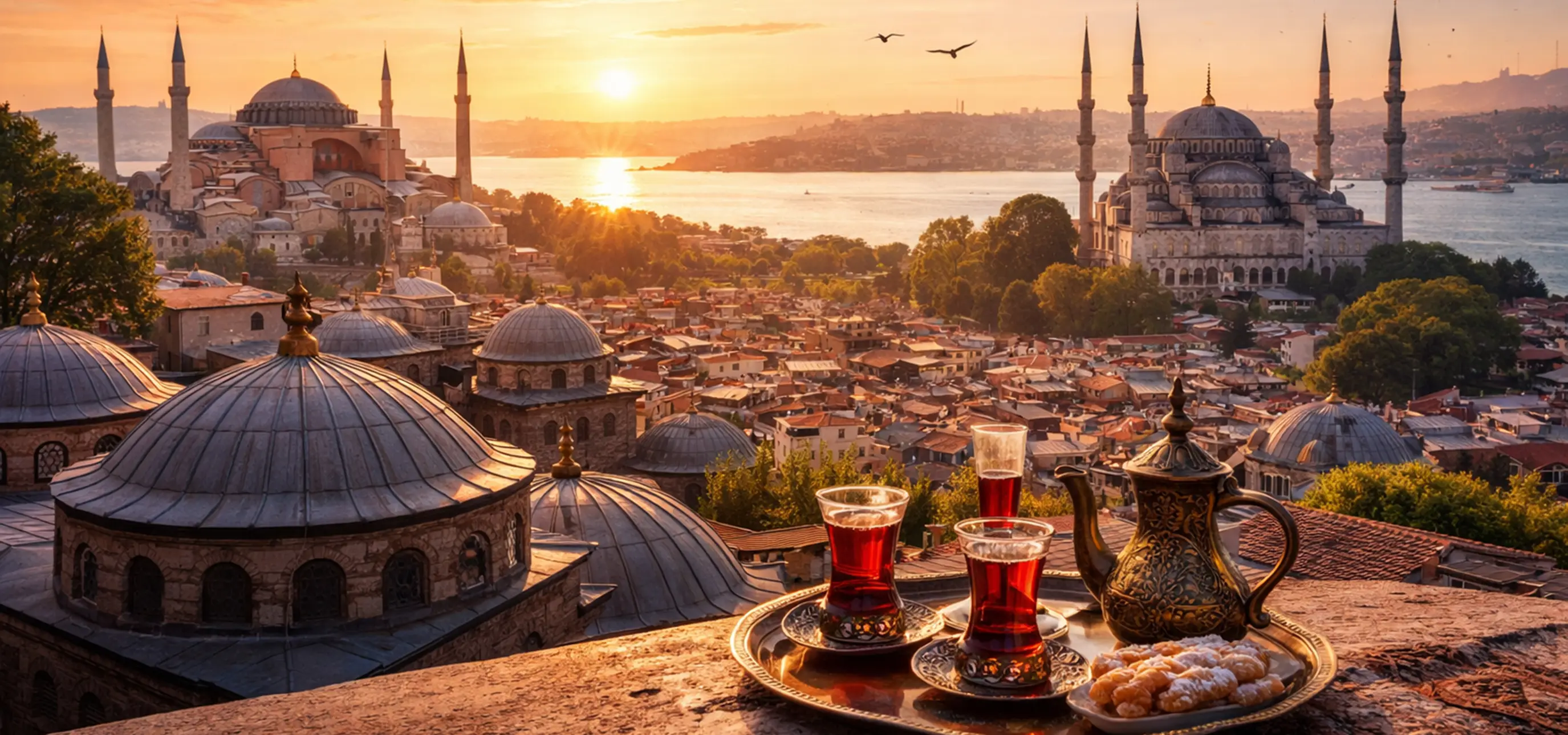
Create a private Istanbul itinerary around imperial palaces, Byzantine monuments, Ottoman mosques, Golden Horn neighborhoods and the city's lesser-visited historic treasures.
View Private Istanbul ToursUse Aynalıkavak as a starting point for a deeper route through the Golden Horn, Hasköy and Istanbul's wider imperial and multicultural heritage.
Continue through Hasköy, Fener, Balat and Eyüp to explore the historic communities and monuments of the Golden Horn.
Explore the Golden Horn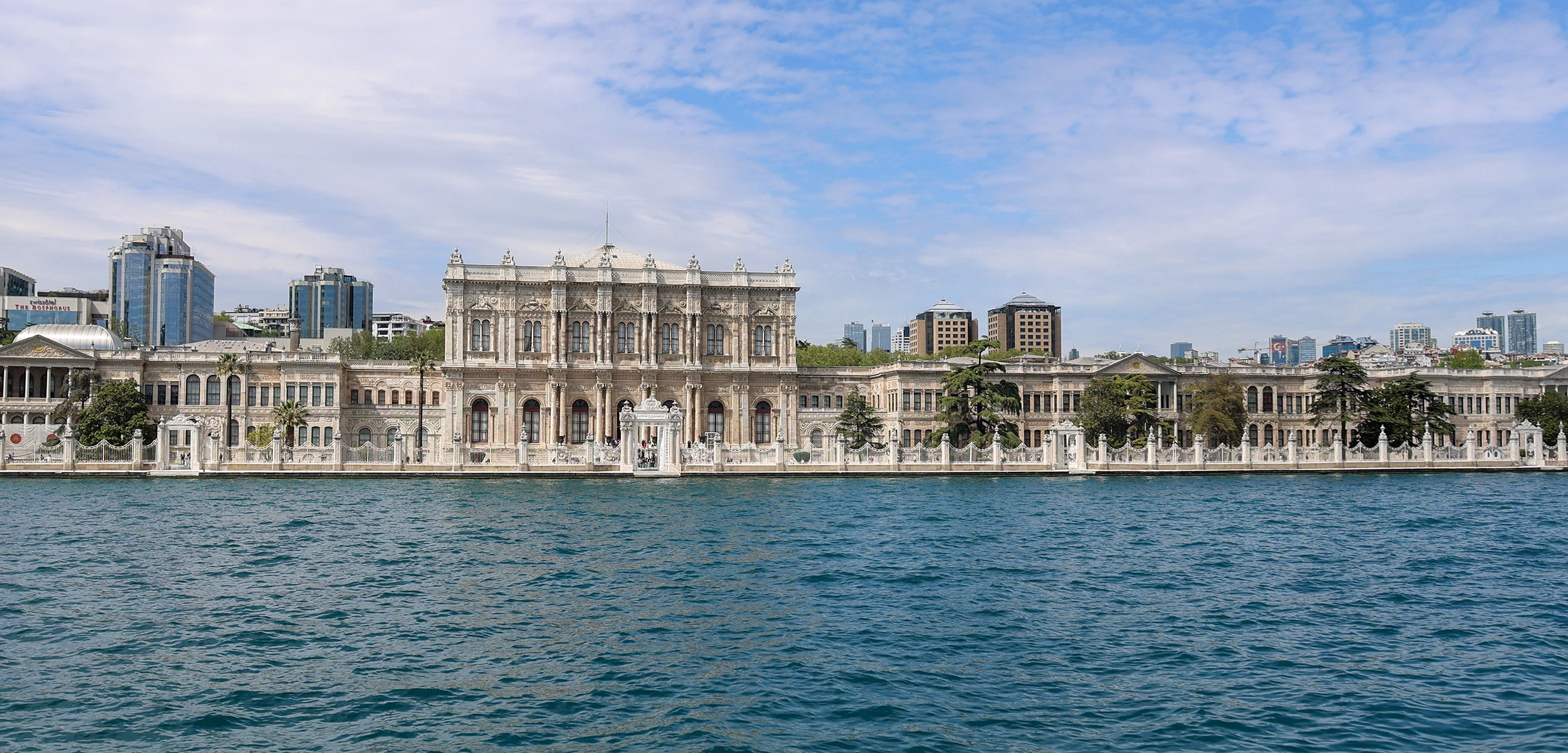
Compare Aynalıkavak's 18th-century timber tradition with the monumental 19th-century palace world of the Bosphorus.
Explore Dolmabahçe Palace
Discover more palaces, pavilions, fortresses, mosques, museums and neighborhoods across the city.
Explore Istanbul
Wow Cappadocia designs unique travel experiences across Turkey. Our expert local guides help travelers explore the country's most iconic destinations including Cappadocia, Istanbul, Ephesus, Pamukkale and Antalya.
Official member of TURSAB (Association of Turkish Travel Agencies).