Greek Orthodox Pilgrimage, Büyükada's Highest Hill & Panoramic Marmara Views

Aya Yorgi Church Büyükada – Complete Visitor Guide

Climb to the historic Greek Orthodox Monastery of Saint George on Yücetepe, discover centuries of island pilgrimage tradition and look across the Sea of Marmara from Büyükada's highest summit.

Explore Aya Yorgi Church

Aya Yorgi Church – Büyükada's Famous Hilltop Greek Orthodox Sanctuary

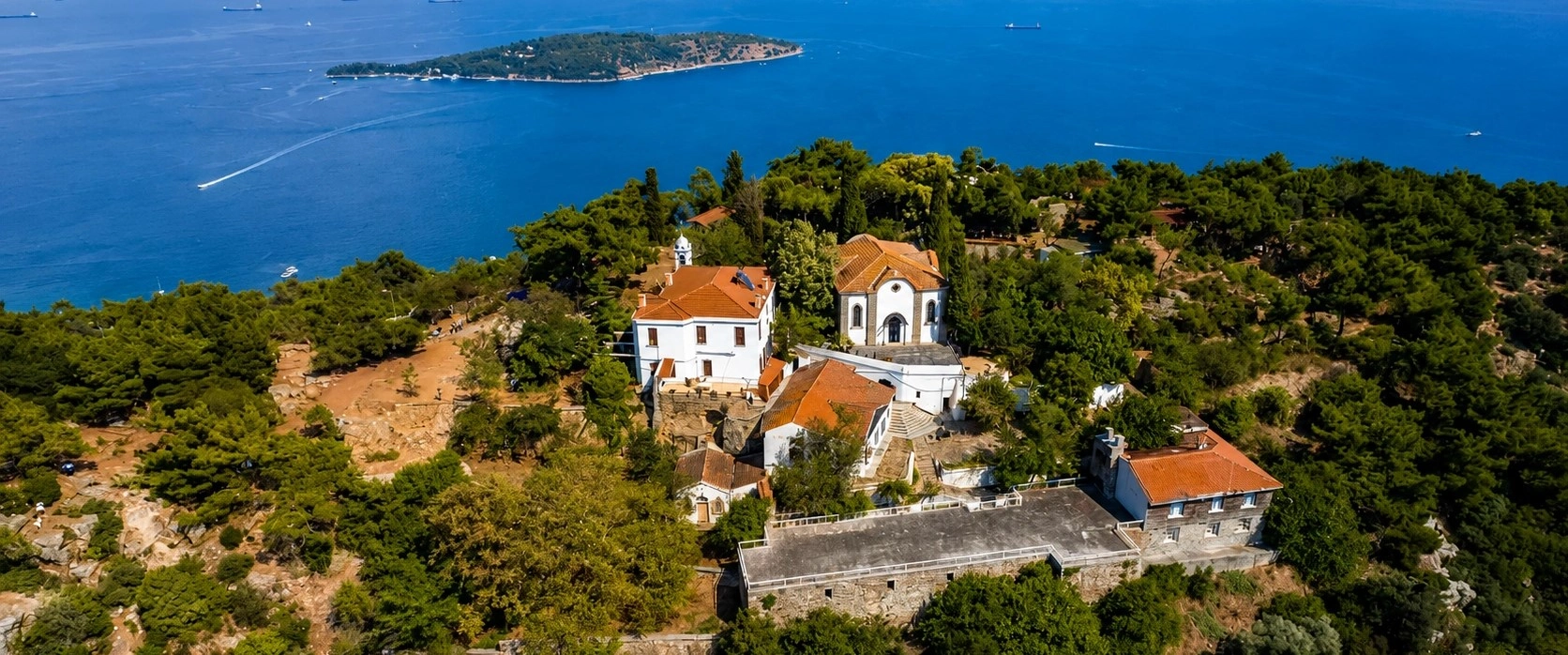
The Aya Yorgi Church and Monastery, also known as Agios Georgios Koudounas, Hagios Georgios Koudounas or the Monastery of Saint George, stands on Yücetepe, the highest hill of Büyükada in Istanbul's Princes' Islands. The sanctuary belongs to the Greek Orthodox tradition and is one of the island's most important religious, historical and cultural landmarks.

The history of the monastery combines documented buildings, medieval references and long-established religious tradition. Local tradition places the foundation as early as 963 during the Byzantine period, while the surviving older church is associated with 1751. A larger stone church was added in the early 20th century, creating the complex visitors encounter today.

Aya Yorgi is especially famous for its pilgrimage days on April 23 and September 24. On these dates, very large crowds climb the steep final path to the monastery. Many visitors participate in popular customs such as walking silently, carrying thread, lighting candles or making wishes. These practices have turned the hill into a remarkable meeting point where Orthodox devotion, local island tradition and wider popular belief overlap.

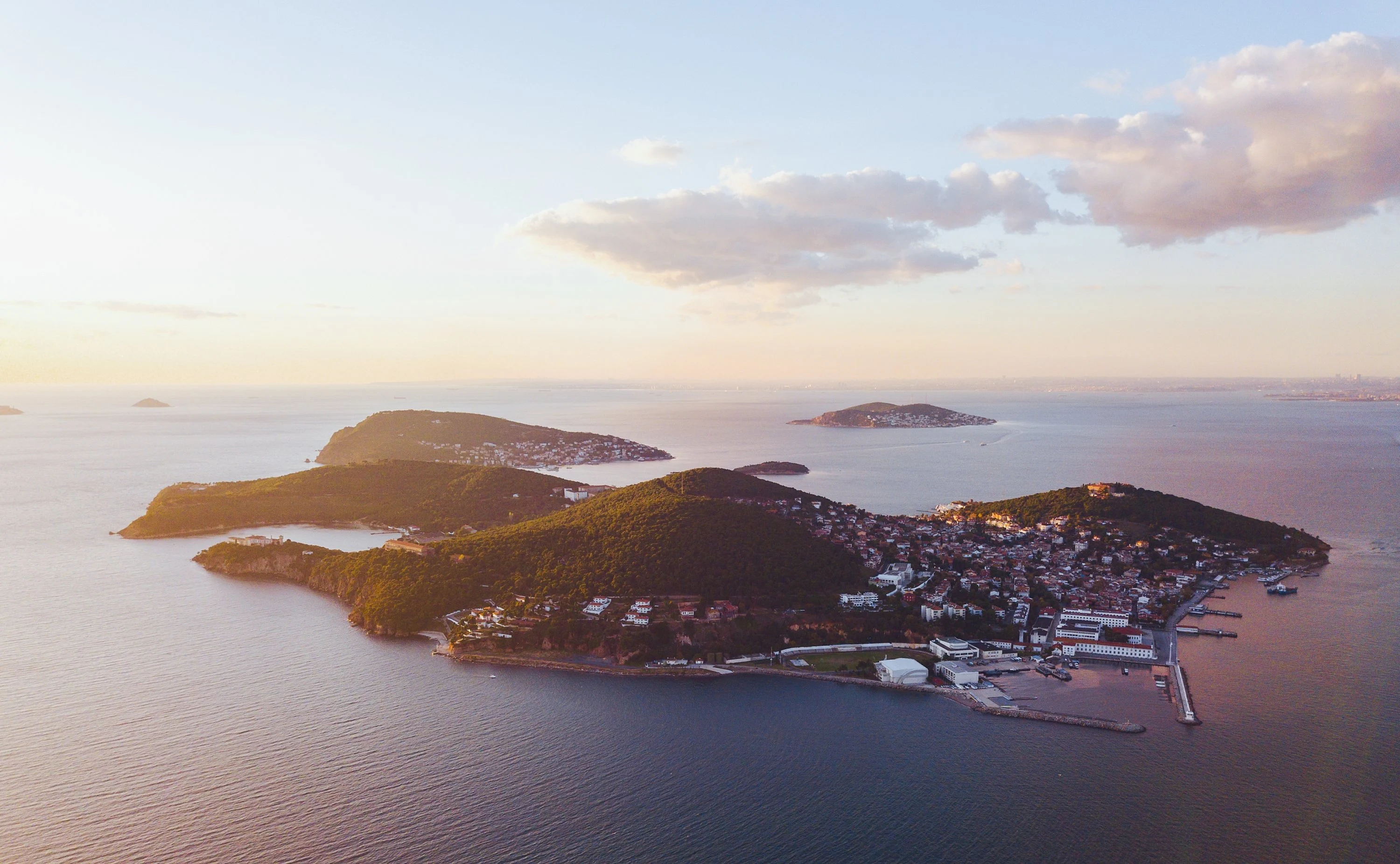
The setting is as memorable as the sanctuary itself. From the summit, visitors can look across Büyükada, the Sea of Marmara, neighboring Princes' Islands and distant sections of Istanbul's shoreline. The final climb is demanding, but the combination of sacred atmosphere, island landscape and panoramic views makes Aya Yorgi one of the most distinctive experiences in Istanbul.

963 – Traditional Foundation

Local and ecclesiastical tradition connects the monastery with the Byzantine period, although the earliest phase is not represented by the present buildings.

1751

The surviving older church is associated with an 18th-century rebuilding of the Saint George sanctuary.

Early 1900s

The larger stone church was built in the early 20th century, giving the hilltop complex much of its present form.

April 23 & September 24

The monastery becomes the focus of major annual pilgrimage traditions drawing visitors from many backgrounds.


Know Before You Go

Aya Yorgi Church Büyükada – Quick Facts

Essential information for visiting Büyükada's best-known hilltop church, understanding its Greek Orthodox identity, planning the steep climb and experiencing the pilgrimage landscape respectfully.

📍

Location

Yücetepe, Büyükada, in Istanbul's Adalar district at the highest point of the island.

Open on Google Maps
✝️

Faith

A historic Greek Orthodox sanctuary dedicated to Saint George, known in Turkish as Aya Yorgi.

⛰️

Elevation

Yücetepe rises to approximately 202 metres, making it Büyükada's highest summit.

📜

Historic Layers

Tradition reaches back to the Byzantine period; surviving structures largely reflect the 18th and early 20th centuries.

🕯️

Pilgrimage Days

April 23 and September 24 are the two best-known annual pilgrimage dates.

🥾

Final Approach

The last section from Birlik / Lunapark Square to the monastery is a steep uphill walk and cannot be avoided by ordinary island transport.


Faith, Island Memory and One of Istanbul's Most Remarkable Shared Pilgrimage Traditions

Why Is Aya Yorgi Church Important?

Aya Yorgi is important not simply because it is old. Its significance comes from the unusual combination of Greek Orthodox worship, Byzantine memory, Büyükada's multicultural history, popular pilgrimage and the physical experience of climbing to the island's highest summit.

The first layer is religious continuity. The monastery is dedicated to Saint George, one of Christianity's most widely venerated military martyrs. For generations, Greek Orthodox islanders and pilgrims have treated the summit as a sacred destination for prayer, feast-day worship and thanksgiving.

The second layer is historical memory. Although the traditional foundation date of 963 belongs partly to the monastery's long narrative rather than to the surviving architecture, medieval references support the presence of important monastic communities on the Princes' Islands. The buildings visible today preserve later phases of that much longer religious landscape.

The third layer is shared pilgrimage. Aya Yorgi is visited not only by Orthodox Christians. Especially on April 23 and September 24, people of different religious and cultural backgrounds climb the hill, light candles, make wishes and participate in local customs. This cross-community participation has made Aya Yorgi one of Istanbul's best-known examples of a sacred place whose meaning extends beyond one congregation.

For travelers using our guide to places to visit in Istanbul, Aya Yorgi also reveals a very different side of the city. Instead of domes, palaces and monumental squares, the experience is built around ferry travel, island streets, pine-covered slopes, a demanding pilgrimage path and a small sacred complex above the Marmara Sea.

History of Aya Yorgi Church and Monastery

The early history of Aya Yorgi is difficult to separate completely from tradition. A long-standing account places the foundation of the monastery in 963, during the reign of the Byzantine emperor Nikephoros II Phokas. This date is widely repeated in local historical tradition, but visitors should understand it as the claimed beginning of the monastic site rather than the date of the surviving church buildings.

Another important clue comes from the 12th century. A document associated with Emperor Manuel I Komnenos and dated to 1158 mentions monasteries of the Princes' Islands and includes a name interpreted by later historians as connected with Koudounas. The identification is significant because the monastery is still known as Agios Georgios Koudounas.

The word Koudounas is associated with bells, an image that became deeply connected with Saint George devotion at the site. Popular tradition also tells of a buried icon discovered after a shepherd received guidance in a dream and heard miraculous bells. The story helps explain why bells, small devotional objects and the language of miracles remain part of Aya Yorgi's popular memory.

The physical buildings are much later. Patriarchal and local sources associate the surviving older church with 1751. This small historic structure belongs to the Ottoman-period revival of the monastery and forms an important contrast with the larger church added more than a century later.

At the beginning of the 20th century, the monastery entered another major building phase. The larger stone church was constructed during the first years of the century, with sources giving dates around 1905–1906 for completion and 1908–1909 for consecration, opening and related additions. Rather than forcing one disputed date, it is best to understand the present main church as an early-20th-century Greek Orthodox building.

Through the late Ottoman era, the Republic and the enormous social changes that affected Istanbul's Greek community, Aya Yorgi remained a powerful place of memory. Today the monastery continues to attract worshippers, pilgrims and visitors, while the climb itself has become inseparable from the cultural identity of Büyükada.

963

Traditional date associated with the Byzantine foundation of the monastery.

1158

A Byzantine imperial document mentions island monasteries and a name later linked with Koudounas.

1751

The surviving older church is associated with an 18th-century rebuilding of the sanctuary.

1905–1906

The larger stone church was constructed during the early 20th-century rebuilding phase.

1908–1909

Sources associate these years with consecration, opening and completion of elements of the modern complex.

Today

Aya Yorgi remains an active pilgrimage destination and one of Büyükada's defining landmarks.

Who Was Saint George?

Aya Yorgi is the Turkish form commonly used for Agios Georgios – Saint George. Christian tradition remembers George as a Roman soldier and martyr from Cappadocia in Anatolia, living during the late 3rd and early 4th centuries. He became one of the most widely venerated saints in the Christian world.

According to tradition, George refused to abandon his Christian faith during persecution under the Roman emperor Diocletian and was executed. His reputation as a courageous martyr spread rapidly through the eastern Mediterranean, and churches dedicated to him appeared across the Byzantine world.

The most famous later legend presents Saint George killing a dragon and rescuing a princess. The story is symbolic rather than a historical account of his life, but it became one of the most recognizable images in Christian art. Icons often show the saint on horseback, piercing the dragon with a spear.

For Orthodox Christians, Saint George is not only a legendary warrior. He is remembered as a Great Martyr, an intercessor and a model of steadfast faith. That devotional significance explains why pilgrimage to a remote hilltop sanctuary dedicated to him can carry powerful emotional meaning.

Agios Georgios

The Greek name for Saint George; Aya Yorgi is the familiar Turkish form.

Cappadocia

Christian tradition connects Saint George with Cappadocia in ancient Anatolia.

Great Martyr

Orthodox tradition remembers George for refusing to renounce his Christian faith.

Dragon Legend

The saint on horseback defeating a dragon became one of the best-known images of Christian hagiography.

April 23

The feast of Saint George is the monastery's best-known annual pilgrimage day.

Patronage

Across different Christian traditions, Saint George is invoked for courage, protection and intercession.

The Aya Yorgi Pilgrimage Tradition

The most distinctive feature of Aya Yorgi is its living pilgrimage culture. Two dates stand out: April 23 and September 24. On these days, the normally quiet road to Yücetepe can fill with thousands of visitors.

April 23 is directly associated with Saint George's feast. September 24 has also become a major local pilgrimage date through long-established island tradition. The exact popular explanations attached to the September observance vary, which is why it is better understood as a historic second pilgrimage day rather than reduced to a single modern story.

Many visitors begin their symbolic ascent near Birlik Meydanı, also commonly called Lunapark Square. Popular customs include walking in silence, sometimes walking barefoot, unwinding a spool of thread along the route, making a wish and lighting a candle at the monastery. Some people return after a wish is fulfilled to give thanks.

These customs are an important part of Aya Yorgi's popular culture, but they should not automatically be treated as formal requirements of Greek Orthodox liturgy. For Orthodox worshippers, the core religious acts remain prayer, veneration, participation in services and devotion to Saint George.

One of the most remarkable aspects of the pilgrimage is its multi-faith participation. Muslims, Christians and visitors with no formal religious affiliation have all taken part in the climb and wish-making traditions. The result is a rare Istanbul ritual landscape in which official religion, folk belief, personal hope and island custom meet on the same path.

April 23Saint George's feast and the best-known annual pilgrimage day
September 24A second major traditional pilgrimage date drawing large crowds
Silent WalkA popular devotional custom practiced by some visitors during the ascent
Thread & WishesFolk practices associated with intention, hope and the pilgrimage journey
CandlesVisitors commonly light candles and pray at the church
Shared Sacred SpaceThe pilgrimage attracts people from different faiths and cultural backgrounds
Respect the distinction: wish-making customs are part of the popular pilgrimage culture surrounding Aya Yorgi, but they are not a substitute for the formal worship and theology of the Greek Orthodox Church.

Architecture of Aya Yorgi Church

Aya Yorgi is not a single monumental church isolated on a hill. It is a small monastic complex made up of buildings from different periods, terraces, service spaces and sacred areas arranged around the summit. This layered layout reflects the site's long religious use.

The older section associated with 1751 has a modest scale and belongs to the later Ottoman period. Its simplicity is part of the appeal: the building feels closer to an island monastery or pilgrimage chapel than to the grand urban churches of central Istanbul.

The larger early-20th-century stone church introduced a more substantial ecclesiastical presence. Its masonry, arched openings, bell elements and traditional Orthodox interior create a clear sacred focus within the summit complex.

The architecture is inseparable from the landscape. The monastery occupies Yücetepe at approximately 202 metres, and the buildings are framed by slopes, pine vegetation and open views over the Marmara Sea. The approach path, courtyard and terraces therefore function almost like an extended architectural sequence leading gradually toward the sanctuary.

Layered Complex

The monastery contains structures from different historical phases rather than one single-period monument.

1751 Church

The older surviving church represents the 18th-century phase of the sanctuary.

Stone Church

The larger church belongs to the early 20th-century rebuilding of the monastery.

Bell Tradition

The Koudounas name and local legends give bells a special place in the site's devotional identity.

Hilltop Setting

The monastery's architecture is defined by its exposed summit position above Büyükada.

Human Scale

Despite its fame, the church remains relatively intimate compared with Istanbul's monumental basilicas.

Inside Aya Yorgi Church

The interior of Aya Yorgi should be approached first as a living place of worship. The space is arranged around Greek Orthodox liturgical practice, with the sanctuary, icons, candles and devotional objects carrying religious meaning for worshippers.

Visitors will encounter images of Saint George along with other Orthodox saints and sacred figures. The iconography should not be treated simply as decoration: in Orthodox Christianity, icons form part of prayer, memory and the devotional relationship between the faithful and the saints.

The relatively compact scale creates an atmosphere very different from Istanbul's vast historic churches. During quieter moments, the combination of low voices, candlelight, icons and the long climb outside can make the sanctuary feel especially intimate.

Photography rules may be restrictive and can change according to worship, crowds and local instructions. Do not assume that interior photography is allowed. If there is any doubt, follow the posted signs or ask the church staff before taking photographs.

Saint George Icons

Images of the church's patron saint are central to the devotional identity of the sanctuary.

Iconostasis

The sanctuary arrangement reflects Orthodox liturgical tradition and separates the altar area from the nave.

Candles

Lighting candles is a common devotional act associated with prayer and remembrance.

Sacred Objects

Icons, crosses and church furnishings should be viewed respectfully rather than handled as exhibits.

Quiet Interior

The church is relatively small, so voices and movement can easily disturb worshippers.

Photography Rules

Follow current signs and staff instructions; restrictions may be stricter during services and pilgrimage days.

The Legend of Aya Yorgi Koudounas

One of the best-known stories attached to the monastery explains both its miraculous reputation and the name Koudounas, which is associated with bells. According to local tradition, sacred objects and an icon of Saint George had been hidden underground during a period of danger.

Much later, a shepherd is said to have seen Saint George in a dream. The saint instructed him to climb the hill in silence and begin digging when he heard bells. The shepherd followed the command, heard the mysterious sound and discovered the buried sacred objects.

Like many monastery legends, the story cannot be treated as a modern historical record. Its importance lies in the way it shaped pilgrimage memory. Silence, bells, the climb and the recovery of the icon became connected in the imagination of generations of visitors.

For this reason, the name Agios Georgios Koudounas is more than an alternative label. It carries the emotional language of the monastery: a saint who reveals himself, a hidden sacred object, a difficult ascent and the sound of bells marking the place of discovery.

Koudounas

A name associated with bells and one of the monastery's most distinctive traditional titles.

Dream

Local legend says a shepherd repeatedly received instructions from Saint George in a dream.

Silent Ascent

The shepherd's silent climb became linked in popular memory with later pilgrimage customs.

Buried Icon

The story centers on the miraculous recovery of a hidden sacred image.

Bells

The sound of bells marks the point of discovery in the traditional narrative.

Legend & History

The story is best understood as sacred tradition rather than a fully verifiable historical account.

What to See at Aya Yorgi Church

A good visit includes much more than entering the church. The pilgrimage path, summit landscape, older and newer buildings, icons and wide Marmara views all form part of the experience.

Pilgrimage Path

Notice how the steep final climb from Birlik Square transforms arrival at the monastery into a physical journey.

Older Church

Look for the historic 18th-century layer associated with the rebuilding of 1751.

Main Stone Church

The larger early-20th-century sanctuary forms the principal architectural focus of the complex.

Saint George Icons

Observe the traditional representation of the military martyr and the devotional importance of his image.

Bell Elements

The monastery's Koudounas identity makes bells an especially meaningful visual and symbolic detail.

Candle Area

If permitted, pause respectfully where worshippers light candles and make prayers.

Summit Courtyard

The compact monastery buildings and open areas reveal the scale of the historic hilltop community.

Marmara Panorama

Look across the sea toward neighboring islands and the distant Istanbul shoreline.

Island Landscape

The pine-covered slopes below the summit are an essential part of the atmosphere of Yücetepe.

Remember: Aya Yorgi is an active religious sanctuary. During prayer, liturgy or private religious moments, remain quiet, avoid obstructing worshippers and follow all instructions from clergy or monastery staff.

Practical Tips for Visiting Aya Yorgi Church

Wear Proper Shoes

The final climb is steep and can be tiring. Comfortable walking shoes are strongly recommended.

Carry Water

Bring water before starting the ascent, particularly in warm weather and during the summer months.

Avoid Midday Heat

The climb can become uncomfortable in strong sun. Earlier morning or later afternoon is usually more pleasant.

Dress Respectfully

Choose clothing suitable for an active Orthodox church, with shoulders and knees appropriately covered.

Expect Crowds on Feast Days

April 23 and September 24 can be extremely busy from the ferry pier all the way to the summit.

Check Access

Do not rely on one fixed internet timetable. Church access and worship arrangements can change.

Plan the Ferry First

Your day depends on ferry schedules between Istanbul and Büyükada, so check outbound and return services before departure.

Allow Enough Time

Aya Yorgi is not a quick stop from the pier. Budget for island transport, walking, the climb and the return descent.

Suggested Aya Yorgi & Büyükada Route

Begin at Büyükada Ferry Pier and spend a short time around the historic waterfront. The ferry arrival is part of the experience: the island immediately feels different from central Istanbul, with pedestrian streets, historic houses and the Sea of Marmara on every side.

Continue toward Birlik Meydanı / Lunapark Square. Depending on your energy and the transport operating that day, you can walk much of the way or use island electric public transport for part of the lower route. The final section to Aya Yorgi, however, must be completed on foot.

From Birlik Square, begin the steep ascent to Yücetepe. Allow approximately 20–40 minutes for the uphill section depending on fitness, heat, crowds and how often you stop. On pilgrimage days, the climb can take considerably longer.

At the summit, allow time for the monastery, the church interior when open, prayer or quiet observation and the panoramic Marmara views. After descending, continue through Büyükada's historic neighborhoods before returning to the ferry pier.

Stop 1Büyükada Ferry Pier and waterfront
Stop 2Historic Büyükada streets and island houses
Stop 3Birlik Meydanı / Lunapark Square
Stop 4Walk the steep pilgrimage path to Yücetepe
Stop 5Aya Yorgi Church and Monastery
Stop 6Summit panorama and rest
Optional ExtensionGreek Orphanage viewpoint area, Hristos Monastery, Dilburnu or Büyükada's historic mansions
Total TimeAllow at least half a day; a relaxed full-island visit is better as a full-day excursion
Planning note: the final climb is the defining physical part of the Aya Yorgi visit. Do not plan the monastery as if a vehicle can deliver you directly to the church entrance.

Aya Yorgi Church Visitor Information

Aya Yorgi stands on Yücetepe in Büyükada, within Istanbul's Adalar district. The monastery is reached from the island's ferry pier by crossing Büyükada and then making the final steep ascent from the Birlik / Lunapark Square area.

The church is a religious site rather than a conventional state museum. Ordinary entry has traditionally not required a museum-style admission ticket, but donations, candles and devotional items may be available separately.

Published opening hours online are inconsistent, and access can also be affected by Sunday worship, religious feasts, pilgrimage days, maintenance and monastery arrangements. For that reason, travelers should verify the latest conditions shortly before making a visit specifically for the interior.

Even when the church interior cannot be entered, the journey still has value: the pilgrimage route, monastery exterior, Yücetepe setting and views over the Marmara Sea make the summit one of Büyükada's most memorable destinations.

Official / Traditional NameAgios Georgios Koudounas / Aya Yorgi Church and Monastery
FaithGreek Orthodox Christianity
LocationYücetepe, Büyükada, Adalar, Istanbul
ElevationApproximately 202 metres
AdmissionNo standard museum-style ticket is normally associated with ordinary religious access
Opening HoursPublished schedules vary; verify current access before making a time-sensitive visit
Suggested TimeAllow 30–60 minutes at the summit, plus travel and climbing time
Important: do not rely on an old blog post for exact church hours. The monastery is a living sacred place, and worship arrangements always take priority over sightseeing.

Worship at Aya Yorgi Church

Aya Yorgi continues to function within the Greek Orthodox religious tradition. Its spiritual life centers on prayer, icons, candles, saints' commemorations and the celebration of Orthodox liturgy.

The most important day associated with the church is April 23, the feast of Saint George. The monastery can become exceptionally crowded as worshippers and visitors climb the hill throughout the day. September 24 is another major local pilgrimage date.

Sunday and feast-day services can affect tourist access. If a liturgy is taking place, do not move around the church as though it were a museum. Stand quietly, avoid blocking participants, keep phones silent and follow all instructions from clergy or staff.

Visitors who specifically want to attend a service should confirm the current schedule locally or through the relevant Orthodox church authorities before travelling, especially outside the main pilgrimage dates.

Saint George

The monastery is dedicated to the Great Martyr Saint George, known locally as Aya Yorgi.

April 23

The principal feast and most famous annual pilgrimage day associated with the sanctuary.

September 24

A second major traditional pilgrimage date in the island calendar.

Icons & Candles

Orthodox devotion at the church includes prayer before icons and the lighting of candles.

Sunday Worship

Services may restrict sightseeing access, particularly during the morning.

Respectful Guests

Visitors of any background should behave as guests in an active place of worship.

Service etiquette: dress modestly, silence phones, avoid flash, do not enter the sanctuary area and never interrupt prayer for photographs.

Best Time to Visit Aya Yorgi Church

Spring

Mild weather and green island landscapes make the climb more comfortable than in midsummer heat.

Autumn

September and October can offer pleasant walking conditions, although September 24 itself is extremely busy.

Early Morning

A good choice in warm weather before the steep path becomes hot and busy.

Late Afternoon

Beautiful light over the Marmara can make the summit especially atmospheric, but always check ferry and church timing.

April 23

Visit for the full pilgrimage atmosphere only if you are comfortable with very large crowds and long queues.

September 24

Another powerful pilgrimage experience, again with heavy visitor numbers and slower movement.

How Much Time Do You Need for Aya Yorgi?

20–40 Minutes

Typical time for the final uphill walk from Birlik / Lunapark Square to the monastery.

30–60 Minutes

Comfortable time at the summit for the church, monastery setting and panoramic views.

1.5–2.5 Hours

A realistic Aya Yorgi excursion from the lower approach when you include climbing, visiting and descending.

Full Day

Best for combining Aya Yorgi with Büyükada's waterfront, mansions, churches, viewpoints and relaxed island atmosphere.

Photography at Aya Yorgi Church

The strongest photographs often begin before reaching the church. The steep path, pilgrims climbing through the island landscape and changing views over Büyükada tell the story of the journey to the sanctuary.

At the summit, wide views across the Sea of Marmara can be spectacular in clear weather. The surrounding islands, coastline, forest and open sky create a visual contrast with the intimate scale of the monastery.

For architectural images, focus on the church entrance, stonework, bell elements, courtyard and relationship between the monastery buildings and the hilltop landscape. Morning or late-afternoon light is often softer than midday sun.

Inside the church, photography may be restricted or prohibited. Never assume permission. Do not photograph people praying, clergy, religious ceremonies or sacred moments without clear consent.

Pilgrimage Path

The steep approach gives context to the spiritual and physical experience of reaching the church.

Bell Tower Details

Bells and the Koudounas name are closely connected with the monastery's identity.

Summit Panorama

Use the elevated position for broad views over Büyükada and the Marmara Sea.

Island Layers

Frame the monastery with pine trees, sea and distant islands rather than isolating the building completely.

Interior Restrictions

Follow posted rules and staff instructions before taking any photographs inside.

Respect Pilgrims

Avoid intrusive close-ups of people making wishes, lighting candles or praying.

Photography rule: the fact that Aya Yorgi is a famous tourist stop does not make every religious moment public. Give worshippers privacy and put the camera away whenever photography would become intrusive.

Accessibility at Aya Yorgi Church

Aya Yorgi is one of the more physically demanding major heritage visits in Istanbul. The monastery stands on the island's highest hill, and the final path from Birlik / Lunapark Square is steep and primarily pedestrian.

For visitors with limited mobility, heart or respiratory difficulties, or difficulty walking on sustained inclines, the ascent may be challenging. Heat can increase the physical demand significantly in summer.

Steep Final Climb

The last approach is the main accessibility challenge and cannot normally be bypassed by standard public transport.

Uneven Surfaces

Expect sloping, occasionally rough or slippery sections depending on weather and maintenance.

Heat Exposure

Summer sun can make the ascent substantially harder, especially around midday.

Rest Frequently

Allow extra time and stop when needed rather than trying to match the pace of other visitors.

Wheelchair Access

The final pilgrimage route is not suitable for ordinary wheelchair access without special assistance and confirmed arrangements.

Confirm Specific Needs

Travelers requiring step-free access should seek current local guidance before committing to the climb.

How to Get to Aya Yorgi Church

Reaching Aya Yorgi involves two separate journeys: first the ferry to Büyükada, then the trip across the island to the foot of Yücetepe. There is no road connection from mainland Istanbul to Büyükada.

From Kabataş / European Side

Use a ferry service to Büyükada. Seasonal routes and departure points can change, so check the current timetable before leaving your hotel.

From Kadıköy

Ferry connections from the Asian side make Kadıköy one of the most practical starting points for a Büyükada day trip.

From Bostancı

Bostancı is another useful Asian-side departure point, often offering a relatively direct crossing to the Princes' Islands.

From Büyükada Pier

Walk toward the island center and continue in the direction of Birlik / Lunapark Square, either on foot or using available island electric transport for part of the route.

From Birlik / Lunapark Square

Continue on foot up the steep Aya Yorgi path to Yücetepe. Allow roughly 20–40 minutes for the climb depending on conditions.

By Bicycle

Cycling is useful for exploring Büyükada, but the final hill is extremely steep and many riders will need to dismount and walk.

Transport update: Büyükada now uses electric public transport rather than the old horse-drawn carriage system. Routes and stops can change, so check the current IETT island service on the day of your visit. No ordinary public bus continues all the way to the monastery summit.

Places to Visit Near Aya Yorgi Church

Aya Yorgi is best experienced as part of a wider Büyükada day. The island preserves Greek Orthodox, Armenian, Catholic, Jewish, Ottoman and early Republican layers alongside famous wooden mansions, pine landscapes and Marmara viewpoints. You can also use our complete Istanbul visitor guide to continue planning.

Princes' Islands

Explore our wider guide to Büyükada, Heybeliada, Burgazada, Kınalıada and the history of Istanbul's island world.

Greek Orphanage

See the extraordinary wooden former Prinkipo Greek Orthodox Orphanage on İsa Tepesi, one of Büyükada's most famous historic landmarks.

Hristos Monastery

Discover another historic Greek Orthodox monastic site on Büyükada's second-highest hill.

Adalar Museum

Learn about the archaeology, social history, communities and changing life of the Princes' Islands.

Hamidiye Mosque

Add an Ottoman religious layer to your island route with Büyükada's distinctive late-19th-century mosque.

San Pacifico Church

Visit Büyükada's historic Roman Catholic church and compare another Christian tradition within the island community.

Surp Asdvadzadzin Church

Discover the Armenian Catholic presence on Büyükada and another important part of the island's multicultural religious heritage.

Dilburnu Nature Area

Combine heritage with pine forest and coastal scenery on one of Büyükada's best-known natural sections.

Explore More of Istanbul

Continue with churches, monasteries, mosques, palaces, museums and historic neighborhoods across the city.

Frequently Asked Questions About Aya Yorgi Church Büyükada

What is Aya Yorgi Church?

Aya Yorgi is a historic Greek Orthodox church and monastery dedicated to Saint George on Yücetepe, the highest hill of Büyükada in Istanbul's Princes' Islands.

What is the full name of Aya Yorgi?

The monastery is commonly known as Agios Georgios Koudounas or Hagios Georgios Koudounas, meaning the Saint George sanctuary associated with the tradition of bells.

Where is Aya Yorgi Church?

It is on Yücetepe at the southern side of Büyükada, in Istanbul's Adalar district.

Is Aya Yorgi on the highest point of Büyükada?

Yes. Yücetepe rises to approximately 202 metres and is generally identified as Büyükada's highest summit.

How old is Aya Yorgi Church?

Tradition places the monastery's origin in 963, but the surviving old church is associated with 1751 and the larger stone church belongs to the early 20th century.

Was Aya Yorgi really founded in 963?

963 is a traditional Byzantine foundation date repeated in local and ecclesiastical accounts. It should not be confused with the date of the surviving church buildings.

Who was Saint George?

Saint George was a Christian soldier and martyr traditionally associated with Cappadocia. He became one of the most widely venerated saints in Eastern and Western Christianity.

Why is Saint George shown killing a dragon?

The dragon story is a later Christian legend symbolizing the saint's victory over evil and became one of the most famous subjects in Christian art.

What does Koudounas mean?

The name is associated with bells and is closely tied to the monastery's local legend of miraculous bell sounds and the discovery of a sacred icon.

Why do people visit Aya Yorgi on April 23?

April 23 is associated with the feast of Saint George and is the monastery's most famous annual pilgrimage day.

What happens on September 24?

September 24 is a second major traditional pilgrimage day at Aya Yorgi and draws large crowds of worshippers and visitors.

Do only Christians visit Aya Yorgi?

No. The pilgrimage has long attracted people from different faiths and cultural backgrounds, making Aya Yorgi a well-known example of shared sacred practice in Istanbul.

Why do people walk silently to Aya Yorgi?

Silent walking is a popular pilgrimage custom connected with devotion, wish-making and the monastery's traditional legends. It is not a requirement for ordinary visitors.

Why do people carry thread on the Aya Yorgi path?

Unwinding thread while walking uphill is a folk wish-making practice associated with the pilgrimage. Visitors should avoid leaving litter or damaging vegetation.

Do people walk barefoot to Aya Yorgi?

Some pilgrims choose to walk barefoot as a devotional practice, but it is not required and the steep route can be rough, hot or slippery.

Can tourists visit Aya Yorgi Church?

Yes, when the monastery is open and religious activity allows. Visitors should behave respectfully because it is an active sacred place.

What are Aya Yorgi Church opening hours?

Published hours vary considerably between sources. Because church access can change according to worship and local arrangements, verify the current schedule before making a time-sensitive visit.

Is Aya Yorgi Church free?

Ordinary religious access has traditionally not required a museum-style entrance ticket. Donations, candles or devotional items may be separate and voluntary.

Can I take photos inside Aya Yorgi?

Interior photography may be restricted or prohibited. Follow posted signs and staff instructions, and never photograph worshippers or ceremonies intrusively.

How difficult is the walk to Aya Yorgi?

The final section from Birlik / Lunapark Square is steep and can be demanding, especially in hot weather. Comfortable shoes and water are strongly recommended.

How long does the climb take?

Most visitors should allow roughly 20–40 minutes for the final uphill section, although fitness, weather and pilgrimage crowds can change the timing substantially.

Can I take a bus directly to Aya Yorgi Church?

No ordinary island public transport continues to the monastery entrance. Electric vehicles can help with lower sections of the island route, but the final ascent is on foot.

Are there horse-drawn carriages on Büyükada?

The traditional public phaeton system ended in 2020. Island public transport now uses electric vehicles.

Is Aya Yorgi accessible for wheelchair users?

The steep pedestrian approach makes ordinary wheelchair access very difficult. Visitors with specific mobility needs should seek current local assistance information before travelling.

Is Aya Yorgi worth visiting?

Yes. It combines religious history, living pilgrimage, Büyükada's multicultural heritage, a memorable uphill walk and some of the island's finest Marmara views.

Responsible Visiting at Aya Yorgi Church

Respect Worship

Remain quiet inside the church and do not interrupt people praying, lighting candles or participating in services.

Dress Appropriately

Wear clothing suitable for a functioning Greek Orthodox sanctuary.

Do Not Leave Thread Behind

If participating in a wish tradition, avoid tying plastic, thread or fabric to trees and shrubs in ways that damage the landscape or create litter.

Protect the Path

Carry all bottles, packaging and personal waste back down the hill.

Photograph Discreetly

Do not treat pilgrims or worshippers as photographic subjects without consent.

Respect Access Rules

If part of the monastery is closed for worship, maintenance or community use, accept the restriction without pressuring staff.

Private Aya Yorgi & Princes' Islands Experiences

Connect Aya Yorgi with Büyükada's historic mansions, Greek Orthodox heritage, island neighborhoods, panoramic viewpoints and the wider story of Istanbul's Princes' Islands through a private route shaped around your interests and without compulsory shopping stops.

Custom Büyükada & Aya Yorgi Experience

Choose a focused Büyükada day built around Aya Yorgi, the island's multicultural religious heritage, historic wooden houses, waterfront streets and panoramic landscapes, or combine the island with a wider Istanbul itinerary.

Continue Exploring Istanbul's Christian Heritage

Use Aya Yorgi as a starting point for a wider journey through Greek Orthodox, Armenian, Roman Catholic, Bulgarian Orthodox and Byzantine heritage across Istanbul.