Private Şile Black Sea Coast Tour
Ask us about a tailor-made route combining Şile Lighthouse, castle viewpoints, harbor, Şile Bezi, seafood, Saklıgöl and selected coastal scenery.
Request a Custom Tour





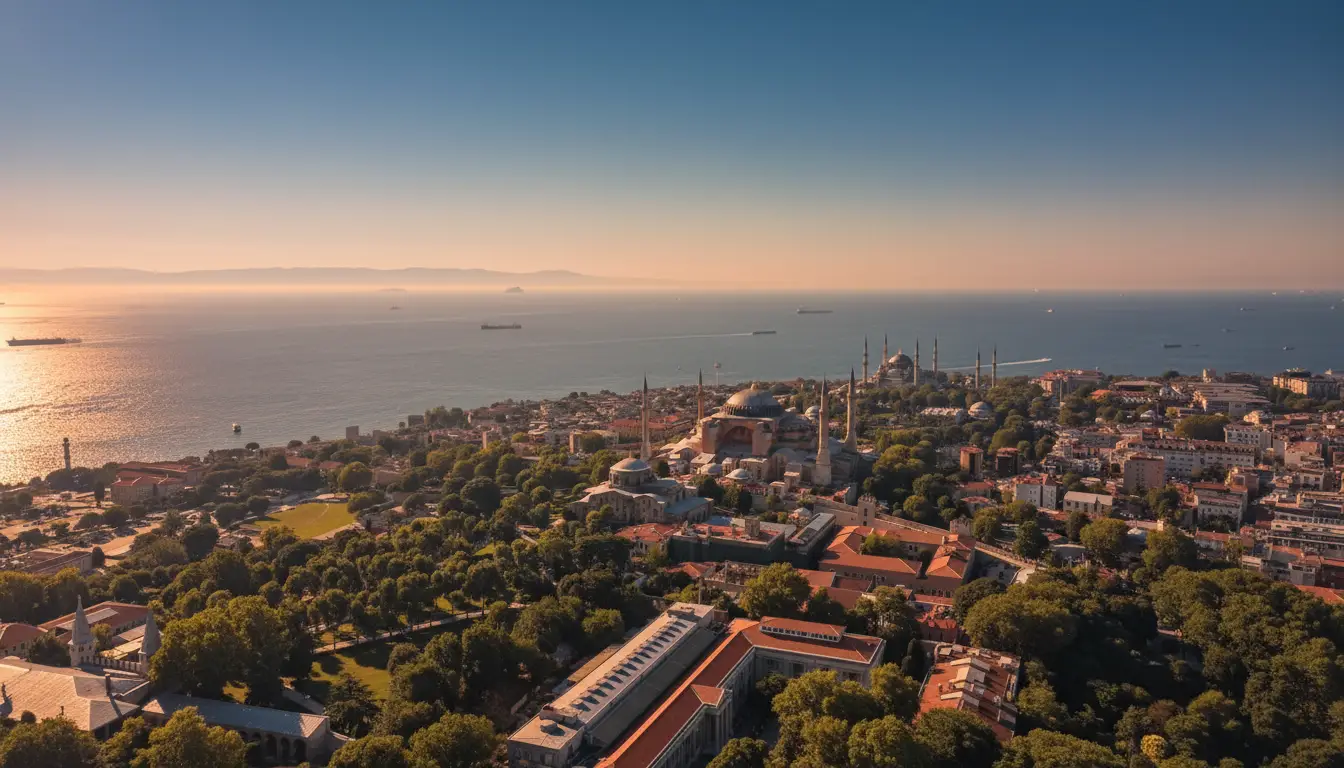
Most first-time visitors imagine Istanbul through the domes of Sultanahmet, the waters of the Bosphorus and the crowded streets surrounding the Golden Horn.
Travel far enough northeast, however, and the city reveals an entirely different personality.
Here the Bosphorus is gone, the urban skyline disappears and the open Black Sea stretches across the horizon.
This is Şile, a historic coastal district on Istanbul's Asian side and one of the most rewarding escapes from the central city.
Şile combines a compact seaside town with dramatic limestone cliffs, a working fishing harbor, sandy beaches, forested countryside, historic monuments and traditional textile culture.
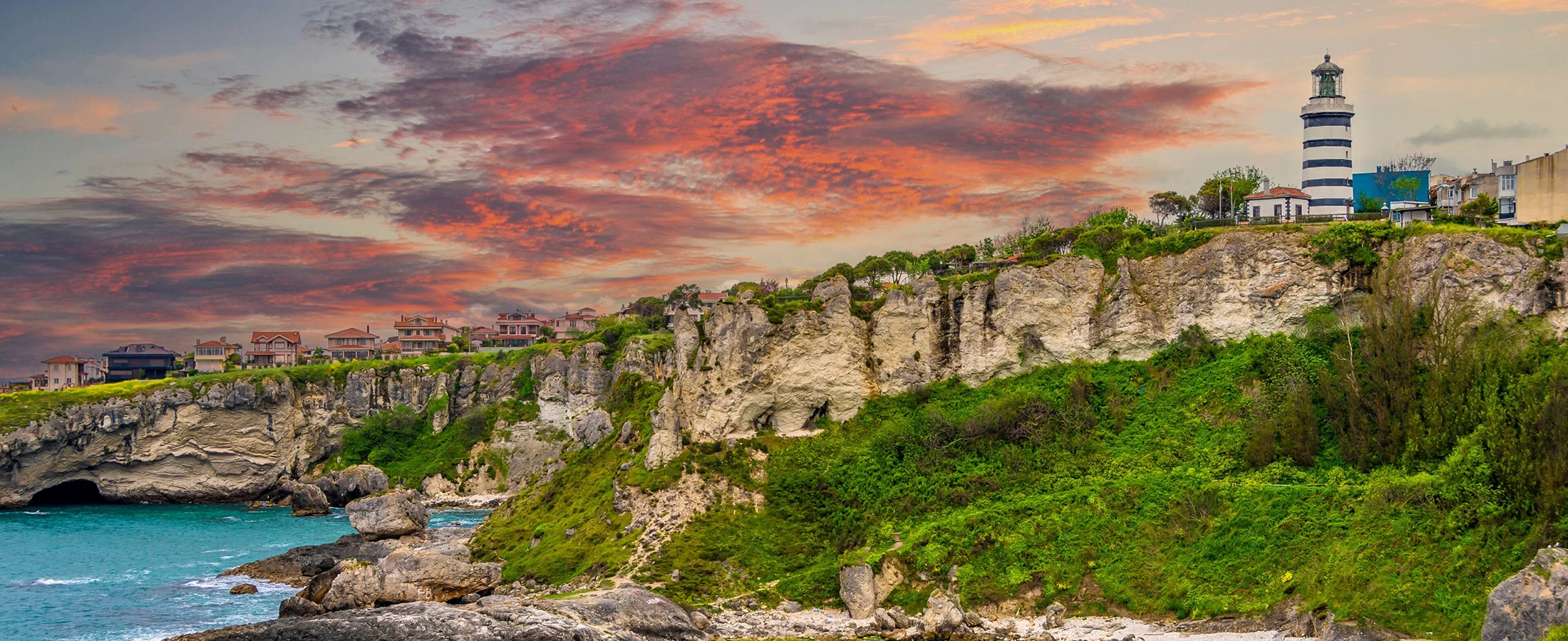
Its most recognizable landmark is the extraordinary Şile Lighthouse — Şile Feneri, a black-and-white striped Ottoman lighthouse standing high above the sea.
Just offshore, the stone tower of Şile Castle rises from rocky Ocaklı Ada, while below the cliffs fishing boats shelter inside the harbor.
The district is also famous for Şile Bezi, the lightweight woven cotton fabric traditionally associated with local households and hand embroidery.
Beyond the center, long beaches, forest roads, hidden coves, rural villages, Saklıgöl and the famous resort area of Ağva extend the Şile experience far beyond a simple seaside walk.
In summer, Istanbul residents arrive for swimming and beach days.
During spring and autumn, the coast becomes better suited to walking, photography, seafood lunches and exploring the natural landscape without the intense seasonal crowds.
Şile is therefore best understood not as a single attraction, but as Istanbul's great Black Sea district — part historic town, part beach escape, part fishing community and part nature destination.
See one of Turkey's most impressive historic lighthouses, built in 1859 above the Black Sea and instantly recognizable by its black-and-white bands.
Walk along dramatic cliffs, rocky bays, viewpoints and long sandy beaches where Istanbul opens directly onto the Black Sea.
Discover the district's famous lightweight woven cloth, a registered local product closely connected with embroidery, household production and Şile identity.
Continue east through forests and coastal villages toward Ağva, riverside hotels, boat rides, Kilimli Cove and some of Istanbul Province's wildest scenery.
Essential information about Şile's location, lighthouse, castle, beaches, history, traditional textile culture, transport, swimming conditions, visit length and connection with Ağva.
Black Sea coast on Istanbul's Asian side, northeast of the central city.
Historic coastal town, fishing harbor, beach destination, nature district and gateway to Ağva.
Şile Lighthouse, built in 1859 and still one of the most recognizable maritime landmarks on Turkey's Black Sea coast.
Şile Castle, also known as Ocaklı Ada Castle, stands on a rocky islet beside the town.
Uzunkum, Ağlayankaya, Kumbaba, Akçakese and numerous smaller bays and coastal stretches.
Şile Bezi, a distinctive lightweight woven cotton textile traditionally decorated with embroidery.
IETT regional services connect the Asian side with Şile; routes and timetables should be checked before departure.
Allow at least half a day for Şile center; a full day is better for beaches or Saklıgöl, and more time is needed if continuing to Ağva.
The Black Sea can develop strong waves and currents; use supervised beaches and follow lifeguard warnings.
Coastal photography, lighthouse views, seafood, beaches, textile shopping, nature walks and slow weekend escapes.
Şile is important because it preserves a side of Istanbul that many visitors never imagine exists.
Although administratively part of the same metropolis as Sultanahmet, Kadıköy and the Bosphorus districts, Şile feels geographically and culturally much farther away.
Its orientation is not toward the Marmara Sea or the Bosphorus but toward the open Black Sea.
That difference has shaped everything from the district's fishing traditions and coastal architecture to its climate, beaches and relationship with maritime navigation.
The historic lighthouse connects Şile directly with the modernization of Ottoman lighthouse services during the 19th century.
The offshore castle reflects the strategic importance of controlling a coastline used by merchants, sailors and military forces for centuries.
Şile Bezi preserves another kind of heritage — domestic textile production, weaving and embroidery associated with generations of local families.
The surrounding villages, forests, streams and agricultural landscapes demonstrate how remarkably rural Istanbul can become once travelers leave the dense urban core.
For visitors, Şile therefore brings together maritime history, traditional craftsmanship, beach culture, geological scenery, fishing life and nature tourism within the boundaries of Istanbul Province.
Şile's landscape is one of the main reasons the district feels so different from central Istanbul.
The coastline alternates between broad sandy beaches, steep cliffs, sea caves, rocky headlands, offshore stacks and small protected coves.
Behind the coast, forested hills and rural countryside extend inland toward the water basins and northern woodland of Istanbul.
The Black Sea constantly reshapes this edge through wind, waves and erosion.
That process has created dramatic coastal formations and exposed rock faces that are particularly photogenic during changing weather.
Şile center rises above sections of dramatic rock, creating viewpoints over the lighthouse, harbor and offshore castle.
Sandy coastal stretches make the district one of Istanbul's most important summer swimming destinations.
Small offshore rocks and islands give the Şile coast much of its distinctive maritime character.
Travel only a short distance inland and the landscape changes from exposed coastline to green valleys, woodland and village roads.
Black Sea conditions can shift quickly, particularly when wind increases and cloud systems move along the coast.
Even though Şile faces generally north, the long summer evening light can produce spectacular colors across cliffs, beaches and the lighthouse.
The history of Şile stretches far beyond the modern resort town visible today.
Archaeological discoveries in the wider district, including flint tools and traces found around caves and stream valleys, indicate human activity reaching back to prehistoric periods.
Local historical accounts connect the first organized coastal settlement with Miletian seafarers, who are believed to have established a colony known as Philee around the 8th century BC.
The settlement occupied a strategically valuable Black Sea coastline used by ships moving between the Bosphorus, northern Anatolia and the wider Pontic world.
Over the centuries, the region came under the influence or control of different Anatolian and Mediterranean powers, including Persians, Romans and the Byzantine Empire.
Caves in the surrounding countryside are also connected with stories of refuge and religious communities during periods when Christianity was persecuted under Roman rule.
During the medieval period, the coast became strategically important to Byzantine and Genoese maritime networks.
Şile Castle on Ocaklı Ada is generally associated with this medieval maritime environment and is commonly described as a Genoese-era fortification.
The district passed permanently into the Ottoman sphere during the late 14th century.
For centuries afterward, Şile remained a relatively small coastal settlement whose economy depended on fishing, agriculture, forestry and local crafts.
The construction of the great lighthouse in 1859 transformed the town's maritime profile during a period when the Ottoman Empire was modernizing navigation infrastructure around its coasts.
Following the First World War, Şile entered the Allied-controlled zone around the Straits and came under British occupation in 1920.
Turkish forces entered Şile on 7 October 1922, a date commemorated locally as the district's liberation.
After the establishment of the Turkish Republic, Şile developed gradually into a municipality, coastal retreat and eventually one of Istanbul's best-known weekend destinations.
Stone tools and cave-related evidence suggest human activity in the wider Şile landscape thousands of years before the classical city.
A settlement known as Philee is traditionally connected with Miletian colonists on the Black Sea coast.
The district remained connected to the political and commercial systems controlling northwestern Anatolia and the Bosphorus.
Fortifications and maritime activity linked Şile with Byzantine and Genoese strategic interests.
Şile became permanently incorporated into Ottoman territory during the late medieval period.
Şile Lighthouse was constructed as part of the expanding Ottoman lighthouse system.
Şile came under British occupation following the First World War and the international control of the Straits region.
Turkish forces entered Şile, ending the occupation shortly before the establishment of the Republic.
No landmark represents Şile more powerfully than Şile Lighthouse — Şile Feneri.
Standing on high coastal rock above the Black Sea, the tower can be seen from many parts of the town and from vessels approaching the coast.
The lighthouse was constructed in 1859 during the Ottoman period as part of the lighthouse system developed to improve navigation around the empire's coasts.
Its engineering and administration were connected with the Franco-Ottoman lighthouse organization that operated many important navigation lights during the 19th century.
The octagonal masonry tower rises approximately 19 meters and stands on cliffs roughly 60 meters above sea level.
Its alternating black-and-white horizontal bands were designed to make the tower highly visible during daylight.
The lighthouse's optical system was designed to project its light far across the Black Sea, where navigation could become extremely dangerous during fog, storms and heavy weather.
For modern visitors, the importance of the lighthouse is both functional and visual.
It remains a maritime landmark while also forming one of the most beautiful coastal viewpoints in Istanbul.
Built in 1859 during the Ottoman period as part of the modern lighthouse network serving Black Sea navigation.
An octagonal masonry structure approximately 19 meters high with distinctive black-and-white horizontal bands.
The lighthouse stands on high rock approximately 60 meters above sea level, giving it exceptional visibility.
Official lighthouse information lists a nominal visibility of approximately 20 nautical miles under suitable conditions.
Approach from the town and coastal paths, then look back toward the striped tower with the open Black Sea behind it.
Museum or interior access can change according to current arrangements; check before traveling if entering the lighthouse is important to your visit.
From the lighthouse viewpoints, one of the most distinctive sights is the stone tower rising from a rocky island just offshore.
This is Şile Castle — Şile Kalesi, also known as Ocaklı Ada Castle.
The surviving structure is generally associated with the medieval Genoese presence on the Black Sea and is often dated to the late Byzantine or Genoese period.
Its position explains its strategic function.
A small fortified tower on the islet could observe vessels moving along the coast and control the immediate approach to the settlement.
The castle seen today has undergone restoration, and its appearance has therefore changed from the weathered ruin familiar from older photographs.
Even when viewed only from the mainland, the relationship between the castle, sea rocks, harbor and lighthouse creates one of Şile's most memorable coastal compositions.
Ocaklı Ada Castle because it occupies a small rocky islet immediately beside Şile.
Usually associated with the medieval Genoese era, although the wider site reflects a long history of coastal defense.
Observation and defense of the coastal settlement and maritime approaches.
View the castle from the lighthouse area, harbor viewpoints and coastal paths rather than treating it as a conventional walk-in fortress.
Below the cliffs, Şile's harbor reveals that this is not merely a tourist resort.
Fishing has been part of the district's economy and identity for generations.
Small fishing boats, working vessels, nets, maintenance areas and seafood restaurants continue to connect the town with the Black Sea.
The harbor also creates one of the most pleasant walking environments in the center.
From different points around the waterfront, visitors can look toward the castle islet, lighthouse cliffs and open sea.
Early morning is particularly atmospheric, when boats may be returning and the waterfront remains much quieter than during the afternoon.
Şile has one of the longest and most varied beach coastlines within Istanbul Province.
Some beaches are directly beside the town, while others require a short drive through surrounding villages and forest roads.
The experience changes dramatically according to season, wind and sea conditions.
One of Şile's best-known sandy beaches, stretching along the coast east of the town and popular during the summer season.
A central beach reached from the eastern side of Şile, close enough to combine with the lighthouse and town center.
A broad coastal area west of Şile center, historically popular with Istanbul residents seeking a simple Black Sea beach day.
A quieter beach area approximately 17 kilometers from the district center, surrounded by a more natural coastal landscape.
A long sandy Black Sea beach in the Ağva section of Şile district, suitable for travelers continuing east for a full-day or overnight escape.
Smaller coves and rocky bays appear throughout the district, but access and swimming safety vary greatly and should never be assumed.
Swimming in Şile requires more caution than swimming in a sheltered bay or calm inland sea.
The Black Sea can produce strong waves, sudden changes in wind and powerful currents even when the beach looks inviting from shore.
Conditions can also vary significantly between two beaches on the same day.
Choose beaches with active lifeguard services whenever possible, especially if you are unfamiliar with Black Sea conditions.
Never ignore red flags, lifeguard instructions or official swimming restrictions.
Large shore break can knock swimmers over even in relatively shallow water.
Rip currents and lateral currents can develop along open sandy beaches and may be difficult to recognize from shore.
Keep young children within immediate reach and do not assume shallow water remains calm.
Enjoy the beach from shore. Şile remains rewarding for walking and scenery even when swimming conditions are poor.
Şile is famous throughout Turkey for a textile that carries the district's name: Şile Bezi.
Traditionally produced from cotton yarn, the fabric is lightweight, breathable and slightly textured.
Its practical qualities made it particularly suitable for warm-weather clothing, household textiles and garments used in coastal villages.
Over time, weaving became closely connected with embroidery.
Women decorated shirts, dresses, tablecloths, scarves and household pieces with patterns that transformed everyday material into local craftwork.
Modern production ranges from simple machine-finished clothing to carefully handmade and embroidered pieces.
Şile Bezi received official geographical-indication registration in Turkey in 2017, recognizing its connection with the district's cultural and production traditions.
Traditionally a light cotton-based woven textile with a characteristic airy and crinkled texture.
Historically associated with domestic weaving, sewing and embroidery practiced by women in Şile and surrounding villages.
Shirts, blouses, dresses, tunics, scarves, table textiles, decorative pieces and contemporary fashion items.
Registered in Turkey in 2017 as a protected local product associated with Şile.
Ask how a piece was produced and whether embroidery was handmade if traditional craftsmanship is important to you.
A well-made Şile Bezi garment is lightweight, practical and far more closely connected with the district than a generic souvenir.
Şile center is compact enough to explore on foot once you arrive.
The most rewarding approach is to move slowly between the upper town, lighthouse viewpoints, local shopping streets, harbor and waterfront.
The atmosphere changes throughout the day.
Morning can feel surprisingly quiet, while weekends and summer afternoons bring far more visitors from Istanbul.
Textile shops selling Şile Bezi remain an important feature of the center.
Cafés, bakeries, seafood restaurants and small local businesses make it easy to turn sightseeing into a relaxed half-day rather than a strict monument itinerary.
One of the best places to understand the inland side of Şile is Saklıgöl, a small lake landscape surrounded by green hills and forest near the district center.
The experience is very different from the lighthouse and beaches.
Instead of wind, salt air and open sea, Saklıgöl offers still water, woodland scenery and a quieter rural atmosphere.
The area is popular for breakfast, short walks and relaxed stops, especially among visitors driving from Istanbul.
Because Saklıgöl can become busy at weekends, early arrival is usually the best choice if you want a calmer experience.
Forest scenery, a relaxed meal, short walks and a contrast with the exposed Black Sea coast.
Visit Saklıgöl before continuing to Şile center, or stop after the coast on your return toward Istanbul.
Arrive early because the lake and surrounding restaurants can attract heavy weekend traffic.
Still water, forest reflections and mist can be particularly attractive during spring, autumn and cool mornings.
The Şile district contains numerous caves and rock shelters created within the coastal geological landscape.
Some are important not merely as natural formations but because they preserve evidence connected with prehistoric occupation and later human use.
Local historical sources mention caves around Sofular, Yalı and other parts of the district in connection with archaeological discoveries and ancient settlement.
The caves also appear in local historical traditions concerning people seeking refuge during unstable periods.
Access, safety and archaeological protection differ greatly from one site to another.
For travelers with more than half a day, Şile naturally leads east toward Ağva.
Ağva lies approximately 31 kilometers from Şile center and is one of the district's most important tourism areas.
The settlement is famous for its position between river landscapes and the Black Sea, with riverside hotels, restaurants, boat trips and forested scenery.
The atmosphere is more resort-oriented than Şile center and particularly popular with couples seeking a quiet overnight escape.
Ağva also provides access to dramatic natural scenery such as Kilimli Cove and Kadırga Cove, where erosion has created unusual coastal rock formations.
Restaurants, guesthouses and boat trips make the riverbanks one of Ağva's defining landscapes.
A famous coastal area of pale rock formations, walking routes and striking Black Sea views.
A more rugged natural area where wave-shaped rock formations reward visitors prepared for a more demanding walk.
A long sandy beach opening directly onto the Black Sea and popular during warmer months.
Stay overnight if you want time for river scenery, a coastal walk and a relaxed dinner without rushing back to Istanbul.
Road travel normally takes around 40–60 minutes depending on traffic and stopping points.
The strongest reason to allow more time in Şile is the extraordinary diversity beyond the town center.
The district includes forests, rivers, waterfalls, coastal dunes, isolated beaches, farmland and villages spread across a large area of northeastern Istanbul.
A rural area known for stream scenery, small waterfalls and nature walks away from the coast.
A coastal village area combining forest and sea landscapes, popular for camping and outdoor stays.
A quieter section of the western Şile coastline known for unusual geological formations and broad natural scenery.
An unusual geological formation on the Doğancılı coast where hardened tube-like structures preserve evidence of ancient dune processes.
Driving between small settlements reveals agricultural land, forest edges and a rural Istanbul rarely seen by international visitors.
Routes vary from easy lakeside walks to demanding coastal paths where proper footwear and weather awareness are essential.
The most natural meal in Şile is seafood.
The town's fishing identity means fish restaurants remain closely connected with the local visitor experience, particularly around the harbor and coastal viewpoints.
Menus change according to season, availability and fishing conditions.
Rather than looking for one specific species throughout the year, ask what is fresh and seasonal.
The wider district also offers village breakfasts, gözleme, baked goods, local honey, preserves and products from rural farms and markets.
Ask which species are seasonal and locally available instead of assuming every menu item is equally fresh.
A seafood lunch after walking around the lighthouse and castle viewpoints creates one of the classic Şile experiences.
Saklıgöl, Ağva and rural areas provide numerous breakfast restaurants surrounded by forest or river scenery.
Popular restaurants can become busy on sunny Saturdays and Sundays, particularly during summer.
Şile is one of the most photogenic destinations in Istanbul Province because the scenery changes constantly with weather and sea conditions.
The lighthouse provides the obvious focal point, but the most memorable photographs often come from combining it with cliffs, paths, clouds and the sea.
Use the black-and-white tower as a vertical anchor against the blue or stormy Black Sea.
Photograph the stone tower across the water with surrounding sea stacks and harbor landscape.
Fishing boats, nets and breakwaters add human scale to the larger coastal scenery.
Winter and windy weather create dramatic waves, but remain well back from exposed cliff edges and slippery rocks.
Early morning is excellent for long clean compositions before summer crowds fill the sand.
Textile shops and embroidered fabrics provide an entirely different visual story from the coastal landscape.
Green countryside, wildflowers, comfortable walking temperatures and fewer beach crowds make spring excellent for exploring.
Long daylight hours and warm weather create ideal conditions for combining sightseeing with a beach stop.
Şile becomes one of Istanbul's busiest weekend escapes. Expect traffic, crowded beaches and greater demand for restaurants and accommodation.
Often an excellent compromise between warm conditions and reduced holiday crowds, although sea conditions remain variable.
Forest color, cooler air and changing skies create excellent conditions for photography and countryside drives.
The coast becomes dramatic and atmospheric, with strong winds, rough seas and a much quieter town.
Şile can be an excellent family day trip because the district combines open-air attractions with beaches, food and nature.
Children often enjoy the lighthouse, castle views, fishing boats and sandy coastline more than conventional museum visits.
The main concern is safety around the sea and cliffs.
Young children should be supervised closely near viewpoints, steep paths, rocky edges and all Black Sea beaches.
Lighthouse viewpoints, harbor, a supervised beach and Saklıgöl provide a varied day without requiring long museum visits.
Use beaches with lifeguards and follow flags carefully. Black Sea conditions can be much rougher than they appear.
Town streets are generally manageable, but cliff paths, natural beaches and coastal viewpoints can include steep or uneven surfaces.
With younger children, focus on Şile center and one additional stop rather than attempting Şile, Saklıgöl and Ağva in a single rushed day.
Accessibility varies considerably across Şile because the destination combines an urban center with cliffs, beaches and natural terrain.
Some central streets, harbor areas and modern promenades may be manageable for visitors with reduced mobility.
Other attractions involve steep gradients, steps, uneven rock and sandy surfaces.
The lighthouse area sits on elevated ground, while natural viewpoints may not provide step-free access.
Beach access also differs from one location to another.
The best overall choice for lighter traffic, quieter streets and more relaxed coastal sightseeing.
Excellent for the lighthouse, harbor and beaches before day-trippers arrive from central Istanbul.
Ideal for green landscapes, walking and combining Şile with Saklıgöl or village routes.
A strong period for long daylight and beach weather before peak summer crowds become intense.
Best for a classic beach trip but also the busiest period, especially on sunny weekends.
Excellent for combining coast and town sightseeing with fewer holiday crowds.
Good for forest scenery, photography, seafood and atmospheric coastal walks.
Best for travelers who enjoy dramatic seas, windswept coastal scenery and a quieter local atmosphere.
Enough for the lighthouse, castle viewpoints, a quick town walk and harbor stop if you are passing through.
Ideal for Şile center, lighthouse, harbor, Şile Bezi shopping and a relaxed lunch.
Add Saklıgöl, a beach or additional coastal viewpoints without rushing.
Possible in one long day with a private vehicle, but the itinerary becomes much more enjoyable if started early.
A strong choice for travelers who want sunset, seafood, a morning beach walk and time to explore Ağva or rural Şile.
Allows a deeper route through beaches, village landscapes, river scenery and coastal nature without treating Şile as a checklist.
Şile is located on Istanbul's Asian side, far northeast of the historic peninsula and central Bosphorus districts.
Because the destination lies well beyond the metro network, travel requires either road transport or a combination of rail and bus connections.
IETT operates regional routes connecting the Asian side with Şile, including services in the 139 family.
The 139 route serves Şile, while 139A continues toward Ağva; 139T also provides a Şile connection from the Tepeüstü area according to current service arrangements.
These routes are long-distance regional services and journey times can be heavily affected by traffic.
A private car or transfer is the easiest choice if you intend to visit multiple beaches, Saklıgöl, Ağva or rural attractions during the same day.
Regional IETT services operate toward Şile; check the current 139-family timetable and exact departure stop before traveling.
Cross to the Asian side by Marmaray, ferry or metro connection, then continue toward the appropriate Şile bus departure point.
The most flexible option, particularly if your day includes Saklıgöl, Akçakese, Ağva or several coastal viewpoints.
Possible but expensive for a long-distance journey; a prearranged private vehicle may be more practical for a full day.
Şile is geographically closer to Istanbul's Asian-side airport than to Istanbul Airport, but road travel still requires significant time.
Leave early. Sunny summer weekends can create substantial congestion on the approach roads and near popular beaches.
Travel time from central Istanbul is significant and weekend traffic can reduce the time available for sightseeing.
Black Sea conditions can change quickly and wind matters as much as temperature.
Coastal paths, viewpoints and natural areas can be steep, sandy, muddy or slippery.
Cliff and beach areas offer limited shade, especially during long summer days.
Never ignore lifeguards, beach flags or official closures because Black Sea currents can be dangerous.
Sunny weekends in July and August can transform quiet coastal roads into heavily trafficked routes.
If craftsmanship matters, ask whether the textile and embroidery are locally produced and handmade.
Seafood is best approached according to the season rather than choosing only by familiarity.
Even warm days can feel cooler beside the open Black Sea when the wind strengthens.
If you only have half a day, enjoy Şile properly instead of spending most of the visit driving farther east.
Unprotected edges, erosion and wet rock make some coastal viewpoints potentially dangerous.
Take all litter with you, especially from isolated beaches and picnic areas with limited waste collection.
Şile center is small enough to experience without complicated planning.
A simple route connecting the lighthouse, castle views, local streets and harbor covers the town's most characteristic sights.
A full day gives enough time to combine inland forest scenery with the historic coast without driving all the way to Ağva.
Travelers with private transportation can combine Şile and Ağva in one long day, but an early departure is essential.
Combine the coast with a forest lake, breakfast and relaxed countryside scenery only a short drive from Şile center.
Continue east for river landscapes, boutique hotels, boat trips, beaches and one of Istanbul Province's most popular romantic escapes.
Explore dramatic pale coastal rock formations and walking scenery near Ağva.
Visit a quieter sandy coast east of Şile surrounded by a more natural and rural landscape.
Head inland for forest paths, stream landscapes and small waterfalls in rural Şile.
Discover a quieter western coastal area where forest and Black Sea landscapes meet.
Return to the wider Istanbul guide for palaces, mosques, museums, parks, neighborhoods and Bosphorus attractions.
Create a custom route connecting Şile with Asian-side Istanbul, the Bosphorus or other lesser-known landscapes.
Şile is on the Black Sea coast of Istanbul's Asian side, northeast of the central city.
Yes. Şile is an official district of Istanbul Province and the Istanbul metropolitan area, even though much of the landscape feels rural and coastal.
Yes, especially if you want to see the Black Sea, historic lighthouse, fishing harbor, beaches, coastal cliffs, Şile Bezi and a side of Istanbul very different from the historic center.
Şile is best known for its lighthouse, Black Sea beaches, Şile Castle, fishing culture, coastal scenery and traditional Şile Bezi textile.
The exact distance depends on your starting point. From central districts, road travel is substantial and commonly requires around 1.5–2.5 hours depending on traffic.
Yes. Şile is one of Istanbul's classic full-day escapes, especially when combined with Saklıgöl or a beach.
Allow at least half a day for the town center. A full day is better if you want Saklıgöl, a beach or additional coastal stops.
Yes, particularly with a private vehicle, but start early. Staying overnight in Ağva creates a much more relaxed experience.
Ağva is approximately 31 kilometers east of Şile center.
Şile Lighthouse was built in 1859 during the Ottoman period.
The masonry tower is approximately 19 meters high and stands on cliffs roughly 60 meters above sea level.
Interior and museum access can depend on current operating arrangements. Check before traveling if entering the lighthouse is essential to your visit.
Şile Castle, also called Ocaklı Ada Castle, is a small medieval fortification standing on a rocky islet beside the town and commonly associated with the Genoese period.
The castle is best experienced visually from mainland viewpoints. Access to the islet should never be assumed and can depend on current safety and local arrangements.
Şile Bezi is a lightweight woven cotton textile traditionally produced in the district and often decorated with embroidery.
Yes. Şile Bezi received geographical-indication registration in Turkey in 2017.
Uzunkum, Ağlayankaya, Kumbaba and Akçakese are among the best-known choices. The best beach on any particular day depends on facilities, crowds and sea conditions.
The Black Sea can be rough and currents can be dangerous. Swim only at appropriate beaches, follow lifeguards and obey official warning flags.
Yes, but families should supervise children closely around cliffs and beaches and choose supervised swimming areas.
Late spring, early summer and September are excellent for general sightseeing. July and August are best for beach weather but also the busiest.
Yes. Sunny summer weekends can be extremely busy, particularly on approach roads, beaches and popular restaurants.
Yes. IETT regional bus services connect Istanbul's Asian side with Şile, including the 139-family routes. Check current timetables before departure.
Current IETT information includes route 139 for Şile, 139A for Şile/Ağva and 139T from the Tepeüstü area. Routes and departure arrangements can change.
No for Şile center, but a car is extremely useful if you want beaches, Saklıgöl, Ağva or rural nature areas during the same trip.
Yes for atmospheric coastal scenery, seafood and photography. Expect wind, rain and rough Black Sea conditions rather than a beach holiday.
Yes. Saklıgöl is one of the easiest inland nature stops to combine with Şile center by road.
Wear comfortable walking shoes and bring an extra layer because the open Black Sea coast can become windy even on otherwise warm days.
No. Şile can be explored independently, although a private guide and vehicle can make it easier to connect the coast with villages, nature areas and Ağva.
Remove every piece of litter you bring and avoid leaving plastic, food waste or cigarette ends in the sand.
Use established access paths where possible and avoid damaging fragile dune vegetation.
Erosion, wind and unstable rock make unofficial cliff-edge viewpoints dangerous.
Ask about genuine locally produced Şile Bezi and handmade embroidery when buying textile souvenirs.
Harbors are working environments. Keep clear of nets, equipment, mooring areas and active boats.
Observe seasonal fire restrictions and never light fires outside specifically authorized areas.
Natural and archaeological sites may be unstable or protected even when no large tourist facility is present.
Remember that rural lanes, farms and beaches are part of local communities rather than purpose-built tourist zones.
Observe birds and animals without changing their natural behavior.
Reduce single-use plastic during beach and hiking days whenever practical.
Respecting sea warnings protects both swimmers and rescue personnel.
The best way to preserve Şile's natural appeal is to leave every beach, forest path and viewpoint unchanged.
Discover the quieter Black Sea side of Istanbul with a private route connecting Şile's lighthouse, castle viewpoints, fishing harbor, traditional textiles, forest landscapes, beaches and Ağva — without compulsory shopping stops.
Create a private day from Istanbul focusing on maritime heritage, coastal scenery, Şile Bezi, seafood, nature and carefully selected stops according to the season and weather.
Ask us about a tailor-made route combining Şile Lighthouse, castle viewpoints, harbor, Şile Bezi, seafood, Saklıgöl and selected coastal scenery.
Request a Custom Tour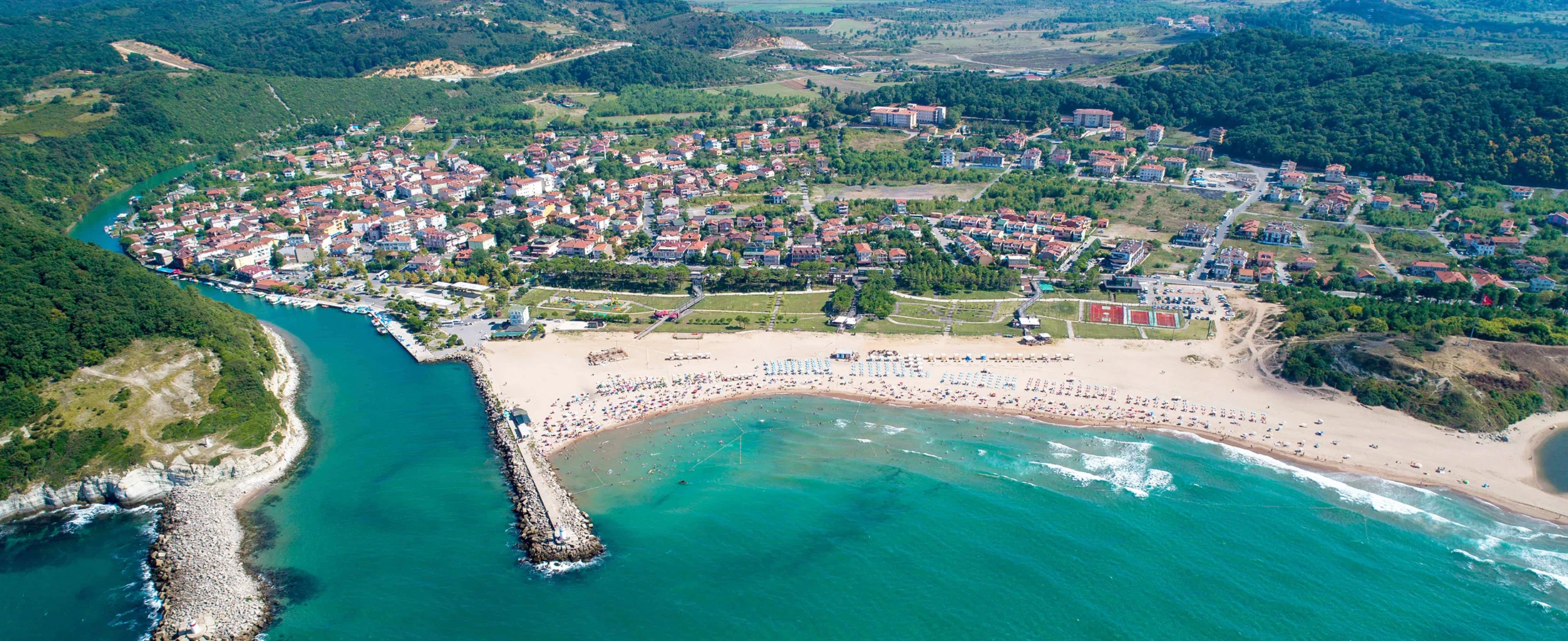
Combine Şile's historic coast with Ağva's rivers, forest scenery and selected natural viewpoints in one carefully timed private itinerary.
Request a Şile & Ağva TourCombine Şile with Asian-side neighborhoods, Bosphorus landscapes, forests or other lesser-known parts of Istanbul according to your interests and available time.
Create a private Istanbul itinerary around Byzantine and Ottoman history, architecture, museums, neighborhoods, food, forests, coastlines and Bosphorus scenery.
View Private Istanbul Tours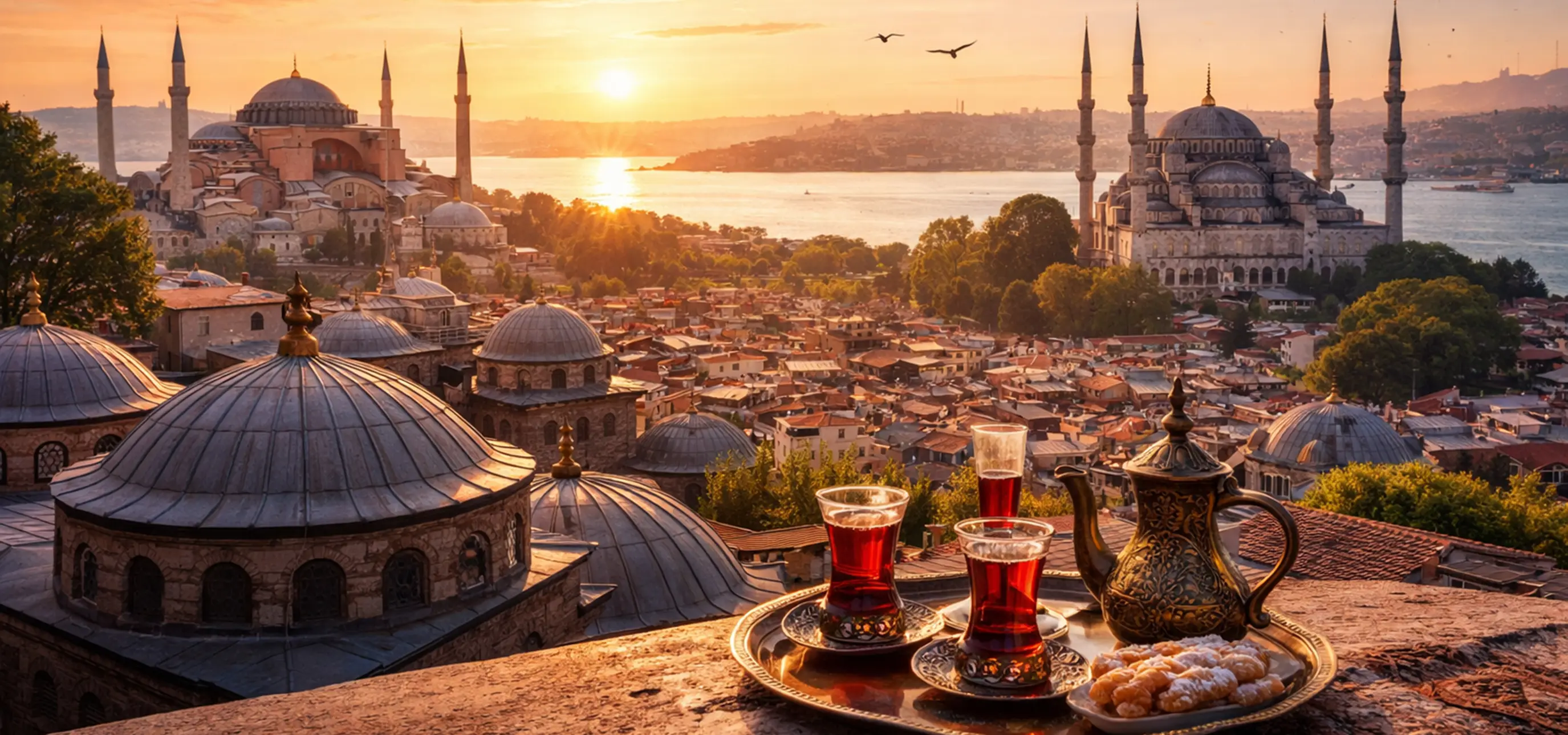
Continue planning with Istanbul's mosques, churches, palaces, museums, bazaars, forests, parks, Bosphorus districts, neighborhoods and Black Sea landscapes.
Explore Istanbul