Ottoman Calligraphy, Turkish Painting, Atlı Köşk, International Exhibitions, Historic Interiors & Bosphorus Gardens in Emirgan

Sakıp Sabancı Museum Istanbul – Complete Visitor Guide

Discover one of Istanbul's most elegant museums, where the historic Atlı Köşk overlooks the Bosphorus and collections of Ottoman calligraphy, manuscripts, Turkish painting, decorative arts, archaeological stonework and major international exhibitions meet in a remarkable garden setting.

Explore Sakıp Sabancı Museum

One of Istanbul's Finest Art Museums in a Historic Bosphorus Mansion

Set in Emirgan on the European shore of the Bosphorus, the Sabancı University Sakıp Sabancı Museum combines the atmosphere of a private waterfront mansion with the curatorial scale of a major modern museum.

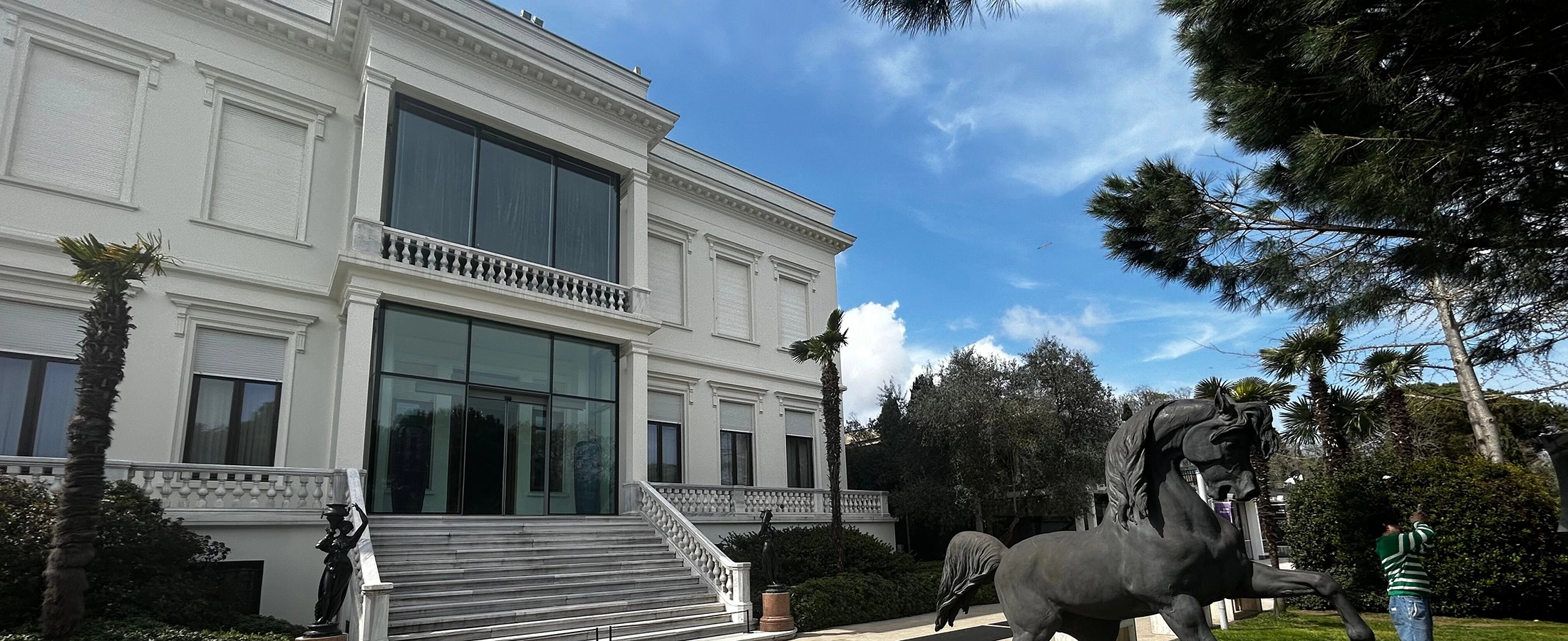
The heart of the complex is the Atlı Köşk, or Equestrian Mansion, commissioned in 1925 by Prince Mehmed Ali Hasan of Egypt's Khedival family and designed by the Italian architect Edoardo De Nari. Completed in 1927, the mansion later became the summer residence of the Sabancı family.

In 1998, the mansion, together with important family collections and furnishings, was donated to Sabancı University for conversion into a museum. With a modern gallery extension, the Sakıp Sabancı Museum opened to the public in 2002.

Today, visitors can move between historic family rooms, Ottoman manuscripts and calligraphy, late Ottoman and Republican painting, archaeological stone works, contemporary art installations and changing international exhibitions.

The museum's setting is one of its greatest pleasures. Terraced gardens descend toward the Bosphorus, and the views across the water turn a museum visit into a broader experience of art, architecture, landscape and Istanbul's waterfront culture.

Allow approximately 2–3 hours for a satisfying first visit. Visitors who want to explore a major temporary exhibition, spend time in the garden, study the calligraphy collection carefully or enjoy a meal overlooking the Bosphorus can easily spend half a day.

Atlı Köşk

Explore the historic mansion where the Sabancı family lived, with preserved interiors, furniture, decorative arts and sweeping Bosphorus views.

Ottoman Calligraphy

See one of the museum's defining collections of Korans, illuminated manuscripts, calligraphic albums, imperial documents and master calligraphers.

Turkish Painting

Follow the development of painting from the late Ottoman period into modern Turkey through artists such as Osman Hamdi Bey, Şeker Ahmed Paşa, Halil Paşa and others.

Bosphorus Garden

Walk among sculptures, archaeological stonework and contemporary installations while enjoying one of the most beautiful museum settings in Istanbul.

Know Before You Go

Sakıp Sabancı Museum Istanbul – Quick Facts

Essential information about Sakıp Sabancı Museum, Atlı Köşk, its art collections, Bosphorus garden and practical visitor planning.

📍

Location

Sakıp Sabancı Caddesi No. 42, Emirgan, Sarıyer, Istanbul.

🏛️

Museum Opened

2002, following the conversion of Atlı Köşk and the addition of modern exhibition galleries.

🏠

Historic Mansion

Atlı Köşk, commissioned in 1925 and completed in 1927.

✏️

Architect

Italian architect Edoardo De Nari.

📜

Famous For

Ottoman calligraphy, illuminated manuscripts, Turkish painting, historic interiors and international exhibitions.

🐎

Name of the Mansion

Atlı Köşk means “Equestrian Mansion,” a name associated with the horse statues in its grounds.

🌊

Setting

Historic Emirgan on the European shore of the Bosphorus.

⏱️

Recommended Visit

Approximately 2–3 hours; half a day if combining the collections, temporary exhibitions, garden and restaurant.


Ottoman Calligraphy, Turkish Painting, Bosphorus Architecture, Private Collecting and International Exhibition Culture

Why Is Sakıp Sabancı Museum Important?

Sakıp Sabancı Museum is important because it brings together art history, private collecting, architectural heritage, family memory, research, conservation and major international exhibitions within one of Istanbul's most beautiful Bosphorus settings.

The first reason to visit is the Arts of the Book and Calligraphy Collection. The collection spans centuries of Turkish and Islamic book arts and preserves Korans, prayer books, calligraphic albums, large wall panels, illuminated documents and the tools used by calligraphers.

The second reason is the Painting Collection, which helps explain how visual culture changed from the Ottoman Empire to the Republic. The galleries connect court patronage, European influence, art education, portraiture, landscape painting and the emergence of modern Turkish art.

The third reason is the Atlı Köşk itself. The mansion is not merely a container for art. Its preserved family rooms, furniture, textiles, mirrors, carpets, paintings and decorative objects reveal the taste and lifestyle of a wealthy Istanbul household during the 20th century.

The fourth reason is the museum's role in international exhibition culture. Since opening, it has become one of Istanbul's best-known venues for ambitious temporary exhibitions drawn from international and Turkish collections.

Finally, the museum demonstrates how a historic private residence can become a research, conservation, education and cultural center without losing the atmosphere that made the original building special.

History of Sakıp Sabancı Museum

The story of the museum begins with Prince Mehmed Ali Hasan, a member of Egypt's Khedival family. In 1925, he commissioned Italian architect Edoardo De Nari to design a summer residence on the hills of Emirgan overlooking the Bosphorus.

The mansion was completed in 1927 and was used for years by members of the Khedival family. Its location reflects the long tradition of wealthy Ottoman, Egyptian and diplomatic families establishing summer residences along the Bosphorus.

In 1951, industrialist Hacı Ömer Sabancı purchased the mansion together with its furnishings and antiques. The property became an important summer home for the growing Sabancı family.

Following Hacı Ömer Sabancı's death in 1966, Sakıp Sabancı and his family later made the Atlı Köşk their home. During these decades, Sakıp Sabancı expanded the family's holdings of Ottoman calligraphy, manuscripts, paintings, furniture and decorative arts.

The collections increasingly developed beyond private decoration into a body of material with significant art-historical value. From the late 20th century, important selections of the calligraphy collection were also shown internationally, helping build the idea of creating a permanent museum.

In 1998, the Sabancı family donated the mansion, its collections and furnishings to Sabancı University for transformation into a museum.

With the addition of a modern gallery building, Sakıp Sabancı Museum opened to the public in 2002. Its exhibition areas were expanded and upgraded in 2005 to support major international exhibitions and modern museum standards.

1925

Prince Mehmed Ali Hasan commissions Edoardo De Nari to design the mansion.

1927

The Bosphorus mansion is completed and used by members of the Egyptian Khedival family.

1951

Hacı Ömer Sabancı purchases the mansion together with its furnishings and antiques.

1970s Onward

Sakıp Sabancı expands the collections of calligraphy, manuscripts, painting and decorative arts.

1998

The mansion and collections are donated to Sabancı University for transformation into a museum.

2002

Sakıp Sabancı Museum opens to the public with a modern gallery extension.

2005

Exhibition spaces are enlarged and upgraded to international technical standards.

Atlı Köşk – The Equestrian Mansion

The historic core of Sakıp Sabancı Museum is the Atlı Köşk, or Equestrian Mansion. Its elevated position above Emirgan gives it a commanding view of the Bosphorus while keeping the building surrounded by gardens.

Architect Edoardo De Nari designed the mansion for Prince Mehmed Ali Hasan in the 1920s. Its architecture belongs to the cosmopolitan world of early 20th-century Bosphorus residences, where European design vocabulary, waterfront culture and elite domestic life met.

The museum preserves the ground-floor family rooms with much of their domestic atmosphere intact. Visitors encounter furniture, carpets, mirrors, paintings, ceramics, textiles and decorative objects that once formed part of the daily and ceremonial life of the residence.

The upper areas of the mansion became particularly associated with the museum's Arts of the Book and Calligraphy Collection, creating a contrast between domestic interiors below and manuscript culture above.

Architecture tip: do not hurry directly into the exhibition galleries. Pause on the terraces and look back at the mansion façade, the garden levels and the relationship between the house and the Bosphorus. The setting explains why Emirgan became one of Istanbul's classic residential landscapes.

Why Is It Called Atlı Köşk?

The name Atlı Köşk means “Equestrian Mansion” and is linked with the horse sculptures placed in the property during the Sabancı family's ownership.

One of the most famous is a bronze horse by the French sculptor Louis Daumas, cast in Paris and associated with the mansion's identity from the 1950s onward.

Another horse sculpture in the grounds is a cast connected iconographically with the celebrated horses of St. Mark's Basilica in Venice, whose originals are historically linked with Constantinople and the Fourth Crusade.

Over time, the horse sculptures became so strongly identified with the residence that the popular name Atlı Köşk survived the building's transformation from private home into museum.

Louis Daumas Horse

A bronze horse cast in Paris that became one of the visual symbols of the mansion.

Venice Connection

A second horse sculpture recalls the famous quadriga associated with Constantinople and St. Mark's Basilica.

Mansion Identity

The sculptures helped establish the popular name “Atlı Köşk,” which remains in use today.

The Historic Family Rooms

One of the most distinctive experiences at Sakıp Sabancı Museum is walking through the preserved family rooms of the Atlı Köşk.

Rather than presenting every object in a neutral display case, the rooms retain the atmosphere of a lived-in residence. Furniture, carpets, paintings, porcelain, mirrors, lighting and textiles remain part of an interior composition.

The reception spaces show how affluent Istanbul households combined European decorative taste, Ottoman traditions, imported furnishings and local cultural preferences during the late Ottoman and Republican periods.

The rooms are also valuable because they prevent the history of collecting from becoming abstract. Visitors can see how works of art existed inside domestic spaces before they became part of a public museum.

Look closely: small details such as upholstery, carpets, framed pictures, clocks, ceramics and room arrangements can be just as revealing as the more famous museum masterpieces.

Sakıp Sabancı Museum Collections

The museum's permanent holdings bring together several different cultural worlds, from manuscript arts to modern painting and from domestic interiors to archaeological stonework.

Arts of the Book & Calligraphy

Korans, prayer books, calligraphic albums, large panels, imperial documents, illuminated manuscripts and calligraphers' tools.

Painting Collection

Late Ottoman and modern Turkish painting tracing changes in visual culture from the 19th into the 20th century.

Decorative Arts

Furniture, carpets, porcelain, mirrors, textiles and household objects preserved in the historic mansion interiors.

Archaeological Stone Works

Ancient and Byzantine stone objects displayed in the garden, including column capitals and sculptural fragments.

Contemporary Art

Contemporary works and installations appear in the building and garden alongside the historical collections.

Temporary Exhibitions

Major changing exhibitions bring international and Turkish artists, historical themes and interdisciplinary projects to Emirgan.

The Arts of the Book & Calligraphy Collection

The Arts of the Book and Calligraphy Collection is one of the defining reasons to visit Sakıp Sabancı Museum. It spans approximately the 14th to the 20th centuries and contains rare examples of Turkish and Islamic manuscript culture.

The collection developed from Sakıp Sabancı's growing interest in Ottoman calligraphy. One important early acquisition was a calligraphic panel by Sultan Mahmud II, who was himself an accomplished calligrapher.

During the 1980s, the collection expanded through major acquisitions, and from 1989 onward selections were exhibited internationally. This international response helped strengthen the idea of turning the family's collection into a public museum.

Visitors can encounter Korans, prayer books, calligraphic albums, hilyes, large wall panels, illuminated imperial documents, exercise sheets and calligraphers' tools. Materials used for the tools include precious and organic substances such as silver, coral, ivory, bone and other finely worked materials.

The collection includes works associated with important masters such as Şeyh Hamdullah, Ahmed Karahisarî, Hafız Osman, Mustafa Rakım, Kazasker Mustafa İzzet and other celebrated Ottoman calligraphers.

Şeyh Hamdullah

A foundational figure in the classical Ottoman calligraphic tradition.

Ahmed Karahisarî

One of the great 16th-century masters, admired for powerful and highly distinctive compositions.

Hafız Osman

A central figure in Ottoman calligraphy whose style influenced generations of later masters.

Mustafa Rakım

Famous for refining monumental calligraphy and the artistic form of the Ottoman imperial tughra.

Kazasker Mustafa İzzet

A major 19th-century master whose works represent the continuity of the classical tradition.

Sultan Mahmud II

An Ottoman ruler and calligrapher whose work played an important role in the formation of Sakıp Sabancı's collection.

What to Look for in the Manuscripts

A manuscript gallery can be easy to rush through, but the strongest way to experience this collection is to look beyond the written text and study the entire object.

Observe the relationship between calligraphy, page proportion, gold illumination, color, paper, binding and marginal decoration. In Ottoman book culture, writing and ornament were designed to work together as a unified visual system.

Different scripts served different purposes. The rhythm of letters, spacing, line arrangement and scale could change according to whether a work was a Koran, a prayer book, a formal document, a hilye or a large panel intended for architectural display.

The calligraphers' tools are equally important. Pen cases, inkwells, scissors, burnishers and other specialized objects reveal the disciplined craftsmanship behind a tradition that could take decades to master.

Viewing tip: spend time with one or two pages rather than trying to read every label. Look first at the composition from a distance, then move closer to examine line thickness, gold work, letter spacing and the balance between empty and decorated space.

Sakıp Sabancı Museum Painting Collection

The museum's Painting Collection traces an important transformation in Turkish art from the 19th-century Ottoman world into the 20th-century Republic.

The collection was begun by Sakıp Sabancı in the 1970s and developed as a natural historical continuation of the museum's earlier manuscript and calligraphy holdings.

Its importance lies in showing how ideas about representation, perspective, portraiture, landscape, art education, professional artists and exhibition culture changed during a period of rapid political and social modernization.

Visitors can see works by artists associated with both the Ottoman and early Republican art worlds, including Osman Hamdi Bey, Şeker Ahmed Paşa, Halil Paşa, Şevket Dağ, Abdülmecid Efendi, Nazmi Ziya Güran, Hikmet Onat, İbrahim Çallı, Feyhaman Duran, Fikret Muallâ and Fausto Zonaro, among others.

The collection also includes works by the Armenian-Russian marine painter Ivan Konstantinovich Aivazovsky, whose repeated visits to Istanbul and relationship with the Ottoman court made him an important figure in the city's 19th-century visual culture.

Best way to read the gallery: follow the works chronologically and ask how the subject matter changes. Portraits, interiors, landscapes, religious architecture and scenes of everyday life reveal changing ideas about what modern painting in the Ottoman Empire and Turkey could become.

Artists & Works to Look For

Osman Hamdi Bey

Look for works such as Hodja Reading the Koran and portraits that combine academic painting with Ottoman subjects and intellectual life.

Şeker Ahmed Paşa

One of the pioneering figures of Ottoman easel painting, especially important for still life and landscape traditions.

Ivan Aivazovsky

Marine paintings connect the collection with the Bosphorus, court patronage and the international art networks of 19th-century Istanbul.

Abdülmecid Efendi

The last Ottoman caliph was also a painter and patron whose works reveal the court's deep engagement with modern art.

Halil Paşa

His paintings help trace the transition toward late Ottoman and early modern Turkish artistic language.

Fausto Zonaro

The Italian painter served as court painter under Sultan Abdülhamid II and became closely connected with Istanbul's artistic life.

İbrahim Çallı

A major figure in early Republican painting and the generation that carried Turkish art into new modernist directions.

Fikret Muallâ

His expressive modernism brings the chronological story into a distinctly 20th-century visual world.

Archaeological Artifacts in the Garden

The museum's gardens contain a small but fascinating Archaeological Artifacts Collection consisting of twenty-two stone works.

A large part of the group is formed by Late Antique marble column capitals in Ionic, Corinthian and composite forms. Their decoration provides insight into the stone-carving traditions of Late Antiquity and the reuse of architectural fragments across later centuries.

Among the most striking pieces are stone works connected with Classical mythology, including an altar showing Cybele and a column drum representing the Gigantomachy, the mythical battle between the Olympian gods and the giants.

The garden also includes a medieval architectural element connected with Byzantine church decoration, helping extend the museum's historical range far beyond the Ottoman and Republican collections inside the building.

Because these objects are displayed outdoors, the garden creates an unusually direct relationship between archaeology, sculpture, landscape and the Bosphorus.

The Sakıp Sabancı Museum Garden

The garden is not simply a path between the entrance and the galleries. It is one of the most memorable parts of the museum experience.

Terraced greenery descends toward the Bosphorus, creating changing views across the Asian shore, palaces, waterfront neighborhoods, boats and the open waterway.

Throughout the grounds, visitors can encounter archaeological stone pieces, sculptures, fountains, columns and contemporary art installations. The result feels closer to an outdoor gallery than a conventional museum garden.

The landscape also helps explain the historic appeal of Emirgan. For centuries, Bosphorus residences depended not only on architecture but on gardens, views, summer air, terraces and access to the waterfront.

Best light: late afternoon can be especially beautiful in the garden, but the strongest museum strategy is to see the permanent collection first and leave enough time to return outdoors without rushing.

Temporary Exhibitions

Sakıp Sabancı Museum is internationally known not only for its permanent collections but also for its large-scale temporary exhibitions.

The modern galleries allow the museum to host works from international museums, private collections and major cultural institutions. Programs may focus on a single artist, a historical period, a cultural theme or a dialogue between historical and contemporary art.

One landmark moment came in 2005 with Picasso in Istanbul, one of the first major exhibitions in Turkey devoted to a leading Western modern artist. Since then, the museum's temporary program has become one of the central reasons art-focused travelers watch the institution's calendar.

Temporary shows can substantially change the time needed for a visit. A major exhibition may require an additional hour or more beyond the permanent collections.

Before visiting: check the museum's current exhibition calendar. Temporary exhibitions change throughout the year, and certain galleries may be closed briefly during installation periods.

Research, Conservation & Learning

Sakıp Sabancı Museum functions as more than a display institution. Its work also includes conservation, research, archival study, publications, learning programs, lectures, concerts and academic collaboration.

The conservation unit helps preserve manuscripts, paintings, works on paper and other sensitive material for future generations while supporting responsible exhibition and loan practices.

The museum also develops educational programs for children, young people, families and adults. Temporary exhibitions are often accompanied by talks, workshops, guided tours and interpretive programs.

Its relationship with Sabancı University adds an academic dimension, connecting museum work with research, technology, education and digital access.

digitalSSM & Online Collections

Visitors who want to prepare before arrival or continue researching afterwards should explore the museum's digital resources.

The institution has developed digitalSSM and other online collection tools that provide access to digitized artworks, manuscripts, archival material and research information.

This is especially useful for the calligraphy collection. Fine manuscript details can be difficult to study through glass in a busy gallery, while high-resolution digital material allows closer inspection of script, illumination, page design and object information.

Digital access also reflects one of the museum's wider goals: using technology not to replace the physical visit, but to make collections more searchable, researchable and accessible.

Restaurant & Museum Shop

Because Sakıp Sabancı Museum occupies such a scenic location, a meal or coffee can be part of the overall experience rather than a simple break between galleries.

The museum currently includes MSA's Restaurant, which pairs food with broad views across the Bosphorus. The restaurant experience may operate with its own schedule and reservation arrangements, so visitors planning a meal should check current details in advance.

The SSM Store offers design objects, books, stationery, art-inspired products and gifts connected with the museum's collections and exhibitions.

Planning tip: if your visit includes lunch, allow at least half a day for the museum complex rather than trying to compress galleries, garden and dining into a two-hour stop.

What to See at Sakıp Sabancı Museum

Atlı Köşk Exterior

Begin with the mansion façade, terraces and horse sculptures before entering.

Historic Family Rooms

See preserved interiors, furniture, carpets, paintings and decorative objects from the Sabancı residence.

Calligraphy Collection

Explore masterworks by major Ottoman calligraphers alongside Korans, prayer books and imperial documents.

Illuminated Manuscripts

Study the relationship between script, gold, color, paper and book design.

Painting Collection

Trace the development of Ottoman and Turkish painting from the 19th into the 20th century.

Osman Hamdi Bey

Look for works connecting academic painting with Ottoman subjects, interiors and intellectual culture.

Temporary Exhibition

Check what is currently on view in the modern galleries before planning your visit.

Archaeological Garden

See Late Antique capitals, mythological stonework and other architectural fragments outdoors.

Horse Statues

Find the sculptures that helped give the mansion its famous name.

Bosphorus Terraces

Pause for panoramic views across the water and toward the Asian shore.

Contemporary Works

Notice how contemporary installations interact with the historic house and garden.

Museum Shop

Finish with books and design products inspired by the museum's collections and exhibitions.

Best Way to Visit Sakıp Sabancı Museum

Begin outside with the Atlı Köşk façade and horse statues. This gives the museum a clear architectural and family-history context before you enter.

Move next through the historic family rooms. Notice how works of art, furniture and decorative objects function together inside a domestic environment.

Continue to the Arts of the Book and Calligraphy Collection while your concentration is highest. Manuscripts reward slow viewing and are easier to appreciate before fatigue sets in.

Then explore the Painting Collection, following its broad chronological movement from late Ottoman artistic modernization into the Republic.

If a major temporary exhibition is on view, visit the modern galleries next. This section can take anywhere from 30 minutes to well over an hour depending on the show.

Finish in the garden and Bosphorus terraces, where archaeological stonework, sculpture and contemporary installations can be seen in natural light.

Stop 1 Atlı Köşk exterior and horse sculptures
Stop 2 Historic Sabancı family rooms
Stop 3 Arts of the Book and Calligraphy Collection
Stop 4 Painting Collection
Stop 5 Current temporary exhibition
Stop 6 Garden, archaeological works and Bosphorus viewpoints
Finish SSM Store or MSA's Restaurant

Sakıp Sabancı Museum Visitor Information

Sakıp Sabancı Museum is located at Sakıp Sabancı Caddesi No. 42, Emirgan 34467, Sarıyer, Istanbul.

The museum's current official visiting hours are Tuesday–Sunday 10:00–18:00.

The museum is currently closed on Mondays. The ticket office remains open until 17:30, and the last visitor admission is also at 17:30.

At the time of writing, admission is free on Tuesdays between 10:00 and 18:00. This can make Tuesday an excellent value choice but also a potentially busier day.

Admission is otherwise ticketed, with adult, discounted and student categories. Because ticket prices can change, it is better to check the museum's official visitor page shortly before travel rather than rely on an older printed amount.

The museum also lists free-entry categories that can include young children, visitors with disabilities and an accompanying person, ICOM cardholders and certain institutional groups. Eligibility conditions should be checked before visiting.

Address Sakıp Sabancı Caddesi No. 42, Emirgan, Sarıyer, Istanbul
Tuesday–Sunday 10:00–18:00
Closed Monday
Ticket Office / Last Entry 17:30
Free Admission Currently Tuesdays, 10:00–18:00
Recommended Visit 2–3 hours; half day with a major temporary exhibition, garden and meal
Important current-access note: opening hours, free-admission arrangements, ticket prices, individual gallery access, temporary exhibitions and event schedules can change. Always verify the official museum information shortly before travel.

Practical Tips for Visiting Sakıp Sabancı Museum

Avoid Monday

The museum is currently closed on Mondays.

Allow 2–3 Hours

A fast visit misses the relationship between the historic mansion, permanent collections and garden.

Check the Exhibition Calendar

A major temporary exhibition can become the longest part of your visit.

Consider Free Tuesday

Admission is currently free on Tuesdays, though visitor numbers can be higher.

Wear Comfortable Shoes

The museum includes slopes, terraces, indoor galleries and garden walking.

Use the Garden Strategically

Save outdoor viewing for the best weather and light during your visit.

Bring Time for Emirgan

The surrounding neighborhood and Emirgan Park make it easy to turn the museum into a half-day Bosphorus itinerary.

Check Restaurant Hours

If dining at the museum is important, verify the restaurant's current operation and reservation policy separately.

Best Time to Visit Sakıp Sabancı Museum

Weekday Morning

Best for slower viewing of manuscripts and paintings before the galleries become busier.

Tuesday

Currently the museum's free-admission day, excellent for value but potentially busier than other weekdays.

Spring

Ideal for combining the museum garden with nearby Emirgan Park and the seasonal Bosphorus landscape.

Autumn

Excellent light, cooler temperatures and strong conditions for a museum-and-waterfront day.

Winter

A strong indoor cultural choice, although the garden can be cold, wet or windy.

Late Afternoon

Beautiful for the Bosphorus terraces, but arrive early enough to complete indoor galleries before last admission.

How Much Time Do You Need at Sakıp Sabancı Museum?

1 Hour

Enough only for a very selective visit focused on either the mansion or one major collection.

1.5 Hours

A fast highlights visit covering Atlı Köşk, one permanent collection and a short garden walk.

2 Hours

A good minimum for the mansion, calligraphy, painting collection and principal garden viewpoints.

3 Hours

Ideal for most first-time visitors who want to explore the permanent museum properly.

Half Day

Best when a major temporary exhibition is open or when combining the museum with lunch and the garden.

Full Bosphorus Day

Combine the museum with Emirgan Park, Rumeli Fortress, Bebek and a ferry or waterfront journey.

Is Sakıp Sabancı Museum Good for Children?

Yes, particularly for families who balance the indoor galleries with the garden and learning activities.

The historic mansion can be easier for children to understand than a completely abstract gallery because it still feels like a house. Furniture, horse sculptures, large paintings and views from the windows create visual anchors throughout the visit.

The museum also develops children's programs, learning activities, workshops and exhibition-related education, though the exact schedule changes.

The calligraphy galleries may require more patience from younger children, so families often do better by alternating detailed indoor sections with the garden and Bosphorus viewpoints.

Family strategy: start with the mansion and horse sculptures, visit one permanent collection, spend time in the garden, then return indoors for paintings or a temporary exhibition.

Photography at Sakıp Sabancı Museum

Sakıp Sabancı Museum is one of Istanbul's most photogenic museum settings, combining architecture, landscape, water views and art.

The Atlı Köşk exterior works beautifully from the garden, especially when the horse sculptures are included in the composition.

The Bosphorus terraces are ideal for wider images that place the museum within Istanbul's waterfront landscape.

Inside, look for details in the family rooms: mirrors, carpets, lamps, framed paintings, window views and the relationship between furniture and architecture.

Photography rules can vary between permanent galleries and temporary exhibitions. Flash, tripods, professional equipment and commercial shoots may be restricted or require separate permission. Always follow current museum signs and staff instructions.

Best Exterior

Atlı Köşk façade with the horse sculpture and garden in the foreground.

Best View

The Bosphorus from the museum terraces and garden.

Best Interior Details

Historic family rooms, furniture, carpets, mirrors and framed art.

Best Garden Subjects

Archaeological stonework, sculpture and contemporary installations.

Temporary Exhibitions

Photography rules can differ by lender and exhibition; check signs carefully.

Professional Shoots

Contact the museum in advance if planning commercial or organized professional photography.

Accessibility

Sakıp Sabancı Museum combines a historic mansion, modern exhibition spaces and a terraced garden. Because these environments have different levels and surfaces, access conditions can vary by area.

The modern galleries are designed as contemporary museum spaces, while the historic Atlı Köşk naturally reflects the constraints of an older residence.

Visitors who use a wheelchair, have limited mobility or need a step-free route should check the museum's current accessibility information before arrival, especially if a particular mansion room, garden section or temporary exhibition is essential.

Visitors with disabilities are currently included among the museum's free-entry categories, with one accompanying person also listed for free admission. Current conditions should still be verified before travel.

Accessibility tip: the garden is part of the museum's appeal but includes slopes and level changes. Ask staff for the easiest route through the complex when you arrive.

How to Get to Sakıp Sabancı Museum

The museum stands in Emirgan on the European shore of the Bosphorus, between the central waterfront neighborhoods of Beşiktaş and the northern districts toward İstinye and Sarıyer.

The closest major public-transport point on the shoreline is the Emirgan–Çınaraltı bus stop. The museum's official transport information currently lists lines including 22RE, 25E, 22, 40, 40T, 42T, EL1, EL2 and 59RH.

The EL1 and EL2 services provide useful connections between Emirgan and 4. Levent Metro, which can be convenient for visitors coming from the modern business districts or the M2 metro line.

By water, Emirgan Pier connects with several Bosphorus stops. Current ferry services can include links with places such as İstinye, Kanlıca, Kandilli, Anadolu Hisarı, Bebek, Arnavutköy and Çengelköy. Always check the live ferry timetable before planning around a specific sailing.

From Taksim, Bosphorus-bound bus services can be practical outside peak traffic. From Sultanahmet or Eminönü, travel first toward Kabataş or Beşiktaş, then continue north along the European shore.

A taxi is straightforward from Beşiktaş, Ortaköy, Bebek, Nişantaşı, Taksim or Karaköy, but travel time can change dramatically with Bosphorus traffic.

The museum has a small on-site car park with limited capacity. Official visitor information currently notes space for approximately 30 vehicles, with additional paid parking sometimes available along the coastal road.

By Bus

Use the Emirgan–Çınaraltı stop on the Bosphorus coastal road.

From 4. Levent

Use the current Emirgan metro-ring services such as EL1 or EL2 when available.

By Ferry

Check current Bosphorus services to Emirgan Pier and combine the journey with a waterfront walk.

From Taksim

Direct or connecting Bosphorus bus routes toward Emirgan and Sarıyer can be practical.

By Taxi

Ask for Sakıp Sabancı Müzesi, Emirgan; allow extra time during heavy coastal traffic.

Parking

On-site capacity is limited; public transport is often easier on weekends and during major exhibitions.

Suggested Sakıp Sabancı Museum & Bosphorus Heritage Route

Begin at Sakıp Sabancı Museum in the morning and allow approximately 2–3 hours. Prioritize Atlı Köşk, the calligraphy collection, the painting galleries and the Bosphorus garden.

After the museum, walk or take a short ride to Emirgan Park, one of Istanbul's great historic green spaces and a natural continuation of the museum's garden setting.

Continue south along the Bosphorus to Rumeli Fortress, the monumental Ottoman stronghold built by Sultan Mehmed II before the conquest of Constantinople.

Finish farther south in Bebek, where cafés, waterfront paths and Bosphorus views create a relaxed ending after a day of museums, gardens and architecture.

This route works especially well because it connects four different sides of the Bosphorus: art collecting, landscape design, Ottoman military history and modern waterfront life.

Stop 1 Sakıp Sabancı Museum – allow 2–3 hours
Stop 2 Emirgan Park
Stop 3 Rumeli Fortress
Finish Bebek waterfront and Bosphorus cafés

What to See Near Sakıp Sabancı Museum

Emirgan Park

Walk through one of Istanbul's best-known historic parks, especially beautiful during spring tulip season.

Rumeli Fortress

Explore the great Ottoman fortress built by Mehmed II on the narrowest strategic section of the Bosphorus.

Baltalimanı Japanese Garden

Visit a small landscaped garden near the Bosphorus for a quiet contrast with the museum's formal grounds.

Bebek

Continue south for waterfront walking, cafés, views and one of the Bosphorus's most elegant urban neighborhoods.

Aşiyan Museum

Visit the former home of poet Tevfik Fikret in a hillside setting overlooking the Bosphorus.

Borusan Contemporary

When open to visitors, the Perili Köşk offers contemporary art in another distinctive Bosphorus building.

İstinye

Continue north along the European shore for marina views, ferry connections and another historic Bosphorus settlement.

Asian Shore by Ferry

Use current Emirgan ferry services to continue across the Bosphorus toward Kanlıca, Anadolu Hisarı or Çengelköy.

Planning Your Visit

Frequently Asked Questions About Sakıp Sabancı Museum

Where is Sakıp Sabancı Museum?

The museum is located at Sakıp Sabancı Caddesi No. 42, Emirgan, Sarıyer, Istanbul, on the European shore of the Bosphorus.

When did Sakıp Sabancı Museum open?

The museum opened to the public in 2002.

What is Atlı Köşk?

Atlı Köşk is the historic mansion at the center of the museum complex. It was commissioned in 1925 and completed in 1927.

Who designed Atlı Köşk?

The mansion was designed by the Italian architect Edoardo De Nari.

Who originally owned the mansion?

It was commissioned by Prince Mehmed Ali Hasan of Egypt's Khedival family and later purchased by Hacı Ömer Sabancı in 1951.

Why is it called Atlı Köşk?

The name means “Equestrian Mansion” and refers to the horse sculptures that became visual symbols of the property.

What is Sakıp Sabancı Museum famous for?

It is famous for its Ottoman calligraphy and manuscript collection, Turkish painting collection, historic mansion interiors, major temporary exhibitions and Bosphorus garden.

Does the museum have Ottoman calligraphy?

Yes. The Arts of the Book and Calligraphy Collection includes works by major Ottoman masters, Korans, prayer books, calligraphic albums, imperial documents and calligraphers' tools.

Which calligraphers are represented?

The collection includes works associated with masters such as Şeyh Hamdullah, Ahmed Karahisarî, Hafız Osman, Mustafa Rakım and Kazasker Mustafa İzzet.

Does the museum have paintings by Osman Hamdi Bey?

Yes. The Painting Collection includes works by Osman Hamdi Bey and other major artists connected with late Ottoman and early modern Turkish painting.

Which other painters can I see?

The collection includes artists such as Şeker Ahmed Paşa, Halil Paşa, Şevket Dağ, Abdülmecid Efendi, Nazmi Ziya Güran, İbrahim Çallı, Feyhaman Duran, Fikret Muallâ, Fausto Zonaro and Aivazovsky.

Are there temporary exhibitions?

Yes. Major changing exhibitions are a central part of the museum's identity. Always check the current program before visiting.

What are the current opening hours?

The museum currently opens Tuesday–Sunday from 10:00 to 18:00. The last admission is at 17:30.

Which day is Sakıp Sabancı Museum closed?

The museum is currently closed on Mondays.

Is Sakıp Sabancı Museum free on Tuesdays?

At the time of writing, yes. The museum currently offers free admission on Tuesdays between 10:00 and 18:00. Always verify before travel in case the policy changes.

How much is admission?

Admission is ticketed on regular days and prices are periodically updated. Check the museum's official visitor page shortly before travel for current adult, discounted and student prices.

How long should I spend at Sakıp Sabancı Museum?

Allow approximately 2–3 hours for a satisfying first visit. A major temporary exhibition, garden walk and meal can turn the museum into a half-day experience.

Is Sakıp Sabancı Museum good for children?

Yes. The historic mansion, horse sculptures, gardens and changing learning programs make it family-friendly, although younger children may need breaks during the manuscript galleries.

Is there a garden?

Yes. The garden is one of the museum's highlights and includes Bosphorus views, archaeological stonework, sculptures and contemporary art installations.

Is there a restaurant?

Yes. The museum currently includes MSA's Restaurant, with views over the Bosphorus. Check current operating details and reservations before visiting.

Is there a museum shop?

Yes. The SSM Store sells books, design products, stationery and objects inspired by exhibitions and collections.

Can I reach the museum by ferry?

Yes. Emirgan Pier is nearby and serves Bosphorus ferry connections. Always check the current timetable before planning your visit around a specific sailing.

What is the nearest bus stop?

The museum identifies Emirgan–Çınaraltı as the closest major bus stop on the coastal road.

Is parking available?

Yes, but the museum's on-site parking is limited. Official visitor information currently notes capacity for approximately 30 vehicles.

Is photography allowed?

Photography rules can vary between permanent galleries and temporary exhibitions. Follow museum signs and staff instructions, especially regarding flash, tripods and professional equipment.

What can I combine with the museum?

Good nearby choices include Emirgan Park, Rumeli Fortress, Bebek, Aşiyan Museum, Baltalimanı and a Bosphorus ferry journey.

Is Sakıp Sabancı Museum worth visiting?

Absolutely. It is one of Istanbul's strongest choices for visitors interested in Ottoman calligraphy, Turkish painting, historic mansions, major art exhibitions, Bosphorus scenery and museum architecture.

Responsible Visiting

Do Not Touch Artworks

Manuscripts, paintings, furniture and decorative objects can be damaged by unnecessary physical contact.

Respect Historic Rooms

The Atlı Köşk interiors are part of the museum collection, not simply a pathway between galleries.

Follow Photography Rules

Temporary exhibitions may have separate restrictions depending on lenders and artwork sensitivity.

Protect the Garden

Stay on visitor routes and respect archaeological objects, sculpture and landscaped areas.

Keep Galleries Quiet

The manuscript rooms especially reward a calm atmosphere that allows visitors to study detailed works.

Respect Events & Programs

Concerts, talks, workshops and guided tours may have separate access or seating procedures.

Private Bosphorus Art & Istanbul Heritage Experiences

Connect Sakıp Sabancı Museum with Emirgan, Rumeli Fortress, Bebek, historic Bosphorus neighborhoods, Ottoman architecture, art collections and panoramic waterfront scenery through a private route shaped around your interests and without compulsory shopping stops.

Custom Sakıp Sabancı Museum & Bosphorus Experience

Choose a private Istanbul route focused on Ottoman art, calligraphy, Turkish painting, Bosphorus mansions, gardens, historic fortifications and the cultural landscape of Istanbul's European shore.

Create a Private Istanbul Art & Heritage Day

Build a day around museum collections, Bosphorus architecture, Ottoman history, Byzantine heritage, waterfront neighborhoods and the places that best match your interests.