Mimar Sinan, Bosphorus Heritage & Üsküdar's Historic İskele Mosque

Mihrimah Sultan Mosque Üsküdar – Complete Visitor Guide

Discover Mimar Sinan's elegant 16th-century waterfront mosque,
standing beside the ferry piers at the historic gateway to Asian Istanbul.

Explore Mihrimah Sultan Mosque

Mihrimah Sultan Mosque – Mimar Sinan's Waterfront Landmark in Üsküdar

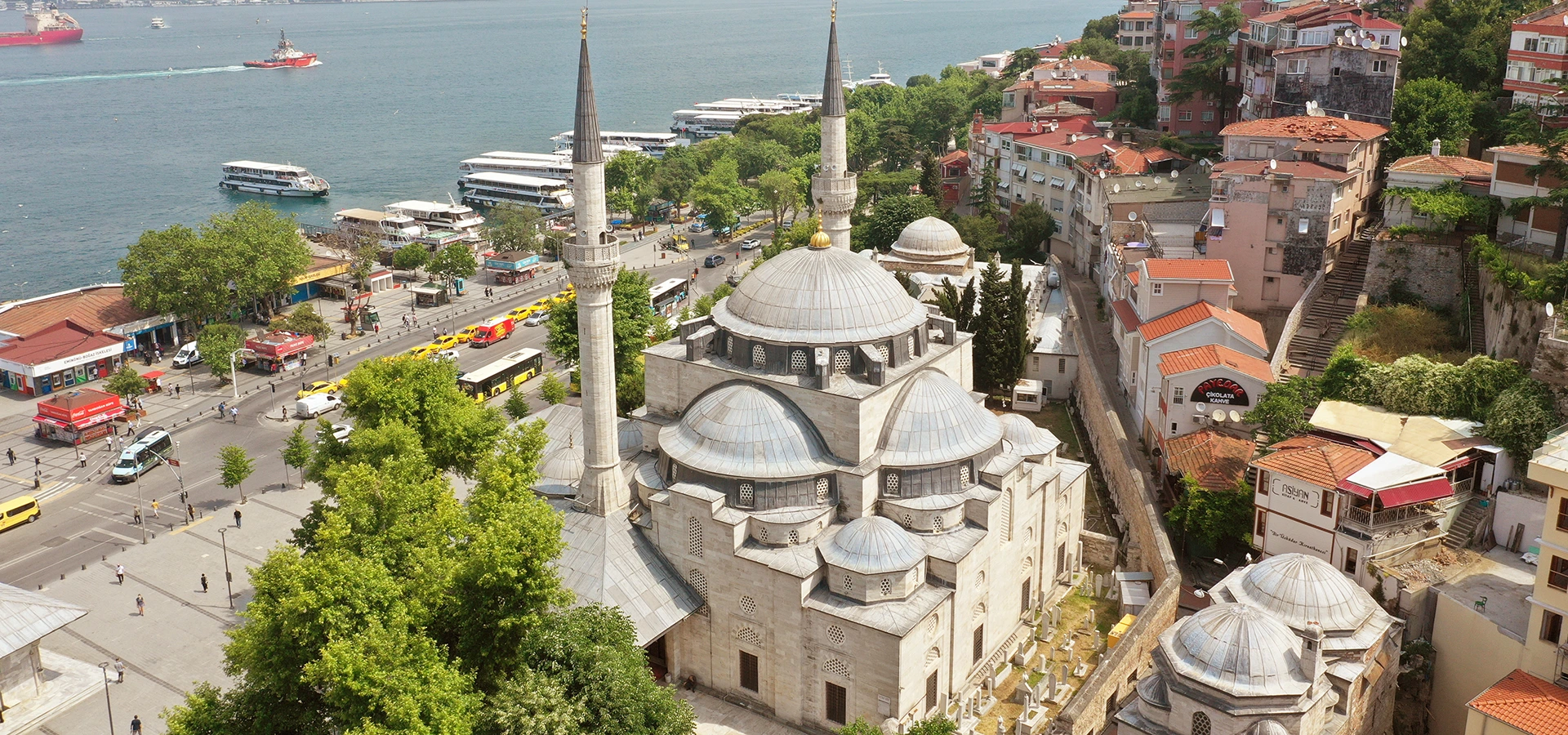
The Mihrimah Sultan Mosque in Üsküdar, also widely known as İskele Camii or the Üsküdar Mihrimah Sultan Mosque, stands immediately beside the ferry piers on Istanbul's Asian shore. For centuries, travelers arriving across the Bosphorus have encountered its dome and twin minarets as one of the defining architectural landmarks of Üsküdar.

The mosque belongs to a major 16th-century külliye associated with Mihrimah Sultan, daughter of Sultan Süleyman the Magnificent and Hürrem Sultan. Designed by the imperial architect Mimar Sinan, the complex was begun in the 1540s and the mosque's inscription records completion in 1547. It is the earlier of the two great Istanbul mosque complexes connected with Mihrimah Sultan.

Architecturally, the mosque is especially important because it belongs to the early phase of Sinan's career as chief imperial architect. A central dome roughly 10 meters in diameter is supported by three semi-domes, while a broad double portico, elegant marble ablution fountain and two slender single-balcony minarets create one of the most memorable mosque façades on the Bosphorus.

Today the mosque remains an active place of worship in the middle of one of Istanbul's busiest transport districts. Its location makes it exceptionally easy to combine with the Üsküdar waterfront, Şemsi Ahmed Pasha Mosque, Yeni Valide Mosque, Aziz Mahmud Hüdayi, Kuzguncuk and the Maiden's Tower shoreline.

1547

Visit one of Mimar Sinan's earliest major imperial mosque complexes after becoming chief architect.

10 m Dome

Stand beneath a central dome supported by three semi-domes in a compact classical composition.

2 Minarets

See the mosque's distinctive pair of slender, single-balcony minarets facing the Bosphorus gateway.

Üsküdar Pier

Explore one of Istanbul's most accessible historic mosques immediately beside ferries, Marmaray and metro connections.

Know Before You Go

Mihrimah Sultan Mosque Üsküdar – Quick Facts

Essential information for visiting Mimar Sinan's historic İskele Mosque beside the Bosphorus in central Üsküdar.

📍

Location

Üsküdar Square, immediately beside the main ferry piers on Istanbul's Asian shore.

Open on Google Maps
🏛️

Architect

Mimar Sinan, chief imperial architect of the Ottoman Empire.

👑

Patronage

Built for Mihrimah Sultan, daughter of Süleyman the Magnificent and Hürrem Sultan.

📅

Completion

The inscription records completion in 954 AH / 1547; the complex belongs to the 1540s.

🎟️

Entrance

No general admission fee; the building remains an active mosque and worshippers take priority.

⏱️

Suggested Visit

Allow around 30–45 minutes, or 2–4 hours when combining it with a wider Üsküdar waterfront walk.


Imperial Patronage, Early Sinan and the Bosphorus Gateway

Why Is Mihrimah Sultan Mosque in Üsküdar Important?

The mosque brings together dynastic patronage, early Mimar Sinan architecture and one of the most strategic waterfront locations in Ottoman Istanbul.

Mihrimah Sultan Mosque is one of the great architectural signatures of Üsküdar. Long before modern ferry terminals, Marmaray and metro stations transformed the square, the mosque occupied a commanding position near the landing place where travelers crossed between the European and Asian shores of Istanbul. Its popular name, İskele Camii, literally reflects this relationship with the pier.

The building is equally significant in the career of Mimar Sinan. Completed only a few years after he became chief imperial architect, the complex belongs to the same broad creative period as the Şehzade Mosque. Here, Sinan was already experimenting with centralized space, semi-domes, layered porticoes and the careful adaptation of monumental architecture to difficult urban topography.

The foundation also demonstrates the exceptional dynastic status of Mihrimah Sultan. As the daughter of Süleyman the Magnificent and Hürrem Sultan, she became one of the most important female patrons of the 16th-century Ottoman world. The Üsküdar complex joined worship, education, hospitality, charity and water infrastructure in a highly visible public foundation.

For travelers using our guide to places to visit in Istanbul, the mosque is particularly rewarding because it introduces a different side of the city: historic Istanbul viewed from the Asian shore, where imperial mosques, neighborhood shrines, ferries and the Bosphorus remain closely intertwined.

History of Mihrimah Sultan Mosque Üsküdar

The Mihrimah Sultan complex at Üsküdar was begun during the 1540s, soon after Mimar Sinan had become chief architect of the Ottoman court. The inscription above the mosque entrance gives the completion date as 954 AH / 1547, while broader descriptions of the construction often place the works between approximately 1543–1548.

Historical sources associate the foundation with Mihrimah Sultan, although scholarly descriptions differ slightly in how they phrase the patronage. Some identify Mihrimah directly as the patron, while others describe Sultan Süleyman as having commissioned the complex in his daughter's name. Either way, the monument was closely tied to Mihrimah's dynastic identity and charitable endowment.

The location was exceptionally important. Üsküdar was the principal Asian landing point opposite the historic peninsula and a major departure area for roads leading deeper into Anatolia. A monumental mosque complex beside the pier therefore served not only a neighborhood population but also travelers, officials, merchants, pilgrims and soldiers moving through the city.

The original foundation was considerably larger than the prayer hall alone. It included a madrasa, sıbyan mektebi, imaret-tabhane, han and water-related structures such as fountains and reservoirs. Later additions included tombs and other service buildings. Some components disappeared as the shoreline and Üsküdar Square were transformed, while others survive in altered functions.

The mosque has undergone repeated repairs and restoration campaigns over the centuries. Changes to the waterfront, earthquakes and the intense development of central Üsküdar altered its historical setting, yet the mosque remains one of the district's most recognizable monuments and continues to serve its original religious function.

1540s

The complex was begun during the formative early decades of Mimar Sinan's career as chief imperial architect.

1547

The mosque inscription records completion in 954 AH, corresponding to 1547.

İskele Camii

The popular name reflects the mosque's position beside Üsküdar's historic landing place and ferry piers.

Imperial Külliye

The foundation combined worship, education, hospitality, charity and services for travelers.

Changing Waterfront

Road construction, shoreline works and modern transport transformed the space around the historic complex.

Today

The mosque remains an active place of worship in the center of modern Üsküdar.

Who Was Mihrimah Sultan?

Mihrimah Sultan was born around 1522, the daughter of Sultan Süleyman the Magnificent and Hürrem Sultan. She grew up at the heart of the Ottoman imperial court during one of the empire's most powerful periods.

In 1539 she married Rüstem Pasha, who later served as grand vizier. Her marriage linked her directly with one of the most influential statesmen of the reign, while her position as the sultan's daughter gave her considerable prestige, wealth and political access.

After Hürrem Sultan's death in 1558, Mihrimah became an increasingly important dynastic figure around her father. She remained influential during the reigns of her brother Selim II and her nephew Murad III. She died in 1578 and was buried at the Süleymaniye complex near her father.

Mihrimah's charitable works extended far beyond a single mosque. She supported religious buildings, water systems and public foundations, and two major Istanbul mosque complexes bear her name: the earlier Üsküdar complex and the later Edirnekapı Mihrimah Sultan Mosque.

c. 1522

Mihrimah Sultan was born to Süleyman the Magnificent and Hürrem Sultan.

1539

She married Rüstem Pasha, one of the most powerful Ottoman statesmen of the 16th century.

Imperial Patron

Her wealth and dynastic position allowed her to support major religious and charitable foundations.

1578

Mihrimah Sultan died and was buried near her father at the Süleymaniye complex.

Why Is Üsküdar Mihrimah Sultan Mosque Important in Mimar Sinan's Career?

When the Üsküdar complex was built, Mimar Sinan was still relatively early in his long career as chief imperial architect. Yet many of the ideas that would define his later masterpieces are already visible: a strong centralized prayer space, clear structural hierarchy, careful control of exterior mass and architecture adapted to the city rather than imposed upon it.

The mosque's site presented a particular challenge. It stood on sloping ground beside the Bosphorus landing place, where monumental architecture had to function within a dense and constantly moving urban environment. Sinan responded by raising the mosque on a substantial platform and using lower vaulted spaces to negotiate the uneven topography.

The double portico is especially important. Instead of treating the entrance as a simple transition from street to prayer hall, Sinan created a layered sheltered zone of columns, arches and domes, with the ablution fountain incorporated into the approach. Variations of this idea would appear again in later Ottoman mosque architecture.

Inside, the central dome is enlarged spatially by three semi-domes rather than by a perfectly symmetrical four-sided arrangement. The entrance side remains more open, producing a distinctive directional balance between the doorway, the central domed zone and the qibla wall.

Early Sinan

The mosque belongs to the period when Sinan was defining the architectural language of the classical Ottoman capital.

Raised Platform

A substantial base allows the mosque to command the sloping waterfront site.

Three Semi-Domes

The central dome is expanded on three sides, creating a compact but dynamic prayer space.

Double Portico

The layered entrance arrangement became an influential feature in later Sinan mosque design.

Architecture of Mihrimah Sultan Mosque Üsküdar

The mosque rises on a raised stone platform near the foot of Sultantepe. Its compact massing reflects the constraints of the waterfront site: Sinan created a monumental building without the enormous open courtyard found at many larger imperial mosques.

The prayer hall is organized beneath a central dome approximately 10 meters in diameter. The dome is supported and visually extended by three semi-domes, while the entrance side does not have a matching fourth semi-dome. This asymmetry gives the interior a characteristic transverse openness.

The exterior composition is defined by two slender minarets, each with a single balcony, together with the central dome, descending semi-domes and the layered entrance portico. From Üsküdar Square, the minarets frame the mosque and reinforce its role as a ceremonial gateway to the Asian shore.

The building uses finely cut stone, while marble is prominent in the entrance, mihrab, minbar and ablution elements. The relationship between pale masonry, shadowed porticoes and changing Bosphorus light gives the exterior a strong sculptural quality.

Central Dome

The main dome is approximately 10 meters in diameter and organizes the prayer hall.

Three Semi-Domes

Semi-domes expand the central space on three sides rather than forming a completely symmetrical four-sided scheme.

Two Minarets

Twin single-balcony minarets create one of the most recognizable silhouettes in Üsküdar.

Double Portico

A layered colonnaded entrance provides shelter and architectural depth on the waterfront side.

Raised Base

Vaulted lower structures help the mosque occupy the sloping site overlooking the historic landing area.

Classical Stonework

Cut stone and marble surfaces create a refined early classical Ottoman architectural character.

The Dome and Three Semi-Domes of Mihrimah Sultan Mosque

The principal dome is the architectural center of the prayer hall. At approximately 10 meters across, it is far smaller than the giant domes of Süleymaniye or the later Edirnekapı Mihrimah Mosque, yet its scale is perfectly matched to the compact waterfront site.

What makes the composition particularly interesting is the arrangement around it. Three sides of the central dome are supported and extended by semi-domes, which in turn open into smaller curved spaces. The entrance side is treated differently, so the interior does not read as a rigidly symmetrical centralized plan.

This solution creates a surprisingly spacious atmosphere. The eye moves easily from the central dome toward the mihrab and side zones, while the absence of a fourth semi-dome keeps the entrance area visually open and strengthens the horizontal prayer rows.

Visitors who have already seen the later Edirnekapı Mihrimah Sultan Mosque will immediately notice the contrast. Üsküdar is more compact and layered, while Edirnekapı is dominated by a much larger single central dome and a dramatically window-filled structural system.

Main DomeApproximately 10 meters in diameter
SupportThree major semi-domes around the central domed zone
Entrance SideNo matching fourth semi-dome
Spatial EffectCompact, centralized and horizontally open prayer space
Architectural PeriodEarly major phase of Mimar Sinan's imperial career

The Double Portico and Marble Şadırvan

The entrance side of Mihrimah Sultan Mosque is one of its most memorable features. Rather than a single conventional porch, the mosque uses a broad double portico that creates multiple layers of columns, arches, small domes and covered circulation.

This arrangement is particularly well suited to the mosque's exposed waterfront position. The portico creates a sheltered transition between the busy square and the prayer hall, while also giving the relatively compact building a more monumental public façade.

A marble şadırvan, or ablution fountain, forms part of this ceremonial approach. Historic descriptions emphasize its many-sided form and multiple water taps, making it not merely a practical facility but an important component of the architecture facing the Bosphorus.

The combination of the double portico, fountain and twin minarets creates a layered composition that is best appreciated from several positions around Üsküdar Square. Move close to study the stonework, then step farther toward the waterfront to understand how the entrance façade works as a single urban monument.

Double Portico

Two architectural layers create a deep sheltered approach before the prayer hall.

Domed Bays

Small domes and pointed arches rhythmically organize the entrance frontage.

Marble Şadırvan

The ablution fountain is integrated into the entrance composition rather than isolated in a large courtyard.

Waterfront Shelter

The portico protects visitors from sun and rain while softening the transition from busy square to sacred interior.

Architectural tip: Do not walk directly inside. Pause beneath the outer portico first and look back toward Üsküdar Square; the columns frame changing views of ferries, pedestrians and the Bosphorus beyond.

The Mihrimah Sultan Külliye in Üsküdar

Mihrimah Sultan Mosque was the religious center of a much larger külliye. Like other major Ottoman foundations, the complex was designed to support worship while also serving education, charity, travelers and daily urban life.

Historical descriptions list a madrasa, sıbyan mektebi, imaret-tabhane, han and water infrastructure among the original components. Later periods added tombs and other buildings. Because central Üsküdar changed dramatically over the centuries, not every element survives in its original form or use.

The madrasa stands near the mosque and has long had later institutional uses. The historic sıbyan mektebi, originally intended for elementary education, also survives and has been adapted for modern community use. These buildings help visitors understand that the mosque once belonged to a complete urban service complex.

The original waterfront context was also different. Before modern roads and enlarged transport spaces, the Bosphorus came much closer to the mosque. The complex therefore functioned visually almost as an architectural landing point for people arriving in Üsküdar by boat.

Madrasa

A formal educational institution formed an important part of the 16th-century foundation.

Sıbyan Mektebi

The complex included a primary school serving children and the surrounding community.

Imaret-Tabhane

Charitable food and hospitality functions supported travelers and people in need.

Han

Accommodation and commercial services reflected Üsküdar's importance as a transport gateway.

Water System

Fountains, reservoirs and related infrastructure formed part of the endowed public services.

Later Tombs

Funerary monuments added further historical layers to the complex after its original construction.

Repairs, Restoration and the Changing Üsküdar Waterfront

Mihrimah Sultan Mosque has survived nearly five centuries in one of Istanbul's most intensively used urban locations. Like many historic buildings in the city, it has required repeated repairs following age, earthquakes, weathering and changes in the surrounding ground conditions.

The 1894 Istanbul earthquake affected many monuments across the city, and later conservation work addressed damaged or deteriorated elements of the Üsküdar complex. Restoration documentation from the 20th century records renewed attention to the mosque, while further conservation campaigns continued into the 21st century.

The setting around the mosque changed just as dramatically as the building itself. Road construction, new ferry infrastructure, shoreline works, Marmaray and metro connections, and the redevelopment of Üsküdar Square altered the relationship between the mosque and the sea.

For this reason, the mosque should be understood as both a preserved Ottoman monument and a living structure that has continuously adapted to the modern city. Its survival at the center of one of Istanbul's busiest transport hubs is part of what makes the site so compelling.

Earthquake History

The mosque has experienced the same seismic risks that have repeatedly affected historic Istanbul.

Modern Conservation

20th- and 21st-century restoration campaigns helped preserve architectural and decorative elements.

Shoreline Change

The historic relationship between mosque and water was altered by roads and modern waterfront engineering.

Living Monument

Despite constant urban change, the mosque continues to function as an active place of worship.

The Two Mihrimah Sultan Mosques in Istanbul

Istanbul has two major mosque complexes bearing the name Mihrimah Sultan, and visitors frequently confuse them. Both are associated with the same imperial princess and both were designed by Mimar Sinan, but they belong to different periods and occupy completely different urban settings.

The Üsküdar Mihrimah Sultan Mosque is the earlier foundation. Completed in 1547, it stands at the Bosphorus landing place on the Asian shore and has two minarets, a compact central dome, three semi-domes and a distinctive double portico.

The later Edirnekapı Mihrimah Sultan Mosque rises beside the Land Walls of Constantinople on the European side. Its architecture is larger in spatial effect, with a great central dome, a remarkable concentration of windows and a single slender minaret.

Visiting both provides an excellent introduction to the evolution of Sinan's architecture. Üsküdar shows the architect working with a busy waterfront site in the earlier phase of his career, while Edirnekapı reveals a more daring mature-period experiment in structure, height and light.

Üsküdar – 1547

The earlier waterfront complex beside the Bosphorus, with two minarets and three semi-domes.

Edirnekapı – 1560s

The later hilltop complex beside the land walls, dominated by a much larger central dome.

Same Dynastic Name

Both complexes are closely associated with Mihrimah Sultan, daughter of Süleyman the Magnificent.

Same Architect

Mimar Sinan designed both monuments at different stages of his extraordinary career.

Navigation note: When searching maps, use “Mihrimah Sultan Camii Üsküdar” or “İskele Camii” to avoid being directed to the separate Mihrimah Sultan Mosque at Edirnekapı.

The “Sun and Moon” Legend of the Two Mihrimah Sultan Mosques

The name Mihrimah is commonly explained through Persian roots associated with “sun and moon”. That poetic meaning has inspired one of Istanbul's best-known architectural legends, linking the Üsküdar and Edirnekapı mosques across the city.

Popular accounts describe moments in spring when, from elevated points on the European side, the sun or moon can be observed in striking visual relationships with the two mosque complexes. Versions of the story vary, but they usually connect the opposing monuments with Mihrimah's name and with the movement of the sun and moon across Istanbul's horizon.

A more romantic version claims that Mimar Sinan secretly loved Mihrimah Sultan and deliberately positioned the mosques as an architectural declaration of that love. This story is extremely popular, but there is no firm contemporary Ottoman evidence proving such a romantic relationship.

The visual alignments and the poetic meaning of Mihrimah's name can be enjoyed without treating the love story as documented history. The two mosques genuinely occupy powerful positions on opposite sides of Istanbul, and their contrasting settings make the legend especially memorable.

History or legend? Treat the secret-romance story as modern Istanbul folklore. The documented historical importance of the mosques rests on imperial patronage, urban planning and Mimar Sinan's architecture.

The Mihrab, Minbar and Interior Decoration

The mihrab occupies the spiritual focus of the qibla wall. Its carved stonework and muqarnas detailing belong to the disciplined classical language of 16th-century Ottoman mosque architecture.

Beside it, the marble minbar provides a second major architectural focal point. Its geometric structure, fine stone craftsmanship and sharply defined silhouette contrast with the softer curves of the domes above.

Historic descriptions of the mosque also draw attention to refined woodwork and inlay. Door and window elements have been associated with decorative techniques using materials such as mother-of-pearl, ivory-like inlay and dark woods, reflecting the high craftsmanship expected in an imperial foundation.

One of the most intriguing small details is a carved sundial associated with one of the minarets. It is easy to miss when concentrating on the larger architecture, so visitors interested in Ottoman timekeeping and astronomical traditions should examine the exterior carefully.

MihrabClassical stone prayer niche with muqarnas detailing
MinbarRefined marble pulpit with strong geometric form
WoodworkHistoric doors and shutters associated with fine Ottoman inlay craftsmanship
SundialA small but fascinating feature connected with one of the minarets
Overall CharacterBalanced early classical Ottoman decoration beneath a compact domed structure

What to See at Mihrimah Sultan Mosque Üsküdar

The mosque is easy to reach, but it deserves more than a hurried glance while changing ferries. Its architecture becomes much clearer when you move slowly from the waterfront façade through the portico and prayer hall and then walk around the surviving parts of the wider complex.

Twin Minarets

Step back into Üsküdar Square to see the two slender minarets framing the mosque above the waterfront.

Central Dome

Stand beneath the main dome and study how the surrounding semi-domes expand the prayer space.

Three Semi-Domes

Notice that the central dome is extended on three sides rather than four, creating a distinctive spatial balance.

Double Portico

Walk beneath the layered colonnades that make the entrance façade one of the mosque's most important architectural features.

Marble Şadırvan

Examine the elegant ablution fountain integrated into the approach from the square.

Mihrab & Minbar

Look for the classical muqarnas mihrab and finely worked marble pulpit inside the prayer hall.

Historic Details

Look closely at doors, shutters, stonework and the small sundial associated with one of the minarets.

Üsküdar Setting

Step back toward the ferry piers to understand how the mosque functions as a landmark between city and Bosphorus.

Best first impression: If you arrive by ferry from Eminönü or Karaköy, remain near the waterfront for a moment before approaching the mosque. The twin minarets, dome and busy Üsküdar square create one of Istanbul's classic arrival scenes.

Practical Tips for Visiting Mihrimah Sultan Mosque

Dress Modestly

Shoulders and knees should be covered. Women should cover their hair when entering the main prayer hall.

Remove Shoes

Shoes must be removed before entering the carpeted prayer area. Follow the arrangements provided at the entrance.

Visit Between Prayers

Sightseeing is easiest outside congregational prayer periods and away from the busy Friday midday service.

Expect a Busy Square

Üsküdar is a major transport hub, so the streets outside can be crowded even when the mosque itself feels calm.

Arrive by Ferry

Approaching from the European side by boat provides one of the most atmospheric ways to experience the mosque.

Walk the Waterfront

Continue toward Şemsi Ahmed Pasha Mosque and Salacak for a rewarding Bosphorus heritage walk.

Suggested Mihrimah Sultan Mosque and Üsküdar Waterfront Route

Begin at Mihrimah Sultan Mosque, ideally arriving by ferry from the European side. Spend time beneath the double portico, visit the prayer hall between prayer periods and then walk around Üsküdar Square to appreciate the mosque's relationship with the historic landing place.

Continue a short distance to the monumental Fountain of Sultan Ahmed III and the nearby Yeni Valide Mosque. Together these monuments reveal how several generations of Ottoman patronage shaped the ceremonial center of Üsküdar.

From the square, walk south along the waterfront toward Şemsi Ahmed Pasha Mosque, one of Mimar Sinan's most intimate Bosphorus complexes. Continue through the Salacak shoreline, where views across the water open toward the historic peninsula.

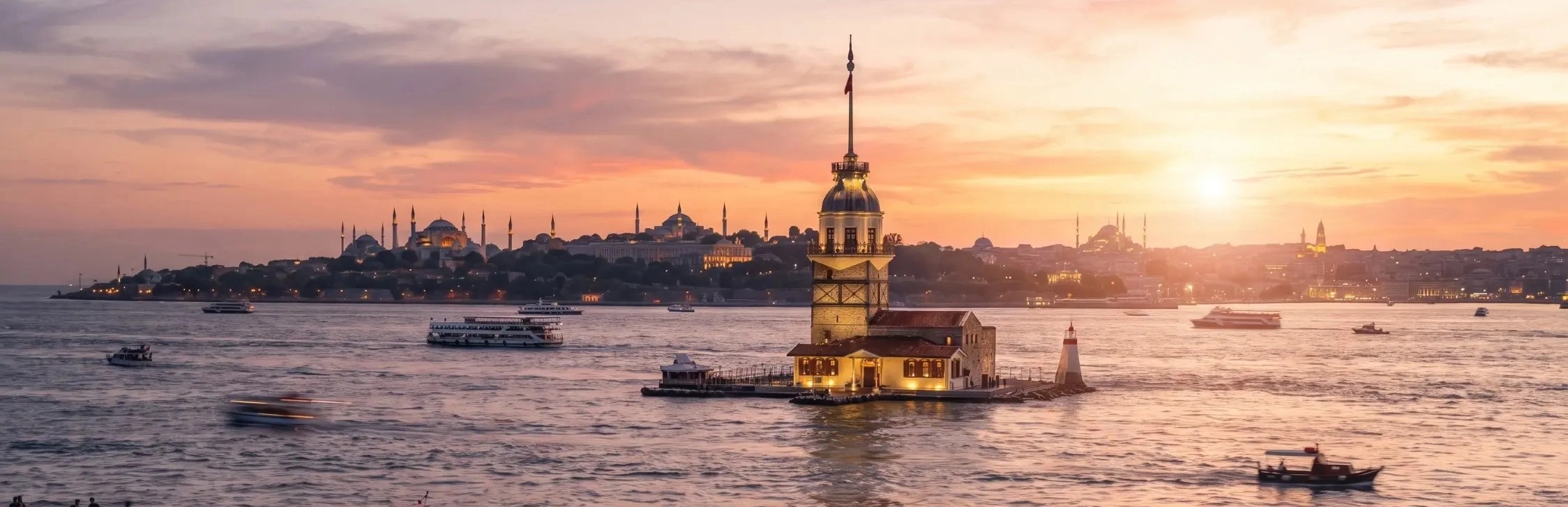
Finish near the Maiden's Tower viewpoint, or extend the route inland toward Aziz Mahmud Hüdayi. If you prefer a longer neighborhood walk, head north from central Üsküdar toward Kuzguncuk and the Bosphorus villages beyond.

StartMihrimah Sultan Mosque / Üsküdar Pier
Historic SquareFountain of Sultan Ahmed III & Yeni Valide Mosque
Sinan StopŞemsi Ahmed Pasha Mosque
Waterfront WalkSalacak Bosphorus promenade
Final ViewMaiden's Tower shoreline
Total TimeApproximately 2–4 hours depending on stops and prayer access
Shorter option: Allow around 30–45 minutes for Mihrimah Sultan Mosque alone, or approximately 90 minutes for the mosque, Üsküdar Square and Şemsi Ahmed Pasha Mosque.

Mihrimah Sultan Mosque Üsküdar Visitor Information

Mihrimah Sultan Mosque is an active place of worship, not a ticketed museum. It is used for the five daily prayers, Friday congregational prayer and religious gatherings, so worship always takes priority over sightseeing.

There is normally no general admission fee. Visitors of all backgrounds can usually enter respectfully outside active congregational prayer periods, subject to temporary restrictions, religious events, maintenance or restoration arrangements.

Because the building follows a living religious schedule, it is better to plan around prayer times rather than rely on fixed museum-style opening hours. Weekday mornings and mid-afternoons are generally the easiest periods for an architectural visit.

The mosque stands immediately beside Üsküdar Square and the ferry piers. Marmaray, the M5 metro, municipal buses, minibuses and ferries all converge nearby, making this one of the easiest major historic mosques to reach in Istanbul.

SiteMihrimah Sultan Mosque / İskele Camii
NeighborhoodCentral Üsküdar, Istanbul
EntranceNormally free; active place of worship
Visitor AccessBest between prayers; temporary restrictions may occur
Suggested Time30–45 minutes; longer with the Üsküdar waterfront
Best ForMimar Sinan, Ottoman architecture, Bosphorus views and historic Üsküdar
Prayer-time reminder: Prayer times change throughout the year. Avoid arriving immediately before Friday midday prayer if your main purpose is sightseeing.

Best Time to Visit Mihrimah Sultan Mosque

Weekday Morning

Usually the calmest period for studying the portico, dome and interior before Üsküdar becomes busier.

Late Afternoon

Beautiful Bosphorus light can enhance the exterior stonework and make the waterfront especially rewarding.

Arrival by Ferry

Daylight crossings from the European side provide a memorable first view of the mosque and Üsküdar skyline.

Friday

The mosque becomes much busier around the principal congregational prayer; choose another period for sightseeing.

Spring & Autumn

Mild weather is ideal for combining the mosque with a longer walk along the Üsküdar and Salacak waterfront.

Clear Evening

Stay for sunset views across the Bosphorus after visiting the mosque, especially from the Salacak shoreline.

How Much Time Do You Need at Mihrimah Sultan Mosque?

15–20 Minutes

Enough for a quick look at the portico and prayer hall if you are changing ferries or passing through Üsküdar.

30–45 Minutes

The best range for understanding the dome, semi-domes, mihrab, minbar, portico and exterior silhouette.

60–90 Minutes

Add a slower look at the surviving külliye elements and the monuments around Üsküdar Square.

Half Day

Combine the mosque with Şemsi Ahmed Pasha, Salacak, the Maiden's Tower viewpoint and nearby historic Üsküdar.

Photography at Mihrimah Sultan Mosque Üsküdar

Mihrimah Sultan Mosque is particularly rewarding for photography because its historic architecture sits directly within the movement of modern Istanbul. Ferries, pedestrians, the Bosphorus, the twin minarets and the layered portico can all appear within a relatively compact area.

Remember that the mosque remains an active place of worship. Photograph quietly, avoid flash and never interrupt or closely photograph people who are praying. Exterior photography is generally the easiest way to explore the monument creatively without disturbing religious activity.

Waterfront Arrival

Photograph the mosque as you approach Üsküdar by ferry for a classic Istanbul arrival composition.

Twin Minarets

Use the two minarets to frame the dome from different positions around the square.

Double Portico

Columns and arches create strong repeating patterns and natural frames toward the square.

Şadırvan

The ablution fountain, portico and mosque entrance work well together in symmetrical architectural photographs.

Dome Interior

A wide view can capture the relationship between the central dome, semi-domes and prayer space.

Evening Light

Late-day illumination can soften the stone façade before you continue toward the Salacak sunset views.

Photography etiquette: Do not photograph worshippers at close range without permission, and avoid standing in prayer rows, blocking entrances or using tripods where they obstruct circulation.

Accessibility at Mihrimah Sultan Mosque Üsküdar

Central Üsküdar is one of Istanbul's best-connected districts, but the mosque itself is a 16th-century historic building on a raised platform. Steps, thresholds and changes of level may therefore affect visitors with reduced mobility.

Central Location

Ferries, Marmaray, M5 metro and buses all stop within a short distance of the mosque.

Raised Site

The historic platform and entrances may involve steps or level changes depending on the approach used.

Historic Surfaces

Stone paving, thresholds and older surfaces can require extra care for wheelchairs or visitors with limited mobility.

Prayer Hall

Shoe removal and the transition onto carpeted flooring can require additional assistance.

Busy Pedestrian Area

Üsküdar Square can become crowded around ferry arrival times and evening commuting periods.

Ask on Arrival

If step-free access is essential, ask mosque staff for the most suitable current entrance before attempting the main route.

How to Get to Mihrimah Sultan Mosque Üsküdar

The mosque stands in the heart of Üsküdar Square beside the Bosphorus ferry terminals. Few major historic monuments in Istanbul are connected to as many transport options, which makes the mosque easy to include even in a short visit to the Asian side.

By Ferry

Regular ferries connect Üsküdar with European-side waterfront districts including Eminönü and other Bosphorus piers.

By Marmaray

Üsküdar station provides a fast rail connection beneath the Bosphorus from the European side and across the Asian city.

By M5 Metro

The M5 line begins in central Üsküdar and connects the district with major neighborhoods deeper on Istanbul's Asian side.

From Sultanahmet

Travel to Eminönü by tram or on foot and cross to Üsküdar by ferry for the most scenic approach.

From Taksim

Use metro and connecting rail or ferry services, or travel toward a Bosphorus pier and continue by boat to Üsküdar.

By Taxi

Road access is possible, but traffic around the Bosphorus crossings and central Üsküdar can make rail or ferry travel more predictable.

Transport tip: For the most memorable arrival, approach Üsküdar by ferry during daylight. You step off the boat almost directly beside the mosque, making the historic relationship between the building and the Bosphorus immediately understandable.

Places to Visit Near Mihrimah Sultan Mosque Üsküdar

Central Üsküdar contains an exceptional concentration of Ottoman religious monuments, waterfront architecture and Bosphorus viewpoints. Use our complete Istanbul visitor guide to connect the mosque with a wider day on the Asian side.

Fountain of Sultan Ahmed III

See the monumental 18th-century public fountain standing almost directly opposite Mihrimah Sultan Mosque.

Yeni Valide Mosque

Explore one of Üsküdar's most important later Ottoman mosque complexes only a short walk from the pier.

Şemsi Ahmed Pasha Mosque

Walk south along the waterfront to one of Mimar Sinan's smallest and most elegant Bosphorus complexes.

Aziz Mahmud Hüdayi

Visit one of Üsküdar's most important spiritual centers, associated with the influential Ottoman Sufi scholar and saint.

Maiden's Tower

Continue toward Salacak for one of Istanbul's most famous Bosphorus landmarks and waterfront viewpoints.

Kuzguncuk

Head north for colorful streets, historic houses and the multi-faith heritage of one of the Bosphorus's most atmospheric neighborhoods.

Fethi Paşa Grove

Climb above the shoreline for green space and broad views across the Bosphorus toward the European side.

Explore More of Istanbul

Build a wider route through mosques, palaces, churches, markets, neighborhoods and archaeological monuments across the city.

Frequently Asked Questions About Mihrimah Sultan Mosque Üsküdar

Where is Mihrimah Sultan Mosque in Üsküdar?

It stands in central Üsküdar Square on Istanbul's Asian side, immediately beside the main Bosphorus ferry piers.

Is Mihrimah Sultan Mosque also called İskele Camii?

Yes. It is commonly known as İskele Camii, meaning the Pier or Jetty Mosque, because of its historic location beside the Üsküdar landing place.

Who built Mihrimah Sultan Mosque Üsküdar?

The mosque was designed by Mimar Sinan as part of an imperial foundation associated with Mihrimah Sultan, daughter of Süleyman the Magnificent and Hürrem Sultan.

When was Mihrimah Sultan Mosque built?

The complex was built during the 1540s. The mosque inscription records completion in 954 AH / 1547, while broader construction is often described as extending into 1548.

Is this one of Mimar Sinan's early works?

Yes. It is one of Sinan's important early imperial complexes after he became chief architect, making it valuable for understanding the development of his architectural ideas.

Who was Mihrimah Sultan?

Mihrimah Sultan was the daughter of Süleyman the Magnificent and Hürrem Sultan, wife of Grand Vizier Rüstem Pasha and one of the most important female patrons of 16th-century Ottoman architecture.

How large is the main dome?

The central dome is approximately 10 meters in diameter.

How many semi-domes does the mosque have?

The main dome is supported and expanded by three semi-domes. The entrance side does not have a matching fourth semi-dome.

How many minarets does Mihrimah Sultan Mosque Üsküdar have?

The mosque has two slender minarets, each with a single balcony.

Why is the double portico important?

The layered entrance portico is one of the mosque's most distinctive architectural features and became an influential solution in later Ottoman mosque design.

Is there an ablution fountain?

Yes. A historic marble şadırvan forms part of the entrance composition beneath and beside the broad portico.

What was included in the original külliye?

The foundation included the mosque, madrasa, primary school, imaret-tabhane, han and water-related facilities. Later additions included tombs and other structures.

Is this the same Mihrimah Sultan Mosque as Edirnekapı?

No. Istanbul has two major Mihrimah Sultan mosque complexes. Üsküdar is the earlier waterfront mosque on the Asian side; Edirnekapı is the later hilltop mosque beside the land walls on the European side.

What does the name Mihrimah mean?

The name is commonly associated with Persian words for “sun” and “moon,” which later inspired popular legends connecting the two Istanbul mosques.

Was Mimar Sinan in love with Mihrimah Sultan?

This is a famous modern legend, but there is no firm contemporary historical evidence proving a romantic relationship. It is best treated as Istanbul folklore.

Is the sun-and-moon alignment story true?

Visual relationships between the monuments, sunrise, sunset and moonrise are widely discussed, but claims that the mosques were intentionally designed as a secret romantic message are not established historical fact.

Is Mihrimah Sultan Mosque free to enter?

There is normally no general admission fee because the building remains an active mosque rather than a ticketed museum.

Can non-Muslims visit?

Visitors of all backgrounds can normally enter respectfully outside congregational prayer periods, subject to current mosque arrangements.

Do women need to cover their hair?

Women should cover their hair inside the prayer hall, and all visitors should wear clothing that covers shoulders and knees.

Do visitors need to remove their shoes?

Yes. Shoes must be removed before entering the carpeted prayer area.

Can I visit during prayer time?

Sightseeing may be restricted during congregational prayer. Visiting between prayer periods is more comfortable and respectful.

What are the opening hours?

As an active mosque, visitor access follows worship rather than a fixed museum timetable. Plan sightseeing between prayer periods and allow for temporary changes.

What is the best time to visit?

A weekday morning or late afternoon is generally ideal. If possible, arrive by ferry for the full Bosphorus experience.

How long should I spend at the mosque?

Allow around 30–45 minutes for the mosque itself. Two to four hours is ideal for a wider walk through Üsküdar and the Salacak waterfront.

Is photography allowed?

Discreet architectural photography is generally possible, but visitors should avoid flash, noise and intrusive photographs of worshippers.

How do I get to Mihrimah Sultan Mosque?

The mosque is beside Üsküdar's ferry terminals and close to Marmaray and the M5 metro, making it exceptionally easy to reach by public transport.

What can I visit nearby?

The Fountain of Sultan Ahmed III, Yeni Valide Mosque, Şemsi Ahmed Pasha Mosque, Aziz Mahmud Hüdayi, Salacak, the Maiden's Tower viewpoint and Kuzguncuk are all natural additions.

Is Mihrimah Sultan Mosque worth visiting?

Absolutely. It combines early Mimar Sinan architecture, imperial history, an exceptional waterfront setting and one of the best introductions to historic Istanbul on the Asian side.


Responsible Visiting at Mihrimah Sultan Mosque

Give Worshippers Priority

Never stand in front of someone praying or block prayer rows, doors and circulation routes.

Dress Appropriately

Modest clothing is expected inside the mosque and respects its continuing religious function.

Keep Noise Low

Avoid loud conversation, speakerphone use and disruptive group behavior in the prayer hall and portico.

Photograph Carefully

Do not turn private prayer or devotion into intrusive photography.

Protect Historic Surfaces

Do not touch carved stone, woodwork, painted decoration or other fragile architectural surfaces unnecessarily.

Follow Local Guidance

Prayer services, funerals, religious events, restoration and maintenance can temporarily change visitor access.

Private Mihrimah Sultan Mosque & Historic Üsküdar Experiences

Connect Mihrimah Sultan Mosque with the Üsküdar waterfront, Şemsi Ahmed Pasha Mosque, Ottoman religious heritage, the Maiden's Tower shoreline and the quieter neighborhoods of Asian Istanbul through a private route shaped around your interests and without compulsory shopping stops.

Custom Mimar Sinan & Üsküdar Heritage Experience

Choose a focused half-day route around Mihrimah Sultan Mosque and the Üsküdar waterfront, or a deeper private experience tracing Mimar Sinan, imperial women patrons and Bosphorus architecture across both sides of Istanbul.

Historic Istanbul mosques Byzantine monuments and Bosphorus skyline

Explore Istanbul

Discover imperial mosques, Byzantine churches, archaeological sites, historic neighborhoods, markets, palaces and waterfront districts across Istanbul.

View Istanbul Guide

Continue Exploring the Bosphorus and Asian Istanbul

Connect central Üsküdar with waterfront landmarks, historic neighborhoods and some of Istanbul's most rewarding views.