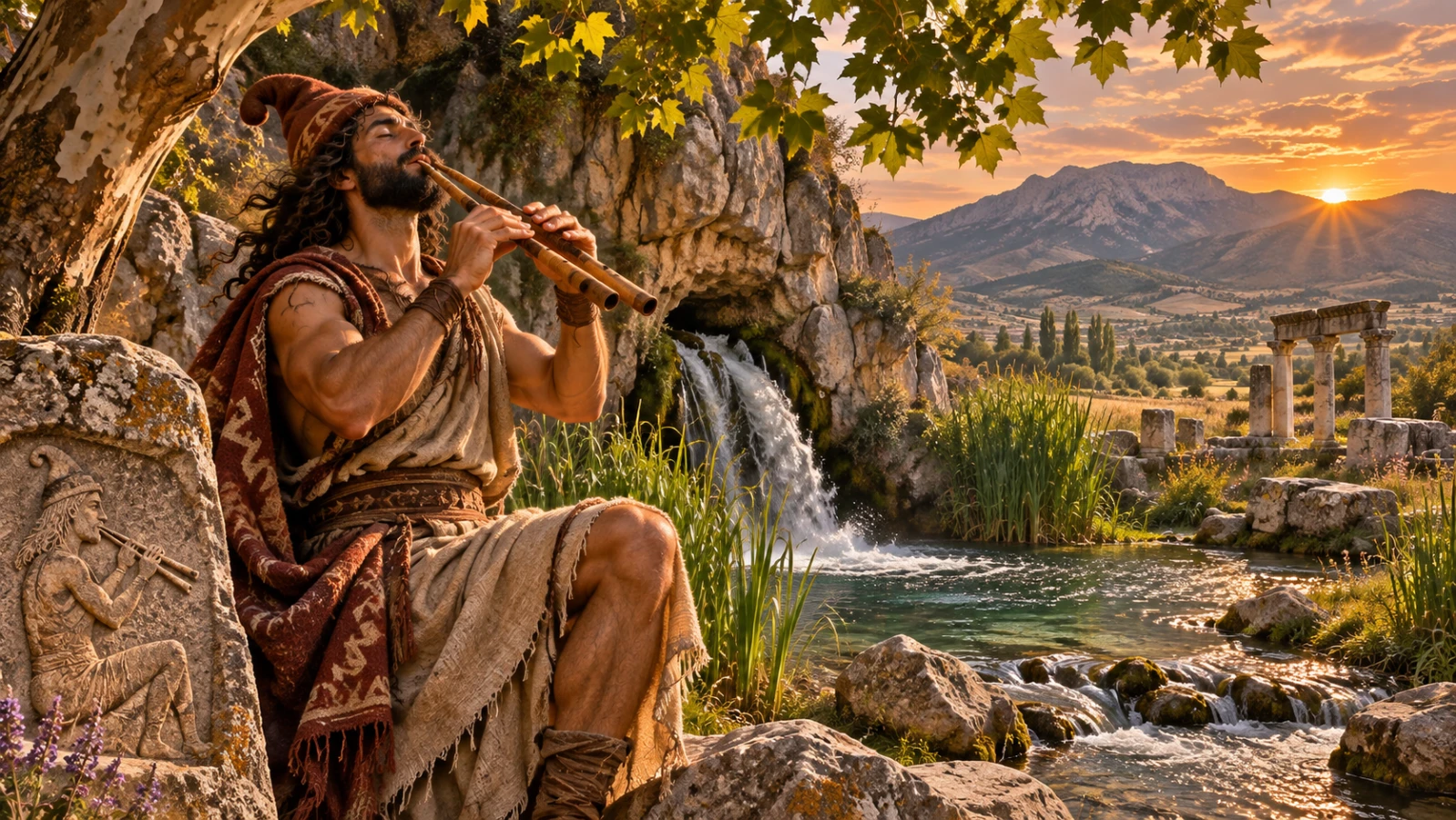
Private Marsyas and Apollo: The Dinar Legend Programme
Tell us your dates, interests and group size. We can check suitable arrangements before confirming an itinerary.
Request a Private Programme





The Marsyas story connects the Dinar landscape with one of the most unsettling musical contests in Greek mythology. It is best approached as a cultural tradition that influenced art and literature, not as a literal event whose location can be archaeologically proved.
Marsyas is associated with a double-reed wind instrument rather than a modern flute.
The contrast between instruments became a major theme in later art.
Ancient geographic traditions connect the name Marsyas with the Dinar/Celaenae area.
The narrative is mythic; its cultural influence is historically real even when events are not verifiable.
Location, context and practical information for a thoughtful visit.
Dinar and the ancient Apameia landscape
Classical mythology • Music • Rivers
In the familiar version, the satyr Marsyas becomes skilled with the double-reed aulos and challenges Apollo, associated with the lyre, to a musical contest.
The aulos, Apollo’s lyre
Allow 30–60 minutes for a cultural walk at Suçıkan, more for the Dinar area.
This is a mythological theme, not a separately ticketed ancient monument.
In the familiar version, the satyr Marsyas becomes skilled with the double-reed aulos and challenges Apollo, associated with the lyre, to a musical contest. The divine judgement and Marsyas’s punishment form a cautionary narrative about pride, power and artistic rivalry. Ancient authors tell the story with differences in detail.
This page separates recorded history from interpretation. The dates and names below should be read alongside the official references, while any changeable visitor arrangements require a fresh check.
In Dinar and the ancient Apameia landscape, the relationship between the aulos and apollo’s lyre is particularly helpful for understanding the subject.
Phrygian settings and river imagery recur in versions of the myth. The name Marsyas is also associated with a watercourse in the ancient geography around Celaenae/Apameia, close to modern Dinar. These associations help explain why local heritage routes connect the legend with Suçıkan’s springs.
Marsyas is associated with a double-reed wind instrument rather than a modern flute.
The contrast between instruments became a major theme in later art.
Ancient geographic traditions connect the name Marsyas with the Dinar/Celaenae area.
The narrative is mythic; its cultural influence is historically real even when events are not verifiable.
A thoughtful visit can begin at Suçıkan to understand the physical water landscape and continue with reading about Apameia’s place in Hellenistic and Roman history. Museums elsewhere hold depictions of Marsyas; do not assume there is a dedicated on-site sculpture or a single officially marked “contest location”.
Ask about the local name, producer or kitchen method, and the differences between family traditions and formally registered specifications. A regional label describes a culinary identity; it does not guarantee that every version is identical.
Four useful lenses are the aulos, apollo’s lyre, river associations and interpretation. Use these to compare the regional speciality with similar products rather than judging it by its name alone.
When explaining the legend to children, note that some ancient versions include graphic punishment; a gentler account can focus on music, competing instruments and the difference between a myth and documented history. Avoid presenting reconstructed scenes as archaeological fact.
For packaged products, read the label for ingredients, allergens, origin and storage instructions. For a freshly prepared dish, confirm availability and preparation time directly with the restaurant.
For a coherent itinerary, start with Suçıkan Park, Dinar, then allow a relaxed tasting of Marsyas and Apollo: The Dinar Legend where it is genuinely available.
Choose a producer or restaurant that can explain the product, taste a modest portion, and compare it with one other Afyonkarahisar speciality if you wish. A purchase should always be optional.
This is a mythological theme, not a separately ticketed ancient monument.
Fresh produce follows harvest conditions; prepared foods depend on kitchen schedules; packaged goods depend on stock and storage. Confirm availability before making a long detour.
Natural side light often reveals texture better than flash: look for the surface of the dish, the way it is served and the relationship between food and its setting. Ask before photographing staff, kitchens or other diners.
If you have allergies, dietary restrictions or accessibility needs, contact the venue in advance. Ingredient lists can vary by batch and kitchen, and a traditional name alone is not an allergen declaration.
The destination is associated with Dinar and the ancient Apameia landscape. Plan the journey from your actual starting point rather than using a straight-line distance or a similarly named attraction elsewhere in the province.
Explore Suçıkan Park, Dinar as a complementary stop, subject to current access and practical travel times.
Explore Apameia Ancient City Dinar as a complementary stop, subject to current access and practical travel times.
Explore Karakuyu Lake Bird Sanctuary as a complementary stop, subject to current access and practical travel times.
Marsyas and Apollo: The Dinar Legend is associated with Dinar and the ancient Apameia landscape, within Afyonkarahisar Province, Türkiye.
Marsyas is associated with a double-reed wind instrument rather than a modern flute.
In the familiar version, the satyr Marsyas becomes skilled with the double-reed aulos and challenges Apollo, associated with the lyre, to a musical contest.
Allow 30–60 minutes for a cultural walk at Suçıkan, more for the Dinar area.
This is a mythological theme, not a separately ticketed ancient monument.
No. Access, opening arrangements, admission and prices can change. Confirm directly with the current operator, local authority or producer shortly before your visit.
Consider Suçıkan Park, Dinar and Apameia Ancient City Dinar; verify travel times and whether each place is open before setting out.
Support responsible producers, avoid unnecessary food waste and check packaging and storage.
Respect the people who maintain this place or tradition. Confirm permissions, pay any legitimate admission fees and leave the setting as you found it.
These official or specialist resources informed the historical, culinary and visitor context. Confirm live access, opening hours and current rules with the relevant operator.
Wow Cappadocia / Venere Travel can discuss a tailor-made itinerary, subject to local access, availability and suitability. No compulsory shopping stops.
Combine heritage, landscapes and local food at a comfortable pace.
Tell us your dates, interests and group size. We can check suitable arrangements before confirming an itinerary.
Request a Private Programme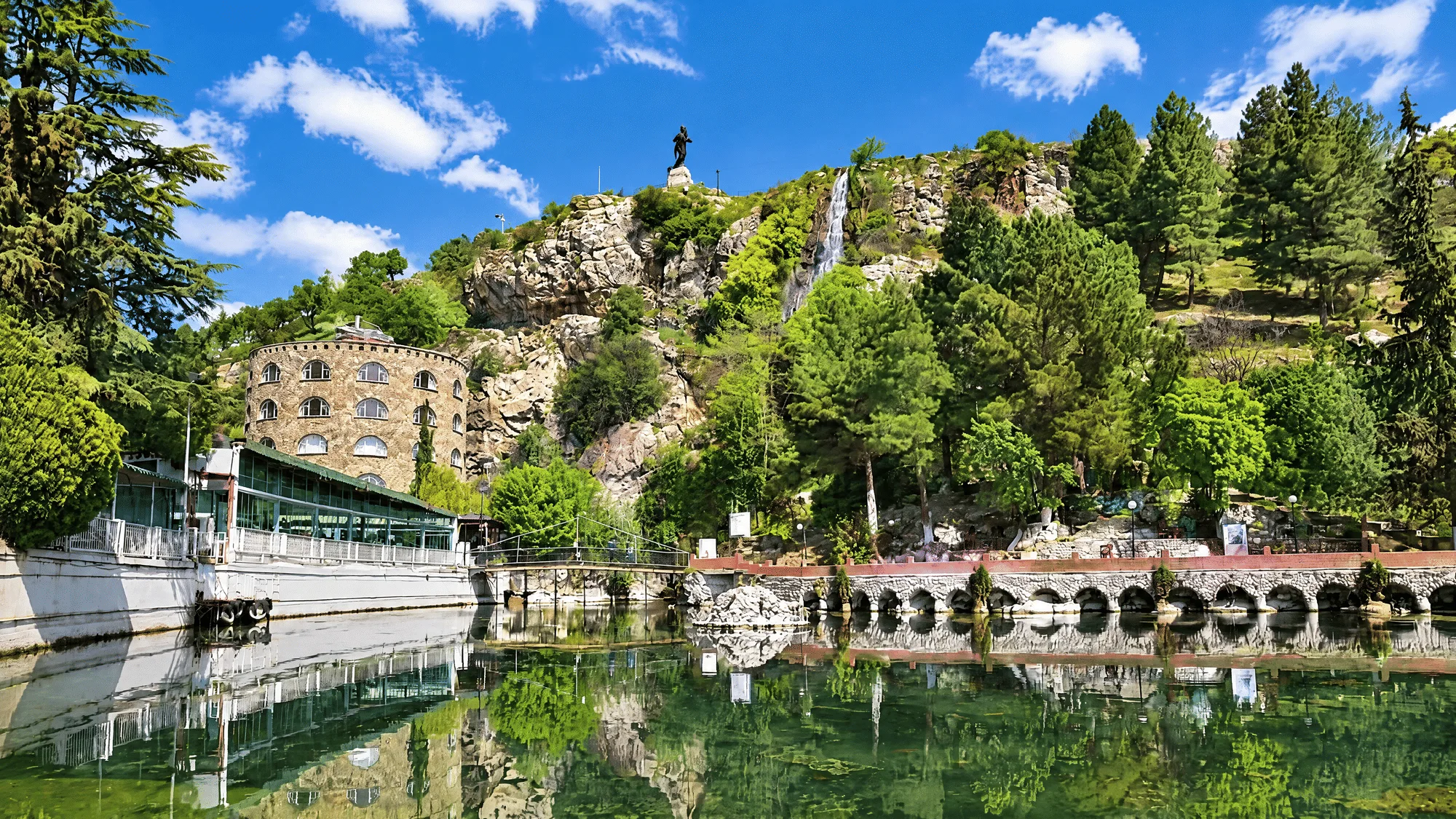
Discover another place or speciality in the Afyonkarahisar region.
Read the Related Guide