Plan a Private Food Experience
Tell us your dates, interests and group size. We can suggest a realistic route and check local arrangements.
Request a Private Programme





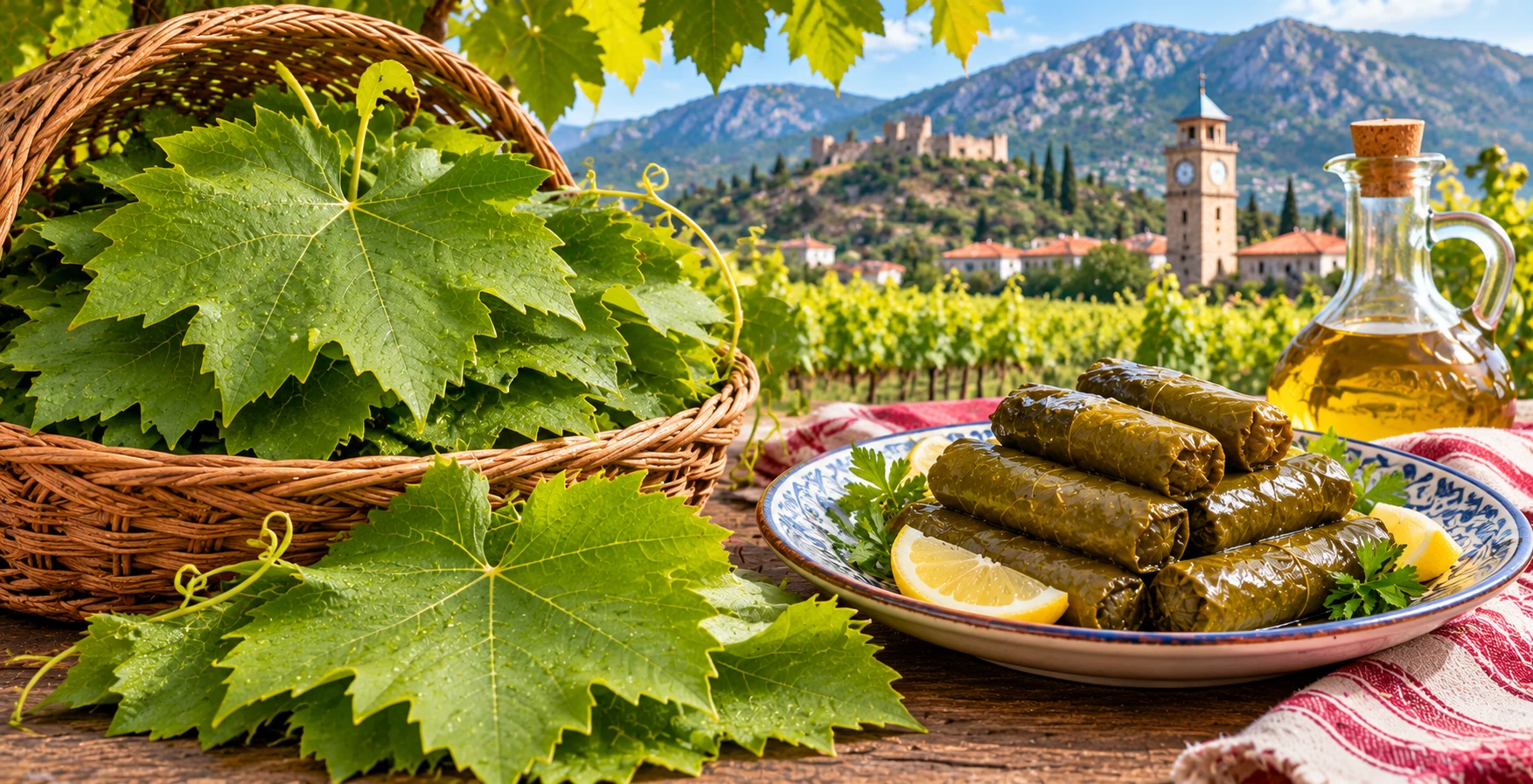
Manisa asma yaprağı refers to vine leaves associated with the province’s grape-growing landscape, particularly leaves of Sultani seedless vines preserved for cooking.
The protected product is not simply any leaf plucked from any vineyard. Turkish Patent describes tender, relatively thin, lightly veined leaves from registered Sultani vines, processed in brine according to a defined regional specification.
These leaves are especially valued for sarma: small parcels wrapped around a filling, cooked slowly and served either warm or cold depending on the recipe.
The registered description emphasises leaves that are not heavily hairy or strongly veined, qualities that help with wrapping.
The protected leaf comes from vines of the Manisa Sultani seedless grape, linking two separate local products.
Salt brining allows leaves to be used beyond the fresh picking season. Recipes may require rinsing or soaking before filling.
Leaves may wrap rice-and-herb fillings or meat mixtures. Cooking and serving traditions vary among households.
An orientation to this Manisa food tradition.
Manisa vineyards and food markets, Manisa
Tender grape leaves preserved for cooking
Living vineyard-food tradition; GI registered 2023
Ingredients and cultural identity
Market visit or sarma tasting
Check producer and ingredients
The product shows how a vineyard provides more than grapes. Leaves become an ingredient with their own harvesting season, texture requirements and preservation craft.
For visitors, a taste of well-made sarma can tell a more precise story about Manisa than a generic “Turkish food” platter.
The Turkish Patent and Trademark Office registered Manisa Asma Yaprağı as a designation of origin on 7 February 2023, registration number 1334.
The official specification links the product to Sultani seedless vines and defines characteristics of fresh leaves and their brining. It identifies multiple Manisa districts within the protected geographical area.
Vine leaves have long been used in regional cooking, but the modern protected specification should not be projected unchanged into every historical period.
Manisa’s extensive vineyards support both fruit production and the preparation of vine leaves. This makes the product part of a broader agricultural economy.
The registered description emphasises leaves that are not heavily hairy or strongly veined, qualities that help with wrapping.
The protected leaf comes from vines of the Manisa Sultani seedless grape, linking two separate local products.
Salt brining allows leaves to be used beyond the fresh picking season. Recipes may require rinsing or soaking before filling.
Leaves may wrap rice-and-herb fillings or meat mixtures. Cooking and serving traditions vary among households.
Alaşehir, Salihli, Sarıgöl and other districts offer market opportunities, but packaging should be checked to establish product origin and method.
When buying preserved leaves, look for intact, flexible leaves of suitable size. Very thick or heavily veined leaves may be harder to roll.
Taste a local sarma dish to understand how leaf texture, filling and acidity work together; there is no single universal recipe.
Compare how different producers express this characteristic.
Ask how preparation affects flavour and texture.
Consider how this element relates to local ingredients.
Look for this tradition in contemporary Manisa food culture.
Brined leaves may be salty. Follow the producer’s storage instructions and rinse or soak as needed for the recipe.
Read labels for salt content and additives; those on sodium-restricted diets should account for the brine and the finished dish.
Official references: Turkish Patent – Manisa Asma Yaprağı, Official geographical-indication specification.
Visit a food market or specialist grocer, then try yaprak sarma at a local restaurant. If visiting a vineyard, arrange permission and ask about the difference between fruit and leaf harvesting.
Pair this experience with Manisa Sultani grapes to explore two uses of the same viticultural tradition.
Fresh leaves are harvested seasonally; preserved leaves are available much more widely throughout the year.
Ask permission before photographing people, market stalls, kitchens or working premises. An authentic image should reflect the actual product and setting, not a misleading substitute.
Markets and shops vary in accessibility. Vineyard access is agricultural and should be arranged with the grower.
Look for properly labelled Manisa Asma Yaprağı in local markets and specialist food shops; confirm producer details.
Explore the full guide for this nearby Manisa destination and plan travel time according to your route.
Explore the full guide for this nearby Manisa destination and plan travel time according to your route.
Explore the full guide for this nearby Manisa destination and plan travel time according to your route.
Explore the full guide for this nearby Manisa destination and plan travel time according to your route.
A protected regional product of vine leaves from Manisa Sultani seedless grape vines, commonly preserved in brine for cooking.
They are especially used to wrap fillings for sarma and related dishes.
Yes. Turkish Patent registered Manisa Asma Yaprağı as a designation of origin in 2023.
They can be, because brining is part of preservation; follow label directions for rinsing or soaking.
Yes. Properly preserved leaves are commonly sold beyond the fresh picking season.
No. They are related agricultural products but have separate protected specifications.
Ask before entering workshops, kitchens, farms or working vineyards.
Read labels and ask about allergens or dietary restrictions.
Choose trustworthy producers and verify storage instructions.
Order realistic portions and dispose of packaging responsibly.
Explore Manisa with a tailor-made route, thoughtful pacing and no compulsory shopping stops. Availability and site access are confirmed before booking.
Combine local culture, history and food at a comfortable pace.
Tell us your dates, interests and group size. We can suggest a realistic route and check local arrangements.
Request a Private Programme
Discover the province’s other cultural, archaeological and culinary highlights.
Read the Manisa Guide