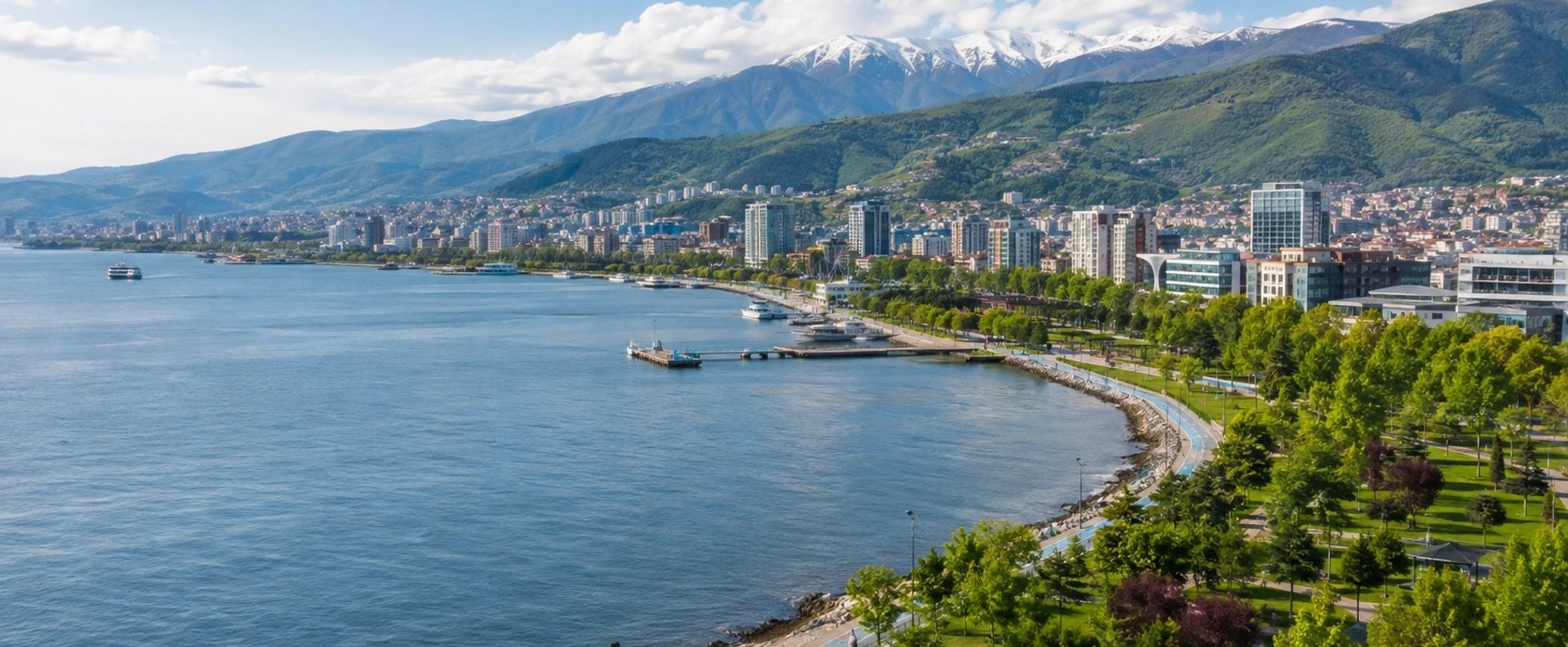
Kocaeli Travel Guide
Continue beyond Kerpe to discover Kandıra's beaches, Kefken, Pembe Kayalar, nature parks, İzmit and the landscapes of the wider province.
Explore Kocaeli



Kerpe is a small seaside settlement in Kandıra District of Kocaeli, on Türkiye's western Black Sea coast. Only around 10 km from Kandıra town, it combines a sheltered crescent-shaped bay, a sandy beach, pine-covered surroundings and some of the most distinctive coastal rock formations in the province.
Kerpe feels different from many Black Sea beaches. Its natural bay is protected from much of the open-sea swell, and the main swimming area remains shallow for a considerable distance from shore. That combination has made Kerpe particularly popular with families, day-trippers and visitors looking for calmer water.
The landscape changes dramatically only a short walk from the beach. At Kerpe Kayalıkları, also widely called Kartal Kayalar, horizontal rock layers descend into clear water, forming cliffs, platforms, small inlets and one of Kocaeli's best-known sunset viewpoints.
Kerpe is also much older than its modern holiday atmosphere suggests. Known in antiquity as Kalpe or Calpe, its natural harbor appears in Xenophon's Anabasis, and archaeological research has identified remains of an ancient breakwater around the northern end of the bay.
Enjoy one of Kandıra's most naturally sheltered swimming areas.
Walk across sculpted coastal rocks and watch the Black Sea at sunset.
Discover a harbor described more than two thousand years ago by Xenophon.
Combine swimming, coastal scenery, seafood and pine-covered countryside.
Essential information for planning a beach, nature and history day on the Kandıra coast.
Kerpe, Kandıra District, Kocaeli Province, Türkiye.
Open on Google MapsSheltered Black Sea water, sandy beach, dramatic coastal rocks and sunsets.
Kalpe / Calpe, an ancient Black Sea harbor mentioned by Xenophon.
Kerpe Public Beach, a Blue Flag beach in recent seasons with seasonal beach services.
Allow 4–6 hours, or a full day if swimming and exploring nearby coastal sites.
Kerpe Kayalıkları in the late afternoon and around sunset.
Kerpe brings together a naturally protected bay, remarkable coastal geology and an ancient maritime story.
The first reason is the shape of the coast. Kerpe Bay curves inward and is protected by the surrounding headland, creating conditions that are often noticeably calmer than the exposed Black Sea shoreline nearby. This is one of the reasons Kerpe became such a popular summer destination.
The second is Kerpe Kayalıkları. The coast here is built from clearly visible horizontal rock layers that have been shaped by waves and weather into cliffs, terraces, channels and isolated forms. The scenery is especially striking when low evening light reaches the rocks.
Kerpe also has historical depth. The ancient harbor of Kalpe stood on an important maritime route between Byzantium and Heraclea Pontica. Xenophon described the harbor and its wooded surroundings in the Anabasis, making Kerpe one of the rare small Black Sea destinations that can be connected directly with a surviving Classical text.
Finally, Kerpe works beautifully as part of a wider Kandıra coastal route. Visitors following our guide to places to visit in Kocaeli can combine the town with Kumcağız, Miço Bay, Kefken, Pembe Kayalar and other beaches along the northern coast of the province.
Kerpe's history is closely connected with its natural harbor. In antiquity the bay was known as Kalpe, also written as Calpe in English-language Classical texts. Its protected position made it a useful stopping point on the southern coast of the Black Sea.
The best-known ancient description comes from Xenophon, whose Anabasis records the passage of the Ten Thousand through this region in the early fourth century BC. Xenophon describes Calpe Harbour as a rocky headland with a harbor below it, fresh water nearby and extensive wooded country behind the coast.
The settlement later formed part of the wider Bithynian world and continued to be used during Roman, Byzantine and later medieval maritime activity. Its position between the Bosphorus and the western Black Sea ports gave the bay continuing practical importance.
Archaeological work around Kerpe has identified remains connected with the ancient harbor, including large breakwater blocks at the northern end of the modern bay. Many of these remains are now underwater, so visitors should not expect a reconstructed ancient port or monumental ruins. The importance lies in recognizing that the modern beach town occupies the setting of a harbor used for centuries.
During the Ottoman period, the forested Kandıra coast also supplied wood, timber and charcoal toward Istanbul. In the twentieth century, improved road connections, summer housing and domestic tourism gradually transformed Kerpe into one of the most popular seaside destinations in Kocaeli.
The ancient name of the harbor and settlement.
The harbor is described in Book VI of the Anabasis.
Kerpe belonged to the historic Bithynian region of northwestern Anatolia.
Breakwater blocks survive partly onshore and largely beneath the water.
The forested coast supplied timber and charcoal toward Istanbul.
Today the town is one of Kandıra's best-known summer destinations.
Kerpe has a particularly unusual connection with Classical history. In Book VI of the Anabasis, Xenophon describes Calpe Harbour while recounting the difficult return journey of the Greek mercenary army known as the Ten Thousand.
His description emphasizes features that still make the location understandable today: a rocky projection into the Black Sea, a harbor protected beneath it, wooded land behind the coast and fresh water in the surrounding landscape. For a modern visitor, the text transforms Kerpe from a pleasant beach town into part of an ancient journey across Anatolia.
Xenophon also places Calpe on the maritime route between Byzantium and Heraclea Pontica. That position helps explain why a naturally protected bay would have been strategically valuable to sailors moving along a coast where safe anchorages were limited.
Archaeological research has identified the remains of an ancient breakwater or mole at the northern end of Kerpe Bay. The surviving blocks are spread across an area that is now partly on land and largely underwater.
Several blocks remain in position close to the shoreline, while others lie beneath the sea. The orientation of the ancient construction was designed to work with the geography of the bay, helping protect vessels from the prevailing northern winds and creating a safer place for loading, unloading and shelter.
This is an archaeological landscape rather than a conventional ticketed monument. Visitors may pass close to traces of the ancient harbor without immediately realizing what they are seeing. Underwater remains should never be disturbed, removed or climbed over in a way that could damage the site.
The protected shape of Kerpe Bay was valuable long before modern tourism.
Large stone blocks survive around the northern part of the bay.
Much of the ancient harbor evidence now lies below the modern sea surface.
Kalpe stood on the Black Sea route between Byzantium and Heraclea Pontica.
The harbor remains form part of the open coastal landscape.
Observe archaeological remains without moving or removing stones.
Kerpe's defining geographical feature is its crescent-shaped bay. The headland and orientation of the coastline help shield the main beach from much of the swell that affects more exposed parts of the Black Sea coast.
Official local tourism information also highlights the unusually shallow character of the main swimming area, with shallow water extending a considerable distance offshore. This combination of shelter, sand and gradual depth has made Kerpe particularly attractive to families.
Calm-looking water should never be treated as a guarantee of safety. The Black Sea can change quickly with wind, weather and currents. Always use designated swimming areas, follow lifeguard instructions and respect beach warning flags.
Kerpe Public Beach is the main swimming beach in the settlement and one of Kandıra's most popular summer shores. Its sandy waterfront, easy access from the town and naturally protected bay make it especially convenient for day visitors.
Kerpe has held Blue Flag status in recent beach seasons. Seasonal services can include lifeguards, showers, changing cabins, toilets, sunshade facilities and designated swimming areas. Because Blue Flag awards and beach operations are renewed season by season, check current local information if a specific facility is important to your visit.
The main beach becomes busy during July, August, weekends and public holidays. For a calmer experience, arrive early in the morning or visit outside the peak school-holiday period.
The central beach is easier for traditional beach use than the rocky headland.
The main bay is known for a gradual, shallow entry compared with exposed coastlines.
Kerpe Public Beach has received Blue Flag recognition in recent seasons.
Use supervised swimming zones whenever they are operating.
Summer Saturdays and Sundays can feel dramatically different from weekdays.
Cafes, restaurants, markets and accommodation are available close to the waterfront.
A short distance from the main beach, the sandy coastline gives way to the extraordinary Kerpe Kayalıkları, often called Kartal Kayalar. Here, layered rock formations extend into the sea and create one of the most recognizable coastal landscapes in Kocaeli.
Waves, salt and weather have gradually shaped the rock into broad platforms, vertical faces, channels, small pools and sculptural forms. The horizontal bands in the stone give the cliffs an almost architectural appearance.
The rocks are popular for walking, fishing, photography and watching the sunset. They are also one of the places where visitors most need to use judgment: surfaces can be uneven or slippery, edges are unprotected, and sea conditions around the rocks are less forgiving than the sandy bay.
Distinct horizontal rock bands create Kerpe's signature coastal scenery.
Late afternoon light makes the rock textures and sea especially photogenic.
Local anglers often use suitable sections of the rocky coast.
Open Black Sea panoramas contrast strongly with the protected main bay.
Wear shoes with grip rather than smooth beach sandals.
Keep well back from cliff edges, especially with children or in wet weather.
Sunset is one of the most memorable times to visit Kerpe. The rocky headland opens toward the sea, allowing warm evening light to move across the layered cliffs while fishing boats and the horizon create simple silhouettes.
Arrive before the sun becomes low. This gives you time to choose a safe position, walk the rock formations in good light and avoid rushing across uneven surfaces after dark.
Clouds often make Black Sea sunsets more interesting rather than less. Even when the sun is partly hidden, the contrast between dark rock, silver water and changing sky can be beautiful.
Kerpe's protected bay is one of the main reasons the settlement is so popular for swimming. The central beach offers the easiest entry, while the surrounding rocky coast is better appreciated for scenery unless a specific area is officially designated and supervised for swimming.
Swim inside designated zones and follow lifeguard instructions.
Never ignore red flags or local warnings even when the bay looks calm.
Shallow water reduces some risks but never replaces active supervision.
Depth and submerged hazards around the cliffs are not reliably visible from above.
Black Sea conditions can deteriorate more quickly than visitors expect.
Do not swim far offshore simply because the near-shore water is calm.
Modern Kerpe still feels connected to the sea through its small harbor, boats and waterfront. The scene is modest rather than monumental, but that is part of its charm.
Fishing has long been part of life along the Kandıra coast. Small boats continue to operate from bays including Kerpe, and local seafood restaurants reflect the wider Black Sea fishing tradition.
The waterfront is particularly pleasant outside the busiest beach hours. Early morning brings quieter streets and working boats, while evening creates a relaxed transition between the beach and the restaurants of the town.
Kerpe's food culture naturally leans toward fish and seafood, but the wider Kandıra region also gives visitors several local products worth looking for. Menus vary seasonally, especially according to the fish available from the Black Sea.
Ask what is genuinely fresh and seasonal rather than ordering only by a fixed menu.
Bonito is one of the classic Black Sea fish when it is in season.
Whiting is another familiar fish on the western Black Sea coast.
Sea bass commonly appears on restaurant menus, grilled or baked.
Look for the district's well-known dairy tradition when local products are offered.
Regional cheese can appear at breakfast tables and local food shops.
A long breakfast works especially well before a beach and coastal sightseeing day.
Small markets and roadside sellers may offer fruit, vegetables and village products.
Use Kerpe's sheltered main bay and supervised beach areas during the summer season.
Explore Kerpe Kayalıkları carefully for dramatic Black Sea views.
Stay for the evening light from the rock formations west of the main beach.
Capture layered cliffs, fishing boats, pine forest, beach life and changing sea conditions.
Suitable coastal sections are popular with local recreational anglers.
Spend time around the harbor and watch small fishing and leisure boats move across the bay.
Continue through Kumcağız and Kefken to explore more of Kandıra's shoreline.
Enjoy the pine-covered landscape behind the coast away from the busiest waterfront.
Green scenery and quieter streets make late spring excellent for walking and photography.
A good balance of warmer weather and lighter crowds before peak summer.
Best for classic beach life, but also the busiest period for traffic and accommodation.
Often one of the nicest months for combining sea, food and a calmer atmosphere.
Excellent for coastal photography, fishing atmosphere and uncrowded walks.
Not a swimming season, but rough seas and empty cliffs can create powerful landscapes.
Kerpe is one of the most rewarding photography locations on the Kocaeli coast. The strongest images usually come from the contrast between layered rock, open sea, protected bay, forest and human scale.
Late afternoon light reveals the horizontal texture of Kerpe Kayalıkları.
A tripod can create smooth water around the rock formations when conditions are safe.
Early light and working boats provide a quieter documentary atmosphere.
Use the rock platforms as foreground while keeping the Black Sea horizon clean.
Clouds can be dramatic, but stay far from wet edges and wave-exposed platforms.
Umbrellas, boats, cafés and beach life tell a different story from the empty winter coast.
Kerpe is popular with families because the central beach has sand, a gradual entry and more shelter than many exposed Black Sea shores. Restaurants, markets and basic town services are also close to the main waterfront.
The sandy supervised swimming area is more suitable for children than the cliff coast.
Shallow water is not a substitute for direct adult supervision.
Bring hats, water and strong sun protection during summer beach hours.
Hold younger children close around Kerpe Kayalıkları and unprotected edges.
Morning means easier parking, more beach space and a calmer start.
Combine beach time with lunch or a shaded rest during the hottest part of the day.
Accessibility changes significantly between the developed beach area and the natural cliffs. The town center and sections of the waterfront are much easier to navigate than Kerpe Kayalıkları.
Kerpe's public beach has offered accessible facilities during Blue Flag seasons.
Paved streets and waterfront areas are generally the easiest parts of Kerpe to reach.
Natural rock surfaces are uneven and are not suitable for unrestricted wheelchair access.
Useful around the town and promenade but impractical on rugged rock platforms.
Ask seasonal beach staff about the current location of accessible entry and sunbathing facilities.
Facilities can change between seasons, so verify specific mobility requirements before traveling.
Summer weekends become crowded quickly and parking fills around the waterfront.
Follow lifeguard instructions and beach warning flags before entering the water.
Beach sandals are useful on sand, but shoes with grip are better on the rocks.
Do not underestimate sun exposure while walking the open cliff area.
Salt spray and sudden waves are hard on cameras and electronics.
Kerpe Kayalıkları are at their most atmospheric late in the day.
Small hotels and pensions can fill during peak weekends.
Do not carve names, leave paint, light fires or abandon waste on the coastal formations.
Begin at Kerpe's central waterfront in the morning. Walk around the bay first to understand the shape of the natural harbor before the main summer crowds arrive.
Continue to Kerpe Public Beach. If you are visiting in warm weather, spend the late morning swimming inside the designated area and enjoy the shallow sandy bay.
After lunch, take time around the harbor and town center. The ancient history of Kalpe becomes easier to imagine once you have seen how naturally protected the bay is.
In the late afternoon, walk toward Kerpe Kayalıkları – Kartal Kayalar. Explore the rock formations carefully, photograph the coastline and stay for sunset.
If you have a car and a full day, continue farther east toward Miço Bay, Kumcağız, Kefken or Pembe Kayalar as part of a wider Kandıra coast journey.
Enough for the waterfront and a short walk across Kerpe Kayalıkları.
Good for a beach walk, lunch and the main rock formations without swimming.
Ideal for swimming, lunch, harbor views and late-afternoon photography.
Best for a relaxed beach day ending with sunset on the rocks.
Allow a full day when adding Kumcağız, Miço Bay or Kefken.
Stay one night if you want sunset, evening atmosphere and an early quiet beach morning.
Kerpe is a public coastal settlement rather than a gated attraction, so there is no general entrance ticket or single opening time for visiting the town, bay or coastal landscape.
The public beach, lifeguard service, changing facilities and other beach operations are seasonal. Restaurants, private parking areas, accommodation and commercial facilities set their own hours and prices.
Kerpe lies on the Black Sea side of Kocaeli Province, approximately 10 km from Kandıra town and around 50 km from İzmit. Road access normally approaches through Kandıra and then continues north toward the coast.
A private vehicle is the easiest option, especially for combining several Kandıra beaches.
Travel north toward Kandıra and continue from Kandıra toward Kerpe.
Kerpe is only around 10 km away and is one of the district's easiest coastal destinations to reach.
Kerpe is possible as a road day trip, but summer weekend traffic can substantially increase travel time.
Regional services operate toward Kandıra and coastal settlements, but schedules can be seasonal or change.
A car gives the greatest flexibility for continuing to Kumcağız, Kefken and Pembe Kayalar.
Parking is usually straightforward outside the peak season, but the situation changes dramatically on sunny summer weekends and public holidays. The central waterfront has limited space compared with the number of day visitors.
Morning arrival gives you far more choice and reduces time spent in local traffic.
Do not block narrow streets, residential entrances or emergency access.
Some businesses and seasonal lots may offer paid parking.
Parking slightly away from the beach can be easier than circling the waterfront repeatedly.
Kerpe Kayalıkları can attract a second wave of visitors late in the day.
Expect the greatest pressure during school holidays and hot weekends.
Kerpe sits in the middle of one of Kocaeli's most enjoyable coastal discovery areas. Use our complete Kocaeli travel guide to connect the beaches and natural landmarks of Kandıra.
A forest-backed cove between Kerpe and Kefken, known for unusual rocks and a natural stone pool.
A broad sandy beach between Kerpe and Kefken, popular for swimming and summer stays.
A lively Black Sea coastal settlement with harbor scenery, beaches and access to nearby natural sites.
Distinctive pink-toned coastal rocks near Kefken with geological and historical interest.
An offshore island associated with ancient and Byzantine remains; access conditions vary.
A long sandy coast farther east, popular for beach holidays, camping and open Black Sea scenery.
A quieter Kandıra coastal stop with beach scenery and natural surroundings.
A broad bay farther west with a sandy beach, camping culture and dramatic Black Sea landscapes.
Kerpe is a Black Sea coastal settlement in Kandıra District of Kocaeli Province, north of İzmit.
Kerpe is famous for its sheltered bay, shallow sandy beach, Kerpe Kayalıkları, sunset views and the ancient harbor of Kalpe.
Yes. It is one of Kocaeli's strongest combinations of swimming, coastal scenery, photography and accessible historical interest.
The ancient name was Kalpe, often written Calpe in English translations of Classical texts.
Xenophon's Anabasis describes Calpe Harbour during the return journey of the Ten Thousand in the early fourth century BC.
Yes, but they are subtle. Archaeological research has identified ancient harbor remains, including breakwater blocks, many of which are underwater. Do not expect a large excavated city.
They are the layered coastal rock formations beside Kerpe, also widely called Kartal Kayalar. They are famous for cliffs, sea views and sunset photography.
Yes. The central bay is naturally more sheltered than many exposed Black Sea beaches and has a shallow sandy entry. Always follow current lifeguard and beach warnings.
Yes. The main public beach has a sandy shoreline, while Kerpe Kayalıkları provide a completely different rocky coastal environment nearby.
Kerpe Public Beach has held Blue Flag status in recent seasons. Because the award is renewed periodically, check the current season if Blue Flag status is important to your plans.
No. Kerpe Bay is naturally sheltered, but Black Sea weather, wind and currents can still create dangerous conditions.
Kerpe is popular with families because of the protected bay and shallow entry, but children still require direct supervision and should swim only in designated areas.
It is not recommended. Depth, submerged rocks, waves and currents are difficult to judge from above. Use designated swimming areas instead.
Kerpe Kayalıkları are the classic sunset location, with open views across the Black Sea and dramatic foreground rock formations.
Late afternoon is especially beautiful. Arrive before sunset so you can explore the rocks safely while there is still good daylight.
Four to six hours is comfortable for a first visit. A full day is better if you plan to swim and remain for sunset.
June and September offer a particularly good balance between warm-weather atmosphere and lighter crowds. July and August are the busiest beach months.
It can be extremely busy on hot summer weekends and public holidays. Weekdays and shoulder-season visits are much calmer.
Yes. There is no general admission fee for entering Kerpe or walking the coast. Individual parking areas, beach services and private businesses may charge separately.
Yes. Kerpe is a popular road escape from Istanbul, although peak weekend traffic can make the journey considerably longer.
Kerpe is approximately 10 km from Kandıra town.
Kerpe is approximately 50 km from İzmit, depending on your exact starting point and route.
Regional public transport serves Kandıra and coastal settlements, but routes and frequencies can change. Check the current Kocaeli timetable before traveling.
Yes. Kerpe, Kumcağız and Kefken form a natural coastal sequence and work well in the same day by car.
Yes. Pembe Kayalar near Kefken is one of the best additions to a Kerpe coastal day, especially for visitors interested in geology and photography.
Yes. Miço Bay lies between Kerpe and Kefken and adds forest scenery, rock formations and a different cove atmosphere. Current access and beach arrangements should be checked seasonally.
Fresh seasonal fish is the obvious choice. You can also look for Kandıra dairy products, regional breakfasts and local village produce.
Wear shoes with good grip. Smooth sandals and wet rock are a poor combination, especially near unprotected edges.
Yes. Spring and autumn are excellent for walking and photography, while winter can produce dramatic Black Sea scenery. Swimming, lifeguards and most beach services are seasonal.
Take all food packaging, bottles and cigarette waste away from beaches and rocks.
Names, paint and scratches permanently damage the natural formations.
Never remove stones or objects from ancient harbor areas or the seabed.
Follow lifeguards, warning flags and temporary swimming restrictions.
Pine forest and dry summer vegetation make careless fire especially dangerous.
Kerpe is a living neighborhood, not only a holiday destination.
Do not block narrow streets, homes or emergency access.
Avoid unnecessary amplified music and leave space for others to enjoy the landscape.
Combine Kerpe's sheltered bay and ancient harbor with dramatic cliffs, forest-backed beaches and the wider landscapes of northern Kocaeli.
Turn Kerpe into a larger Kandıra coast journey with beaches, rock formations and fishing towns along the Black Sea.
Continue beyond Kerpe to discover Kandıra's beaches, Kefken, Pembe Kayalar, nature parks, İzmit and the landscapes of the wider province.
Explore Kocaeli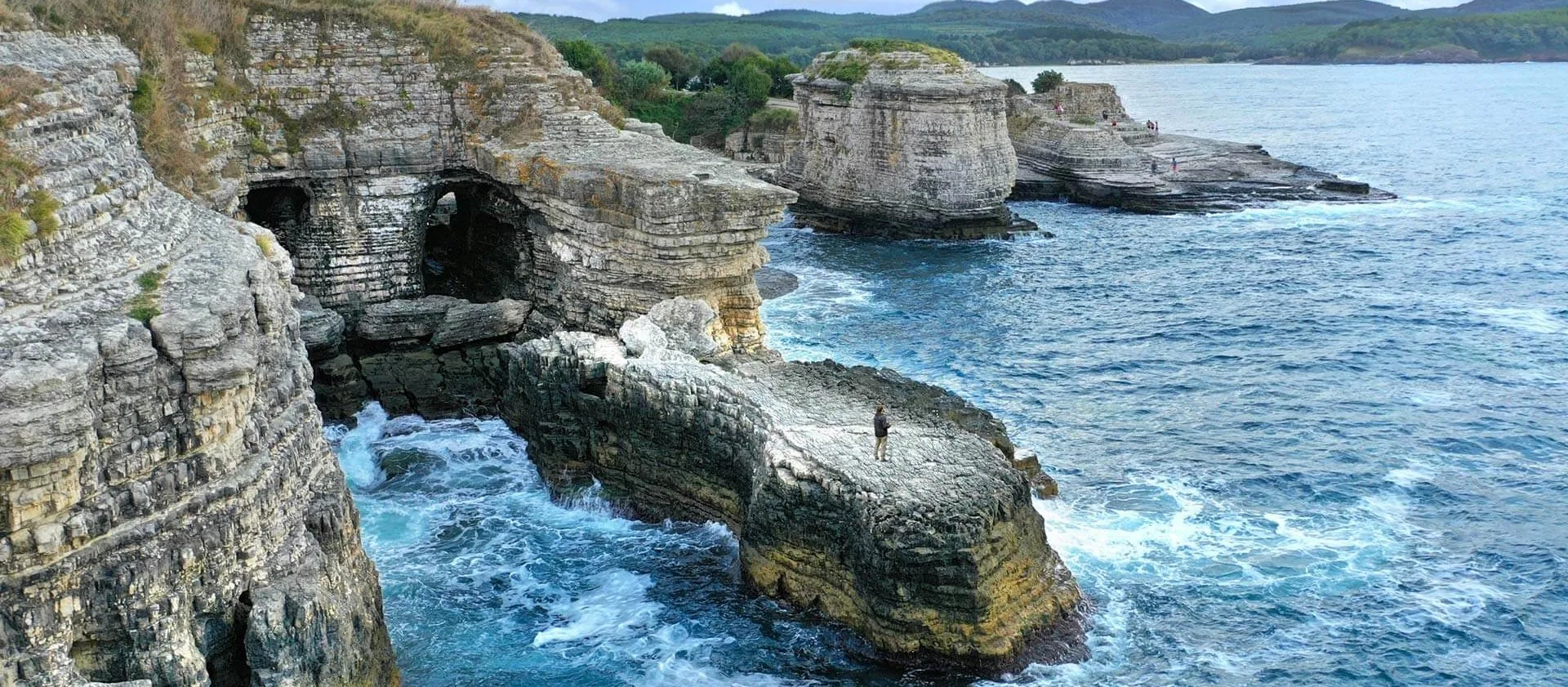
Ask us about including Kerpe, Kefken, Pembe Kayalar and other Kocaeli highlights inside a privately designed Turkey journey.
Request a Custom RouteWe can combine Kocaeli's Black Sea coast with Istanbul, Cappadocia and destinations throughout Türkiye.
Build a private coastal day around Kerpe, Kefken, Pembe Kayalar and the quieter landscapes of Kandıra.
Plan Your Journey
Discover the Gulf of İzmit, Kandıra coast, Kartepe, historic sites, nature attractions and regional food traditions.
Explore Kocaeli
Continue throughout Türkiye with archaeological sites, historic cities, coastal landscapes, food traditions and cultural heritage.
Explore Türkiye