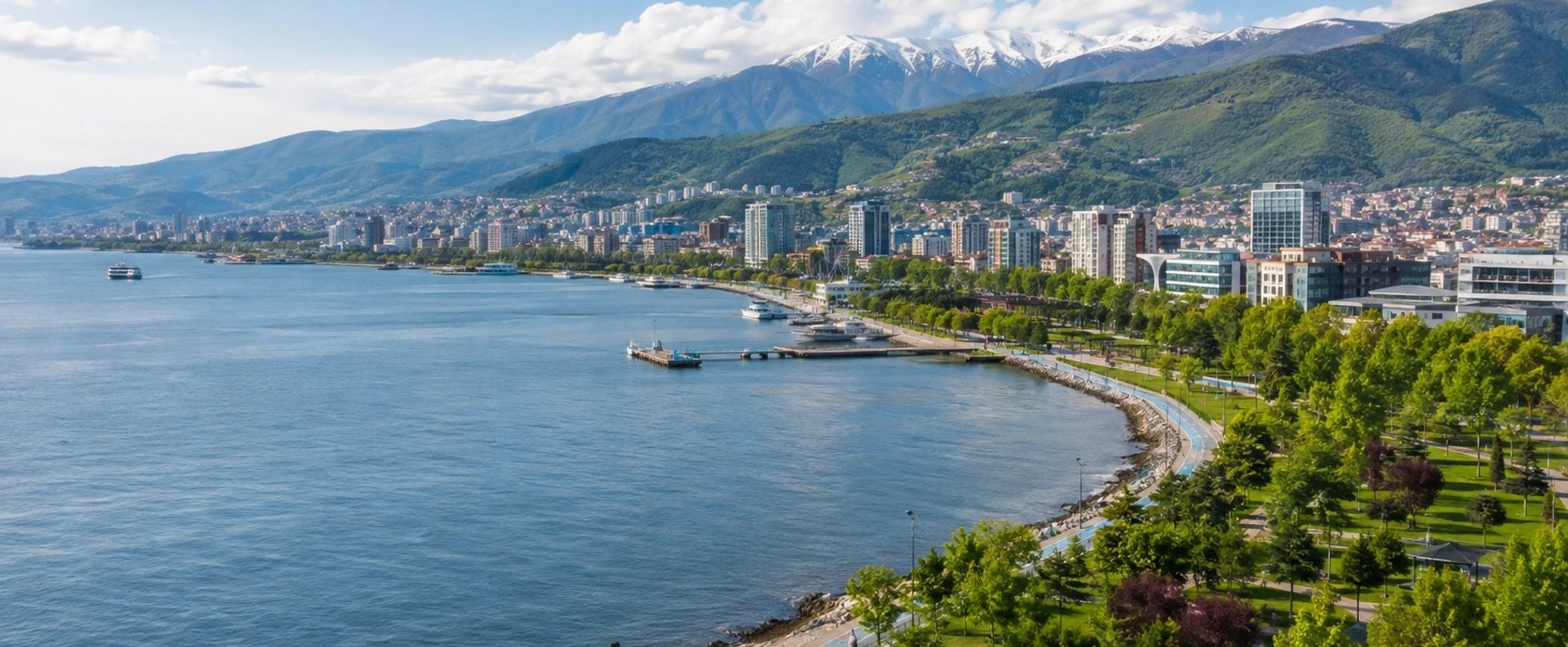
Kocaeli Travel Guide
Continue beyond Ballıkayalar to discover Gebze, Eskihisar, İzmit, Kartepe, the Kandıra coast and Kocaeli's wider natural and historical attractions.
Explore Kocaeli





Ballıkayalar Nature Park, or Ballıkayalar Tabiat Parkı, lies near Tavşanlı in Gebze, Kocaeli, only a short distance from some of the busiest transport and industrial corridors between Istanbul and İzmit. Yet inside the protected landscape, steep limestone walls, flowing water, woodland, rocky pools and narrow canyon passages create a completely different world.
The protected area covers approximately 1,603 hectares. Its central natural feature is the Ballıkayalar Valley, a narrow karstic gorge formed as water dissolved and eroded limestone over long periods of time. Official descriptions give the main canyon a length of about 2 kilometres and a width generally ranging from 40 to 80 metres.
Ballıkayalar is especially important because nature and outdoor-sports history overlap here. Its solid limestone walls became one of the birthplaces of modern rock climbing in Türkiye. Climbers have used the valley since the 1970s, and the area developed a distinctive climbing culture often associated with the “Ballı” school. Today the canyon still contains more than one hundred routes of different difficulties.
You do not have to be a climber to enjoy Ballıkayalar. Visitors come for hiking, canyon scenery, picnics, photography, wildlife observation and the simple pleasure of following the stream between high rock walls. However, the inner canyon is natural terrain: water levels, slippery limestone, exposed edges and route difficulty can change considerably with weather.
Walk beside a stream through a narrow limestone gorge shaped by water and erosion.
See one of Türkiye's most historically important rock-climbing areas, with 100+ routes.
Discover a protected landscape with rich plant life, birds, butterflies and mammals.
Reach a surprisingly wild outdoor landscape close to Gebze, the D-100 and the TEM motorway.
Essential information for exploring one of Kocaeli's most distinctive canyons and outdoor-sports landscapes.
Tavşanlı area, Gebze District, Kocaeli Province.
Open on Google MapsApproximately 1,603 hectares and designated as a nature park in 1995.
About 2 km long, generally 40–80 m wide, with a narrow karst-gorge character.
Limestone canyon scenery, rock climbing, hiking and nature photography.
Rich flora and fauna, including more than 100 bird species and around 50 butterfly species.
Allow 2–4 hours for a relaxed visit, longer for serious hiking or climbing.
Ballıkayalar combines geology, biodiversity and outdoor-sports heritage within an unexpectedly wild valley near Gebze.
The first reason Ballıkayalar is exceptional is its geological form. The valley is cut into limestone and displays the characteristic features of a karstic gorge: steep walls, water-carved hollows, pools, small cavities and sculpted rock surfaces created by long-term dissolution and erosion.
The second is its ecological diversity. The protected area includes woodland, scrub, stream habitat, rock faces and open areas, allowing many different plant and animal communities to exist within a relatively compact landscape.
The third is its extraordinary role in Turkish climbing culture. Ballıkayalar began attracting climbers in the 1970s and became an important training area for mountaineering clubs, universities and generations of climbers. Its limestone cliffs now contain more than one hundred climbing routes, ranging across different levels of difficulty.
Finally, Ballıkayalar is remarkably accessible for such a dramatic natural environment. The D-100 highway and TEM motorway pass only a few kilometres to the south, making the park an easy nature escape from Gebze, Istanbul and the wider Marmara region. Visitors following our guide to places to visit in Kocaeli can combine it with historical sites around Gebze and Eskihisar.
Ballıkayalar's defining landscape is a deep limestone gorge formed through the interaction of water and soluble rock. Over long geological periods, flowing and underground water dissolved, widened and reshaped fractures in the limestone, while the stream continued to erode the valley floor.
The result is not one smooth-sided canyon. Visitors encounter cliffs, ledges, cavities, hollows, pothole-like basins and narrow rocky passages that change continually as they move through the valley. Some rock surfaces are broad and pale; others rise almost vertically beside the stream.
Official protected-area descriptions identify the principal Ballıkayalar Valley as roughly 2 kilometres long and generally 40–80 metres wide. The dramatic canyon occupies the southern part of the much larger nature park.
Water is central to the scenery. Ballıkaya Stream runs through the canyon, sometimes flowing openly over flat limestone and at other times collecting in small pools or channels. Its appearance changes greatly according to season and recent rainfall.
Pale, solid rock forms the steep canyon faces that make Ballıkayalar immediately recognizable.
The valley developed as water dissolved and eroded limestone, creating a narrow and deeply cut landform.
Natural hollows, openings and water-worn cavities appear throughout the canyon landscape.
Erosion has formed depressions and pool-like features in the bedrock along the stream.
The gorge alternates between confined passages and more open sections of valley.
Rain and flowing water continue to influence the appearance and difficulty of the canyon today.
The Ballıkaya Stream is the thread that ties the canyon together. It passes through the narrow valley, crossing broad limestone slabs and collecting in natural pools between the rock formations.
Depending on rainfall, some sections may be little more than a gentle flow, while other periods can bring much stronger water. Small cascades and waterfall-like drops appear where the stream descends over uneven limestone.
The water gives Ballıkayalar much of its atmosphere. Reflections brighten shaded canyon walls, vegetation gathers along the damp valley floor, and the sound of running water can make the inner gorge feel surprisingly remote despite the nearby urban region.
Visitors should remember that a stream crossing that seems easy on one day may become difficult after rain. Do not assume that photographs taken in summer represent spring water levels or conditions after a storm.
Water volume can change considerably after rain and between seasons.
Natural depressions in the limestone collect water and create some of the canyon's most photogenic scenes.
Short drops and uneven rock produce miniature waterfall effects along the stream.
Wet limestone, algae and mud can make streamside walking much more difficult.
Some hiking routes may require careful movement beside or across water depending on conditions.
Strong flow can transform an ordinary walk into a much more technical canyon passage.
Ballıkayalar is far more than a scenic canyon. It occupies an important place in the development of rock climbing in Türkiye. Climbers began using the limestone walls in the 1970s, and the valley became a training ground for mountaineering clubs, university groups and generations of Turkish climbers.
Over time, a distinctive local climbing tradition developed. Kocaeli sources describe a “Ballı Ekolü”, or Ballı school, reflecting the techniques, culture and experience created by climbers who learned on these walls.
The canyon now contains more than 100 climbing routes at different levels of difficulty. The rock is predominantly strong limestone, with vertical faces, cracks, ledges and technical sections that make the area suitable for serious training and sport.
Climbing here should never be treated as an improvised visitor activity. Technical climbing requires appropriate experience, correct equipment, route knowledge, a competent partner and an understanding of current anchors and conditions. Beginners should climb only with qualified instruction or an experienced organized group.
Ballıkayalar is widely associated with the beginnings of modern rock climbing in Türkiye.
The canyon contains more than one hundred established lines with different technical difficulties.
Strong limestone walls provide cracks, faces, ledges and varied climbing movement.
Mountaineering clubs, universities and outdoor groups have long used Ballıkayalar for training.
The canyon developed its own recognizable climbing culture within Türkiye's mountaineering history.
Technical routes require proper equipment, partner systems and climbing competence.
Walking is the easiest way for most visitors to experience Ballıkayalar, but there is an important difference between the day-use area, the easier valley approaches and the rough inner canyon. They should not all be treated as one simple park path.
Official descriptions identify approximately 2 kilometres of the route through the canyon itself. Kocaeli's nature-route system has also promoted a 3-kilometre Ballıkayalar route, while longer walking combinations can use paths on the surrounding ridges and wider landscape.
Inside the gorge, expect irregular rock, stream edges, possible water crossings and sections where hands may be useful for balance. After rainfall, mud, wet limestone and stronger stream flow can raise the difficulty considerably.
For a first visit, start from the main day-use area, walk only as far as conditions remain comfortable, and remember that returning through the same terrain may take longer than expected. Closed shoes with reliable grip are strongly preferable to casual sandals.
The developed entrance and picnic side is suitable for a relaxed first look at the valley.
The gorge becomes rougher and can require careful movement over natural rock.
Higher paths around the valley offer different perspectives and longer walking possibilities.
Stream flow may force route changes or make some passages more difficult.
Wear closed hiking shoes or trainers with strong grip rather than smooth-soled footwear.
Do not depend on finding drinkable natural water once you are on the trail.
The dramatic canyon attracts most of the attention, but Ballıkayalar Nature Park protects a much larger ecological landscape. Official sources describe a mixture of maquis and pseudo-maquis vegetation, woodland, stream habitat, rocky slopes and open areas.
Oak species are particularly important. The park includes mazı oak, Hungarian oak and kermes oak, together with hornbeam, chestnut, maple, ash, linden, yew, pine, fir, alder, willow and plane trees in suitable habitats.
The botanical diversity extends beyond trees. Official nature-park information records 20 orchid species, while Kocaeli municipal information refers to more than 400 plant species within the protected area.
Wildlife is equally varied. Animals recorded in the park include roe deer, otter, squirrel, marten, badger, weasel, jackal, fox, wild rabbit and wild boar. The area also supports roughly 110 bird species and around 50 butterfly species.
Several oak species dominate parts of the protected landscape.
Willows, alders and other moisture-loving plants occur closer to water.
Twenty orchid species have been recorded in official nature-park information.
Around 110 bird species can be observed across the area during the year.
The park supports approximately 50 butterfly species.
Otter, roe deer, fox, badger, marten, wild boar and other mammals are recorded in the wider park.
Follow the stream and explore as much of the canyon as your experience and current conditions safely allow.
See experienced climbers using the limestone walls in one of Türkiye's classic climbing areas.
Use established routes only with appropriate experience, equipment and current route knowledge.
Photograph limestone cliffs, stream pools, vegetation, climbers and changing canyon light.
Look for woodland and open-country species across a protected area with rich bird diversity.
Spring and summer can be especially rewarding for observing the park's varied butterfly life.
Use designated day-use areas and follow current fire and park regulations.
Look closely at water-worn limestone, cavities, natural basins and the changing form of the karst gorge.
Ballıkayalar includes a designated day-use area where visitors can stop before or after exploring the canyon. Official nature-park information lists picnic tables, a fountain, a prayer room and toilets among the available facilities.
The developed area makes Ballıkayalar practical for visitors who want a nature day without committing to a technical hike. Families and groups often use the picnic side while climbers and walkers continue deeper into the valley.
Facilities should still be treated as relatively simple. Bring enough drinking water, food, sun protection and any personal necessities you will need during several hours outdoors, especially if you plan to leave the main day-use area.
Fire regulations deserve particular attention. Kocaeli's 2026 forest-fire measures allow controlled picnicking in officially registered nature parks, but wider forest areas are subject to strict seasonal restrictions. Always follow the instructions in force at Ballıkayalar on the day of your visit.
Designated day-use tables are available within the managed section of the park.
Official park information lists a fountain, but carrying your own drinking water is still wise.
WC facilities are listed in the official nature-park facilities.
A mescit is listed among the visitor facilities.
Do not rely on finding a full restaurant or market inside the canyon.
Use only currently permitted picnic methods and never carry fire into restricted forest sections.
Ballıkayalar has long appeared in outdoor reports as a place where climbers and nature groups have pitched tents, and some parts of the wider valley contain flat ground that looks suitable for camping.
However, historical use should not be interpreted as permanent permission. Protected-area rules, operator decisions, fire-season restrictions and overnight-use policies can change.
Kocaeli's 2026 forest-fire decisions prohibit overnight stays in forest areas outside specifically determined accommodation areas. For that reason, visitors should confirm directly whether overnight tent camping is currently designated and permitted inside Ballıkayalar before arriving with camping equipment.
If camping is authorized, use only the designated location, never create a new fire ring, keep access roads clear and take every item of waste away with you.
Do not assume that old blog posts or photographs prove current camping permission.
Stay only where overnight use is specifically allowed by the current park operator or authorities.
Never light a campfire simply because previous visitors have done so.
Keep soap, food waste and other pollutants away from the water.
Avoid disturbing wildlife, nearby visitors and climbers preparing for an early start.
Pack out rubbish and do not damage vegetation to create a campsite.
The official Doğa Koruma ve Milli Parklar nature-tourism portal currently lists Ballıkayalar Nature Park with visitor hours of 08:00–18:00, together with entry and vehicle tariffs. Because operating hours and charges can change, visitors should check the official listing shortly before travelling.
The same official portal identifies Kocaeli Metropolitan Municipality as the operator and lists a visitor capacity of 500. The park remains a protected natural area, so management decisions may affect parking, picnic use, climbing access or sections of the trail.
For 2026, Kocaeli's forest-fire measures are in force from 15 May to 1 November. The decision restricts entry to general forest areas while allowing controlled picnicking in officially registered nature parks and recreation areas. It also restricts overnight stays outside specifically designated accommodation areas.
These rules are precisely why visitors should separate “the nature park is open” from “every activity is permitted.” Check current signs and announcements before climbing, camping, using fire or entering side trails.
The current DKMP portal lists 08:00–18:00; recheck before your visit because schedules can change.
The official portal publishes current admission and vehicle charges; confirm the latest category and amount before arrival.
The current nature-tourism portal identifies Kocaeli Metropolitan Municipality as operator.
Province-wide 2026 forest-fire measures run from 15 May to 1 November.
Opening the park does not automatically mean every trail, fire use or overnight activity is permitted.
Current signs and staff instructions take priority over older online visitor reports.
Ballıkayalar offers a remarkable range of photography within a small area. The strongest visual contrast comes from pale limestone, dark green vegetation, moving water and the deep shadows of the gorge.
The stream creates reflections and natural leading lines, while the vertical cliffs make excellent frames for hikers and climbers. Including a person in the composition can reveal just how large the canyon walls are.
Morning and late-afternoon light can soften the rock, but the orientation of individual canyon sections means sunlight reaches different walls at different times. Overcast weather can also be excellent because it reduces harsh contrast inside the narrow gorge.
After rain, the stream and small cascades may become more dramatic, but wet rock also increases risk. Never choose a photographic position that requires standing on a slippery edge or entering moving water.
Photograph experienced climbers from a safe distance to show the height of the limestone faces.
Calm pools can reflect vegetation and bright rock surfaces.
Use successive cliff lines to create depth through the narrow valley.
Longer exposures can emphasize small cascades where conditions and footing are safe.
Fresh vegetation creates strong contrast against the grey-white limestone.
Later-season vegetation can add warmer tones to the canyon walls.
One of the most attractive seasons: greener vegetation, stronger stream flow and comfortable hiking temperatures.
Kocaeli route information particularly highlights April for walking, although rain can also raise water levels.
Long daylight and warm weather are excellent for a full nature day before peak heat.
The canyon can be hot and busy; begin early and pay close attention to seasonal fire restrictions.
Cooler air and changing vegetation make hiking and photography very pleasant after dry weather.
The canyon remains dramatic, but cold, rain, slippery rock and strong stream conditions can make the inner route unsuitable.
Ballıkayalar can be an excellent family nature stop when the visit is planned around the day-use and easier valley areas. Children can see the stream, limestone cliffs, climbers and wildlife without completing a demanding canyon route.
The inner gorge is a different environment. Uneven rock, water, steep drops, slippery surfaces and climbers working overhead require much closer supervision than an ordinary city park.
Families with younger children should be comfortable turning back early. There is no need to complete the canyon for the visit to be worthwhile, and the entrance landscape already provides a strong sense of Ballıkayalar's geology.
Keep children away from the base of active climbing routes unless you are sure the area is safe. Loose stones, equipment or climbers may be moving above.
Use the easier entrance section first and judge everyone's comfort before continuing.
Keep small children physically close beside water, cliffs and uneven rock.
Do not sit or play directly beneath climbers or rope systems.
Children need secure footwear just as much as adults on smooth limestone.
Carry what your family needs instead of depending on facilities deeper in the valley.
A shorter safe visit is better than forcing a difficult canyon section.
Ballıkayalar should be understood as two very different visitor environments. The managed day-use area may provide some accessible parking and easier surfaces, while the natural canyon itself contains rough, irregular terrain.
The inner gorge should not be expected to provide continuous wheelchair-accessible, step-free or stroller-friendly travel. Rock slabs, stream edges, mud and narrow sections make full canyon exploration unsuitable for many mobility needs.
Visitors who want only the landscape atmosphere may still enjoy the entrance, picnic areas and views toward the limestone valley without attempting the rough trail.
Anyone with specific accessibility requirements should verify the current layout, parking and facility access before travelling, because natural terrain and temporary works can change conditions.
Some developed visitor facilities are easier to reach than the natural gorge.
Do not expect standard wheelchair access through the inner canyon.
Ordinary strollers are generally impractical on rough streamside and rocky terrain.
Natural limestone surfaces may include steps, cracks and slippery sections.
Official educational visitor information reports wheelchair-suitable parking, but current conditions should be confirmed.
A scenic entrance visit can be enjoyable even without attempting the canyon route.
Rain can raise the stream and make limestone substantially more slippery.
Closed hiking shoes or trainers are much better than flip-flops for canyon terrain.
Bring enough drinking water for your planned route, especially beyond the facilities.
Morning gives cooler temperatures, easier parking and more daylight for exploration.
A waterproof pouch is useful around stream crossings and wet rock.
A small backpack is preferable to carrying loose bags when balance is important.
Stay clear of ropes, belay areas and the base of active climbing routes.
Leave food packaging, bottles and cigarette waste nowhere in the park.
Begin in the morning at Ballıkayalar Nature Park when temperatures are cooler and the valley is quieter. Walk through the easier sections, watch the climbers and continue into the canyon only as far as conditions and experience allow.
Allow time to stop for photographs rather than treating the valley as a race. The limestone formations, stream pools and changing cliff faces are the main experience.
After leaving Ballıkayalar, continue toward Gebze or Eskihisar. This gives the day a completely different second half, combining natural scenery with Ottoman-period architecture, museum history and views over the Gulf of İzmit.
Use our Kocaeli travel guide to connect Ballıkayalar with other attractions across Gebze, Darıca, Hereke or the wider province.
Ballıkayalar Nature Park – canyon walk, stream scenery and climbing walls
Picnic or short rest in the designated day-use area
Gebze – Çoban Mustafa Pasha Complex or town-center exploration
Eskihisar – castle and Osman Hamdi Bey Museum House area
Darıca coast, Hünkar Çayırı or another western Kocaeli attraction
Continue toward İzmit if you want to extend the route beyond Gebze
Enough for the entrance landscape, a short streamside walk and photographs.
Suitable for a relaxed visit to the easier canyon sections and picnic area.
A good choice for deeper exploration, photography and a longer walking route.
Best for walkers who want to move slowly and spend time beside the stream.
Useful for serious climbing, longer hiking or combining Ballıkayalar with a picnic.
Combine a morning in the park with historic Eskihisar and Gebze attractions in the afternoon.
Ballıkayalar is a protected natural area, not a theme park or a paved urban recreation zone. The developed facilities are concentrated around the day-use area, while the canyon quickly becomes natural terrain.
Current official information should be checked for opening hours, vehicle tariffs, fire rules, camping permissions and any temporary restrictions. Climbers should also use current route information rather than relying on old bolt or anchor descriptions.
The park's proximity to Gebze can be misleading. Although major roads and dense settlement are close, sections of the canyon are rough enough that visitors should still bring suitable footwear, water and basic outdoor preparation.
Tavşanlı, Gebze / Kocaeli
Approximately 1,603 hectares
1995
Approximately 2 km long and 40–80 m wide
Hiking, climbing, geology, photography, picnics and wildlife
Day-use area, picnic tables, fountain, prayer room and toilets
Current DKMP portal lists 08:00–18:00; verify before travelling
2–4 hours for most visitors
Ballıkayalar Nature Park lies near Tavşanlı in Gebze District. Its position makes it unusually convenient for a major natural attraction in the Marmara Region.
Official directions describe two principal road approaches. From the D-100 highway, turn toward Tavşanlı; from the E-80 / TEM motorway, leave via the Dilovası side and continue north through Tavşanlı toward the nature park.
Both the D-100 and TEM pass roughly 4 kilometres south of the protected area, although the actual driving route is longer than this direct distance.
Kocaeli Governorate information also notes regional public-transport connections through Tavşanlı. However, routes and timetables can change, so travellers without a car should confirm the latest Gebze-area bus or minibus service before departure.
Private vehicle is the simplest option for most visitors coming from Istanbul, Gebze or İzmit.
Use the Tavşanlı turn and continue toward the nature park.
Use the Dilovası side and travel north through Tavşanlı.
Ballıkayalar is a short regional drive north of the main urban area.
The park is popular as a day trip because it lies close to the eastern Istanbul–Kocaeli corridor.
Check current Tavşanlı-bound regional services and be prepared for a final walk or local connection.
Vehicle access and parking are available around the managed visitor area, and the current official nature-tourism portal lists vehicle tariffs among the park charges.
Ballıkayalar's closeness to Istanbul and Gebze makes weekend crowding an important consideration. Warm spring days, summer weekends and organized climbing events can bring many visitors at the same time.
Arriving early makes the experience easier and reduces pressure on narrow access areas. Always use the designated parking arrangement rather than creating informal spaces on vegetation or beside access tracks.
Keep entrances, service roads and emergency routes clear. This is especially important in a canyon environment where rescue vehicles may have limited approach options.
Use the managed parking area rather than stopping on vegetation or narrow tracks.
The official park portal lists tariffs by vehicle category; verify the latest rate.
Good-weather weekends can be substantially busier than weekdays.
Morning usually provides an easier arrival and more time in the valley.
Never block service or emergency routes.
Protect soil and vegetation by parking only where directed.
Ballıkayalar is easy to combine with the historical and coastal attractions of western Kocaeli. Use our complete Kocaeli travel guide to build a longer itinerary around Gebze, Eskihisar, Darıca and the Gulf of İzmit.
A major Ottoman mosque complex in Gebze associated with the early 16th century.
A historic fortress overlooking the Gulf of İzmit and the strategic crossing toward Yalova.
The Eskihisar home associated with the famous Ottoman painter, archaeologist and museum pioneer.
A historically important meadow near Gebze associated with Sultan Mehmed II's final campaign.
A pleasant waterfront extension if you want sea views after a day in the limestone canyon.
Continue east for Ottoman industrial history, carpets and Gulf of İzmit scenery.
Kocaeli's provincial center offers museums, Ottoman architecture, waterfront areas and Roman-period traces.
A larger nature destination farther east, especially suitable for families wanting developed outdoor facilities.
Ballıkayalar Nature Park is near Tavşanlı in Gebze District, Kocaeli Province, in northwestern Türkiye.
No. It is officially designated as a nature park (tabiat parkı).
Ballıkayalar received nature-park protection in 1995.
The protected area covers approximately 1,603 hectares.
Official protected-area information describes the principal Ballıkayalar Valley as approximately 2 kilometres long.
The main gorge is generally described as roughly 40–80 metres wide, although the landscape varies from section to section.
It developed in limestone through long-term dissolution and erosion by water, producing a narrow karstic gorge with cavities, basins and sculpted rock.
Yes. Ballıkaya Stream runs through the valley and forms pools, channels and small cascade-like drops depending on water level.
Yes. Hiking is one of the park's main activities, but the inner canyon contains rough rock, water and potentially slippery sections.
Not all of it. The entrance and day-use area are easier, while deeper canyon sections can require careful footing, stream crossings and good balance.
Closed hiking shoes or sturdy trainers with reliable grip are strongly recommended.
You can visit the park, but the inner canyon may become considerably more difficult because of stronger stream flow, mud and slippery limestone.
It is widely regarded as one of the historic birthplaces of rock climbing in Türkiye and has been used by climbers since the 1970s.
Kocaeli sources describe more than 100 established routes of different difficulty levels.
Beginners should climb only with qualified instruction or experienced supervision and appropriate equipment. Seeing bolts on a wall does not make a route suitable for an inexperienced climber.
Yes. Watching experienced climbers is part of the atmosphere, but remain clear of ropes, belay zones and areas directly below active routes.
Yes. Official park information lists a day-use area, picnic tables, a fountain, prayer room and toilets.
Fire and picnic rules can change seasonally. Use only methods currently permitted by the park operator and follow all 2026 fire-season instructions.
Do not assume that historical camping use means overnight stays are currently permitted. Confirm whether a designated camping area is operating before bringing a tent.
The current official DKMP nature-tourism portal lists 08:00–18:00. Recheck before visiting because operating hours can change.
The official portal currently displays admission and vehicle tariffs. Check the latest official category and amount before travelling.
Yes. Vehicle access and parking are available around the managed visitor area, with tariffs subject to current park rules.
Yes for a carefully planned visit around the easier areas. The inner gorge requires close supervision because of water, cliffs and slippery rock.
Some managed visitor facilities may be easier to access, but the natural inner canyon is not suitable for continuous standard wheelchair access.
A stroller may be useful only in easier developed sections. Rough rock and streamside terrain make the inner canyon impractical for ordinary strollers.
The wider park supports mammals such as roe deer, otter, fox, badger, marten, wild boar and squirrel, together with rich bird and butterfly life.
Official nature-park information records around 110 bird species across the protected area.
Yes. Official park information records 20 orchid species.
Spring and autumn are excellent for walking. Spring gives greener vegetation and stronger water flow; autumn offers cooler temperatures and attractive colour.
Around 2–4 hours is comfortable for most visitors. Climbers and longer-distance hikers may spend most of a day.
Yes. Its position near Gebze and major motorways makes Ballıkayalar one of the most convenient wild-canyon day trips from Istanbul.
From the D-100 use the Tavşanlı turn; from the TEM / E-80 approach through the Dilovası side and Tavşanlı.
Regional services pass through the Tavşanlı area, but routes and final connections change. Confirm the current Gebze bus or minibus option before travelling.
Absolutely. The canyon, stream, limestone formations, hiking, wildlife and photography make it a strong nature destination even without climbing.
Bring water, grippy shoes, sun or rain protection according to the forecast, a charged phone and a small backpack for anything needed in the canyon.
Yes. Gebze, Eskihisar Castle, the Osman Hamdi Bey Museum House area and other western Kocaeli attractions combine naturally with a morning in Ballıkayalar.
Take bottles, food packaging, cigarette waste and every other item away with you.
Do not pour soap, food, chemicals or other pollutants into the water.
Never paint, carve or scratch names into the limestone walls.
Do not damage bolts, anchors, fixed equipment or route markings.
Stay on existing routes where possible and do not collect orchids or other wild plants.
Observe animals quietly and never feed or chase them.
Avoid loud music in a protected canyon where sound carries between the rock walls.
Use fire only where and when it is explicitly permitted under current park regulations.
Combine Ballıkayalar's limestone canyon with Ottoman heritage, Gulf of İzmit landscapes, historic Eskihisar and the wider attractions of Kocaeli.
Turn a canyon visit into a complete western Kocaeli day with Gebze, Eskihisar and the Gulf of İzmit.
Continue beyond Ballıkayalar to discover Gebze, Eskihisar, İzmit, Kartepe, the Kandıra coast and Kocaeli's wider natural and historical attractions.
Explore Kocaeli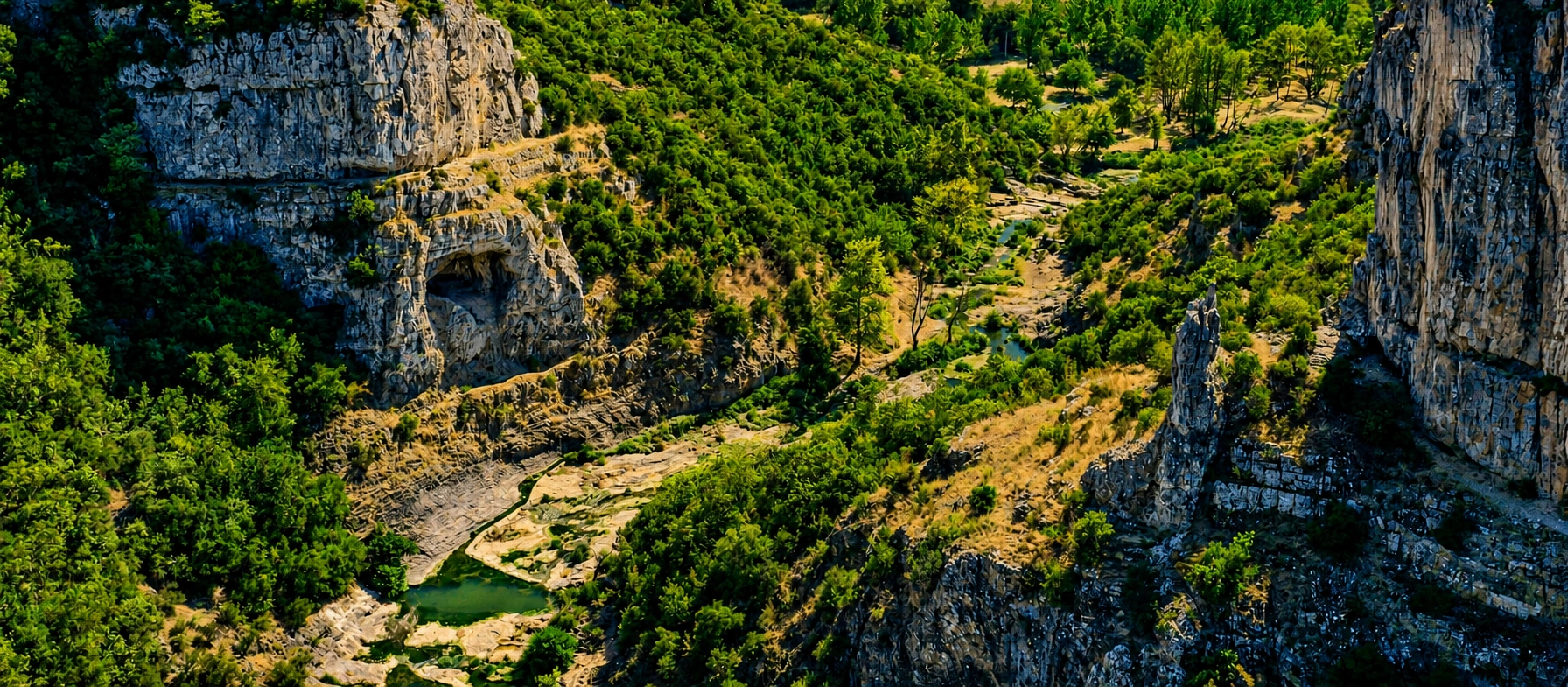
Ask us about combining Ballıkayalar, Gebze, Eskihisar and other Kocaeli highlights inside a privately designed Türkiye journey.
Request a Custom RouteWe can combine Kocaeli with Istanbul, Cappadocia and destinations throughout Türkiye.
Build a private day around Ballıkayalar's canyon, Gebze's Ottoman heritage and historic Eskihisar beside the Gulf of İzmit.
Plan Your Journey
Discover the Gulf of İzmit, Kandıra coast, Kartepe, historic sites, nature parks and regional food traditions.
Explore Kocaeli
Continue throughout Türkiye with archaeological sites, historic cities, mountains, coastal landscapes, food traditions and cultural heritage.
Explore Türkiye