Private Amos Ancient City Programme
Share your travel dates, group size and interests. We will check practical arrangements and propose a suitable route.
Request a Private Programme





Amos rewards visitors with a rare combination of ancient theatre and sea views. The site stands on elevated ground between Turunç and Kumlubük, making the coastal geography central to its appeal.
Unlike a large reconstructed city, Amos is read through surviving walls, the theatre and the contours of the hill. A short visit can still reveal how an ancient community used a naturally defensible position.
The route may involve uneven ground and exposure to sun; plan for a heritage walk rather than a paved museum promenade.
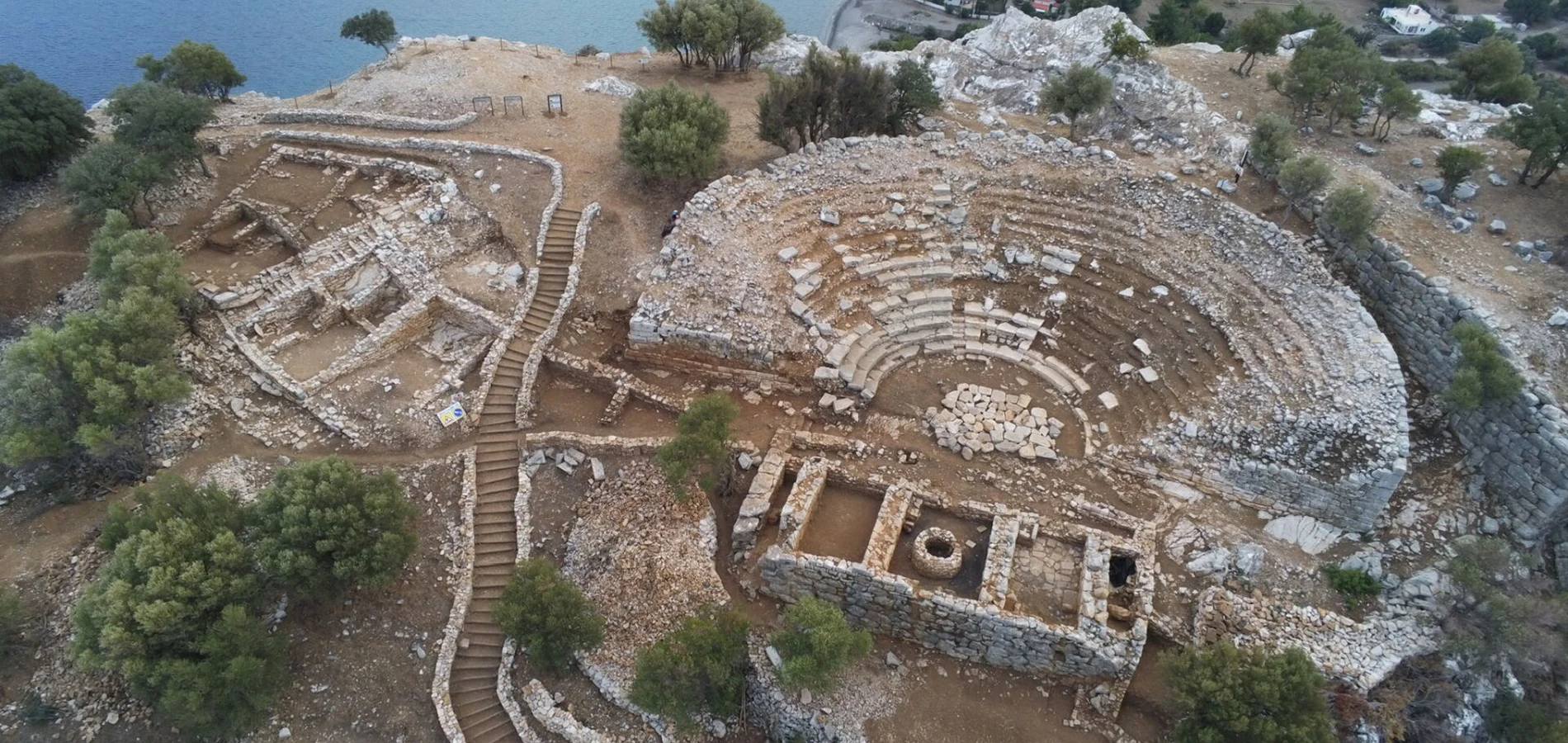
Stone seating on the hillside is the most recognisable monument.
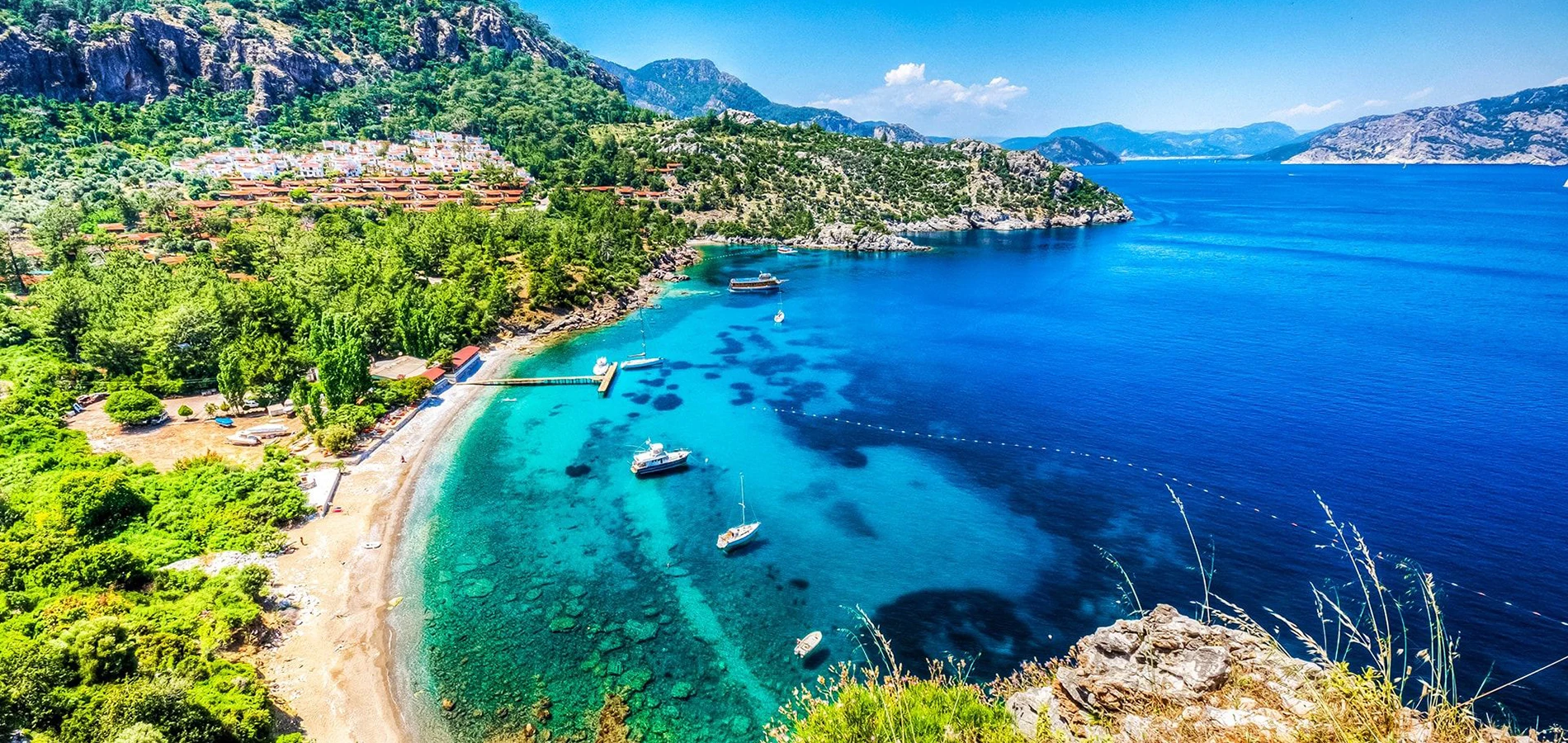
The views towards Turunç and Kumlubük explain the importance of the site’s position.
Surviving wall lines help outline the defended settlement.
Low walls and scattered blocks should be read cautiously; not every stone can be assigned a definite function.
A practical orientation to the landscape, heritage and visitor experience.
between Turunç and Kumlubük, Marmaris
Coastal carian archaeological site
Hellenistic urban remains
A rocky hill above the southern marmaris coast
Allow 45–90 minutes on site, excluding the winding coastal drive.
Verify current access and local conditions; do not rely on old ticket or transport details.
The strongest reason to visit Amos Ancient City is not a single postcard image. The combination of ancient theatre, coastal outlook and its position in a rocky hill above the southern Marmaris coast makes the place distinctive within Muğla. Approaching the site with an understanding of its environment makes the experience richer than a rushed photograph.
Its wider story is connected to hellenistic urban remains. The visible landscape also reflects the choices of people who lived, travelled or worked here long after the earliest history of the area. Different periods should be distinguished rather than presented as one continuous, unchanging past.
Unlike a large reconstructed city, Amos is read through surviving walls, the theatre and the contours of the hill. A short visit can still reveal how an ancient community used a naturally defensible position. The best visit allows time for small details, not only the most recognisable view. In a region of busy holiday routes, that slower approach helps protect both heritage and local communities.
Amos belonged to the ancient Carian world and was associated with the Rhodian sphere of influence. Its coastal position connected it with maritime routes across the southern Aegean.
The surviving theatre is commonly dated to the Hellenistic period. Other remains include defensive and civic traces that require interpretation on the ground.
Modern tourism has increased awareness of the site, but its appeal depends on retaining the quiet, open-air character of the ruins.
To interpret Amos Ancient City accurately, distinguish surviving evidence from later stories and modern tourism labels. When dates or attributions are disputed, a cautious explanation is more useful than an attractive but unsupported claim.
The site occupies a headland landscape with steep slopes and views of the open sea and adjacent bays.
The geography around Amos Ancient City influences how people approach it. Views, shade, wind, water and the condition of paths can vary across short distances, particularly where mountains descend directly to the coast.
Before travelling, compare the map with the terrain. A route that looks short in a straight line may involve winding roads, a boat crossing or a steep footpath. This is especially important when combining the visit with Turunç Bay.
Stone seating on the hillside is the most recognisable monument.
This is a useful starting point for understanding Amos Ancient City: consider what can be observed directly, how it relates to the surroundings, and which interpretations need historical evidence. Small details often reveal more than a distant panoramic view.
Look for the details that distinguish this feature from nearby places, and keep to the designated route.
The views towards Turunç and Kumlubük explain the importance of the site’s position.
Take time to look at the relationship between coastal outlook and the rest of a rocky hill above the southern Marmaris coast. Changes in light, visitor activity and weather can alter the impression considerably.
Compare the feature with the surrounding terrain; its meaning becomes clearer in context.
Surviving wall lines help outline the defended settlement.
An informed visit distinguishes permanent features from temporary conditions. Where access is limited, observing from an approved viewpoint is preferable to entering a fragile or restricted area.
Where surfaces are fragile or access is uncertain, choose observation over close contact.
Low walls and scattered blocks should be read cautiously; not every stone can be assigned a definite function.
This feature also connects the immediate visit with the wider between Turunç and Kumlubük, Marmaris area. Consider it alongside the other three highlights rather than as an isolated attraction.
The most rewarding perspective is often the one that includes the wider landscape, not only the feature itself.
Amos Ancient City is part of a region where Carian archaeology, village traditions, forests and maritime routes meet. Its character as a coastal Carian archaeological site helps explain one specific part of that broader mosaic.
For a well-balanced itinerary, compare the experience with Turunç Bay and Kumlubük Bay. These nearby places reveal different aspects of southwestern Türkiye without treating every bay or ruin as interchangeable.
Muğla rewards slow travel because distances are shaped by peninsulas and mountain roads. A day built around two or three meaningful stops is often more enjoyable than an ambitious list that leaves little time for observation.
Start by identifying the main physical clues: ancient theatre, coastal outlook and the orientation of the surrounding land or water. Ask what these details reveal about how the place functioned.
Amos belonged to the ancient Carian world and was associated with the Rhodian sphere of influence. Its coastal position connected it with maritime routes across the southern Aegean. When reading an interpretive panel or hearing a local story, separate what is documented from what is remembered or traditionally told.
A thoughtful visit does not require specialist equipment. Comfortable shoes, patience, an accurate map and a willingness to look carefully are usually more useful than trying to cover every possible viewpoint.
The following four highlights give the visit a clear structure. Which are accessible on the day depends on local conditions and any protected-area rules.
Stone seating on the hillside is the most recognisable monument.
The views towards Turunç and Kumlubük explain the importance of the site’s position.
Surviving wall lines help outline the defended settlement.
Low walls and scattered blocks should be read cautiously; not every stone can be assigned a definite function.
For a useful comparison, add Turunç Bay if time and travel conditions permit. Do not assume that every feature is accessible without a guide or that all areas are open throughout the year.
Reach the area via the Turunç–Kumlubük coastal road and confirm the permitted footpath. Wear sturdy shoes and carry water; avoid the hottest part of the day.
Suggested visit length: Allow 45–90 minutes on site, excluding the winding coastal drive. These are planning estimates, not guaranteed activity durations. Allow extra time for parking, walking, tickets, weather changes or waiting for transport.
Opening hours, admission charges, guided services and permitted areas may change. Consult the responsible authority or operator shortly before the visit, especially outside the main summer season. Never assume a free public-access policy for an archaeological or protected site.
Begin by arriving at the most practical public access point for Amos Ancient City; confirm this before setting out. Start with ancient theatre so that the location and its main character become clear.
Continue to coastal outlook and fortification traces if they are open and safely accessible. Do not rush between viewpoints: short pauses help connect the details to the surrounding landscape.
Finish with archaeological restraint, then consider Turunç Bay as a separate stop if the route is realistic. Take time to understand the theatre’s orientation and how the landscape framed public gatherings. Do not stand on unstable masonry.
Comfort is often best in spring and autumn, when walking conditions can be more forgiving than in the hottest summer weeks. For coastal Carian archaeological site, however, weather and seasonal operation may matter as much as temperature.
Morning light can make ancient theatre easier to appreciate, while later light may transform the wider a rocky hill above the southern Marmaris coast. Avoid making a journey solely for a particular sunset without checking access and the return route.
In summer, carry drinking water and protect yourself from the sun. In winter or during strong winds, check roads, paths and boat services; some facilities operate seasonally.
Begin with a wide photograph that establishes a rocky hill above the southern Marmaris coast, then move to details such as ancient theatre or coastal outlook. This combination tells a fuller story than a single panorama.
For context, include people only with permission and without blocking narrow paths. Take time to understand the theatre’s orientation and how the landscape framed public gatherings. Do not stand on unstable masonry.
Drone use may be restricted by aviation, military, archaeological or environmental rules. Do not fly without confirming applicable permissions. Avoid flash near wildlife and never step onto fragile remains for a better angle.
Reach the area via the Turunç–Kumlubük coastal road and confirm the permitted footpath. Wear sturdy shoes and carry water; avoid the hottest part of the day. The presence of a road or promenade does not guarantee step-free access to every feature.
Ask locally about gradients, steps, uneven surfaces, rest areas and accessible toilets before committing to a route. Archaeological paths, forest tracks and natural shorelines are often difficult for visitors with reduced mobility.
If you are travelling with young children, consider a shorter route and regular breaks. For a private itinerary, describe mobility needs in advance so that a suitable alternative can be proposed.
Amos Ancient City is in between Turunç and Kumlubük, Marmaris. Reach the area via the Turunç–Kumlubük coastal road and confirm the permitted footpath. Wear sturdy shoes and carry water; avoid the hottest part of the day.
Road distances around the Gulf of Gökova, Marmaris and the Datça Peninsula can be deceptive because routes follow hills and coastlines. Public transport, taxis and boat departures may be seasonal or limited.
If combining the trip with Turunç Bay, check the actual travel route rather than relying on the apparent distance on a map. For remote sites, establish a safe return plan before departure.
Nearby stops offer a useful contrast to Amos Ancient City. The best combination depends on whether you prefer heritage, villages, watersports or quiet coastal scenery.
Explore another part of Muğla’s coastal, natural or archaeological landscape.
Explore another part of Muğla’s coastal, natural or archaeological landscape.
Explore another part of Muğla’s coastal, natural or archaeological landscape.
Explore another part of Muğla’s coastal, natural or archaeological landscape.
Plan a realistic number of stops and check road or sea conditions. The most memorable Muğla itineraries leave time for local meals, observation and unplanned pauses.
Amos Ancient City is in between Turunç and Kumlubük, Marmaris, within Muğla Province in southwestern Türkiye.
Its distinctive appeal is ancient theatre together with coastal outlook. The setting—a rocky hill above the southern Marmaris coast—is part of the experience.
The key historical context is hellenistic urban remains. Amos belonged to the ancient Carian world and was associated with the Rhodian sphere of influence. Its coastal position connected it with maritime routes across the southern Aegean.
Allow 45–90 minutes on site, excluding the winding coastal drive.
Reach the area via the Turunç–Kumlubük coastal road and confirm the permitted footpath. Wear sturdy shoes and carry water; avoid the hottest part of the day.
Arrangements differ by season and by the parts of Amos Ancient City you plan to visit. Confirm current access, any ticket or permission requirements, and local conditions shortly before travelling; do not rely on an old price list.
Nearby options include Turunç Bay and Kumlubük Bay. Choose combinations according to actual road or boat conditions rather than straight-line distances.
Take time to understand the theatre’s orientation and how the landscape framed public gatherings. Do not stand on unstable masonry. Treat the setting as a living place with local residents, working landscapes and vulnerable natural or cultural features.
Keep to permitted routes, take litter away, avoid disturbing wildlife and do not remove archaeological fragments, sand, stones or plants. Ask before photographing people or entering privately managed spaces.
For updated visiting arrangements, check official museum, municipal or conservation information before departure. Historical background is provided for orientation, not as a substitute for on-site guidance.
Wow Cappadocia / Venere Travel can help arrange tailor-made sightseeing with a licensed guide and suitable transport, subject to availability and confirmed access. No compulsory shopping stops.
Combine local heritage, village culture and coastal landscapes at a comfortable pace.
Share your travel dates, group size and interests. We will check practical arrangements and propose a suitable route.
Request a Private Programme