Classical Ottoman Architecture & Ceramic Art
Rüstem Paşa Mosque History & Significance
Discover the patronage, urban design and extraordinary tile decoration behind one of the most distinctive works of
Ottoman Istanbul.
Rüstem Paşa Mosque was commissioned in memory of Rüstem Paşa, one of the most powerful grand viziers
of Sultan Süleyman the Magnificent. Rüstem Paşa was also married to Mihrimah Sultan, the daughter of
Süleyman and Hürrem Sultan. The mosque is generally dated to 1561–1563 and was designed by the imperial
architect Mimar Sinan.
The location presented Sinan with a very different challenge from Istanbul’s large imperial mosque complexes.
The site stood within a dense commercial district close to the city’s port, warehouses and markets.
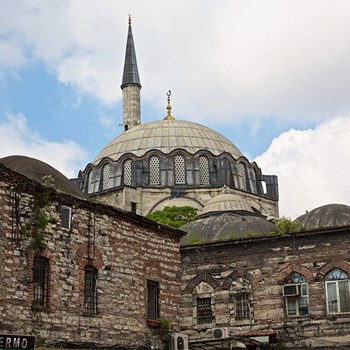
Instead of clearing a monumental open area, the mosque was constructed as a fevkanî, or elevated building,
above vaulted shops and commercial spaces. These income-producing units also supported the mosque’s charitable endowment.
Visitors reach the mosque through stairways rising from the surrounding market streets. At the top, a double portico leads into
a compact but carefully organized prayer hall. The central dome rests on an octagonal support system, while corner semi-domes,
arches and side galleries create a broad interior suited to congregational prayer.
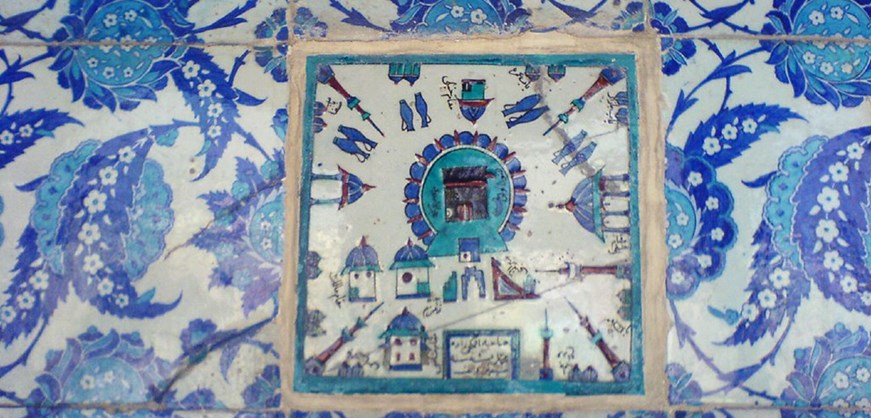
The mosque’s greatest artistic distinction is its exceptional İznik tile decoration.
Tiles cover much of the lower interior, the structural supports, sections beneath the dome and parts of the exterior portico.
Tulips, carnations, roses, pomegranates, serrated saz leaves, cloud bands and geometric patterns appear in a rich palette
of cobalt blue, turquoise, green, white and coral-red.
Rüstem Paşa Mosque was damaged during the Great Istanbul Fire of 1660 and again during the earthquake of 1766.
Repairs and later restorations changed some painted decoration, but the building continues to preserve one of the most remarkable
ensembles of classical Ottoman tile art in Istanbul.