Private Akhisar Food Experience
Share your travel date, interests and group size. We can propose a sensible local route and check any producer access.
Request Your Private Programme





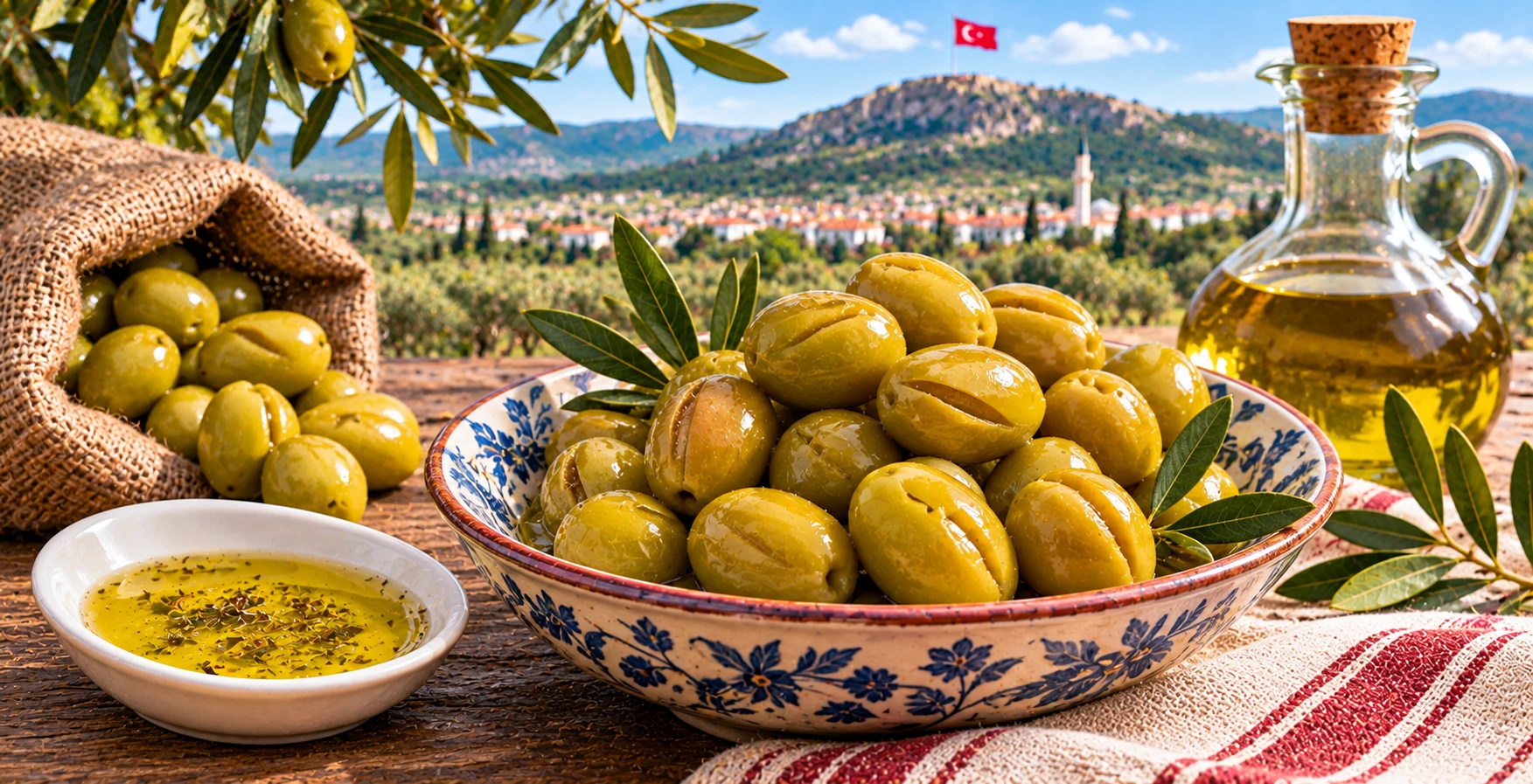
Uslu olives are closely associated with Akhisar and its surrounding olive-growing districts. Unlike an olive oil, this is a fruit prepared for eating after processing; the cultivar and curing method both influence the final taste.
A small bowl of olives can reveal as much about Akhisar as a long menu. Try Uslu beside another cultivar, paying attention to the flesh and brine rather than judging only by colour.
Uslu is not interchangeable with the larger Domat table olive.
Akhisar Uslu Zeytini: origin-name registration 165 (2012).
Brine and other processing choices change salt, texture and flavour.
Try a plain sample before mixing with herbs or spices.
Essential context for a meaningful food experience.
Akhisar, Manisa
Table olives
Cultivar identity
Protected designation
Ask locally about availability and season
Turkish GI no. 165
Akhisar Uslu Zeytini is a registered Turkish geographical indication with origin-name protection, number 165, registered on 13 December 2012. The protected area includes Akhisar and specified neighbouring districts, rather than meaning that any Uslu olive sold anywhere has the designation.
Akhisar is known for several olive types. Uslu should be distinguished from Domat: a shopper comparing the two is exploring different fruit characteristics and uses, not simply two brands of the same product.
The Turkish geographical-indication registry lists Akhisar Uslu Olives under number 165 (Menşe adı), registered 2012-12-13.
The character of an Uslu olive depends on maturity and processing. Look for sound fruit, a clean aroma and a flavour that is not dominated by harsh off-notes.
Saltiness can vary widely, even within a single cultivar. A small tasting is more informative than choosing solely by colour or the appearance of a large display barrel.
Uslu is not interchangeable with the larger Domat table olive.
Akhisar Uslu Zeytini: origin-name registration 165 (2012).
Brine and other processing choices change salt, texture and flavour.
Try a plain sample before mixing with herbs or spices.
A tasting in Akhisar pairs naturally with local olive oil, a visit to the museum and a meal of Akhisar köfte. These stops reveal how agriculture, everyday cooking and the ancient landscape coexist.
Olives are not usually eaten directly from the tree because naturally occurring bitter compounds require processing. Table-olive producers use controlled curing methods, often involving brine, before packing. Exact steps and seasoning differ by product style.
A good tasting compares the flesh, firmness, salt level and balance between fruity and savoury notes. Ask whether a jar contains a whole, pitted or otherwise prepared olive and read the ingredient list for added flavourings.
Uslu is not interchangeable with the larger Domat table olive.
Akhisar Uslu Zeytini: origin-name registration 165 (2012).
Brine and other processing choices change salt, texture and flavour.
Try a plain sample before mixing with herbs or spices.
Check the designation Akhisar Uslu Zeytini if the protected product is what you want. The official registration is for the olive; Akhisar Uslu Zeytinyağı is a separate, later registration for oil.
Reference for the regional method or designation: Official Turkish GI registry. The linked record is provided for checking the details; opening hours and producer availability must be confirmed separately.
Serve alongside cheese, tomatoes, bread and other elements of a Turkish breakfast. Uslu olives can also be offered as a simple mezze, but strong marinades may obscure the cultivar’s own character.
Use a clean utensil when serving from a jar and follow the producer’s storage directions after opening. The preservation method, not a general rule for all olives, determines safe handling.
Start by asking for the simplest or most characteristic preparation. Give yourself time to observe the texture, aroma and serving method, then compare it with one of the related Manisa foods linked below. A short conversation with a producer can be more revealing than collecting several rushed tastings.
If buying unpackaged olives, ask about curing style and storage rather than assuming they carry a registered label. Avoid taking open brine containers in luggage without secure packing.
For a special trip, verify the producer or bakery is open and that the item is available. Seasonal harvests, working-kitchen schedules and festival dates can change; this guide deliberately avoids inventing fixed opening hours or prices.
Photograph the product in its actual context: the market stall, bakery counter, plate or orchard, with the maker’s permission. Do not enter production spaces without approval, and avoid disrupting food handling to stage a picture.
The hero path in this page is a website image reference, not a photograph included in this HTML package. Supply a properly licensed image of the specific food or product before publishing.
Food markets and historic town centres may have steps, narrow pavements or limited seating. If you need a step-free tasting location, confirm the venue’s access arrangements before travelling.
Ingredient and allergen information should come from the actual producer or kitchen. A traditional description cannot guarantee the absence of cross-contact or accommodate individual dietary needs.
Harvest and processing are seasonal activities, but cured olives can be available year-round. Ask local producers when fresh-season batches are typically offered.
The local starting point is Akhisar in Manisa Province. Use an up-to-date map for the exact shop, producer or market and confirm access before making a special journey.
Continue with this related Manisa guide for a different food tradition or nearby heritage stop. Check actual travel time and opening conditions.
Continue with this related Manisa guide for a different food tradition or nearby heritage stop. Check actual travel time and opening conditions.
Continue with this related Manisa guide for a different food tradition or nearby heritage stop. Check actual travel time and opening conditions.
The registered designation covers Akhisar and the specified neighbouring districts in Manisa.
Yes. Akhisar Uslu Zeytini is registered as a menşe adı under number 165, dated 13 December 2012.
No. Uslu and Domat are different olive cultivars associated with the region.
Fresh olives are naturally bitter; controlled processing makes them suitable for eating.
Follow the instructions on the package, keeping the product protected from contamination.
Local olive oil, bread, Akhisar köfte and Akhisar Museum are complementary stops.
Buy from identifiable producers and ask respectfully about their methods.
Read labels and ask about allergens, preparation and storage.
Do not enter farms, mills, kitchens or workshops without permission.
Order manageable portions and use practical packaging for purchases.
Ask Wow Cappadocia / Venere Travel to plan a private route with licensed guiding where appropriate, realistic travel times and no compulsory shopping stops. Producer visits are subject to availability and permission.
Combine food, culture and history at your own pace.
Share your travel date, interests and group size. We can propose a sensible local route and check any producer access.
Request Your Private Programme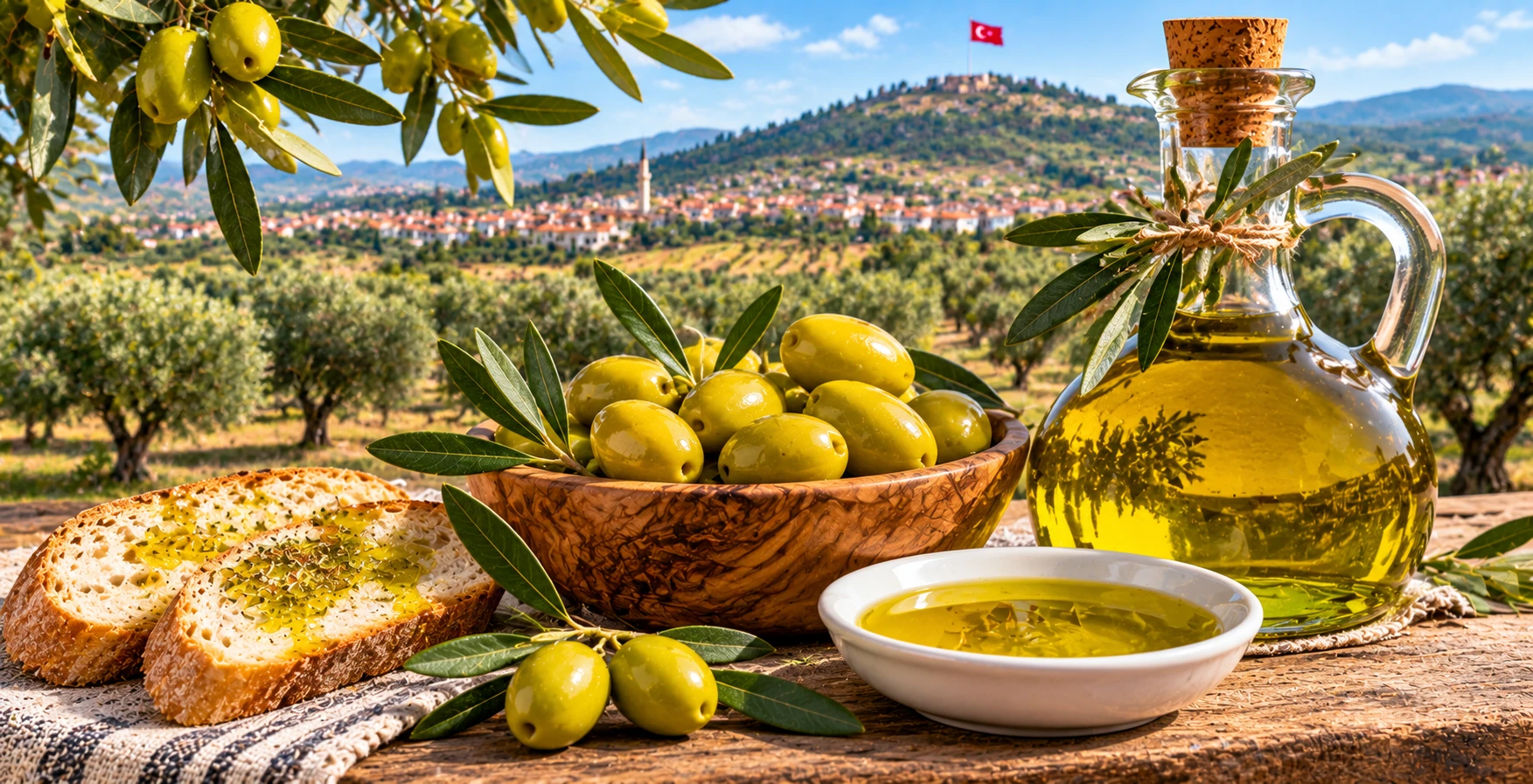
Discover a complementary local food or cultural destination.
Read the Related Guide